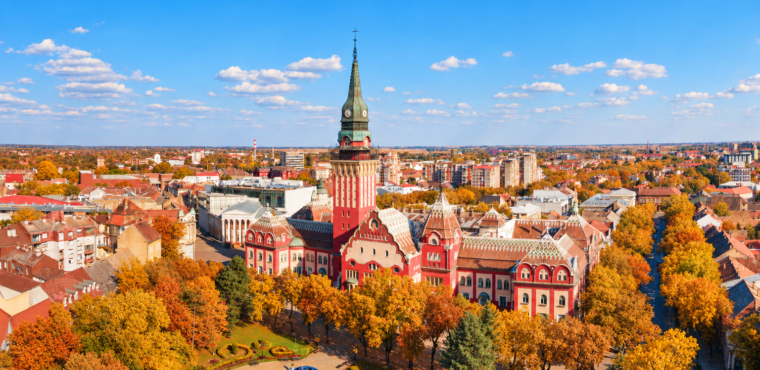

There are cities where historical landmarks are visited, photographed and then left behind. Smederevo is different. Its fortress is not simply a monument to the past, but a space that still belongs to the city – a place for walks, gatherings, concerts, theatre performances and summer evenings under the open sky.
As the day begins to settle and the fortress walls soften in the warm light of sunset, Smederevo takes on an entirely different rhythm. People head towards the Danube promenade, the main square fills with life, and the medieval fortress transforms from a historic landmark into one of Serbia’s most striking cultural stages.
Summer is the ideal time to discover this city beyond a quick tour of its best-known attraction. Behind its powerful walls are stories of the last capital of medieval Serbia, vine-covered hills, the Obrenović dynasty, old city symbols and a modern Smederevo that uses its position on the Danube as a natural backdrop.
A Fortress That Still Belongs to the City
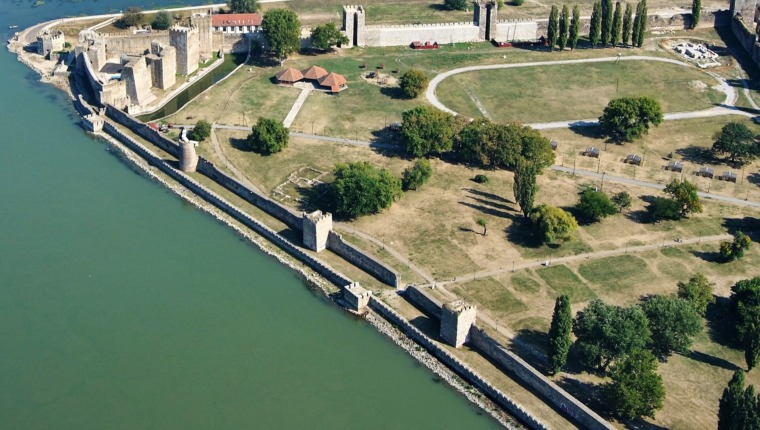
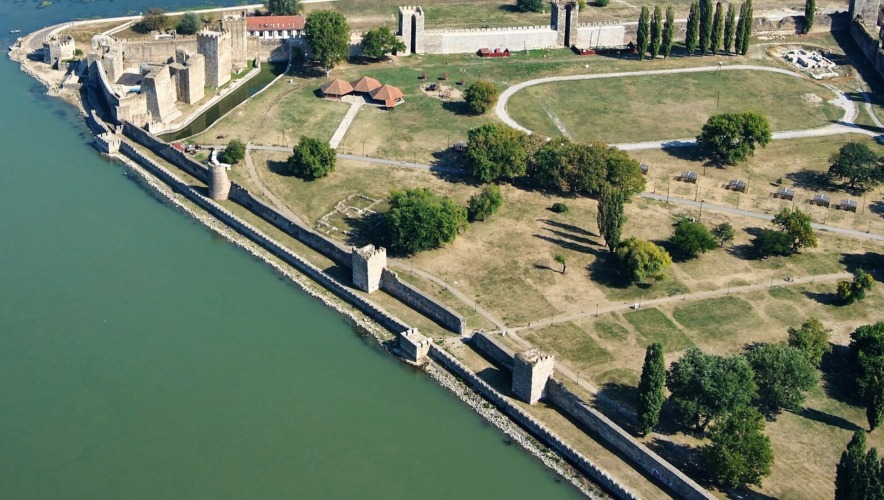
Smederevo Fortress appears almost unexpectedly. Standing on flat ground at the confluence of the Jezava and the Danube, it does not dominate the city from a distant hill. Instead, it rises directly beside its streets, railway and river. Because of this, it never feels detached from everyday life – it remains an integral part of it.
The fortress was built in the 15th century by Despot Đurađ Branković, after Smederevo was chosen as the new capital of the Serbian Despotate. From 1430 until its final fall under Ottoman rule in 1459, the city served as the political, military, economic and cultural centre of the state. Covering approximately 11 hectares and protected by 25 towers, it ranks among the largest lowland fortresses in Europe.
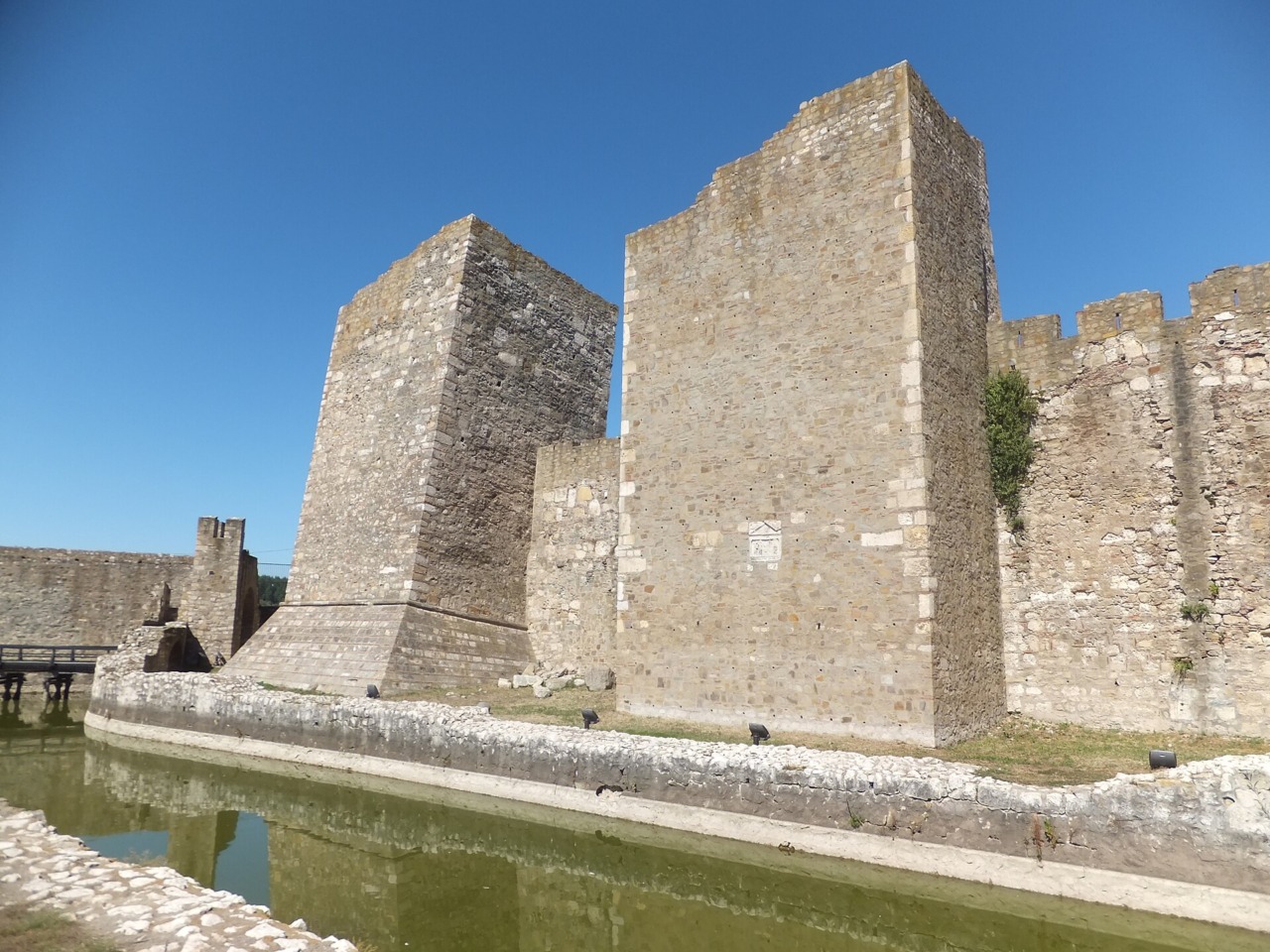
Its most recognisable section is the Small Town, once the fortified court of the ruler, enclosed by high walls and towers. One of the towers still bears a brick inscription recording that the city was built on the orders of Despot Đurađ. The Great Town served a different purpose: it contained the settlement where the everyday life of the medieval capital unfolded.
Today, the extensive lawns within the walls are used for walking, recreation and public events. The true scale of the fortress becomes clear only after entering through its gates. From the outside, it appears monumental; from within, it opens into an entire city beneath the sky.
When the Fortress Walls Become Theatre Scenery
Few places in Serbia bring theatre and historical surroundings together as naturally as the Small Town of Smederevo Fortress. The “Theatre in the Fortress” festival is built around precisely this connection: performances are staged outdoors, while medieval walls, towers and the night sky become part of the scenery.
The festival brings together theatre companies and artists from Serbia and abroad. Yet its appeal lies not only in the programme, but also in the way audiences experience each performance. Sound, light and movement gain a different intensity in a setting that already carries its own atmosphere and centuries-old story.
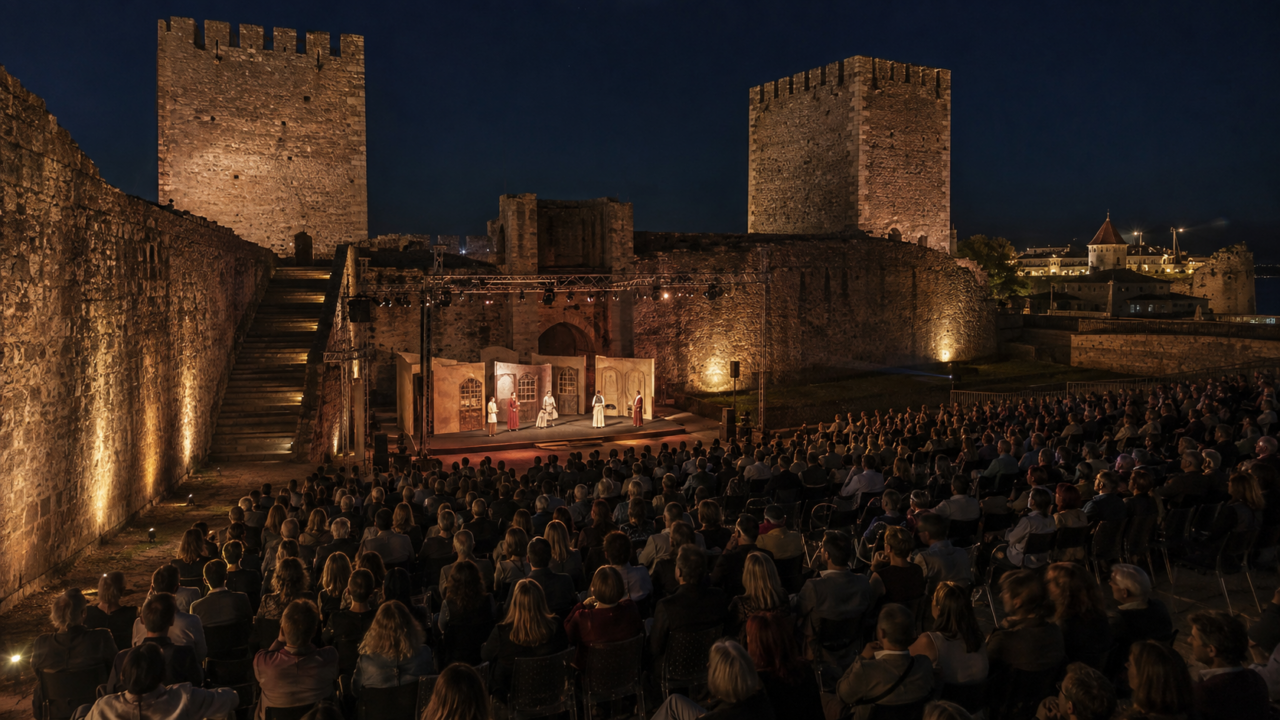
“Theatre in the Fortress” is therefore more than a cultural event held at an attractive location. It demonstrates how historical heritage can become a living space once again – not a backdrop observed from a distance, but a setting for contemporary art and shared experiences.
The festival is only one part of Smederevo’s summer calendar. Throughout the season, the fortress hosts numerous artistic programmes, from concerts to film screenings, offering visitors many different ways to experience the same remarkable setting.
Summer 2026 Between Music, Film and Art
This year’s Cultural Summer brings events to several locations across Smederevo, including workshops, exhibitions, musical evenings and programmes dedicated to local artists. Some take place in the Wine City and the Art Quarter, allowing cultural life to extend beyond the fortress and into different parts of the historic centre.
One of the most important events in the second half of the season is the ninth Danube Film Fest, taking place from 21 to 26 August. The festival opens on 21 August at 8 p.m. in the Small Town of Smederevo Fortress with The House, the feature-film debut of director Tanja Brzaković. Dedicated to cinema from countries connected by the Danube, the festival traditionally holds screenings at several locations throughout the city.
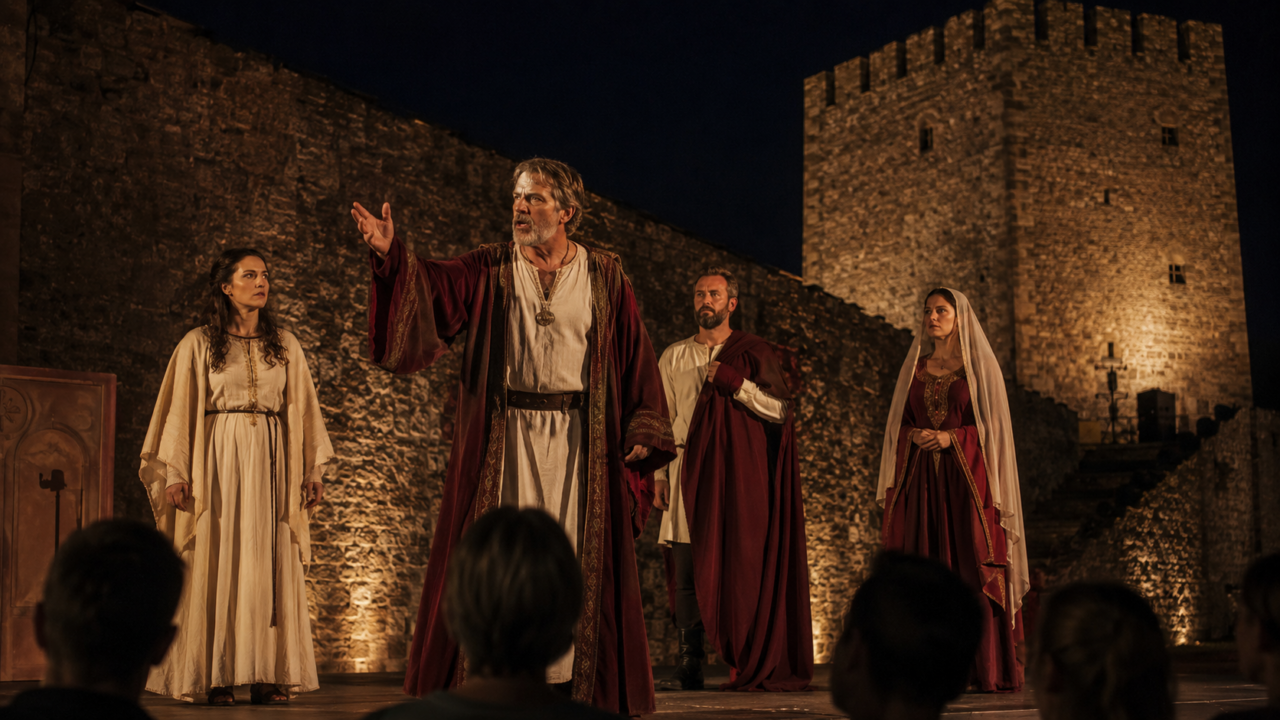
Over the course of a single summer, the fortress assumes several identities: it becomes a concert venue, a theatre stage and an open-air cinema. That sense of transformation is what makes summer in Smederevo so distinctive. A visit does not end when its museums and landmarks close – the city’s most interesting programmes often begin only after nightfall.
A City Best Explored Slowly
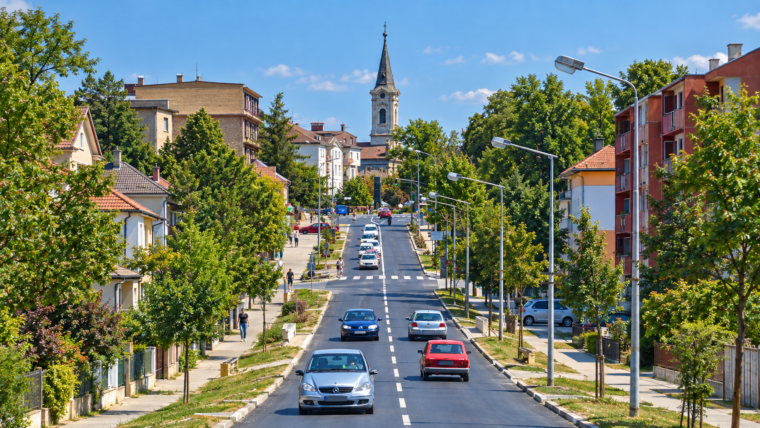
Although the fortress attracts the most attention, Smederevo extends far beyond its walls. From there, it is only a short walk to the historic centre and Republic Square, surrounded by some of the city’s most recognisable buildings.
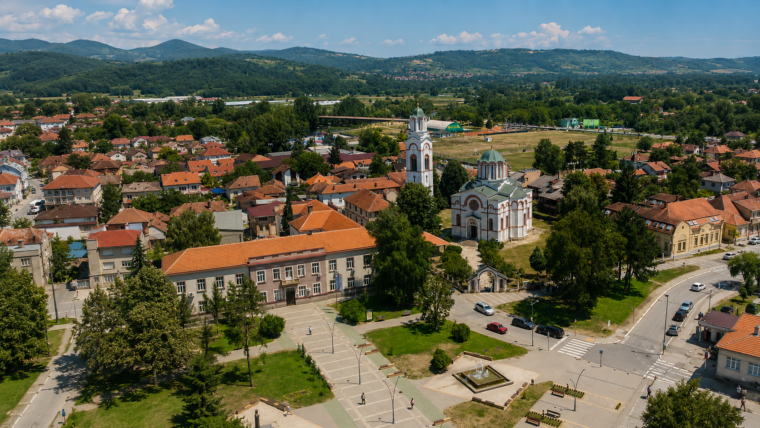
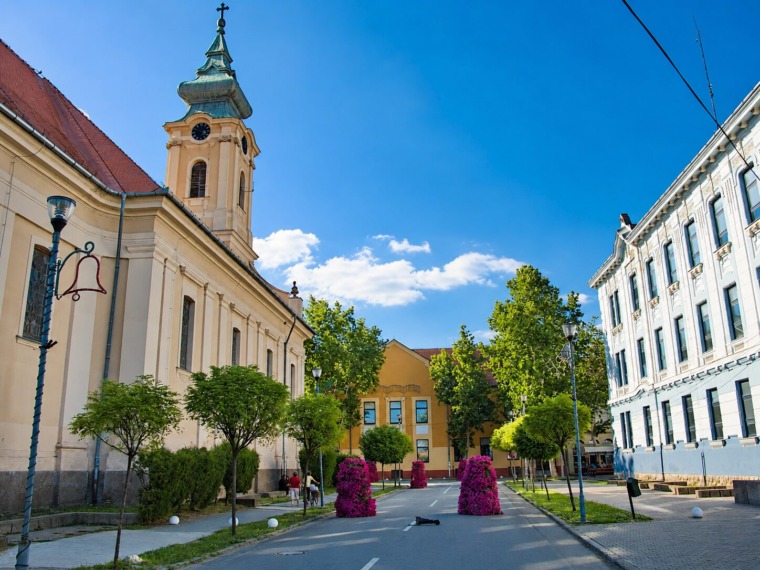
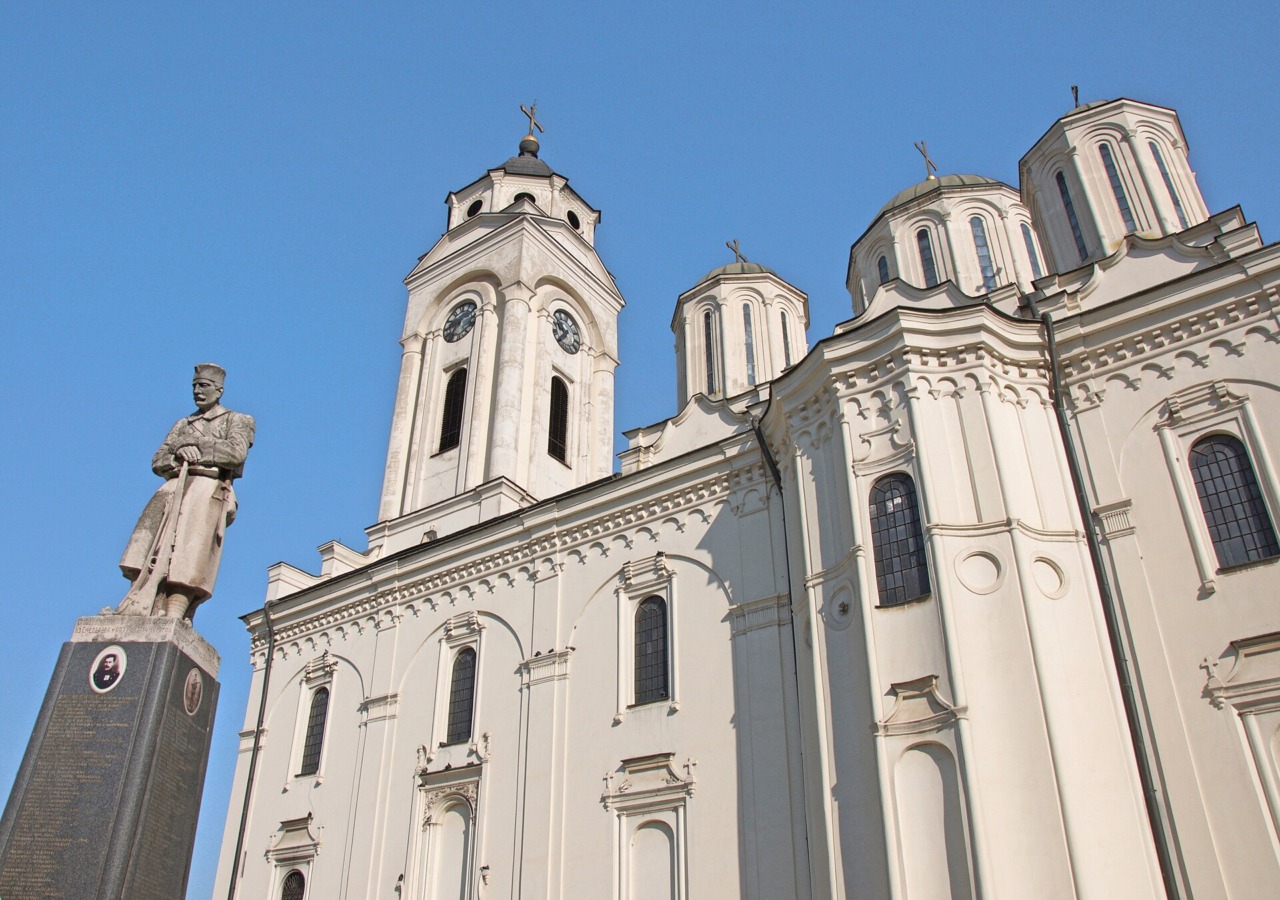
The square is dominated by the Church of St George, built between 1850 and 1854 and inspired by Manasija Monastery. Its monumental façade gives the square its distinctive appearance, while the surrounding streets reveal a calmer, more everyday side of Smederevo – cafés, pastry shops, small stores and passages that can be explored without a strict plan.
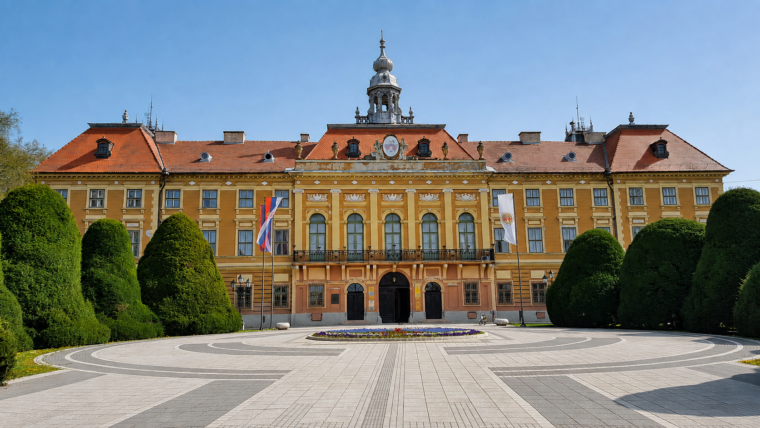
Nearby stands the Museum in Smederevo, whose historical, archaeological, ethnological, artistic and numismatic collections provide context for everything previously seen inside the fortress. Rather than leaving its walls as little more than impressive architecture, the museum helps visitors understand life in the former capital and the city’s later development.
Another important symbol can be found near the site of the former city gate. Karađorđe’s Mulberry Tree commemorates the surrender of the keys to Smederevo to Karađorđe during the First Serbian Uprising. It may not be as monumental as the fortress, but places like this reveal how many layers of history are concentrated within a relatively small area.
The Danube as the City’s Second Great Stage
Smederevo cannot be understood without the Danube. Throughout history, the river shaped its location, development and defence. Today, it provides the city with open space and a slower summer rhythm.
The Danube promenade is particularly pleasant in the early evening, once the heat of the day has faded. It is the perfect place for an unhurried walk, a break overlooking the water or a continuation of the day after visiting the fortress. Here, the city feels less monumental and more relaxed and familiar.
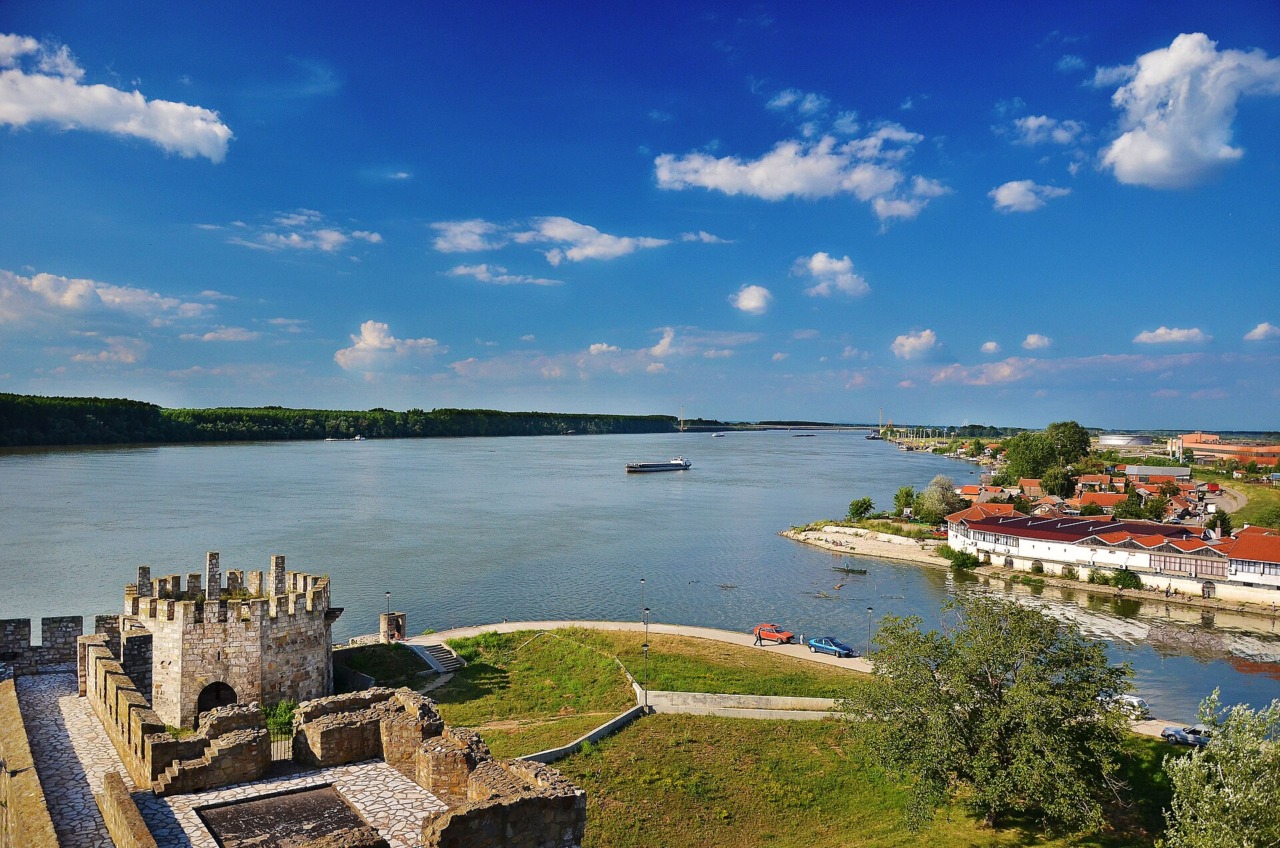
Smederevo’s location allows its two most important symbols to appear within a single view – the broad Danube and the towers of the medieval fortress. Their meeting point captures the city’s character: firmly connected to its past, yet open to the river, travellers and new experiences.
For a summer break by the water, visitors can also head to Jugovo, approximately five kilometres from the centre on the right bank of the Danube. This part of the city offers swimming and recreational facilities, making it a good addition to a day trip or weekend stay, particularly for families.
From a Medieval Capital to the “City of Iron and Grapes”
Smederevo is often described as the city of iron and grapes. The first part of this identity reflects its strong industrial heritage, while the second leads towards the gentle hills and vineyards surrounding the city.
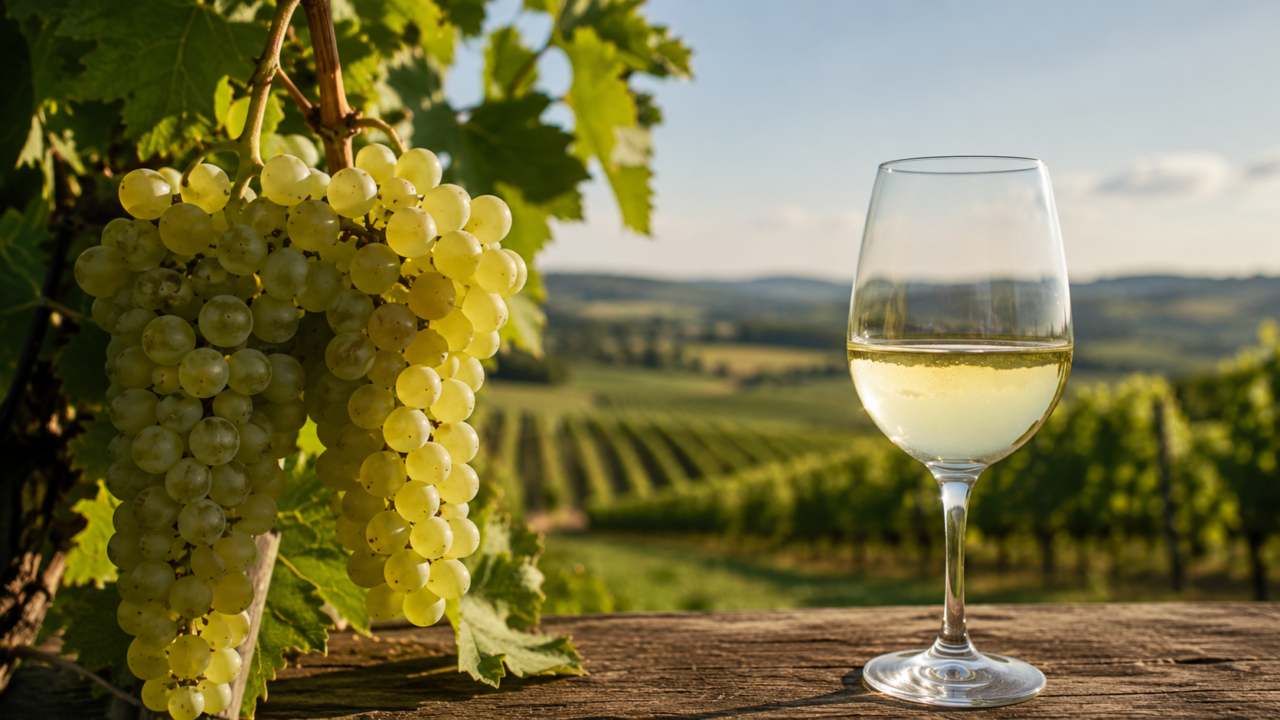
Viticulture has shaped the Smederevo region for centuries, while the Smederevka grape variety has become one of its best-known symbols. This tradition is most visible during the Smederevo Autumn festival, although vineyards and old wine stories remain part of the city’s identity throughout the year.
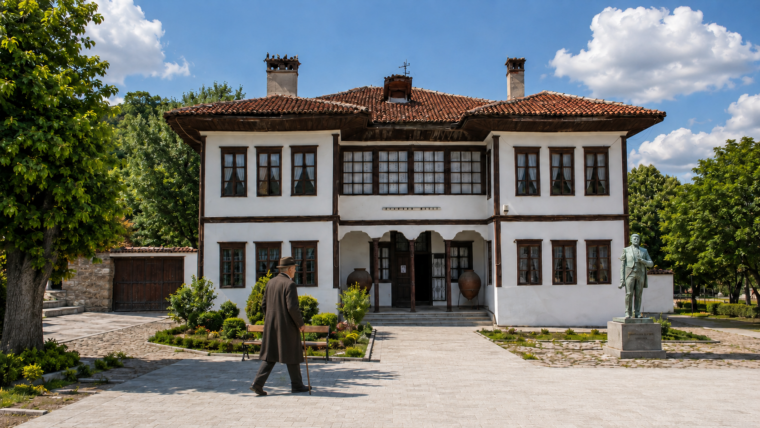
One of the most interesting places among the hills is the Zlatni Breg Villa, once a summer residence of the Obrenović dynasty. Surrounded by a park and vineyard scenery, the villa reveals a more elegant and peaceful side of the city’s past, very different from the military grandeur of the fortress. Visits are organised in advance, so checking availability before arrival is recommended.
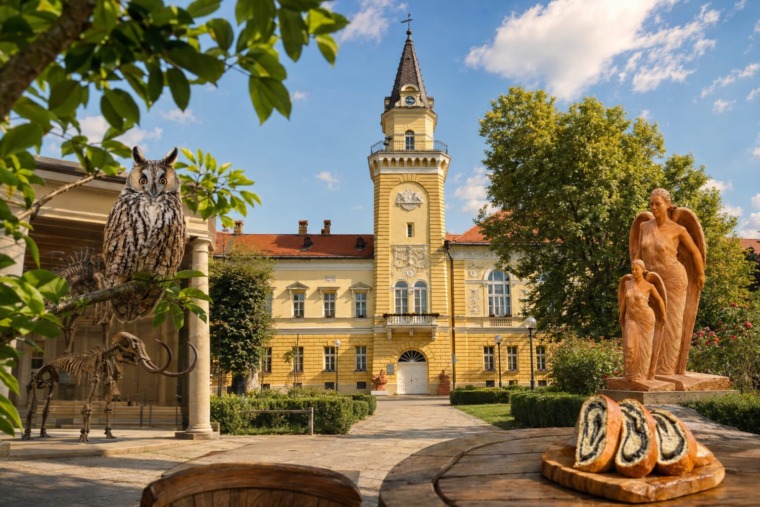
The city centre is also home to the Wine City, an atmospheric complex of small houses made from old wine barrels. During summer festivals, this space frequently hosts musical and cultural programmes, connecting local heritage with contemporary city life.
One Day for an Introduction, a Weekend to Truly Explore
Thanks to its proximity to Belgrade, Smederevo is often chosen for a day trip. A good itinerary begins at the fortress in the morning, followed by the museum, the main square and the streets of the historic centre. Late afternoon belongs to the Danube promenade, while the evening can be reserved for a theatre performance, concert or film screening.
Staying for an entire weekend, however, allows the city to be experienced without rushing. There is then enough time to visit Zlatni Breg, explore the surrounding vineyards, stop at Jugovo and enjoy the evening programmes. Smederevo does not require a complicated itinerary. Its main attractions are close enough to be explored largely on foot, yet each one opens a completely different chapter of the city’s story.
Summer suits Smederevo particularly well because its greatest qualities no longer feel separate. History is not confined to museums, culture is not enclosed within auditoriums, and the Danube is more than a landscape in the background. Everything comes together within and around the fortress.
When the stage lights illuminate the towers of the Small Town, Smederevo briefly becomes a capital once again – this time, a summer capital of culture on the Danube.
Related Articles