
-
Serbia at a Glance
Discover All -
Arts & Culture
Discover All -
Identity & Heritage
Discover All -
Famous Serbs
Discover All
-
Regions
Discover All -
Cities
Discover All -
Nature
Discover All -
Cultural Landmarks
Discover All
-
Outdoor & Wellness
Discover All -
Food & Drink
Discover All -
Tours
Discover All -
Urban Experiences
Discover All -
Seasonal Experiences
Discover All
Partner with Serbia.com
Let's create lasting impact together
Partner with Serbia.com to reach travellers through trusted recommendations, inspiring editorial stories and thoughtfully designed campaigns. Together, we create meaningful visibility that supports your goals and remains valuable long after publication.
Explore partnership opportunities- Serbian Favorite Rituals Everyday traditions and little things that make life in Serbia special.
- Villages of Serbia Charming villages, local stories and authentic rural life.
- Serbia Told By You Personal stories, local perspectives and authentic experiences from across Serbia.
- Is it Worth Visiting in Serbia? Honest destination guides to help you decide which places are worth visiting.
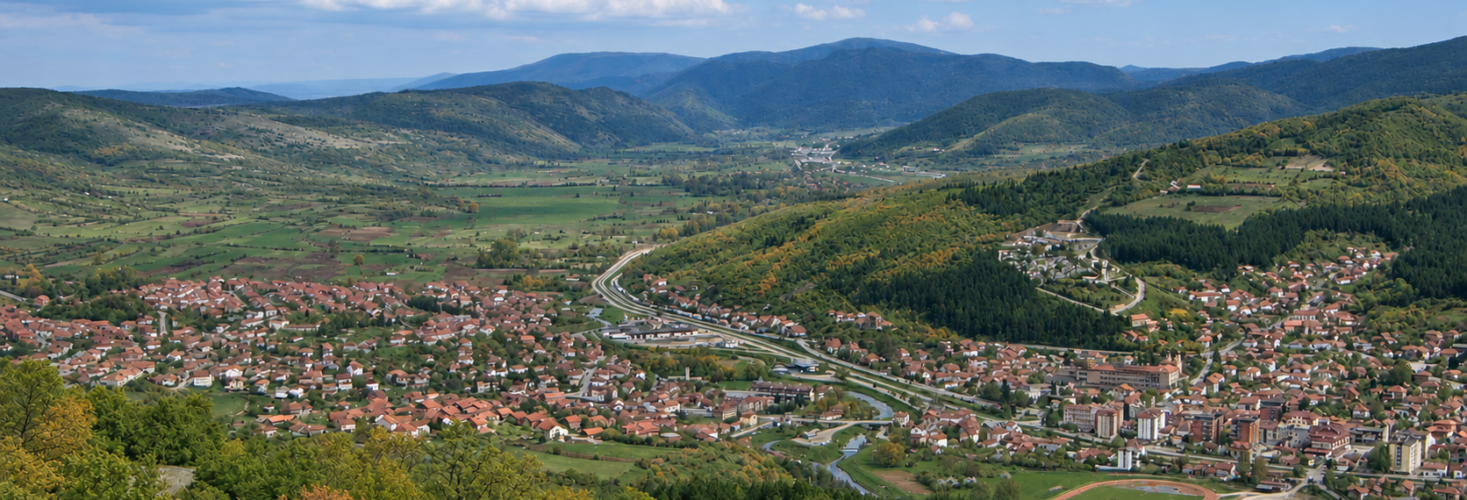
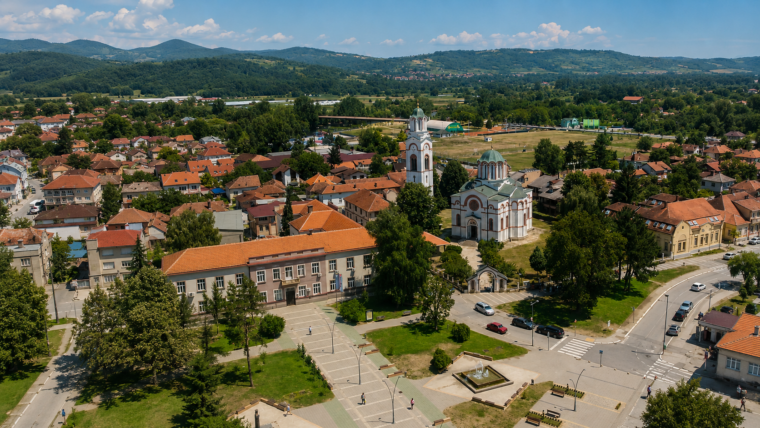
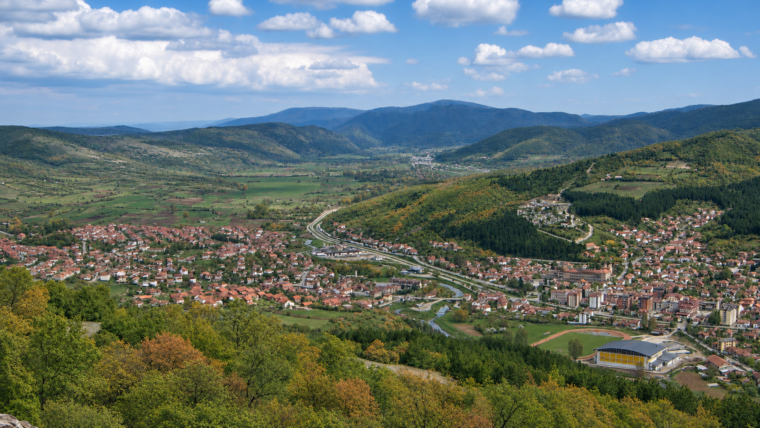
On the way to the Bulgarian border, it’s worth turning off the main road into Dimitrovgrad. In the old quarter, you’ll find a stone fountain, small bridges and former merchants’ houses. The sign on the municipal building bears two names, and on the hill above town stands a memorial that tells an unusual story from the shared history of Serbia and Bulgaria.
For a first visit, spend the morning in Caribrod, as many locals still call the town, and set aside the afternoon for the Jerma Gorge and Poganovo Monastery. If you’re travelling in mid-November, you can also time your visit to coincide with the Caribrod Šušenica Festival.
How the railway changed Caribrod
Caribrod’s position in the Nišava Valley has long shaped life in the town. The Roman road known as the Via militaris passed through the area, and the arrival of the railway in the late 19th century gave the town new momentum. The line linking Niš, Pirot, Caribrod and Sofia brought more trade. The railway station and the houses of former merchants still recall that period.
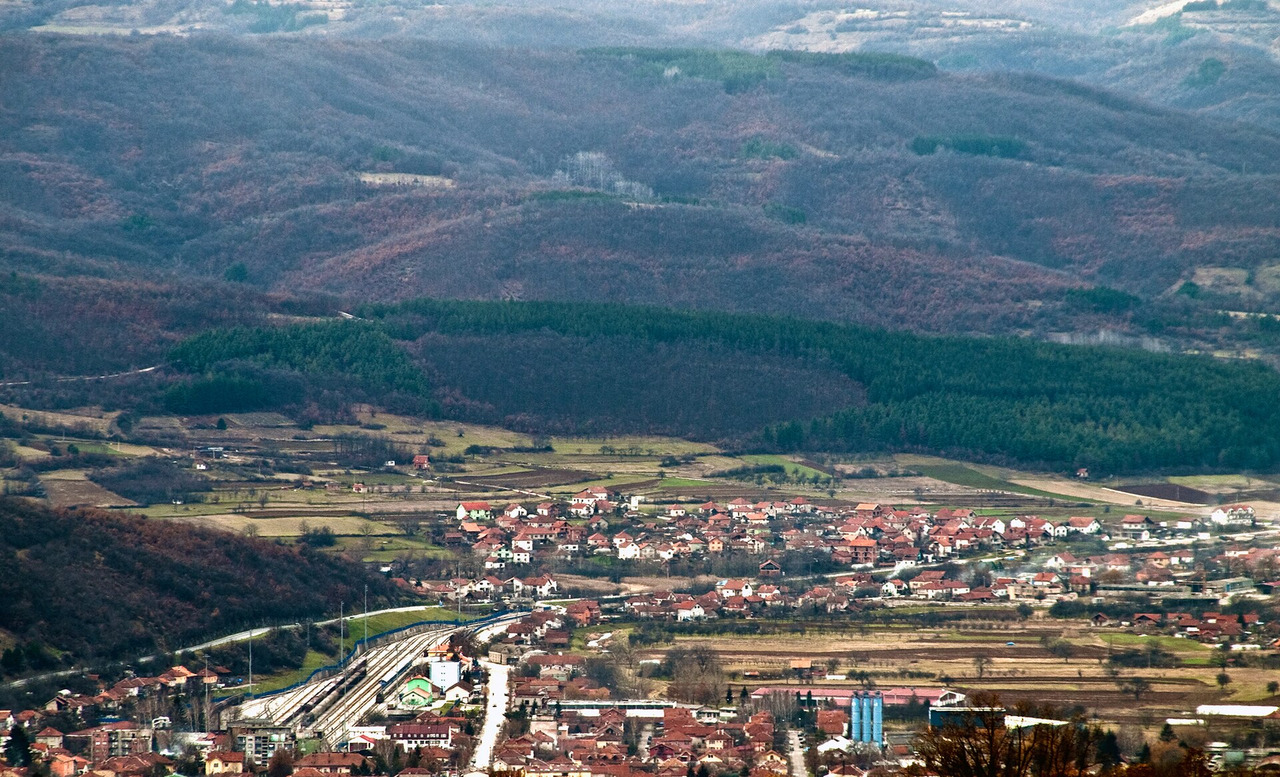
The border shifted over time. After the First World War, Caribrod became part of the Kingdom of Serbs, Croats and Slovenes in 1920. After the Second World War, it was renamed Dimitrovgrad after the Bulgarian politician Georgi Dimitrov. The old name lives on in everyday speech and on the bilingual sign outside the municipal building, where you can still read both names.
The old quarter around Strošena Česma
Start your walk at Strošena Česma, a stone fountain on Širinta Square, once a marketplace. Look out for the old townhouses around the square and the small stone bridges over a former mill channel. Among the most distinctive buildings are the so-called Greek houses, built in the early 20th century by prosperous merchants of Greek origin.
The fountain has its own local legend. In one version, a young Turkish man fell in love with a girl he used to see drawing water from a spring. He set out to build her an ornate fountain, but her brothers opposed the project and tried to tear it down. The stone fountain still stands, and the neighbourhood around it takes its name from it.
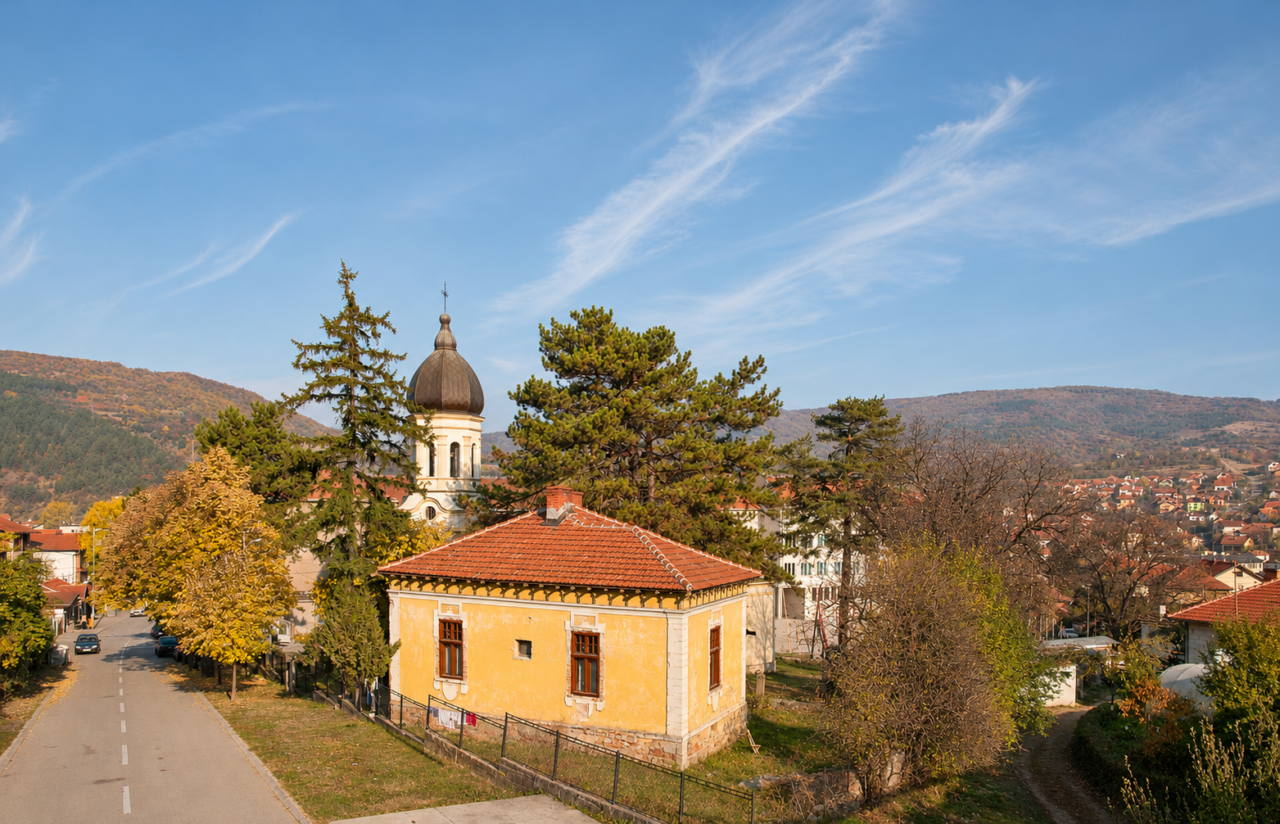
From the old quarter, continue to the Church of the Nativity of the Virgin Mary on Hristo Botev Street. If the church is open, take a close look at its boxwood iconostasis. Woodcarvers from Debar worked some of the details so finely that they resemble lace.
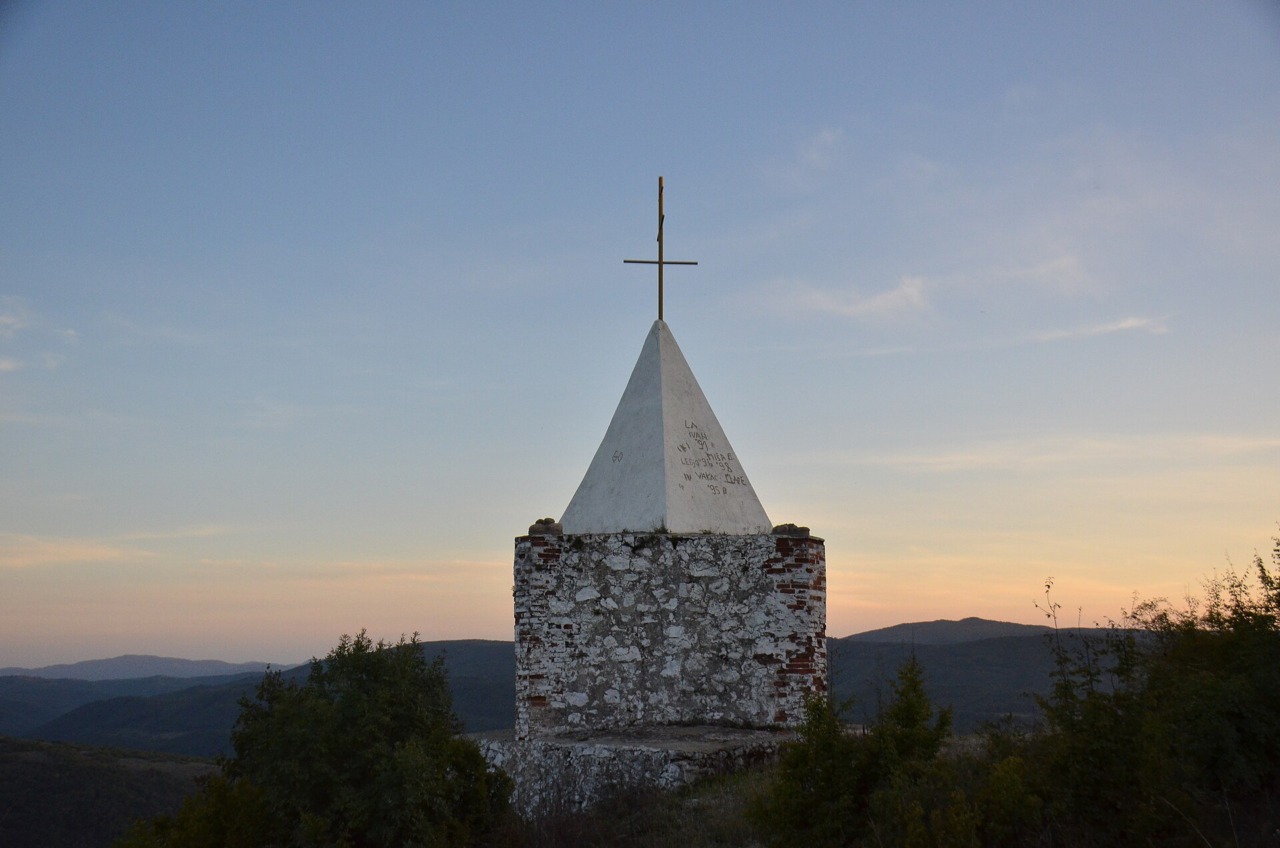
On Neškovo Hill, above Dimitrovgrad, Serbian and Bulgarian soldiers who died in battle in 1885 are buried together in a memorial ossuary. It is known as Pametnik, the Bulgarian word for “monument”. Its story carries particular weight in a town where both languages are still part of daily life. On a clear day, take a moment to look back over the town from the hill.
A museum collection started by schoolchildren
In the late 1950s, local pupils in a young archaeologists’ club began collecting objects from the area. Today, the local history collection at the Detko Petrov Library holds archaeological finds, clothing and household objects from nearby villages, as well as old photographs and documents. The permanent exhibition includes objects unearthed during excavations along the route of the Via militaris. Check with the library before your visit to arrange a time.
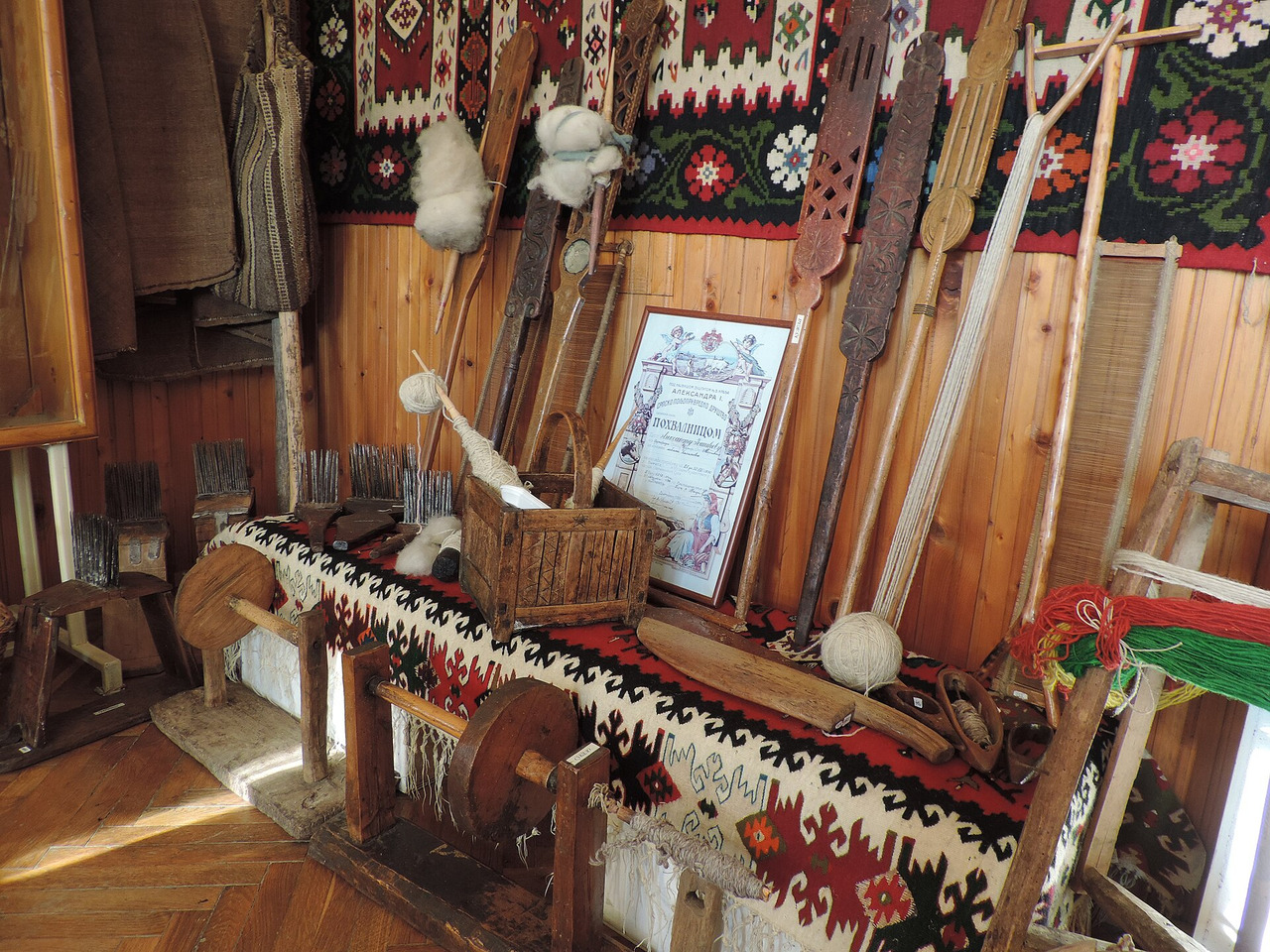
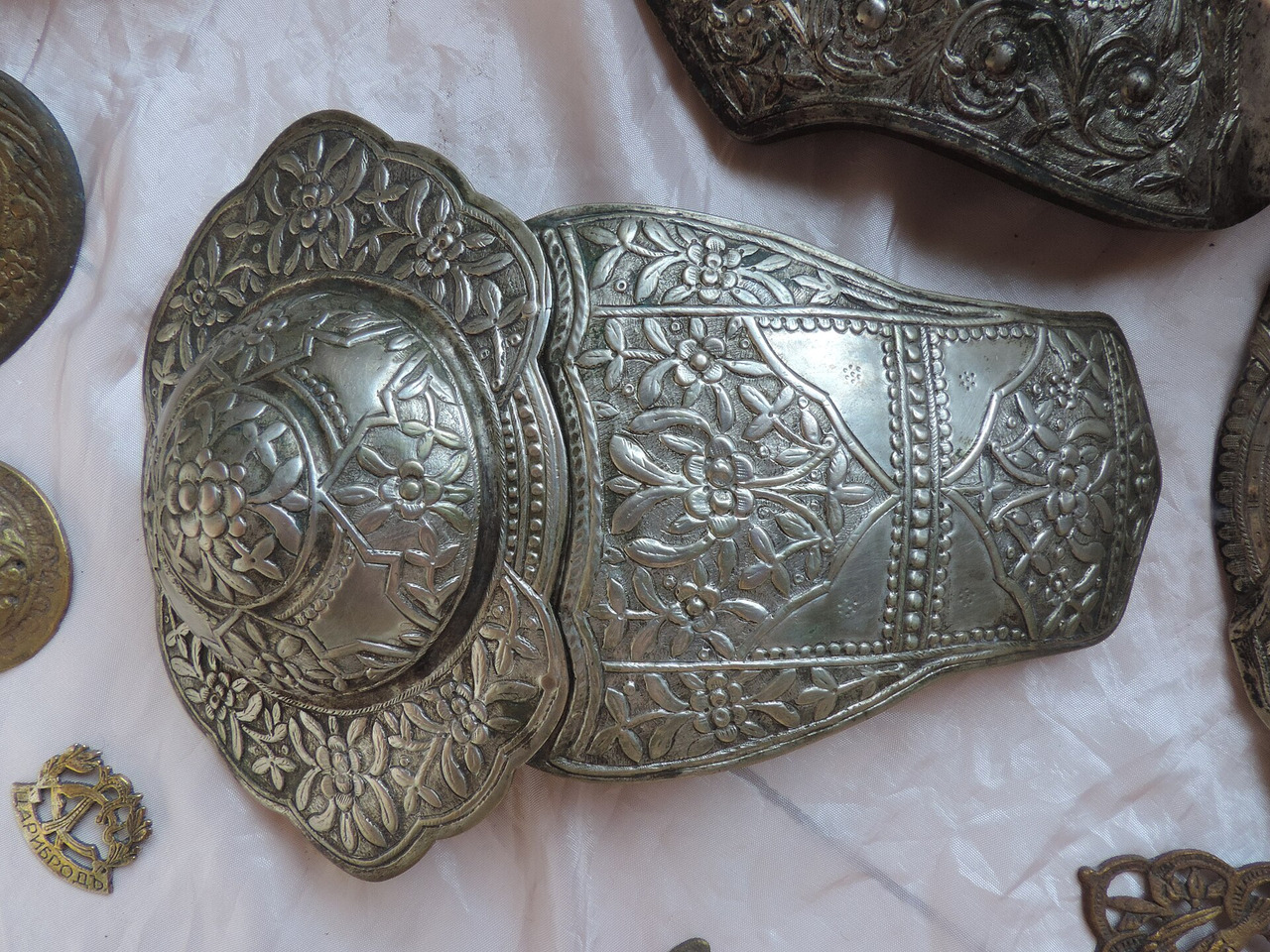
For a look at the town’s more recent cultural life, check what’s on at the Metodi-Meta Petrov Gallery. Part of Dimitrovgrad’s Cultural Centre, the gallery is named after a local artist and cartoonist. If there’s an exhibition on, it makes a good addition to a walk through town.
The Jerma Gorge and Poganovo Monastery
The scenery changes as the road to Poganovo approaches the Jerma River. The valley narrows between Greben and Vlaška Mountain, and steep limestone cliffs rise above the water. One of the most striking parts of the reserve is Vlaško Ždrelo, near the village of Vlasi, where you can see how narrow a passage the river carved between the rock walls.
The main stop is Poganovo Monastery, dedicated to St John the Theologian. It was built on the left bank of the Jerma in the late 14th century, and the church was painted in the late 15th century. Give your eyes a moment to adjust when you step inside, then take a closer look at the frescoes. Outside, pause to see how the monastery sits between the river and the cliffs.
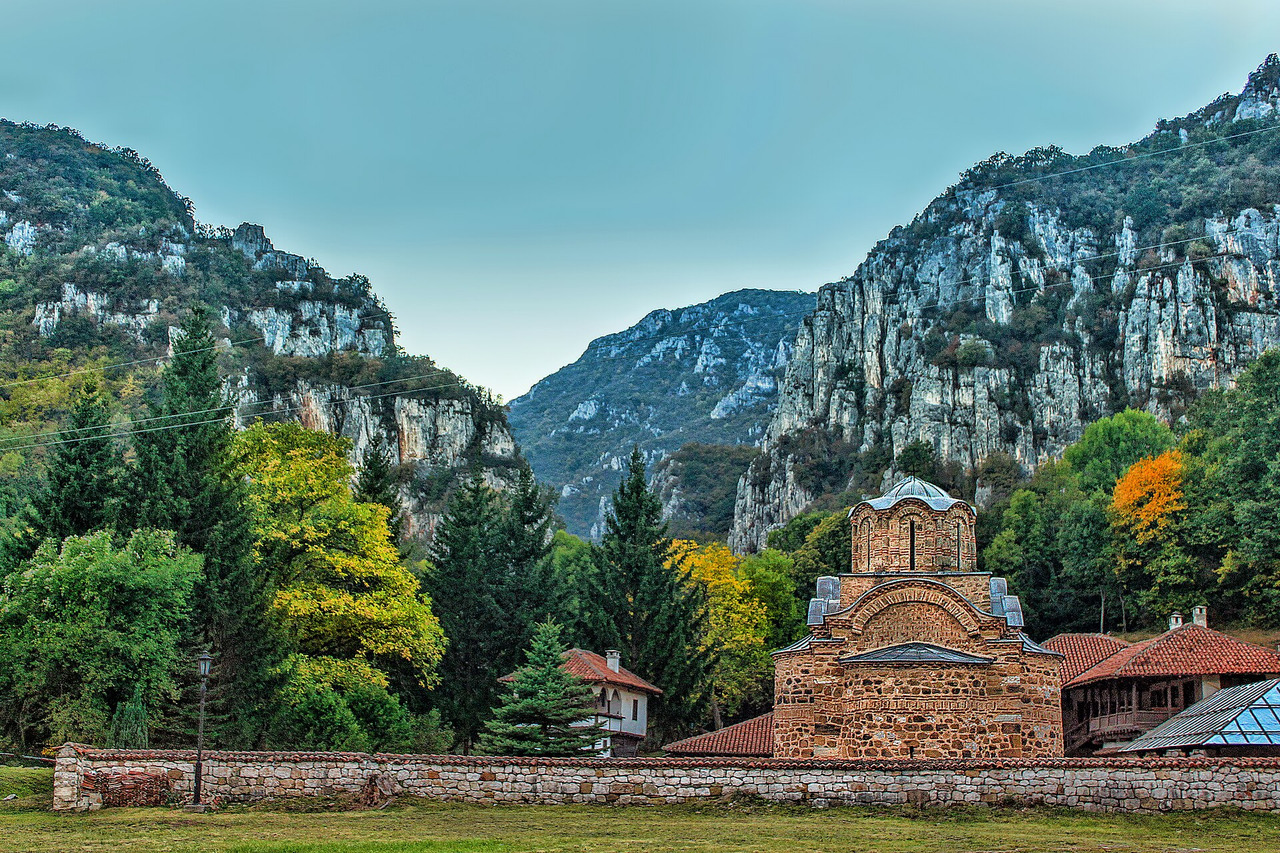
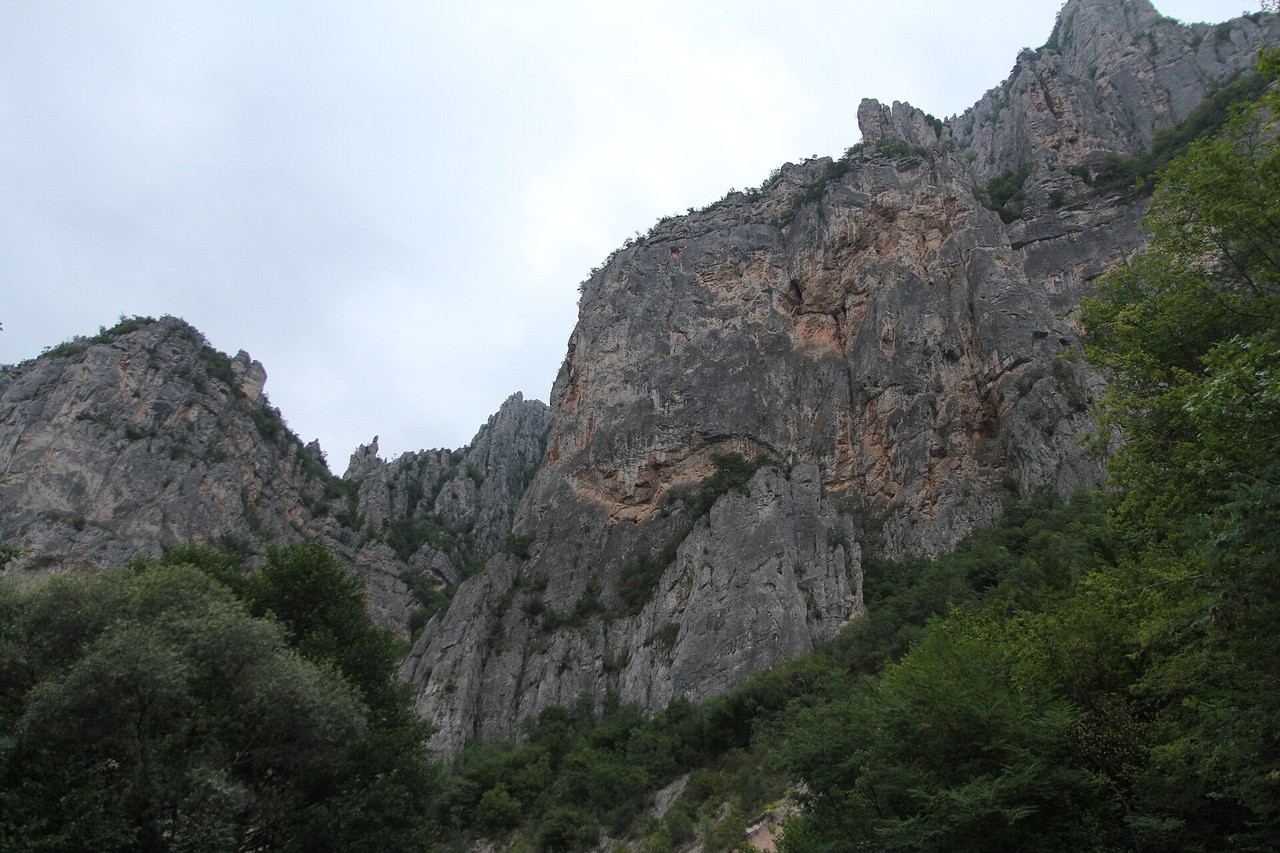
For a first visit, spend the morning in Dimitrovgrad, head to the monastery and then continue through the valley towards Vlasi and Vlaško Ždrelo. In November, set out early enough to see the gorge in daylight. If you’re staying in the area longer, save the Smilovska Lakes for a separate outing.
Caribrod’s šušenica and a November festival for local food
In Caribrod’s traditional smokehouses, šušenica is made from pork leg smoked over beechwood. It’s a detail worth remembering when you try it for the first time. At the festival, taste a thin slice from a few different producers and ask how long they smoke the meat and how they know when it’s ready.
The tenth Caribrod Šušenica Festival takes place on 14 and 15 November 2026 at the Park Sports Centre and on Balkanska Street. Admission is free, and the stalls feature local meat and dairy products as well as fruit and vegetable preserves. Saturday’s programme includes a competition for the best šušenica.
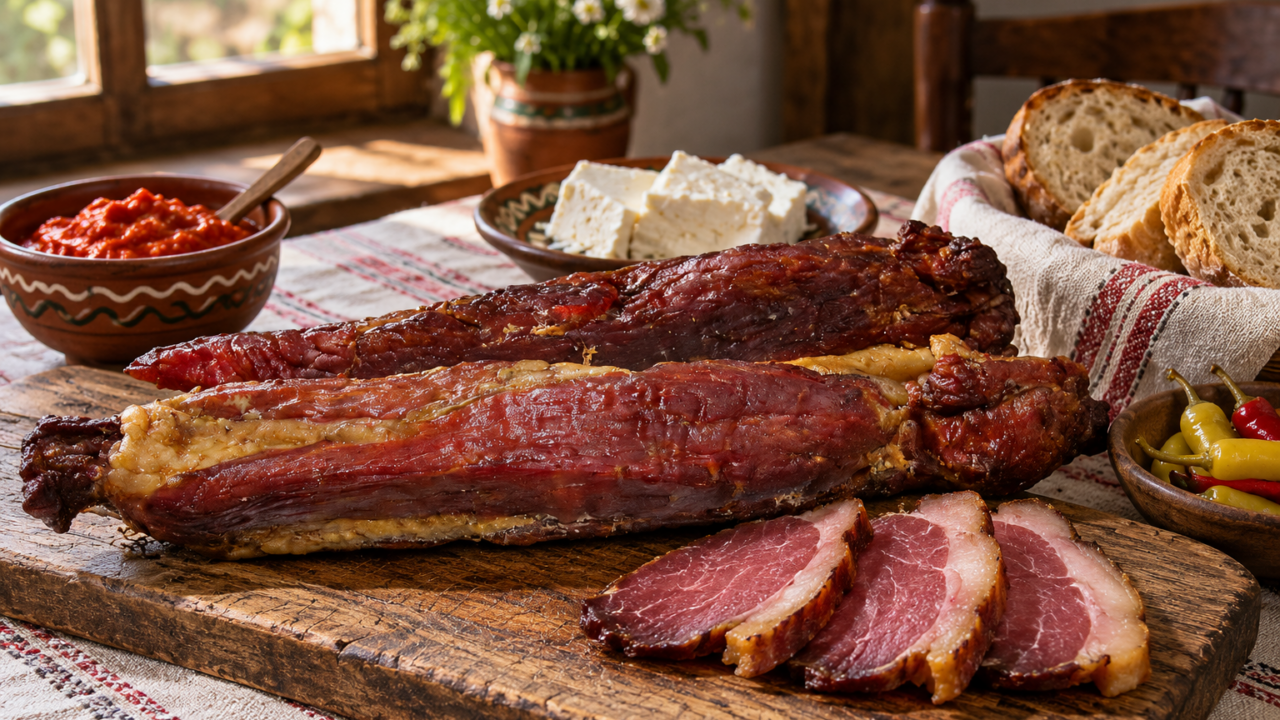
If you’re coming for the festival, pair a browse around the stalls with a walk to Strošena Česma and the old quarter. If you also want to see the Jerma Gorge that day, go earlier and return to town for the later part of the programme.
If you have another day, stop in Pirot
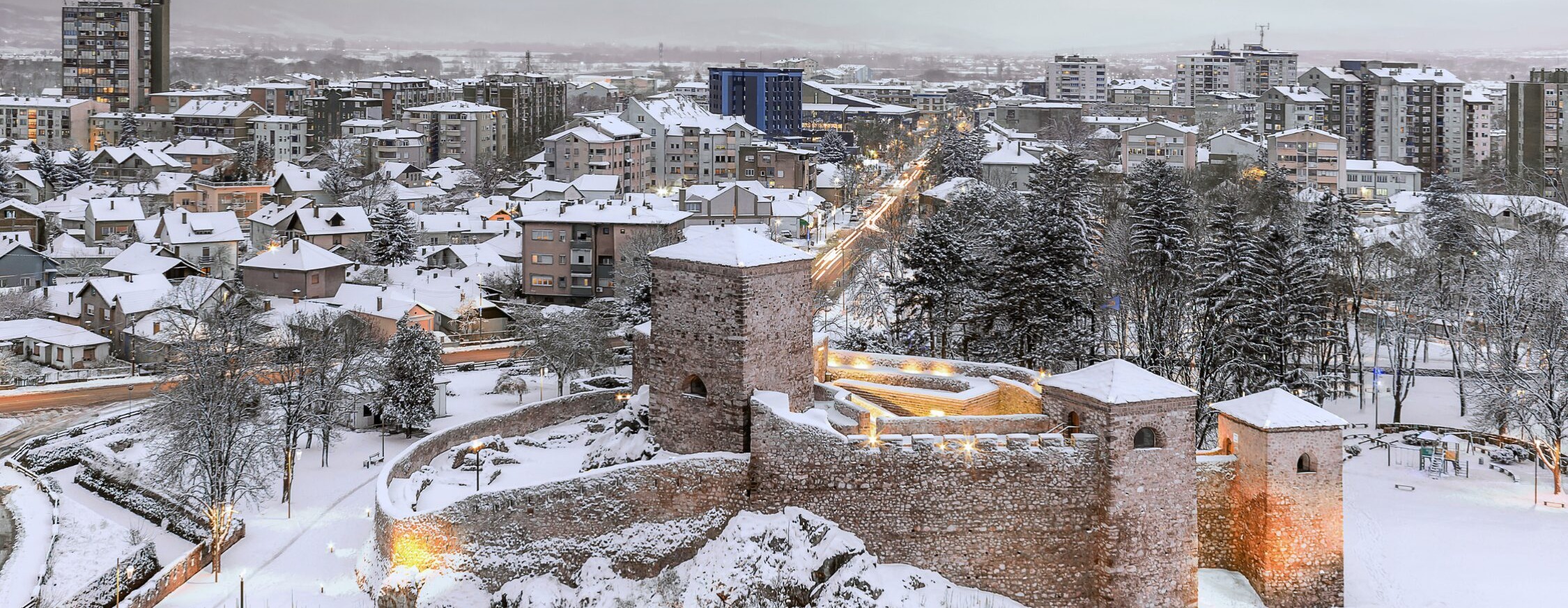
If you’re heading back towards Niš from Dimitrovgrad, Pirot makes a natural next stop. Start at Kale Fortress, also known as Momčilov Grad, then make your way to the Nišava riverfront. The river separates Pazar and Tijabara, two parts of town you can explore in a single walk.
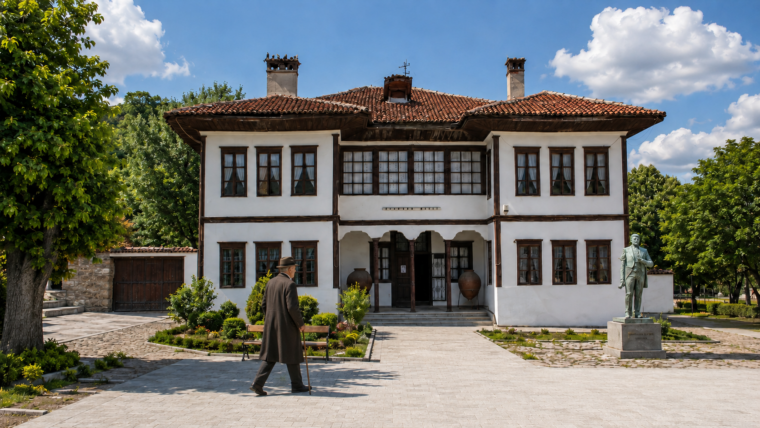
In Tijabara, make time for Mali Rista’s House, home to the Museum of Ponišavlje. Once the residence of merchant Hrista Jovanović, the house is a place to see how a 19th-century Pirot home was furnished, from its traditional sitting area and carved woodwork to the local woven rugs. If you’re more interested in archaeology, the museum has a separate exhibition near the fortress. Arrange Sunday visits in advance.
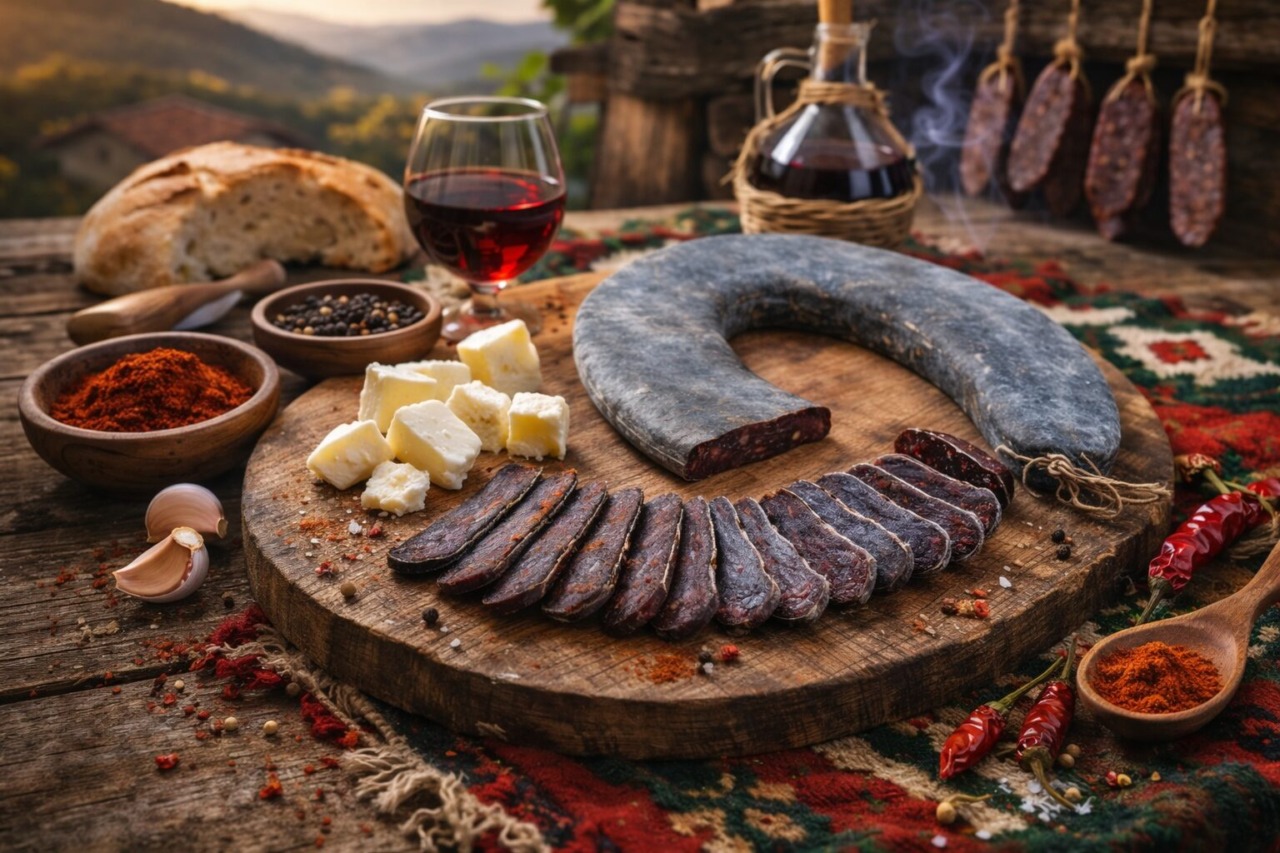
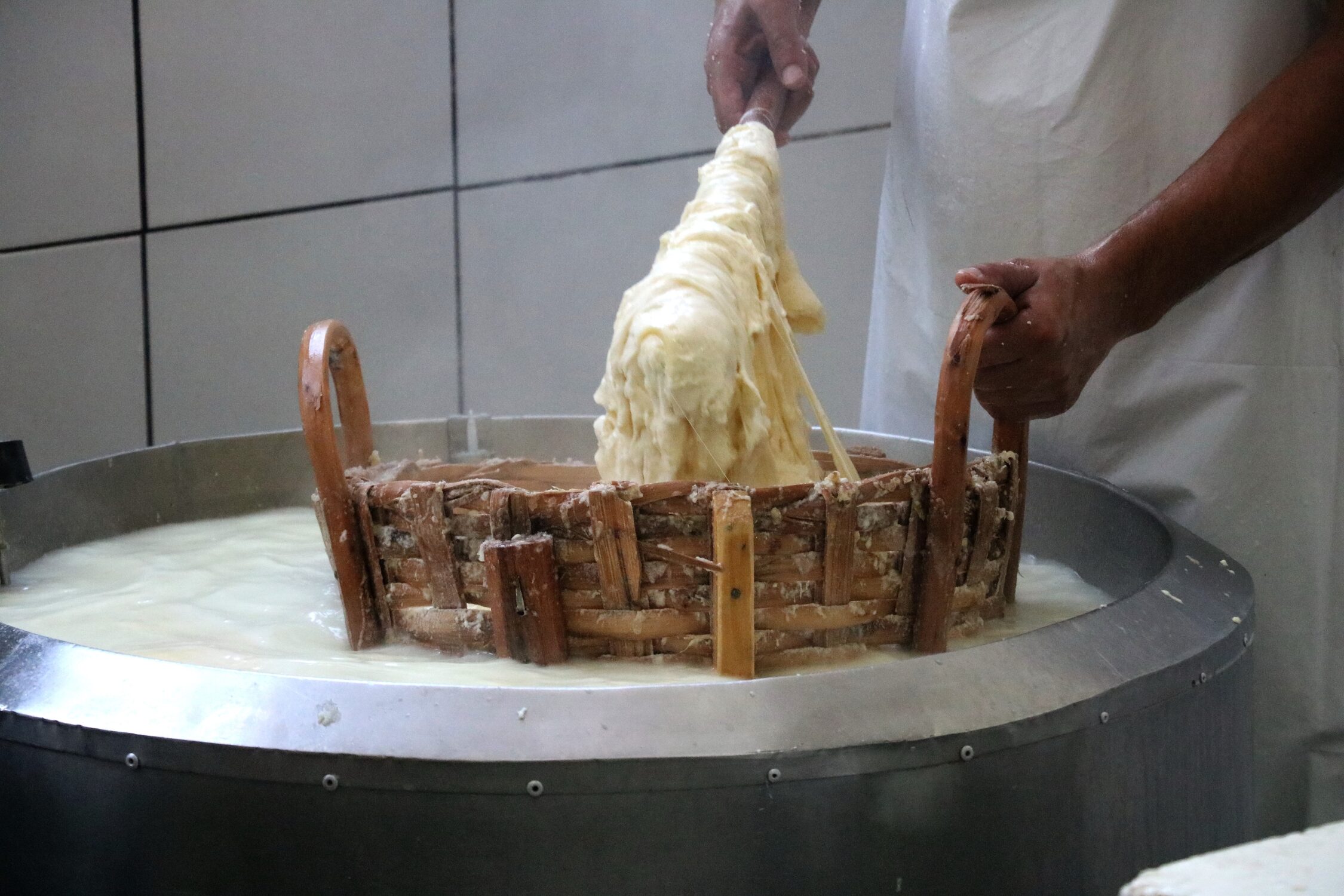
Leave time for lunch or stop at a dairy shop for Pirotski kačkavalj. If there are both young and aged varieties, try them side by side. Another local speciality is Pirot’s peglana kobasica, a sausage shaped by hand as it cures, giving it its distinctive flattened appearance.
Serbia.com recommends
Handpicked places, stays and experiences to make your journey through Serbia even more memorable.
Plan your visit
Everything you need to plan your perfect trip.
Related Articles