

-
Serbia at a Glance
Discover All -
Arts & Culture
Discover All -
Identity & Heritage
Discover All -
Famous Serbs
Discover All
-
Regions
Discover All -
Cities
Discover All -
Nature
Discover All -
Cultural Landmarks
Discover All
-
Outdoor & Wellness
Discover All -
Food & Drink
Discover All -
Tours
Discover All -
Urban Experiences
Discover All -
Seasonal Experiences
Discover All
Partner with Serbia.com
Let's create lasting impact together
Partner with Serbia.com to reach travellers through trusted recommendations, inspiring editorial stories and thoughtfully designed campaigns. Together, we create meaningful visibility that supports your goals and remains valuable long after publication.
Explore partnership opportunities- Serbian Favorite Rituals Everyday traditions and little things that make life in Serbia special.
- Villages of Serbia Charming villages, local stories and authentic rural life.
- Serbia Told By You Personal stories, local perspectives and authentic experiences from across Serbia.
- Is it Worth Visiting in Serbia? Honest destination guides to help you decide which places are worth visiting.
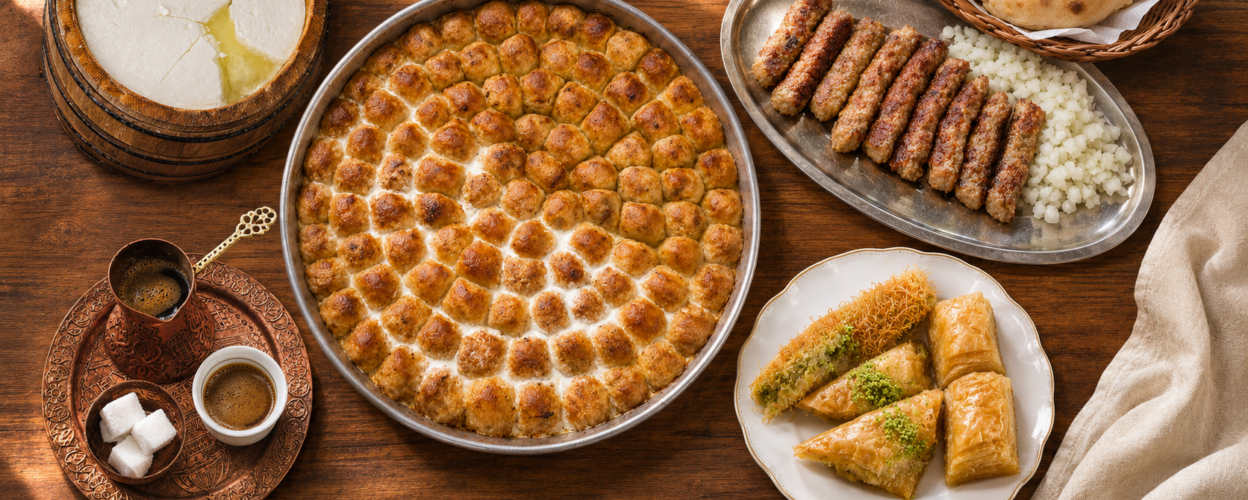
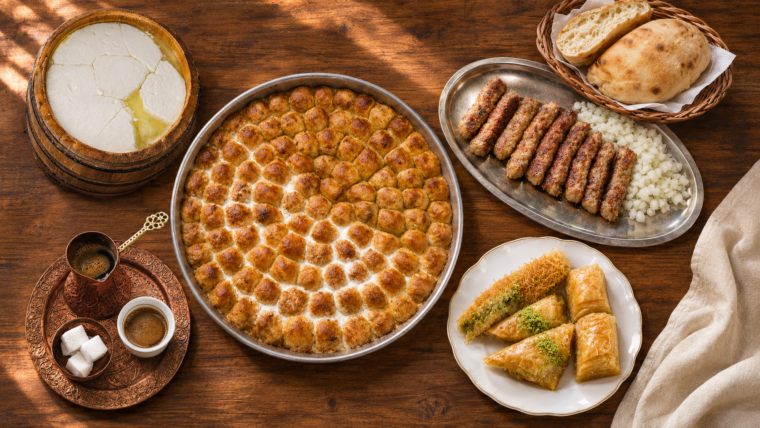
In Novi Pazar, the day can begin with mantije and cultured milk and end with baklava and coffee brewed over embers. In Sjenica, it’s worth tasting two distinct local cheeses, while the Pešter Plateau is the place to look for jardum, lamb and buckwheat bread. This food guide follows the flavours of southwestern Serbia, from town bakeries to farmhouse tables on the plateau.
Come to Novi Pazar hungry and leave plenty of time between meals. Mantije make a substantial breakfast, but by lunchtime there’s already a decision to make between pazarski ćevapi and a slow-cooked dish from an aščinica. And just when you think you’ve had enough, there’s one more question: baklava or tulumba with your coffee? In Sjenica, the choice is different. Try both the sheep’s and cow’s milk cheeses, then decide which one to bring home.
Novi Pazar: Breakfast from the Baking Tray
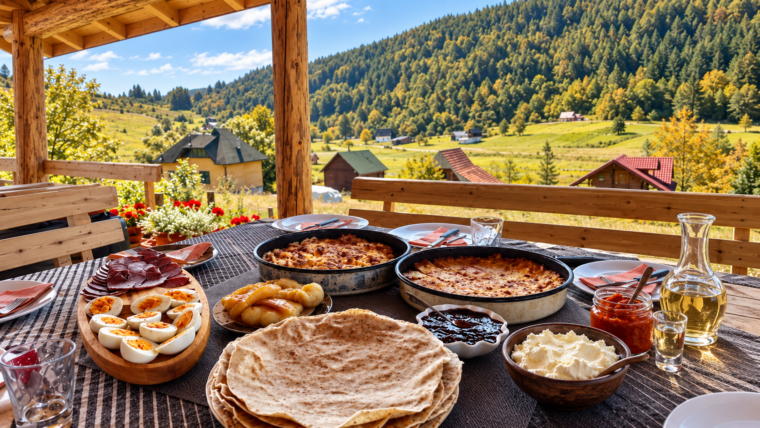
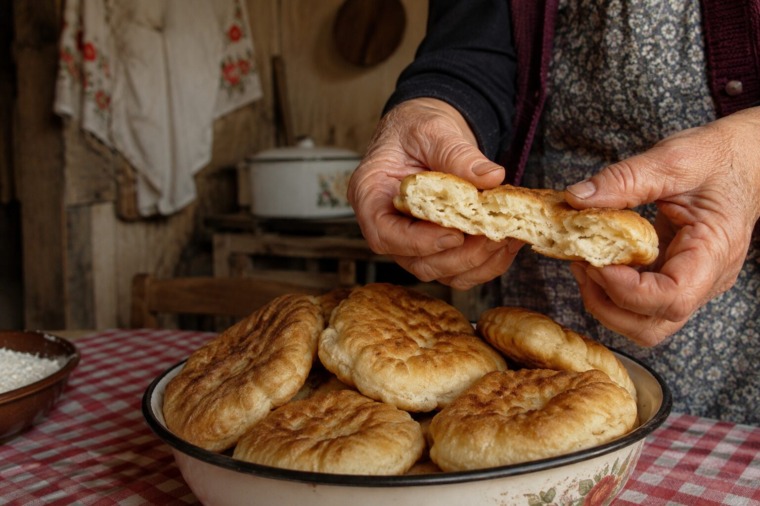
Mantije are small parcels of thin pastry filled with meat. Each one is shaped by hand, packed snugly into a baking tray and baked until golden on top. They’re best eaten warm, with a spoonful of kiselo mleko, a tangy cultured milk that balances the rich filling and crisp pastry.
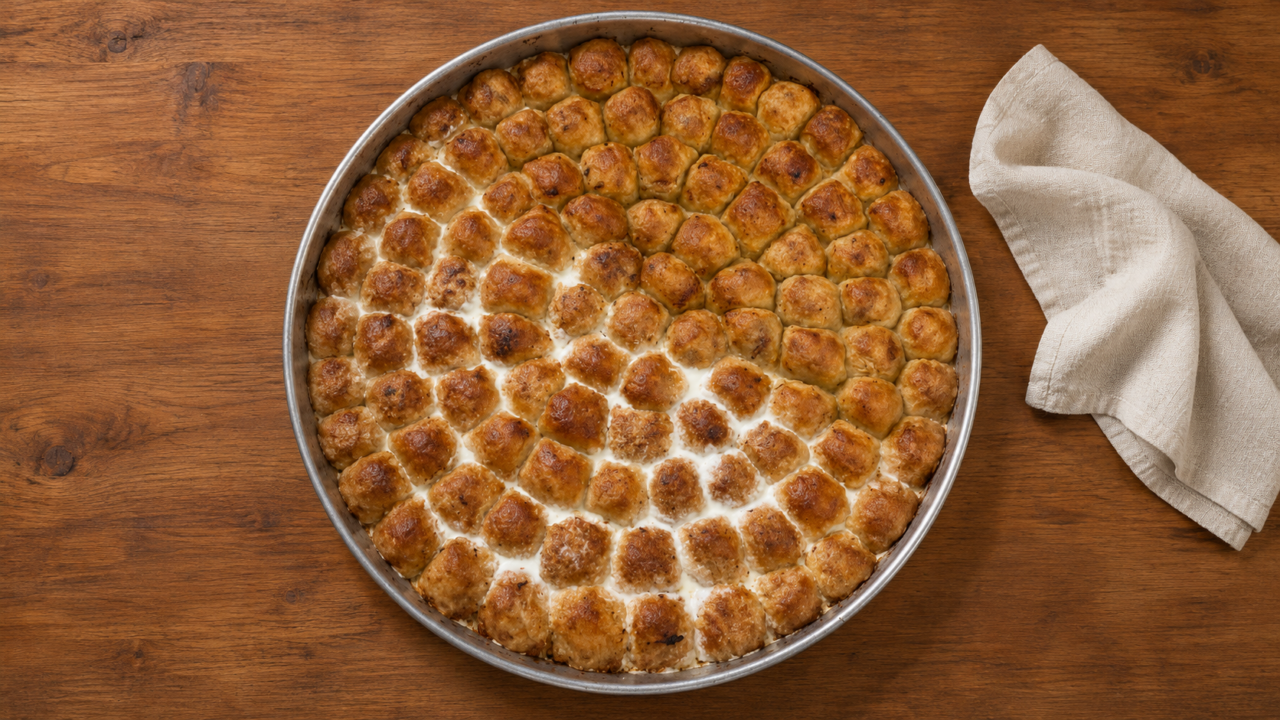
In and around Novi Pazar, mantije are part of everyday meals as well as important family gatherings. Their traditional method of preparation is listed in Serbia’s National Register of Intangible Cultural Heritage. If you’re trying them for the first time, order a small portion and see whether the bakery also has zeljanica, a savoury greens pie, or another freshly baked pie. Trying a little of each is a good way to see how shaping and layering the dough changes the texture.
Ćevapi or Lunch at an Aščinica?
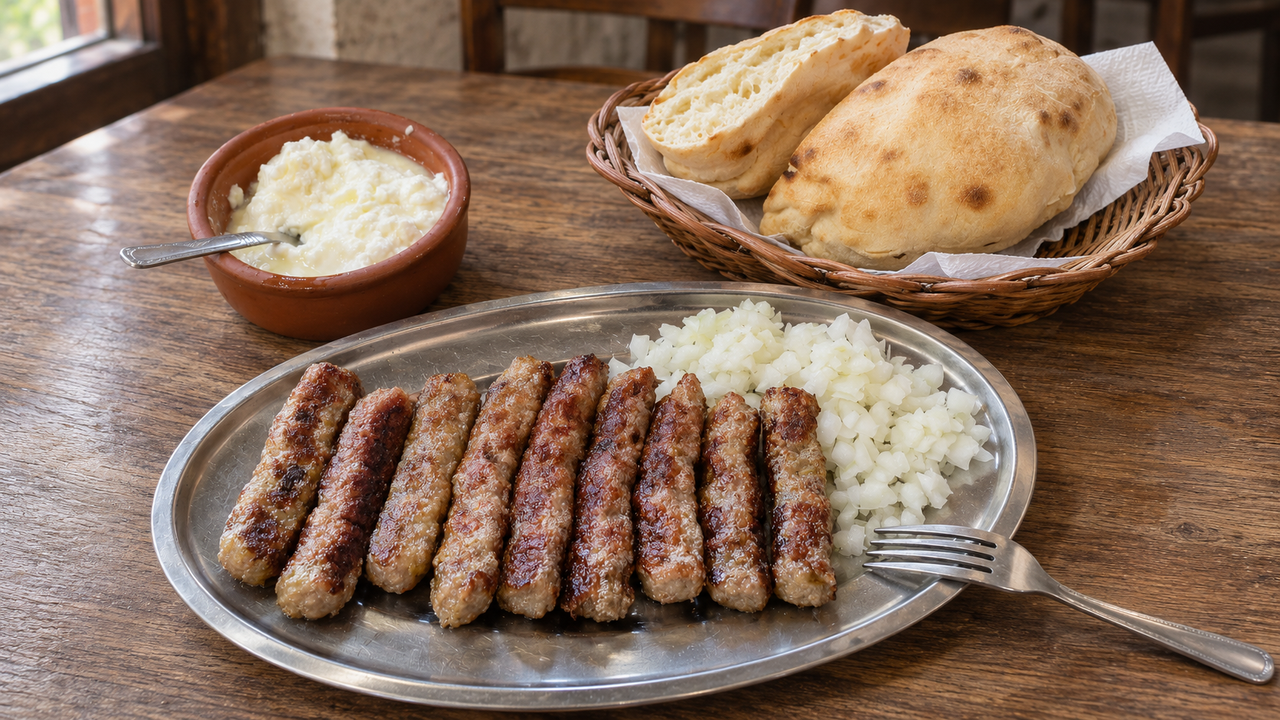
Novi Pazar’s ćevapi, small rolls of grilled minced meat, are reason enough to sit down at a local ćevabdžinica. Order them in somun, a soft flatbread, with chopped onion and try a bite with a little of everything. The bread soaks up the juices from the grill, while the fresh onion cuts through the richness. If you’re travelling with friends, share a portion and leave room to try another kind of lunch.
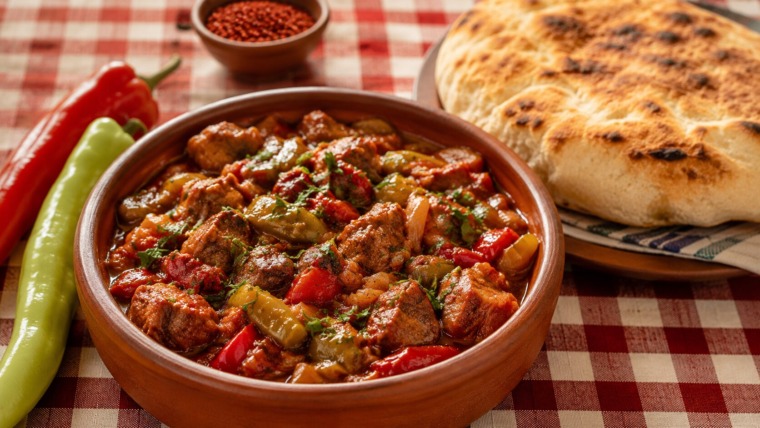
An aščinica is a traditional eatery where the best place to start is by asking what’s cooking. Find out which dishes have just come off the stove and what’s served alongside them. The selection varies by kitchen and by day, so What’s cooking today? is often more useful than arriving with a dish in mind. If you have two days in Novi Pazar, there’s time for both lunches. On a shorter visit, go for ćevapi if you’re in the mood for the grill, or sit down at an aščinica to see what’s on the table when lunch is cooked in a pot.
Baklava, Tulumbe and Coffee Brewed over Embers
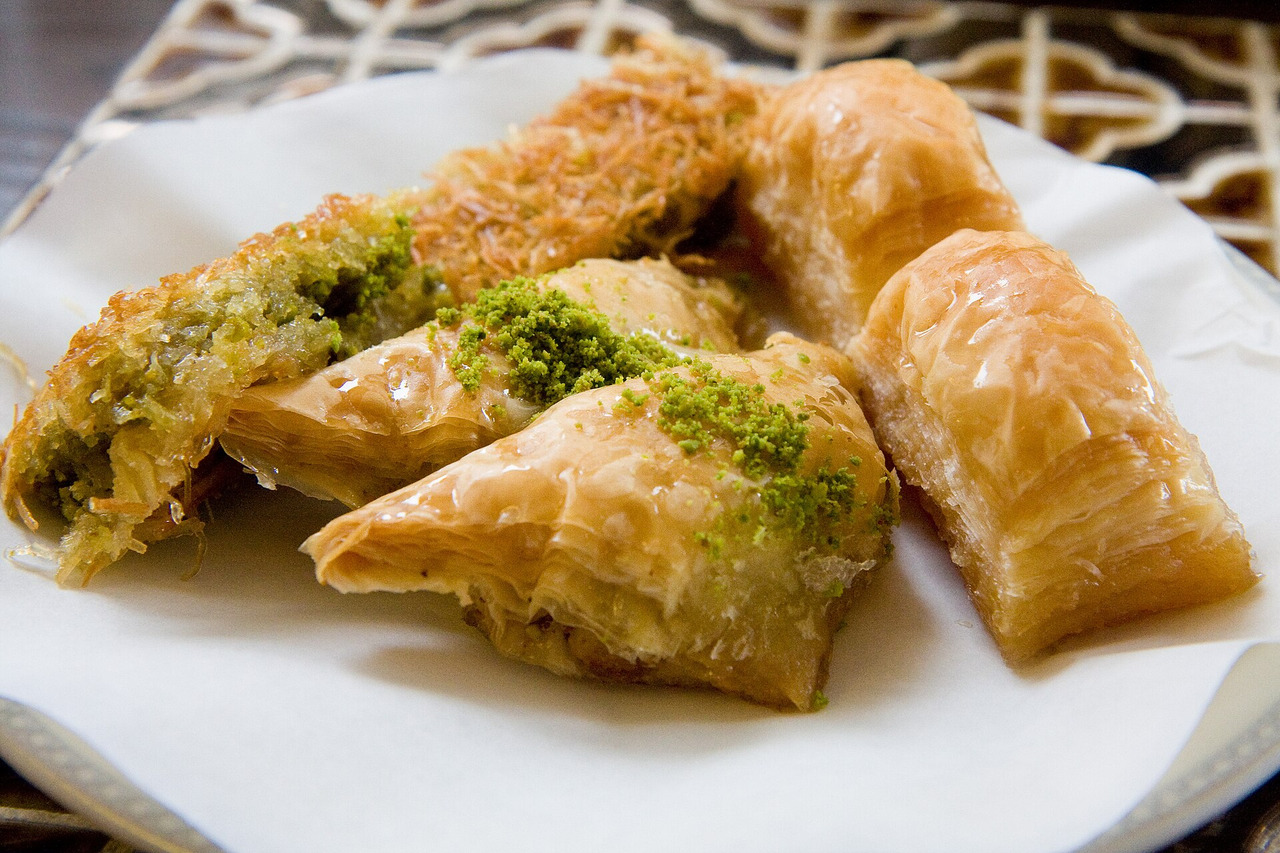
At the pastry shop, order a few different sweets to share. Baklava is rich and layered, and some Novi Pazar pastry shops make pistachio versions. Tulumbe are fried pastries soaked in syrup, with a firmer exterior and a soft, syrupy centre. Hurmašice, also known as urmašice, are shaped and baked before being drenched in syrup. If you spot tufahije in the day’s selection, try those too. A poached apple filled with walnuts makes a change after all that pastry.
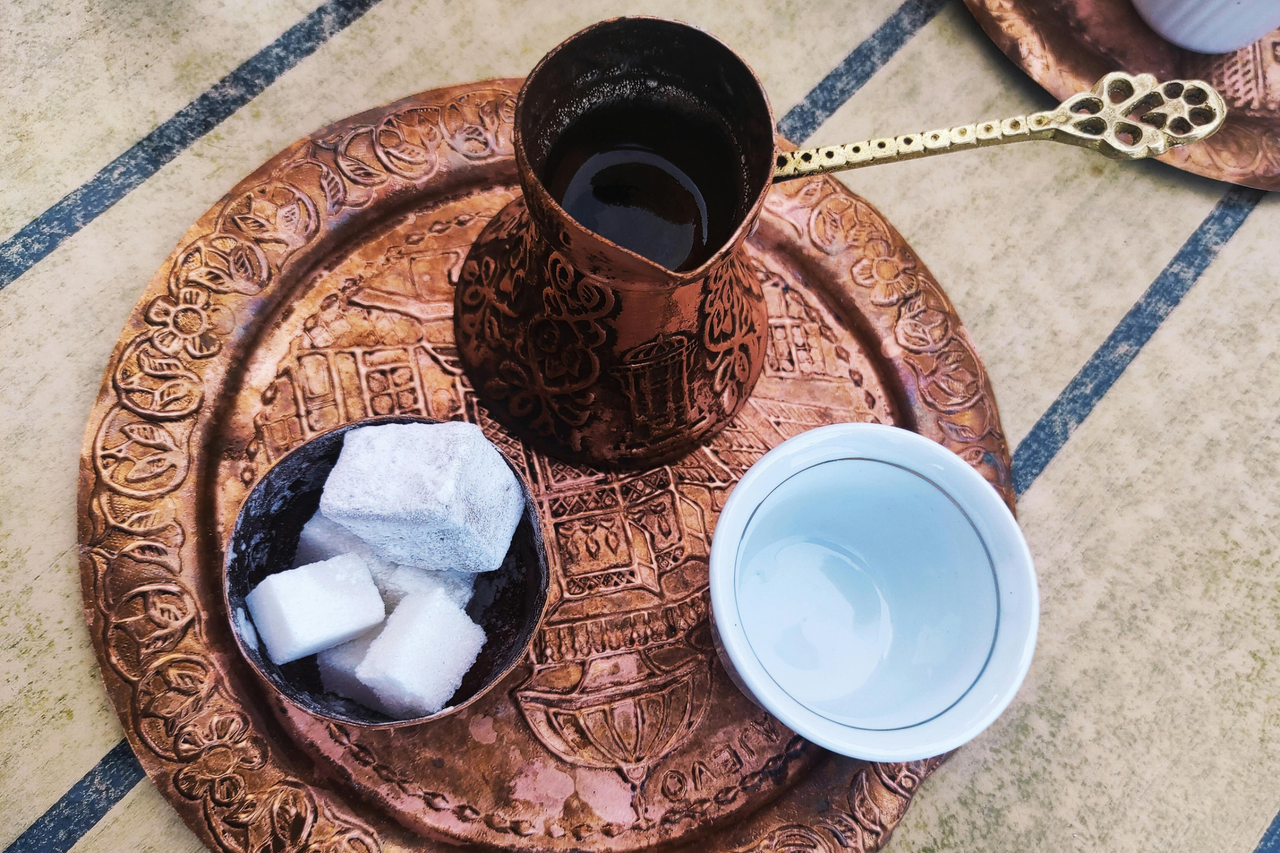
Order coffee brewed over embers with something sweet, or look for boza, a mildly fermented grain drink, when you stop again. Local food tours also feature đulsija, a rose drink, and malinada, a raspberry drink. Between lunch and dessert, take a walk through the old bazaar and stop at the Small Town Market (Mala gradska pijaca). It’s a good place to ask sellers where their products come from and what’s in season.
Sjenica: Two Cheeses to Taste Side by Side
The name Sjenica cheese covers two products with separately registered designations of origin: Sjenica sheep’s milk cheese and Sjenica cow’s milk cheese. Both are white cheeses matured in brine. The sheep’s milk cheese tends to have a fuller, more pronounced flavour, while the cow’s milk cheese is generally milder. Try them side by side with plain bread before ordering anything else.
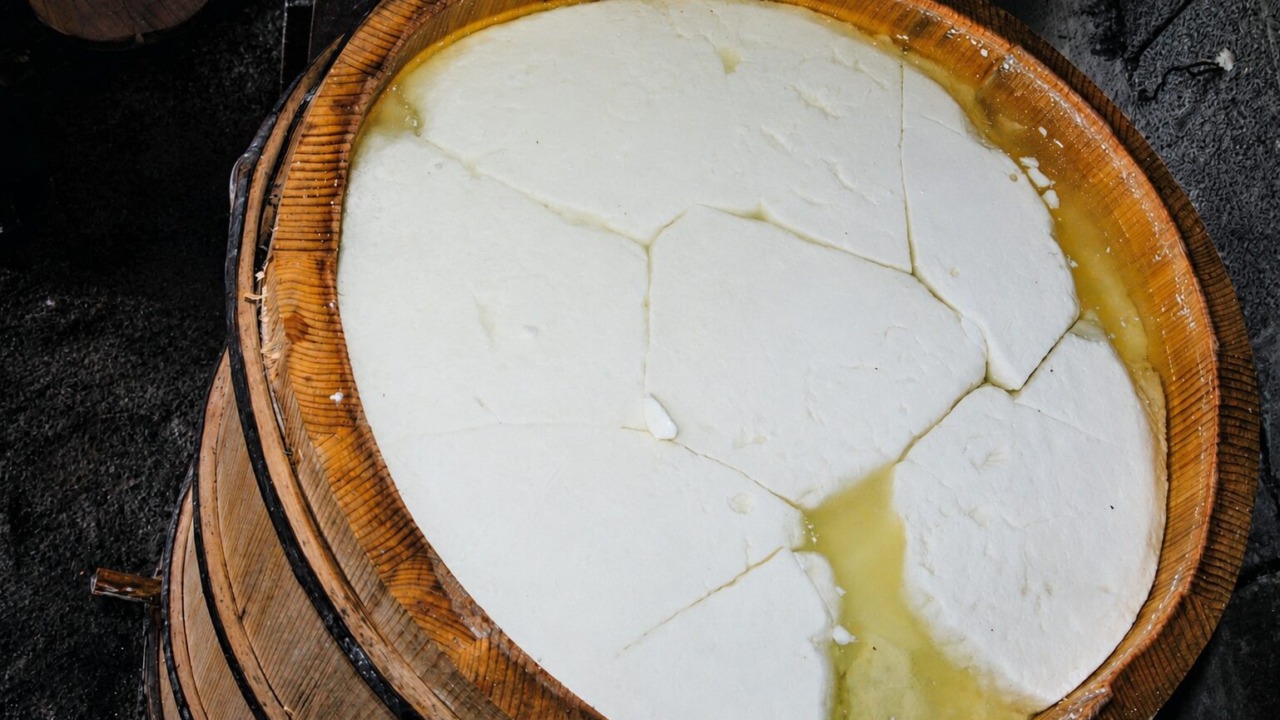
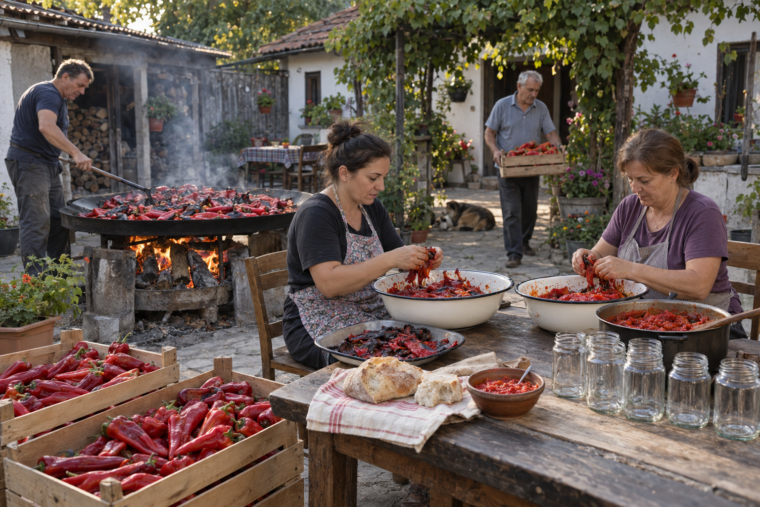
In Sjenica, look beyond the cheese counter. Young kajmak, a rich dairy spread, and Sjenica butter are easy to try on a slice of bread. Peppers in cream go well with a savoury pie or meat, and some producers also make cabbage in cream. On the Pešter Plateau, ask about jardum, a thick sheep’s milk speciality traditionally made by heating and stirring the milk. Ask local hosts whether they have it, especially if you’re extending your trip across the plateau towards Tutin.
Pešter Lamb, Sudžuk and Pies Worth Saving for Breakfast
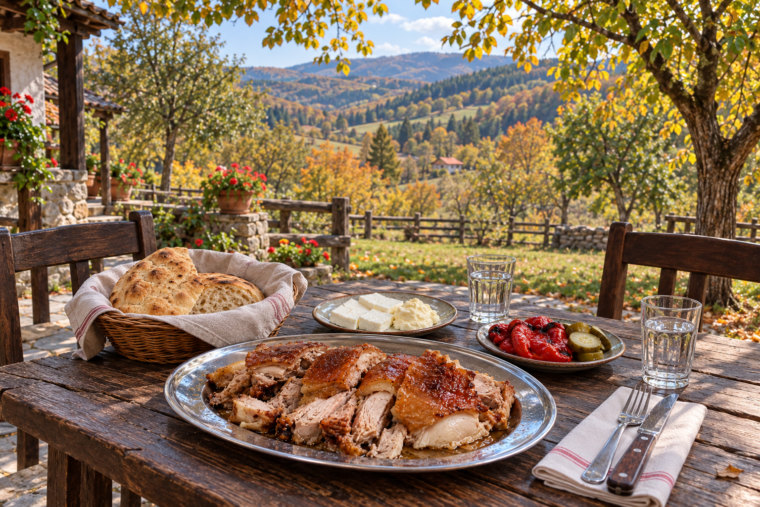
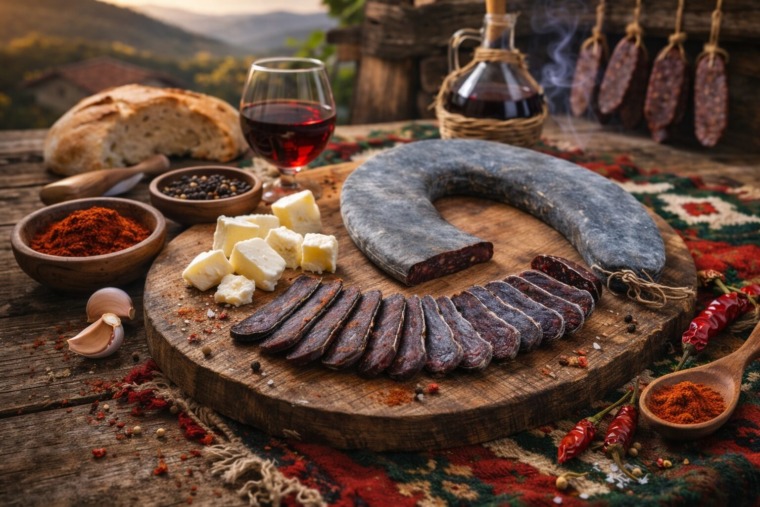
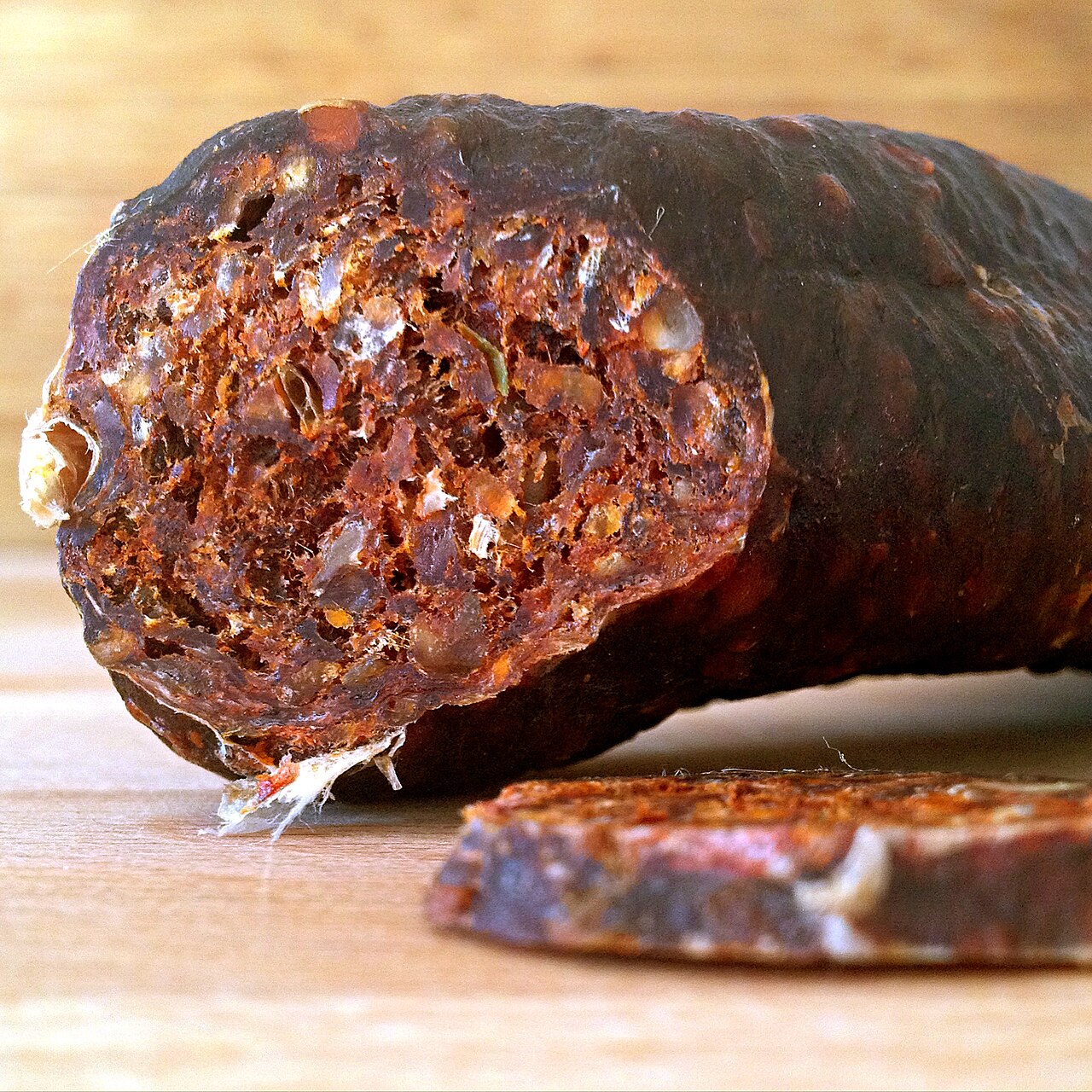
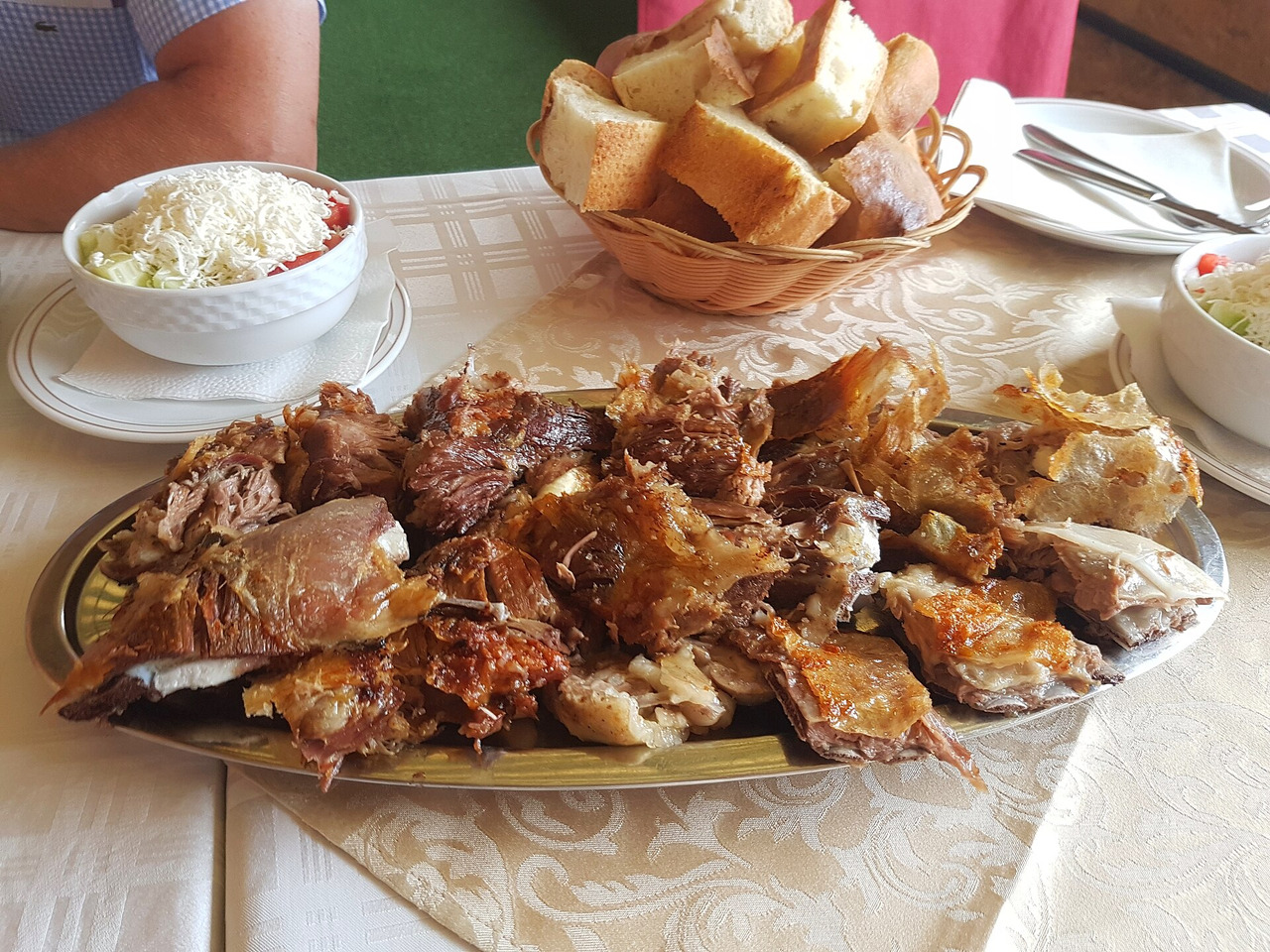
For lunch around Sjenica, look for Sjenica lamb, which also has a registered designation of origin. If you’re choosing a place especially for the lamb, ask where the meat comes from and how it’s being prepared that day. Among the cured meats, start with Sjenica sudžuk, a seasoned sausage, then ask local producers about stelja, cured sheep meat, or goveđa pršuta, dry-cured beef. If you’re buying some to take home, try a thin slice first and ask how best to store it for the journey.
Save some room for Sjenica’s savoury pies. You’ll recognise koturača by its spiral shape. Other local favourites include zeljanica, krompiruša or potato pie, and burek. At the bakery, ask what’s just come out of the oven. If you’re sitting down to breakfast at a farmhouse, try buckwheat bread with cheese, kajmak or local honey. A single breakfast table can hold several of the flavours that make the trip from Novi Pazar to Pešter worthwhile.
A Two-Day Food Trip Through Novi Pazar and Pešter
Spend the first day in Novi Pazar. Start with mantije and cultured milk, walk through the old bazaar and stop at the Small Town Market. Choose a ćevabdžinica or an aščinica for lunch, then finish the day at a pastry shop. If you’re travelling with friends, order a few different sweets and share them.
Spend the second day in Sjenica and on the Pešter Plateau. Start with a savoury pie or a tasting of both Sjenica cheeses, then leave time for a lamb lunch and a stop to buy directly from local producers. If you’d like to try jardum or have lunch at a farmhouse, arrange the visit before you set out. Bring home whatever you enjoyed most, whether it was sheep’s milk cheese, peppers in cream or a piece of sudžuk.
Serbia.com recommends
Handpicked places, stays and experiences to make your journey through Serbia even more memorable.
Plan your visit
Everything you need to plan your perfect trip.

Related Articles