
-
Serbia at a Glance
Discover All -
Arts & Culture
Discover All -
Identity & Heritage
Discover All -
Famous Serbs
Discover All
-
Regions
Discover All -
Cities
Discover All -
Nature
Discover All -
Cultural Landmarks
Discover All
-
Outdoor & Wellness
Discover All -
Food & Drink
Discover All -
Tours
Discover All -
Urban Experiences
Discover All -
Seasonal Experiences
Discover All
Partner with Serbia.com
Let's create lasting impact together
Partner with Serbia.com to reach travellers through trusted recommendations, inspiring editorial stories and thoughtfully designed campaigns. Together, we create meaningful visibility that supports your goals and remains valuable long after publication.
Explore partnership opportunities- Serbian Favorite Rituals Everyday traditions and little things that make life in Serbia special.
- Villages of Serbia Charming villages, local stories and authentic rural life.
- Serbia Told By You Personal stories, local perspectives and authentic experiences from across Serbia.
- Is it Worth Visiting in Serbia? Honest destination guides to help you decide which places are worth visiting.
Before autumn colours the forests and vineyards, another sign of the changing season appears across Serbia. It drifts over garden fences, fills apartment courtyards and follows shoppers home from the market: the unmistakable scent of red peppers roasting for ajvar.
There is a moment every September when Serbia begins to smell different.
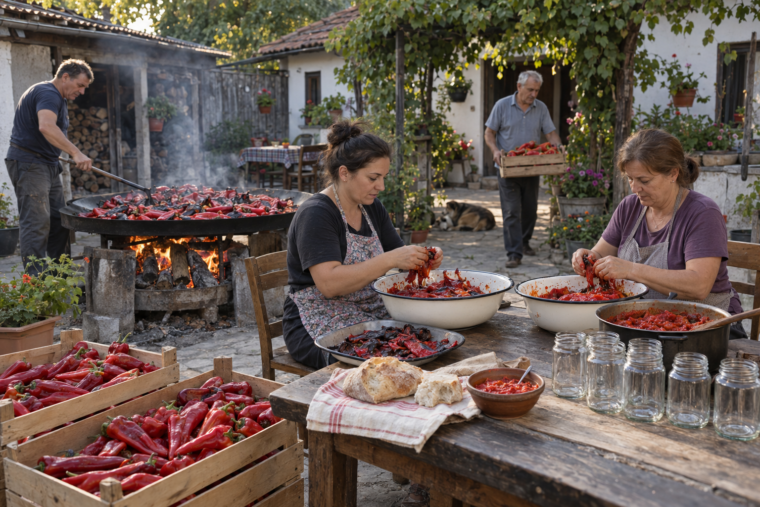
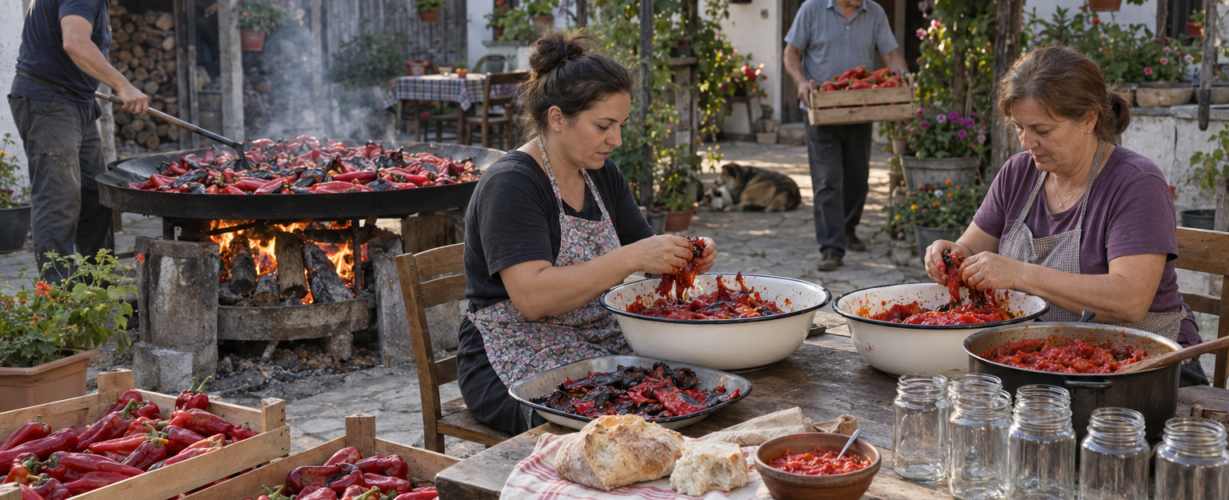
It may reach you while walking through a residential neighbourhood, passing an open gate or visiting a village at the end of summer. The aroma is sweet, smoky and slightly charred. Somewhere nearby, peppers are blistering on a metal plate over a wood fire. Crates of deep-red fruit wait their turn, bowls are being prepared for peeling, and glass jars stand clean and ready on a kitchen table.
For visitors, the scent may be unexpected. For many people in Serbia, it is one of the most familiar markers of the year.
This is the season of zimnica – the broad local tradition of preserving summer and autumn produce for the colder months. Jars are filled with roasted peppers, pickled vegetables, tomato juice, plum jam and countless household variations. Yet few preparations are as eagerly anticipated, or as fiercely discussed, as ajvar.
More than a red pepper spread, ajvar is a lesson in how food can hold memory, geography and family ritual in a single jar.
The September Ritual
The work begins at the market. By late August and early September, market stalls across Serbia turn red. Piles of ripe peppers appear in quantities that would seem excessive if they were intended only for lunch. Buyers inspect their colour, weight and firmness, searching for fleshy fruit that will roast well and yield enough pulp after the skins and seeds are removed.
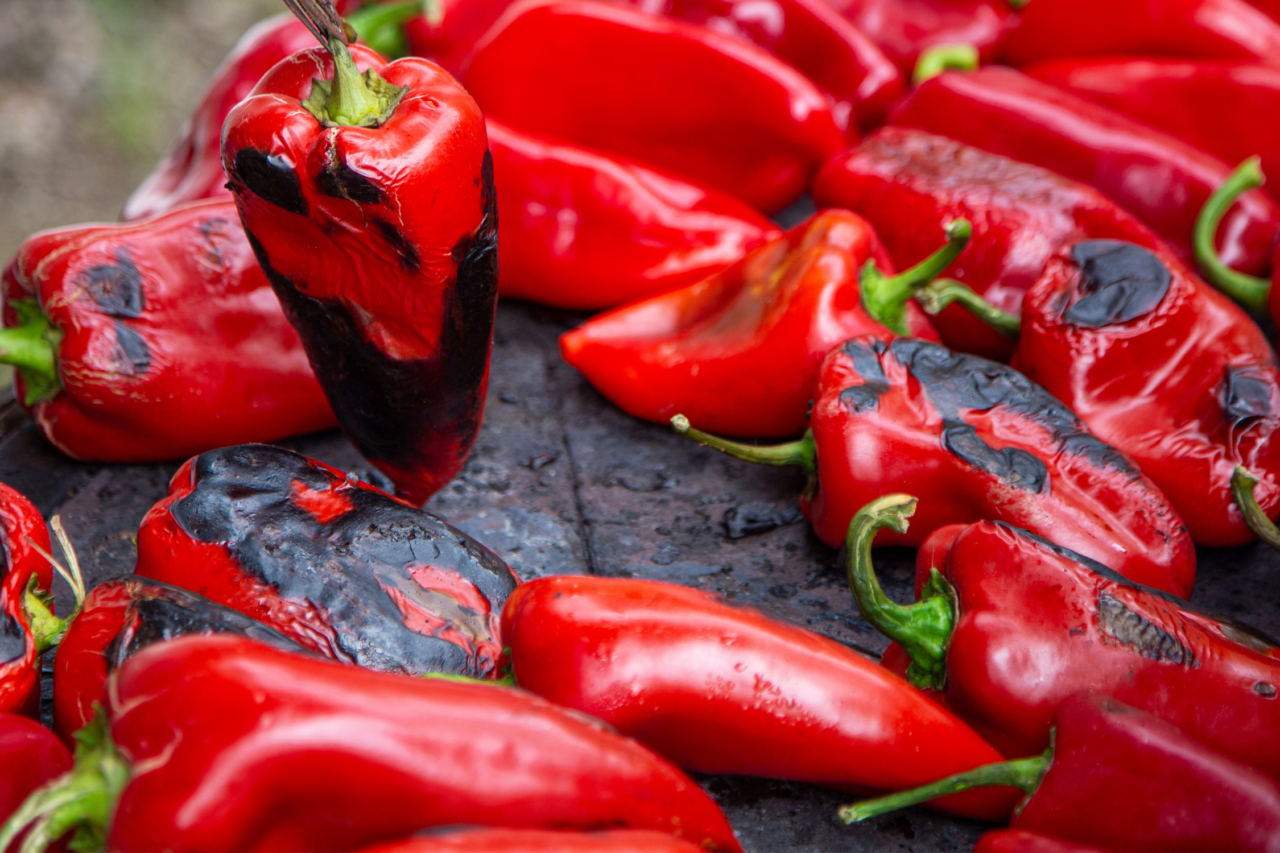
Kurtovka – often called kurtovska kapija – is particularly valued for ajvar. Its long, flattened red fruits are sweet, meaty and relatively easy to peel after roasting. Serbia’s national tourism organisation describes it as the preferred variety for the country’s best-known pepper preserve.
The peppers are rarely purchased one or two kilograms at a time. They leave the market in sacks, crates or the boots of cars. The scale reveals something essential about zimnica: this is not spontaneous cooking. It is a seasonal undertaking that requires planning, space and many hours of work.
Traditionally, peppers are roasted over a live fire on a broad metal surface. Their smooth red skins darken, crack and separate from the flesh beneath. The aim is not to burn the pepper itself, but to soften it and build the characteristic roasted aroma that an oven struggles to reproduce.
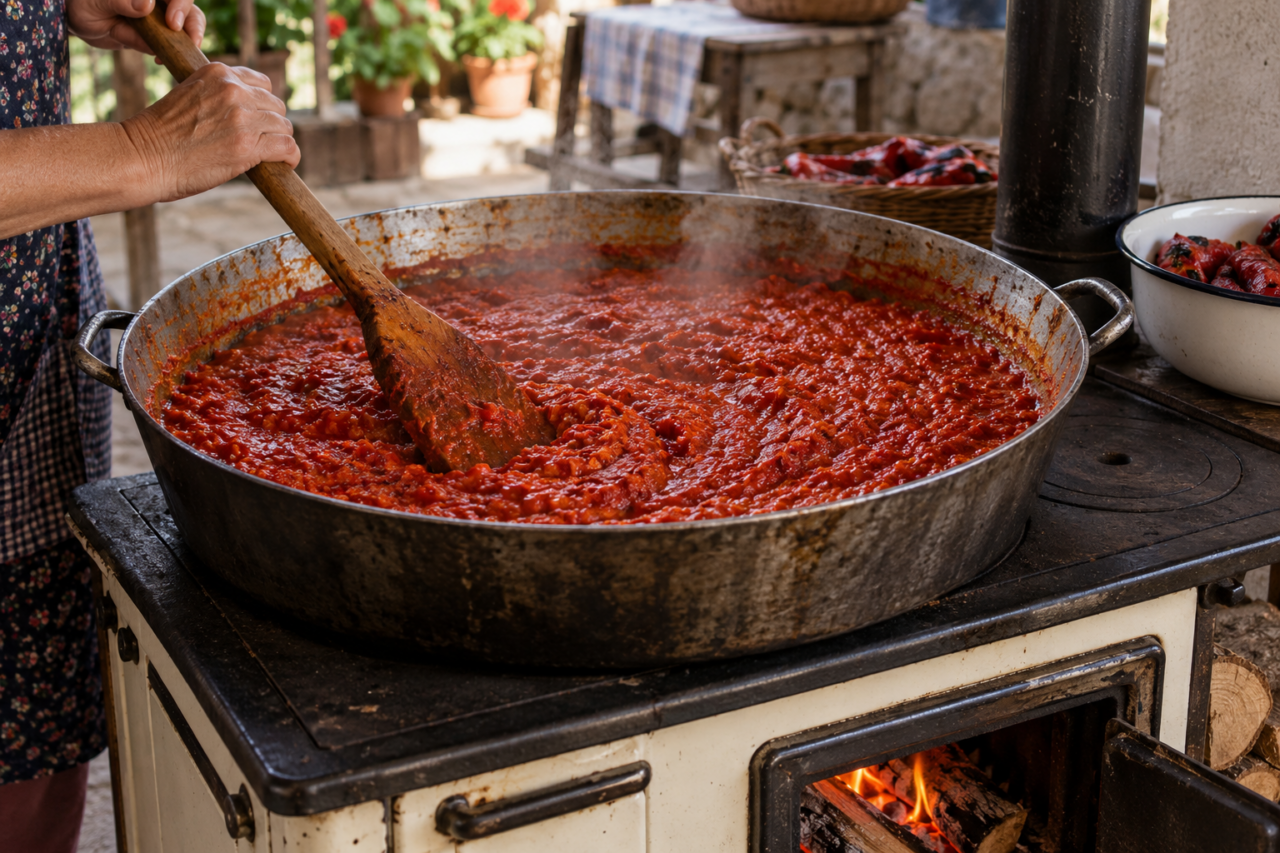
Once roasted, the peppers are covered and left to rest, making them easier to peel. Then comes the most patient part of the process. Every skin, stalk and cluster of seeds must be removed. The cleaned peppers are left to drain, sometimes overnight, before being ground or chopped and slowly cooked with oil and salt until the mixture becomes thick, glossy and intensely flavoured.
The finished ajvar is spooned while hot into prepared jars, sealed and stored for the months ahead. What looks simple on a plate is the result of an entire day – and often more – spent beside the fire and stove.
A Food Made Together
Ajvar is rarely remembered only for its taste. People remember who prepared it, where they were sitting and which job they were given.
One person watches the fire. Another turns the peppers. Several pairs of hands peel and clean them, often around a table where the conversation continues for hours. Someone washes the jars; someone else stirs the heavy pot. Children may be given smaller tasks, disappear to play and return when there is warm bread and the first spoonful to taste.
Every family organises the day differently, but the shared labour is part of the meaning. Ajvar demands attention that modern cooking usually tries to eliminate. It cannot be rushed without changing the result. The peppers need to be roasted properly, drained thoroughly and stirred long enough for excess liquid to disappear.
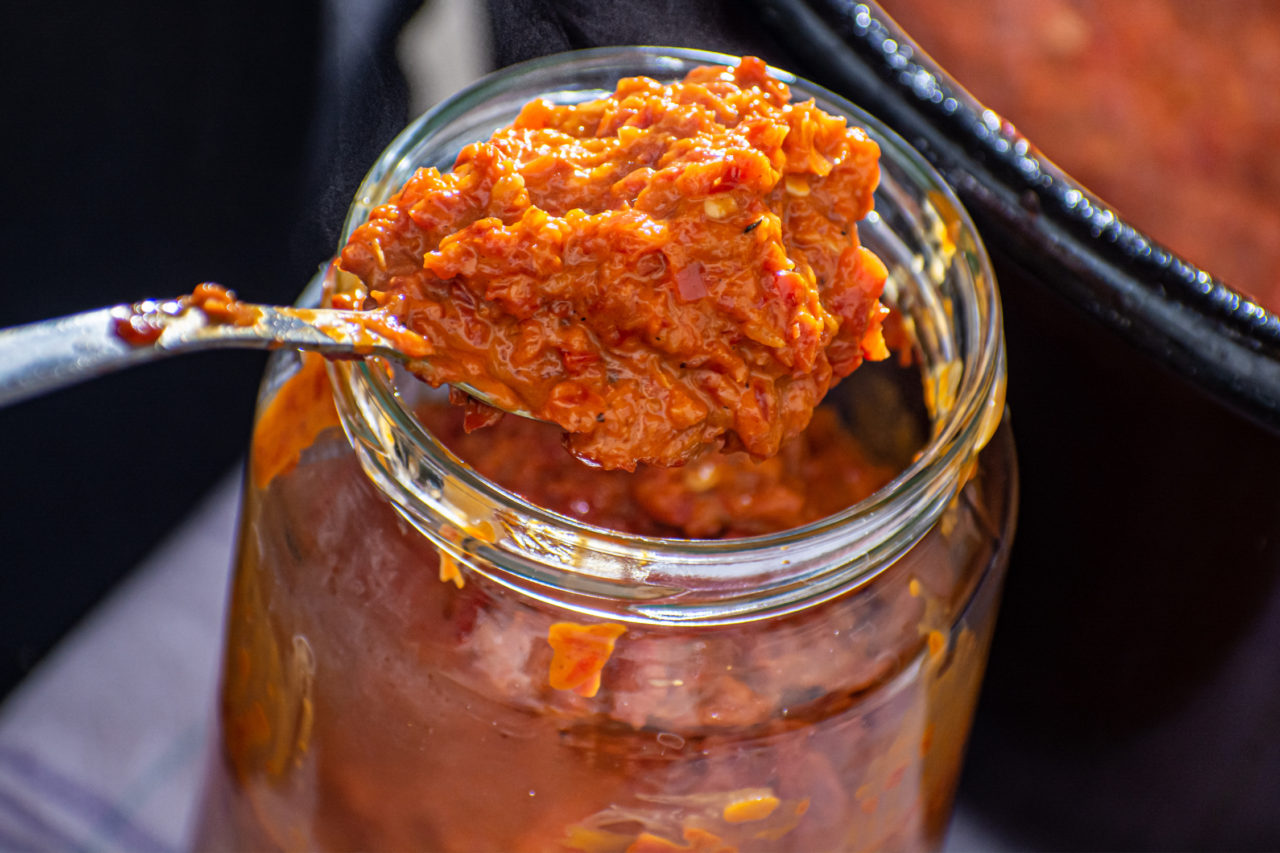
That slowness is also what turns preparation into an occasion. A practical task becomes a gathering, and a gathering becomes part of the family’s calendar. Even people who no longer make zimnica themselves can often recall the smoke in a grandparent’s courtyard or the pile of peppers waiting to be peeled.
The smoke has another side, of course. Preparing ajvar is hot, repetitive work. Fingers become sticky, clothes absorb the smell of the fire and the person stirring the pot cannot simply walk away. To romanticise the tradition without acknowledging the labour would miss half the story.
Perhaps this is why a jar of homemade ajvar is treated so differently from an ordinary condiment. It represents not only ingredients, but time given willingly – and usually shared with others.
There Is No Single Household Ajvar
Ask several Serbian families how ajvar should be made and the agreement may end after the first ingredient.
Everyone begins with ripe red peppers. After that, the rules become personal. Some households use nothing beyond peppers, oil, salt and perhaps a little vinegar. Others add aubergine, garlic, sugar or hot peppers. Texture can range from smooth and creamy to visibly coarse. Some prefer a gentle sweetness; others want smoke, acidity or heat to dominate.
These differences are not small details. They are the reason people compare jars, defend family methods and immediately recognise when an ajvar tastes like the one they grew up with.
Purists – particularly in southern Serbia – often argue that true ajvar should allow the pepper to stand almost alone. That principle is especially important in the protected Leskovački domaći ajvar, or homemade ajvar from Leskovac. Its official specification requires fully ripe red peppers and defines the product by the flavour and aroma of roasted, cooked pepper. It contains no preservatives, while the permitted quantities of oil, vinegar, sugar and salt are limited.
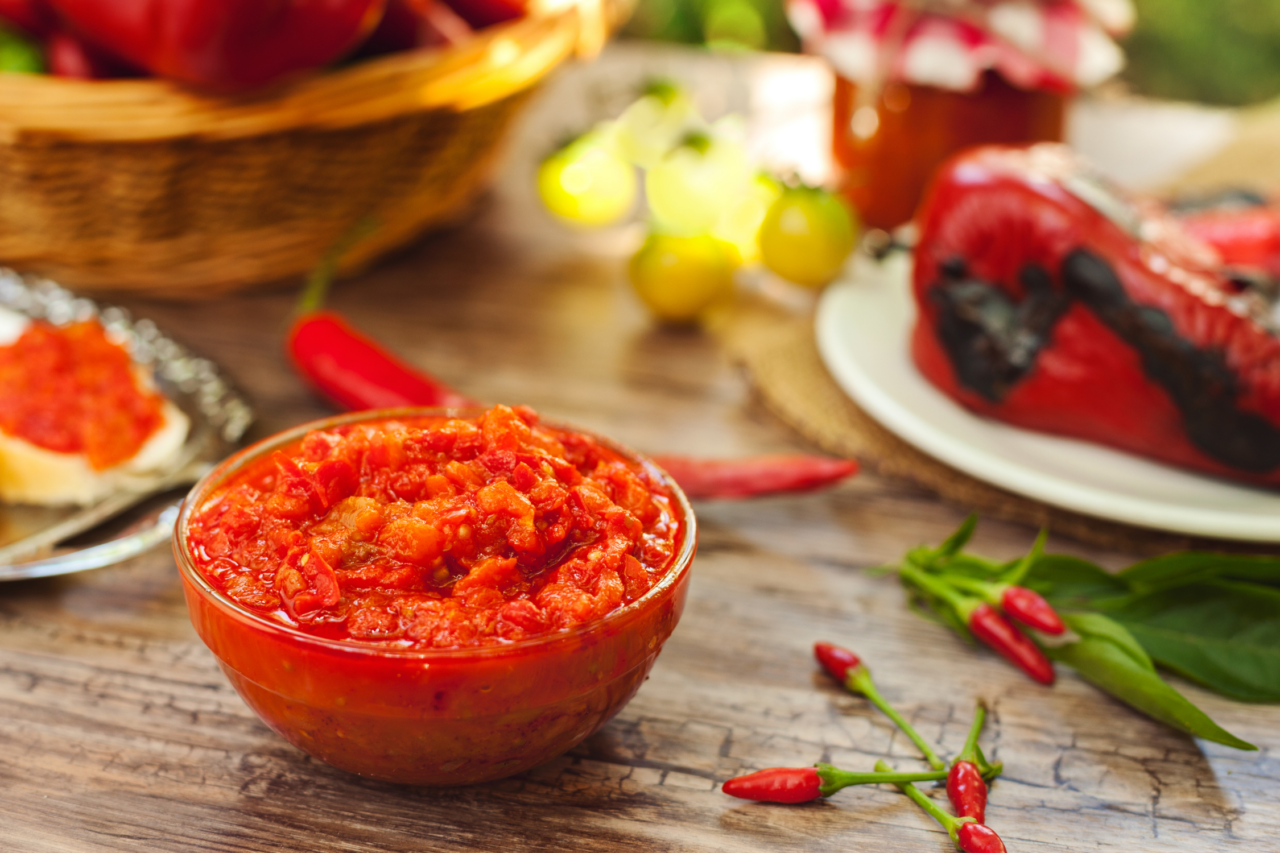
This protection is more than a marketing label. Serbia’s Intellectual Property Office uses Leskovac homemade ajvar as a central example of an appellation of origin: a product whose qualities are closely linked to a defined place, its natural conditions and the knowledge of the people who make it.
Not every excellent homemade jar follows that protected specification, nor does every family want it to. Across Serbia, ajvar remains both a recognised regional speciality and a living household food. Its strength lies in that tension between an established tradition and countless private interpretations.
Leskovac and Serbia’s Red-Pepper South
Ajvar is made throughout Serbia, but the region around Leskovac has become its strongest geographical reference.
The warm climate and long agricultural tradition of southern Serbia favour pepper cultivation. In September, markets and roadside stands around Leskovac fill with produce, while courtyards become temporary open-air kitchens. Here, roasted pepper is not a fashionable revival but a familiar part of the local economy and identity.
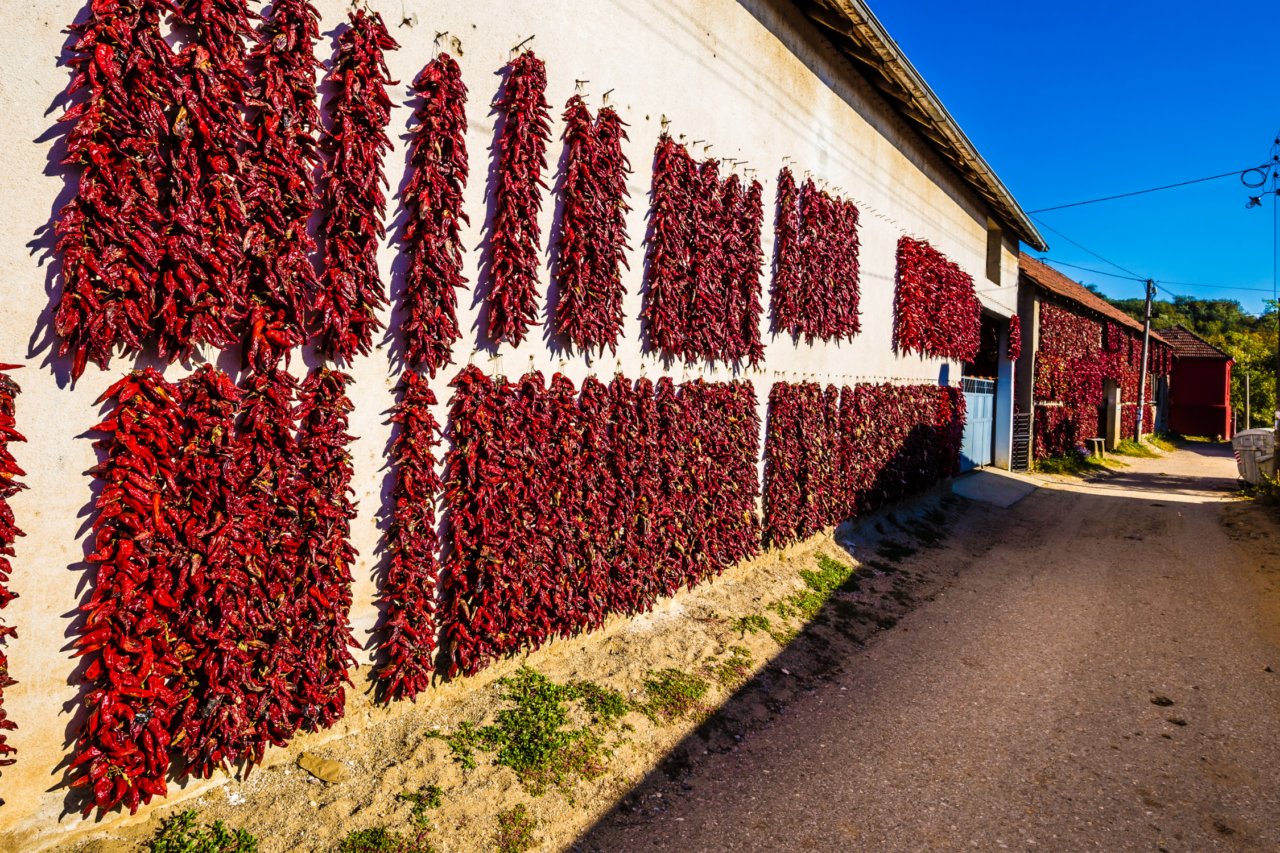
One of the most striking expressions of that connection can be found in Donja Lokošnica, a village near Leskovac known for its red peppers. After harvest, strings of peppers cover house façades, balconies and outbuildings, turning parts of the village a remarkable shade of crimson. The peppers are dried for local specialities, and the landscape itself becomes evidence of how closely a community can be shaped by one crop.
Leskovac’s reputation does not end with ajvar. Leskovačka ljutenica, a hot preserve made from traditionally processed vegetables, fresh tomato and hot pepper, also carries protected geographical status. Together with the city’s renowned grilled meat culture, these products make the region one of Serbia’s most distinctive food destinations.
For travellers, this is an opportunity to look beyond the restaurant table. The story begins in fields and markets, continues beside the roasting fire and ends in the jar served with warm bread, white cheese or grilled food.
Ajvar, Pinđur and Ljutenica: What Is the Difference?
The red jars lined up at a Serbian market may look similar, but their contents are not interchangeable.
Ajvar places roasted red pepper at the centre. Depending on the household or producer, it may be mild or hot, smooth or coarse, and occasionally combined with aubergine. The most traditional versions rely on a short list of ingredients and long cooking to concentrate the natural flavour of the pepper.
Pinđur is generally looser and more visibly textured. It commonly combines roasted peppers with tomatoes and may include aubergine, garlic or other seasonings. Compared with ajvar, its tomato character is usually easier to recognise.
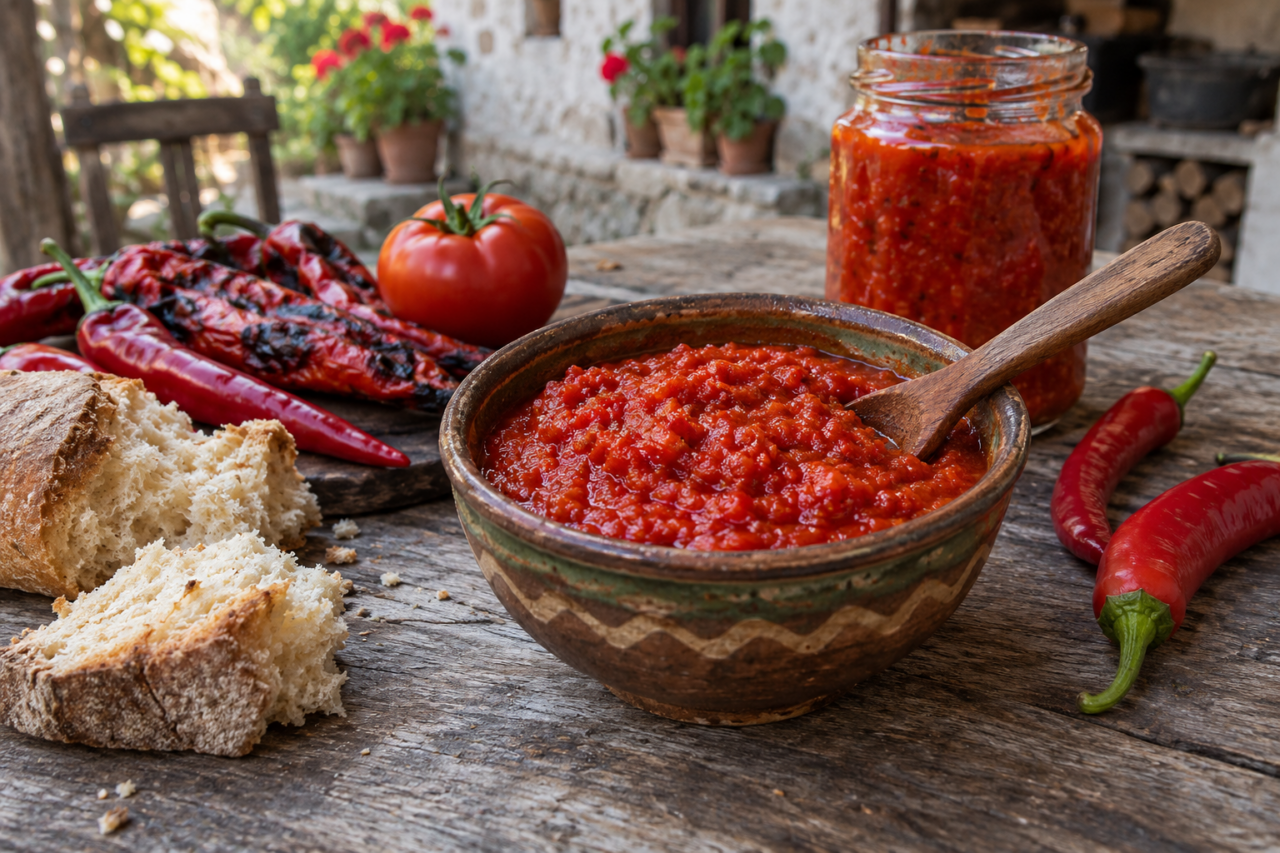
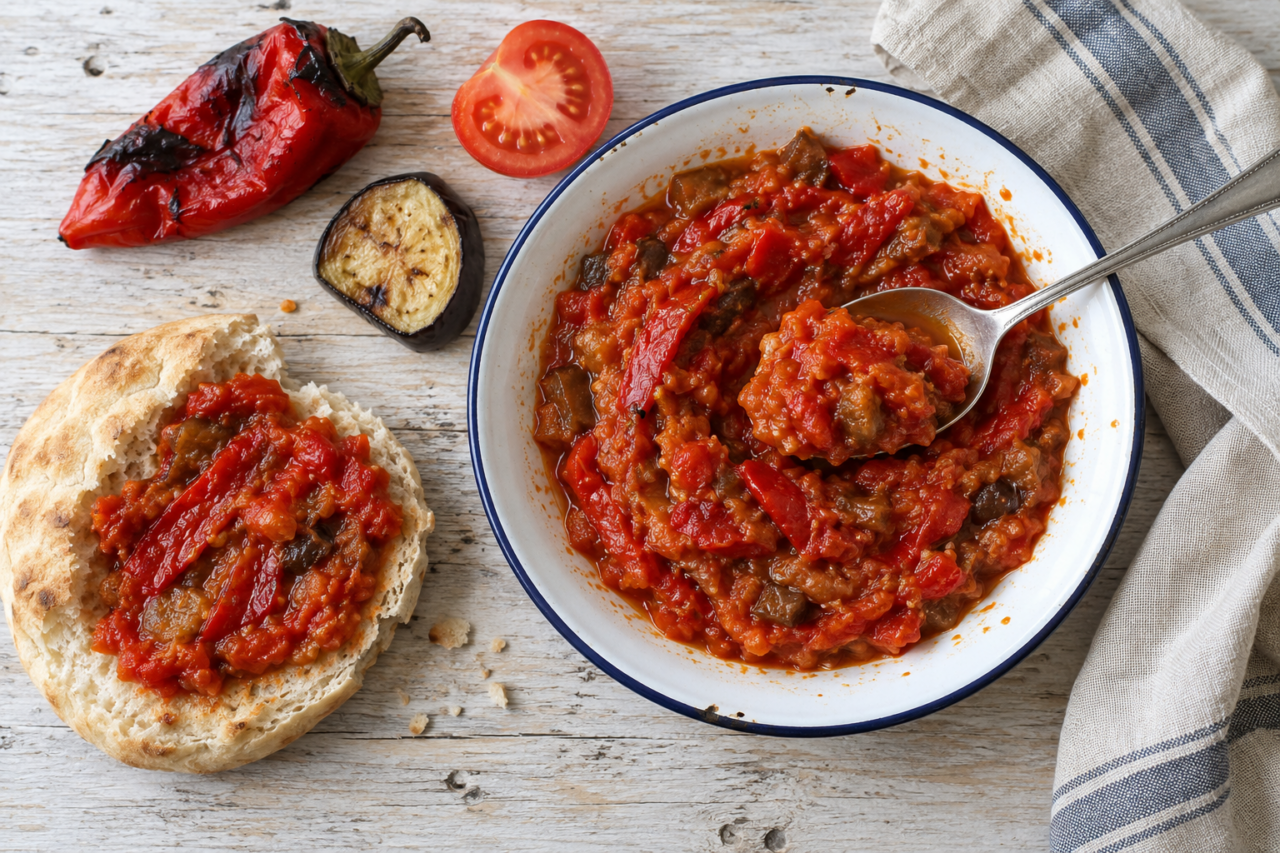
Ljutenica announces its identity in its name: ljuto means hot or spicy. Recipes vary, but tomato and hot pepper usually play important roles, creating a brighter and sharper preserve. The protected Leskovac version is made with specified tomato and hot-pepper varieties using a traditional process.
There are also roasted peppers preserved whole or in pieces, mixed pickles, tomato preparations and recipes whose names change from one household to another. The boundaries are not always as fixed in home kitchens as they are on commercial labels.
The best way to understand the difference is not to memorise definitions, but to taste them side by side. A local market, traditional restaurant or small producer can reveal more in three spoonfuls than a glossary ever could.
A Tradition Adjusting to Modern Life
The September ritual is changing. Fewer households have large courtyards, wood-burning stoves or an entire free day to devote to peppers. Apartment living makes smoke and bulk preparation difficult. Families are smaller, working hours are longer and excellent ajvar is now widely available from shops and independent producers.
Some people divide the process over several days. Others roast peppers outdoors and finish the ajvar in an apartment kitchen. Friends share equipment and labour. Families order already roasted peppers or buy their annual supply from a trusted producer. Younger cooks experiment with smaller batches, ovens and food processors.
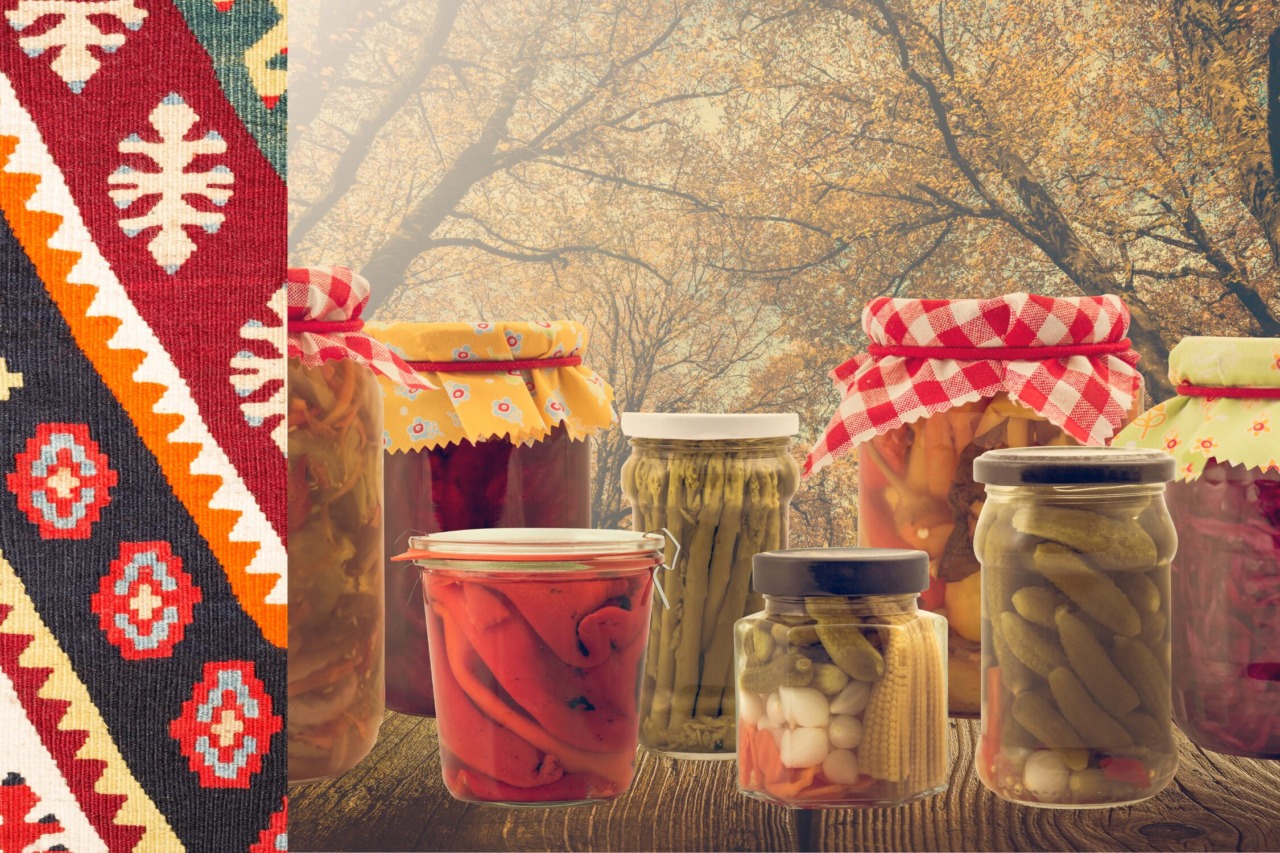
These changes are sometimes described as evidence that the tradition is disappearing. A more accurate view may be that it is adapting. Homemade zimnica no longer has the same practical necessity it once did, when preserving the harvest was essential for winter. Yet people continue to make it because flavour, habit and memory still matter. Even a smaller batch can preserve the annual ritual. Buying from a local producer can support the same agricultural knowledge on a different scale.
Tradition survives not because every generation repeats each step without alteration, but because enough meaning remains for people to find a place for it in contemporary life.
How Visitors Can Experience Ajvar Season
September is one of the best months to explore Serbia through food, but the most authentic experiences are not always packaged as tourist attractions.
Begin at a green market. In Belgrade, Novi Sad, Niš, Leskovac and towns across the country, the volume and colour of seasonal produce reveal what people are cooking at home. Look for long red peppers, jars from small producers and stalls selling other forms of zimnica. Ask whether the ajvar is mild or hot and whether it contains aubergine. The answer often leads to a much longer conversation.
When buying a jar, read the label rather than relying only on rustic packaging. Look for a clear list of ingredients, producer information and, when relevant, a certified geographical indication. An attractive cloth lid does not automatically mean that a product is homemade or local.
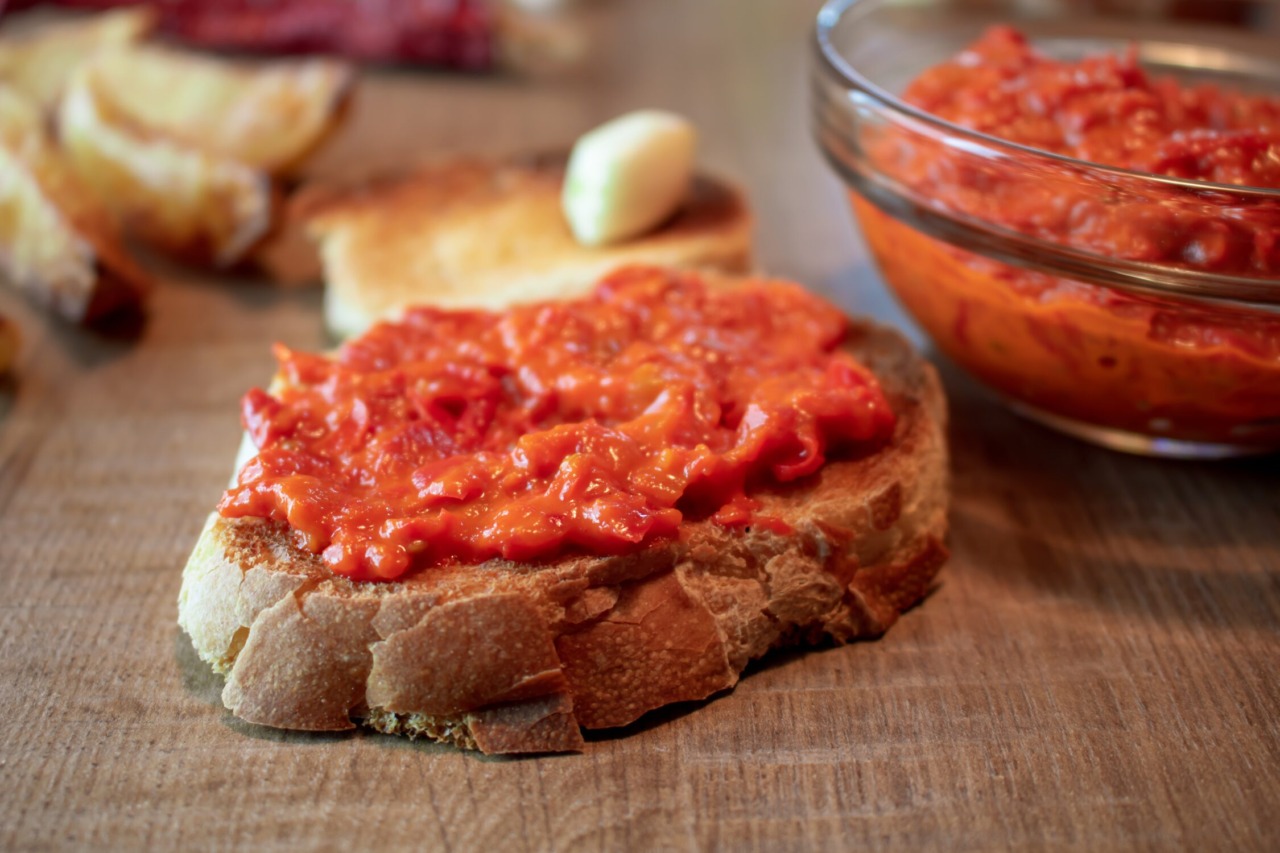
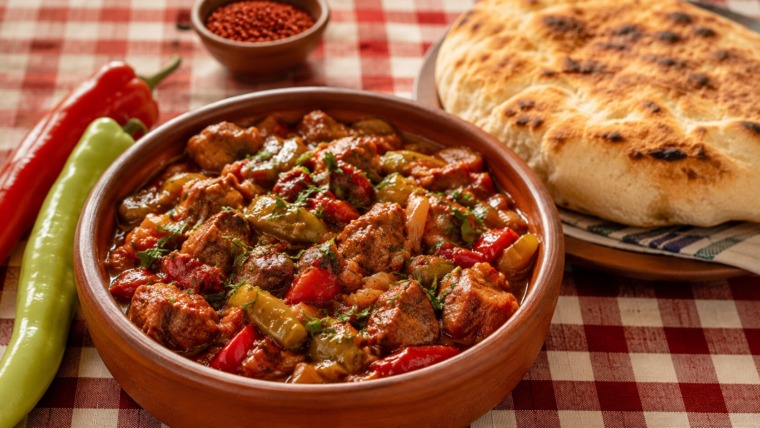
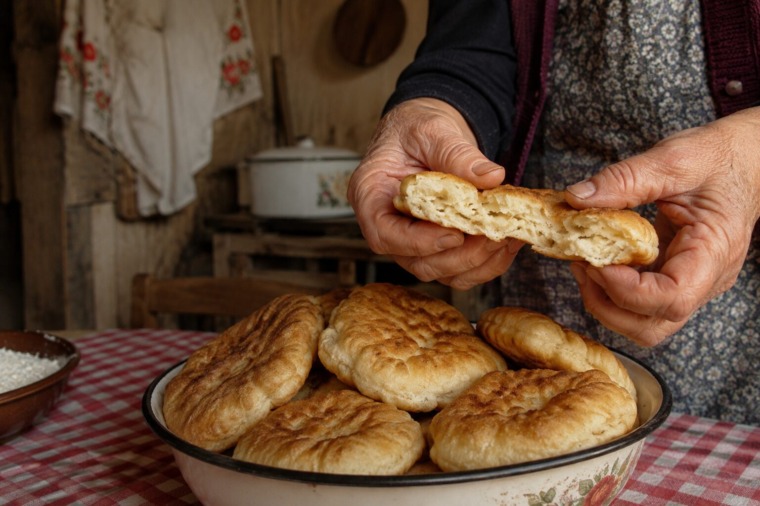
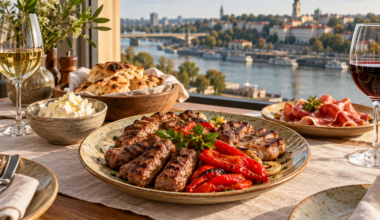
In restaurants, ajvar may arrive beside grilled meat, but it deserves to be tasted on its own. Try it with fresh bread, lepinja, white cheese or kajmak. A good ajvar should taste first of ripe roasted pepper, with sweetness, smoke and gentle acidity supporting rather than hiding it.
Travellers heading south can place Leskovac at the centre of a broader culinary journey. Local markets, traditional restaurants and small producers provide different parts of the story, while Donja Lokošnica offers an unforgettable visual connection to pepper-growing culture. Because villages and production spaces are living communities rather than open-air exhibits, visits should be arranged respectfully and private homes photographed only with permission.
Above all, avoid treating ajvar as a souvenir with a single correct brand. Taste several versions. The differences between them are the point.
The Taste of Time
When the jars are finally sealed, the fire goes out and the courtyard is cleaned, the smell of roasted peppers remains. It clings to clothes, drifts through the neighbourhood and returns each September with surprising precision.
Months later, when a jar is opened in winter, the flavour carries something of that day back with it: the market at the end of summer, the heat beside the stove, the conversation around the table and the first taste from the pot.
That is why ajvar occupies such a particular place in Serbia’s food culture. Its ingredients are simple, but simplicity is deceptive. The true luxury is the quantity of ripe peppers, patience and shared time concentrated into every jar.
September in Serbia has many signs – grapes in the vineyards, cooler mountain evenings and the first yellow leaves. But in streets and courtyards across the country, autumn often announces itself through scent first.
It smells of peppers roasting over a fire.
Plan your visit
Everything you need to plan your perfect trip.

Related Articles