
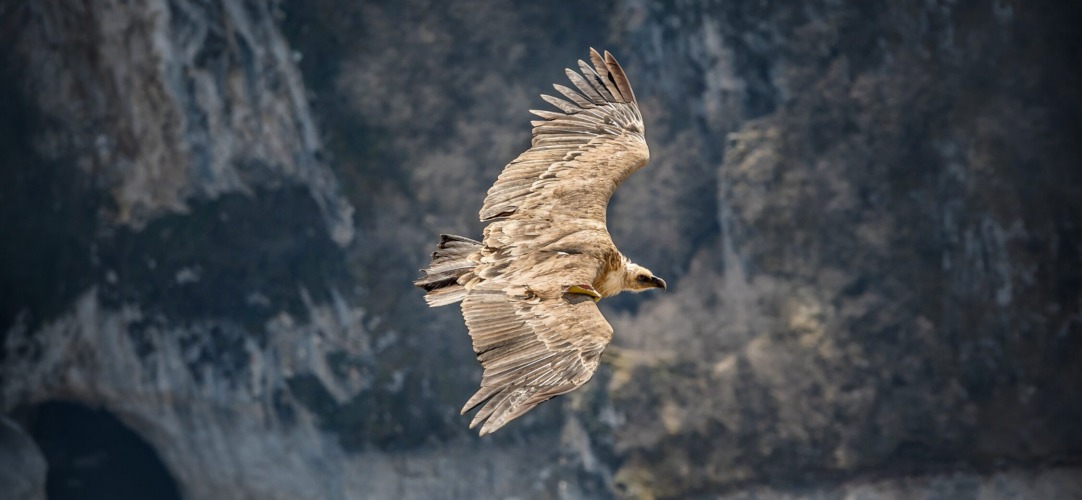
With a wingspan reaching nearly three meters, the griffon vulture is one of Europe’s most extraordinary birds – and one of Serbia’s greatest wildlife stories.
There is a moment on Uvac that almost everyone remembers. It usually happens unexpectedly. You are standing above the canyon, watching the famous meanders curve through the landscape, when suddenly a shadow moves across the rocks. Then another. And another.
A giant bird appears overhead – silent, impossibly graceful, moving through the sky without effort. For a few seconds, everything else becomes secondary. Because seeing a griffon vulture in the wild does not feel ordinary.
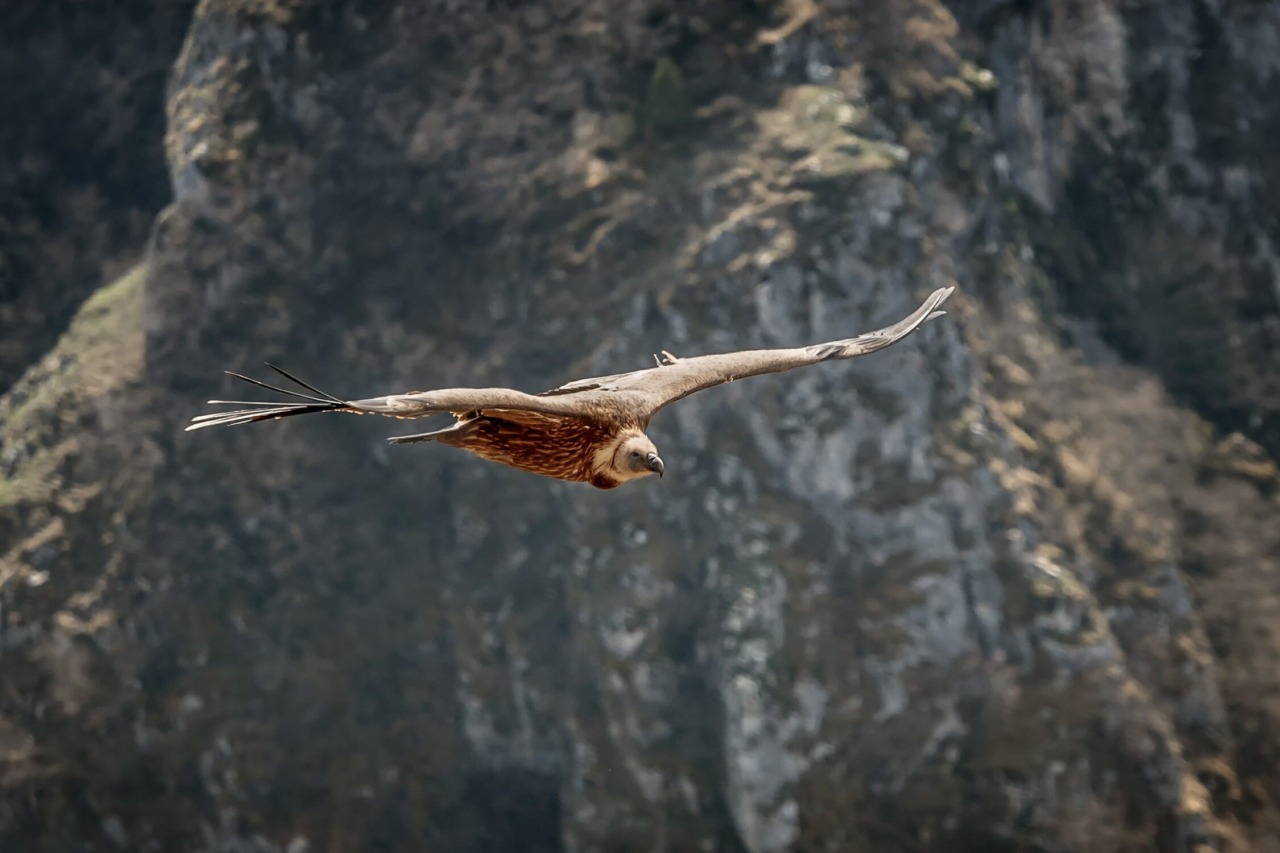
With a wingspan that can stretch close to three meters, this rare bird looks prehistoric, powerful, and strangely elegant at the same time. It circles high above the dramatic cliffs of Uvac, using air currents to glide for long distances without almost any movement at all.
Many visitors arrive at Uvac for the viewpoints. But increasingly, they leave talking about the birds. And especially one bird. The griffon vulture – known locally as beli sup – has quietly become one of Serbia’s most fascinating natural symbols.
Why Is the Griffon Vulture So Special?
At first glance, the griffon vulture hardly looks real. Its size alone feels surprising. As one of Europe’s largest birds, it can reach a wingspan of up to 2.8 meters, making it larger than many people imagine before seeing it in person. Yet despite its size, what surprises most visitors is not power – but calmness.
The griffon vulture rarely flaps its wings unnecessarily. Instead, it glides almost effortlessly, carried by warm air currents high above the canyon. Watching one move through the sky often feels strangely peaceful, even hypnotic.
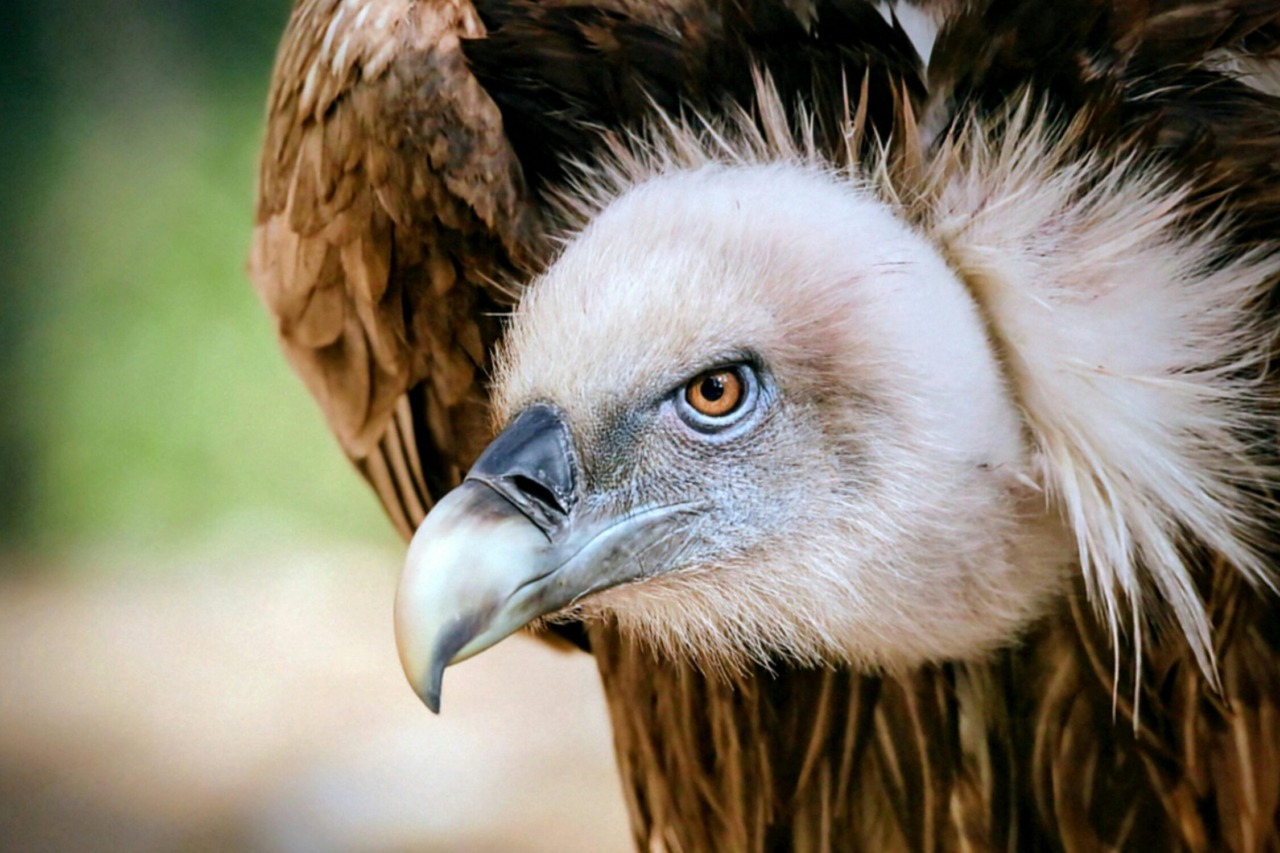
Its pale head, wide wings, and silent flight make it look like something from another era – a bird that somehow belongs to untouched landscapes. And in many ways, that feeling is true. Because very few places in Europe still allow encounters like this in the wild.
The Bird That Almost Disappeared From Serbia
What makes the story of the griffon vulture even more remarkable is how close Serbia came to losing it. Decades ago, populations declined dramatically due to poisoning, habitat loss, and changes in traditional livestock farming. In many regions, the bird disappeared completely.
At one point, only a handful of breeding pairs remained in Serbia. Uvac changed that story. Thanks to conservation efforts inside the Uvac Special Nature Reserve, the population slowly recovered, and today the canyon is home to one of the largest griffon vulture colonies in the Balkans.
Seeing them here is not just beautiful. It is rare. And it represents one of Serbia’s greatest wildlife conservation successes.
Why This Giant Bird Matters More Than People Realize
Despite their intimidating appearance, griffon vultures are not predators. They do not hunt. Instead, they play a crucial role in nature as cleaners of ecosystems, helping remove animal remains and preventing the spread of disease.
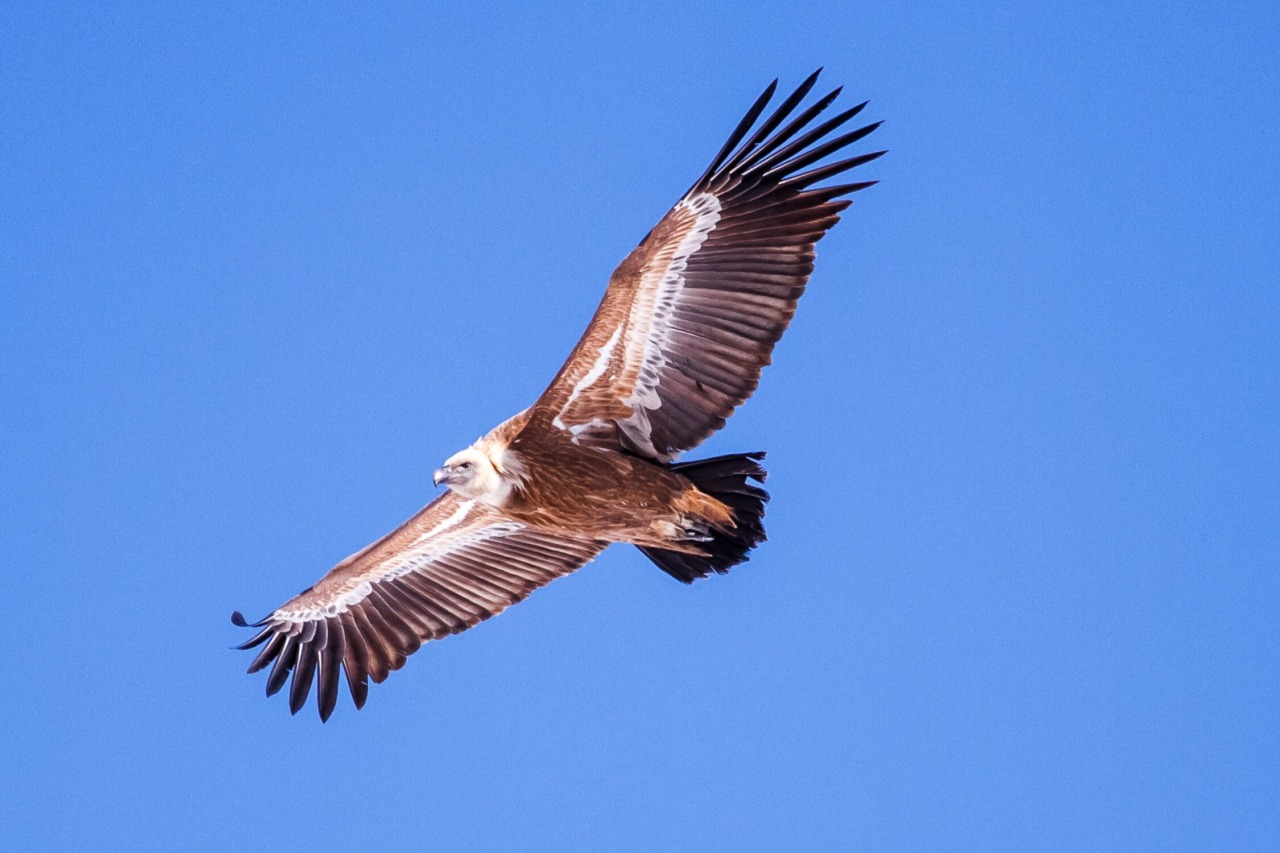
In other words, they quietly protect the balance of nature. Without them, ecosystems function differently. Which makes their survival far more important than many people initially realize. The griffon vulture is not just a spectacular sight. It is part of what keeps wild landscapes healthy.
Where Can You See the Griffon Vulture in Serbia?
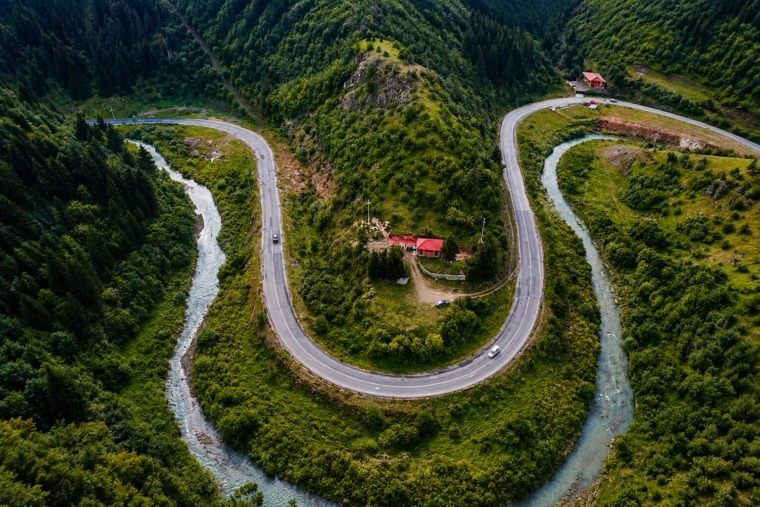
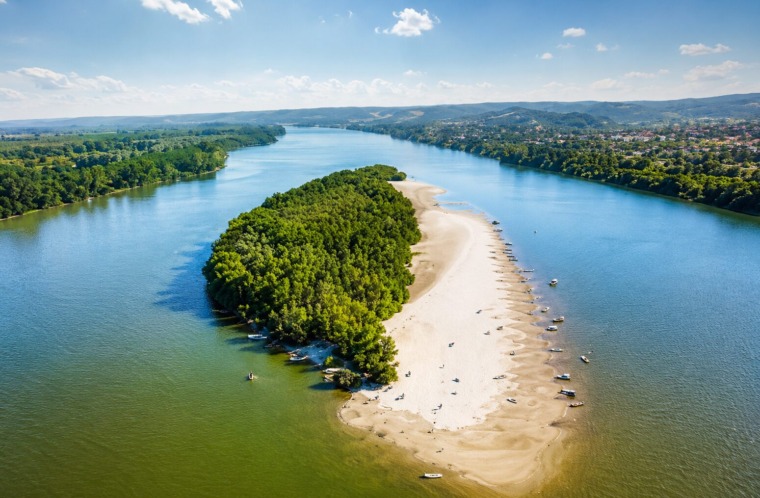
There is one place above all others: Uvac Special Nature Reserve. This protected landscape in southwestern Serbia is famous for its winding meanders, dramatic cliffs, caves, and – above all – its vultures.
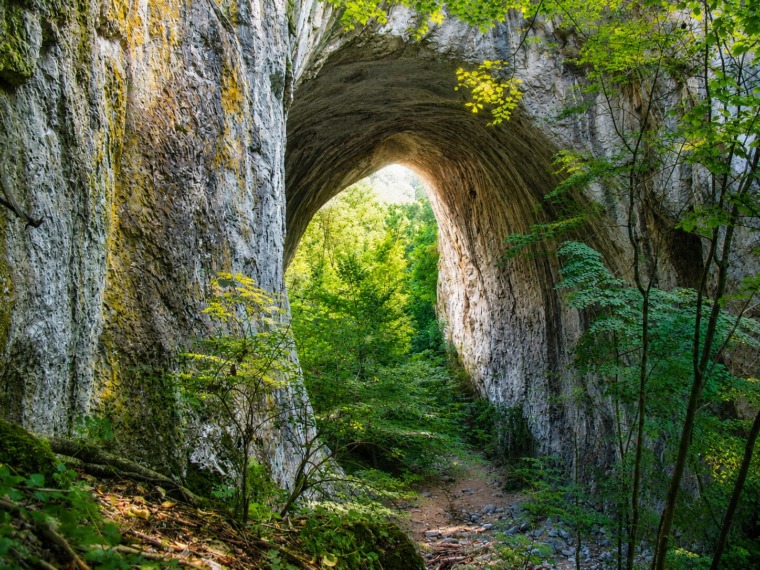
One of the best places to spot them is Molitva Viewpoint, where birds often glide surprisingly close to visitors. But the experience feels even more dramatic from below. Boat tours through the canyon offer a completely different perspective, allowing visitors to watch the vultures soaring above steep limestone cliffs while exploring hidden caves along the river.
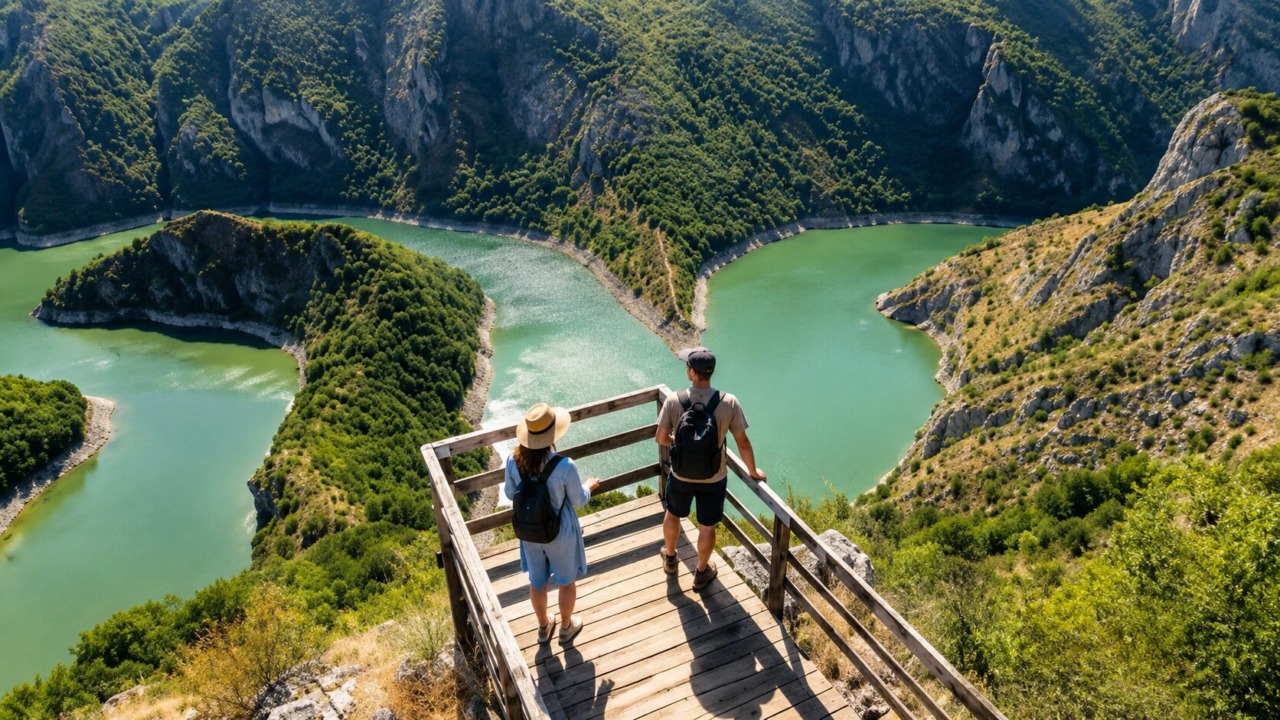
Many local guides know exactly when and where sightings are most likely. And patience often pays off. Because when it happens, it tends to become the highlight of the trip.
When Is the Best Time To See Them?
Spring and summer are generally the best seasons. Warmer temperatures create stronger thermal air currents, making it easier to see vultures soaring above the canyon for longer periods.
Morning hours and late afternoons often offer the best conditions – especially when the light softens and visibility improves.
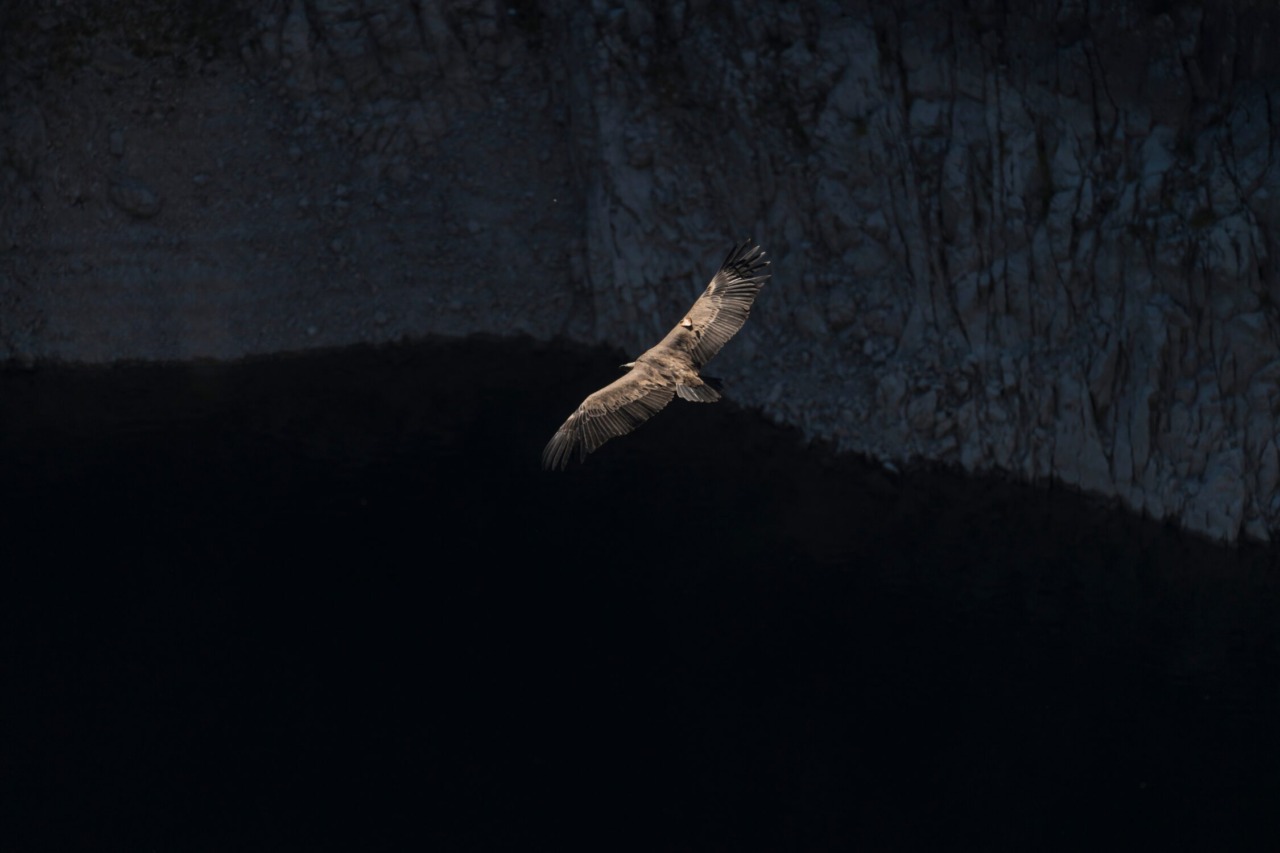
But nature always remains unpredictable. Some visitors spot dozens. Others wait patiently for one unforgettable moment. And somehow, that unpredictability makes the experience feel even more special.
A Few Tips Before Visiting Uvac
If seeing the griffon vulture is high on your list, a little preparation helps. Bring binoculars if possible – details become far more impressive when you can observe the birds closely.
Combine a boat ride with a viewpoint visit for the best overall experience. Seeing Uvac from both perspectives changes the entire feeling of the place. And perhaps most importantly: slow down. Uvac is not a destination that rewards rushing. Sometimes the best moments happen when you simply stop and look up.
Why Uvac Feels Different
Of course, the griffon vulture is only part of the story. Uvac itself remains one of Serbia’s most spectacular landscapes – famous for dramatic meanders, caves, viewpoints, and untouched nature that still feels surprisingly wild.
But the vultures somehow change the experience. They add movement to the landscape. A sense of scale. And a reminder that some places in Europe still feel genuinely untamed.
In a world where truly wild encounters are becoming harder to find, watching a griffon vulture soar above Uvac feels unexpectedly powerful. Ancient. Silent. Free. And for many visitors, it becomes the moment they remember most about Serbia.
Related Articles