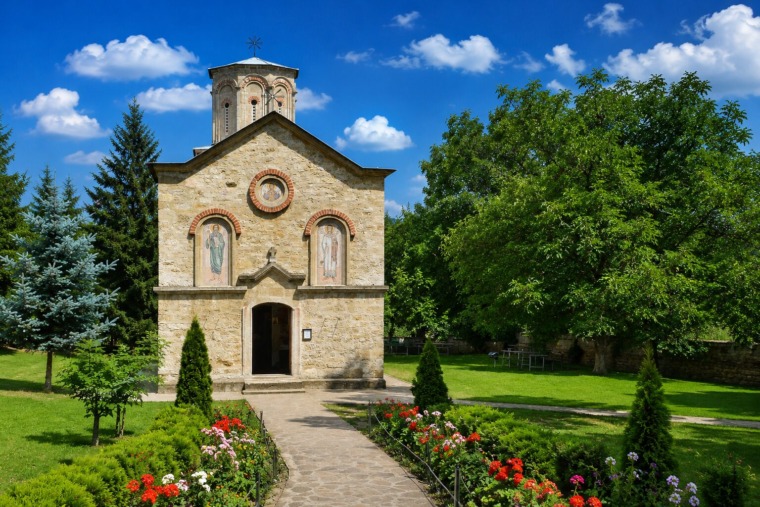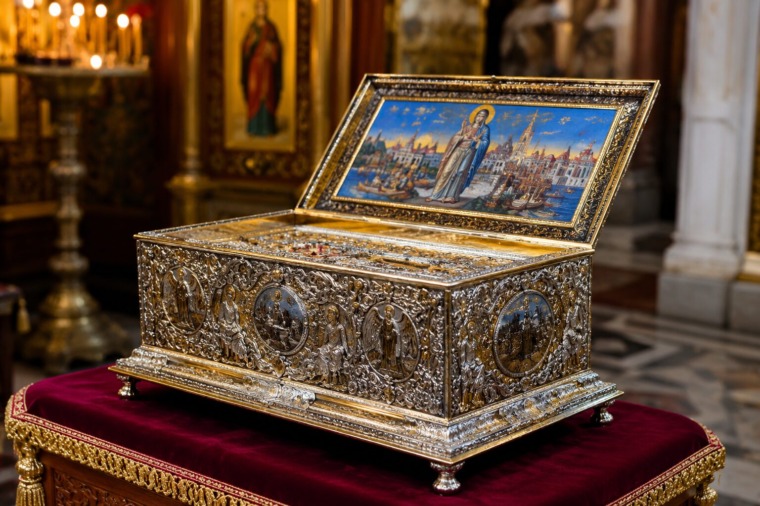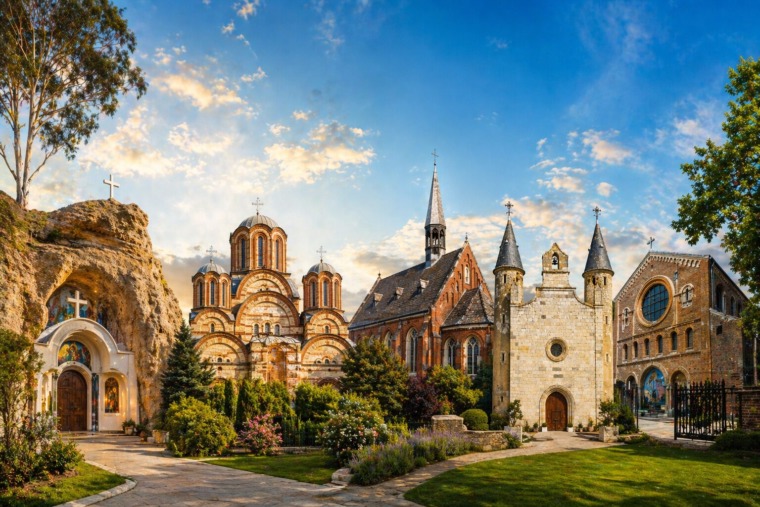

Did you know Serbian churches exist in the middle of Africa, beside a tropical lake in Guatemala, and in the heart of Manhattan? These are some of the world’s most unexpected Serbian sacred places.
Serbian Orthodox churches around the world are often much more than places of worship. They were built wherever Serbian communities created new lives – in major cities, across continents, and in cultures vastly different from the one they left behind. Yet through domes, icons, liturgy, and community life, these sacred places preserved a sense of belonging and a connection to home thousands of kilometers away.
Some of them stand in places where you would least expect to find Serbian spirituality – in South Africa, beside a volcanic lake in Guatemala, in the heart of Manhattan, or in northern Europe.
This is the second part of the story of unusual Serbian Orthodox churches and monasteries around the world.
1. Saint Thomas Serbian Orthodox Church in Johannesburg, South Africa
Few people would expect to find a Serbian Orthodox church in the middle of Africa. Yet in Johannesburg, South Africa’s largest city, a strong Serbian community has gathered for decades around the Church of Saint Thomas.
Built as a spiritual center for the Serbian diaspora in Africa, the church became a gathering place for families who left the Balkans during different historical periods and found a new home on another continent entirely. Its surroundings immediately feel unexpected. Palm trees, bright African sunlight, and warm landscapes create an unusual contrast with Serbian Orthodox crosses and traditions.
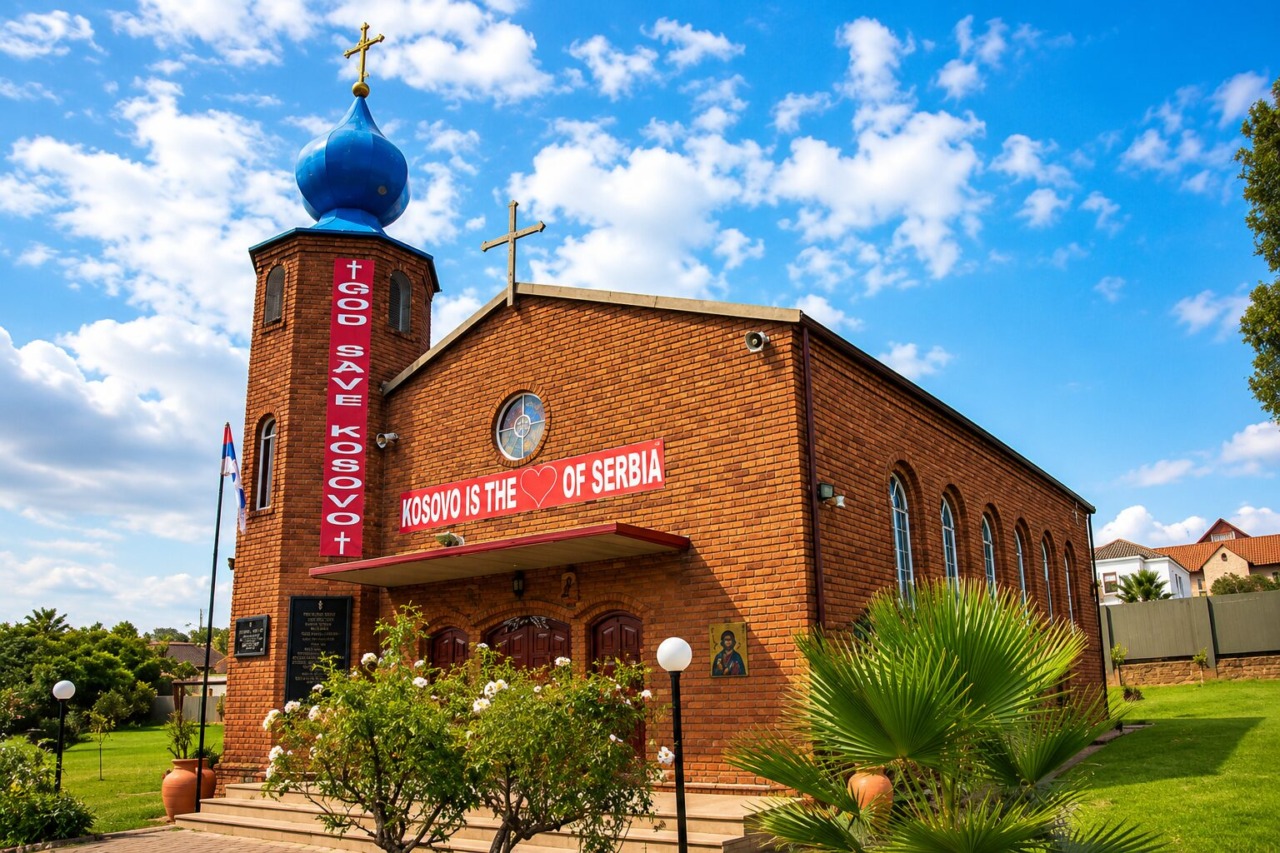
Inside, however, the atmosphere feels familiar to many Serbian worshippers. The iconostasis, Orthodox imagery, and liturgical layout preserve the spiritual identity of Serbian churches far from home. More than a place of worship, the church became a cultural center where language, customs, slava traditions, and community life continued through generations.
Today, it remains one of the most unexpected examples of Serbian spiritual heritage abroad – a Serbian sacred place rooted in African soil.
2. Holy Trinity Monastery in Guatemala
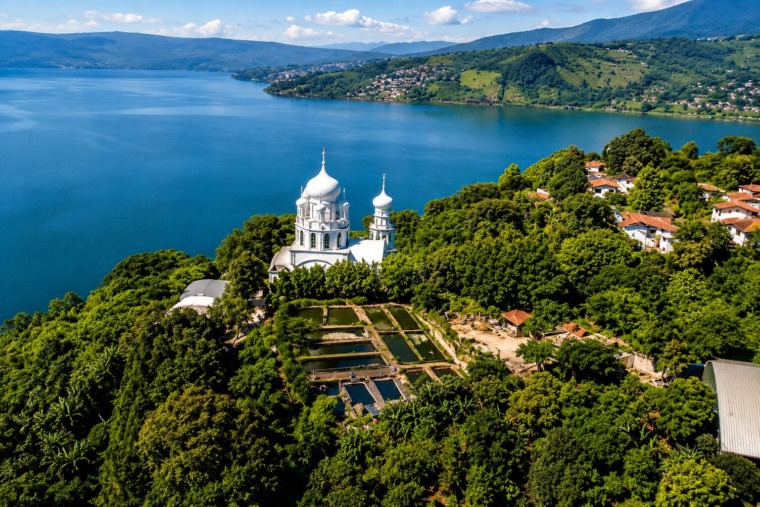
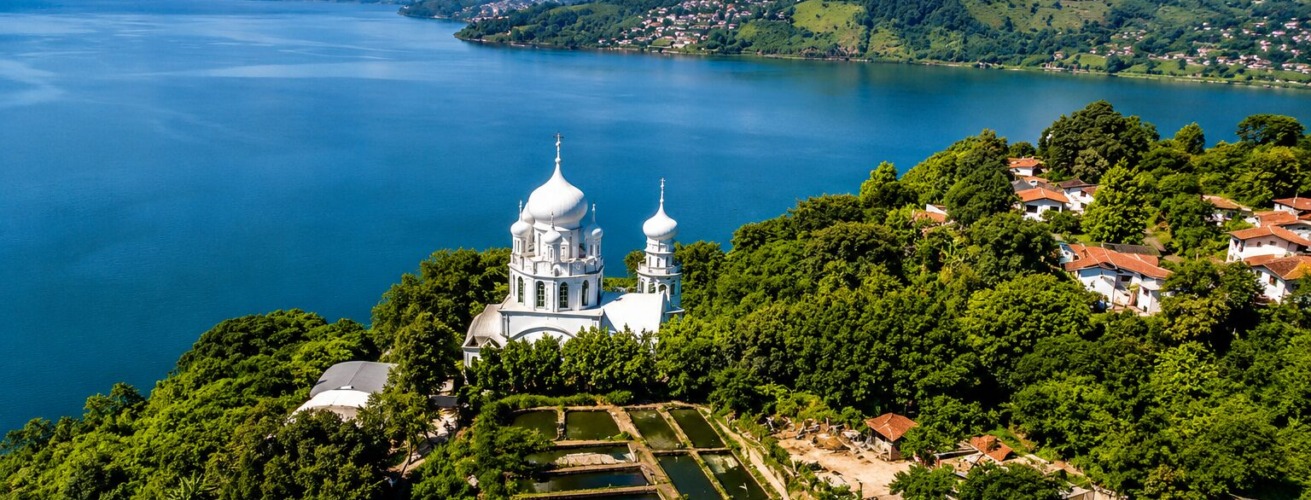
On the shores of Lake Amatitlán, surrounded by lush volcanic landscapes in Guatemala, lies one of the most surprising Serbian Orthodox holy places outside Europe. The Holy Trinity Monastery is particularly significant because it is the first monastery under the jurisdiction of the Serbian Patriarchate in Central America.
Its location feels almost cinematic. Surrounded by tropical greenery and overlooking the lake, the monastery appears like an unexpected meeting point between Balkan spirituality and Central American nature. Architecturally, the monastery clearly reflects Orthodox traditions. White domes and Byzantine-inspired forms stand out dramatically against a landscape that feels worlds away from Serbia.
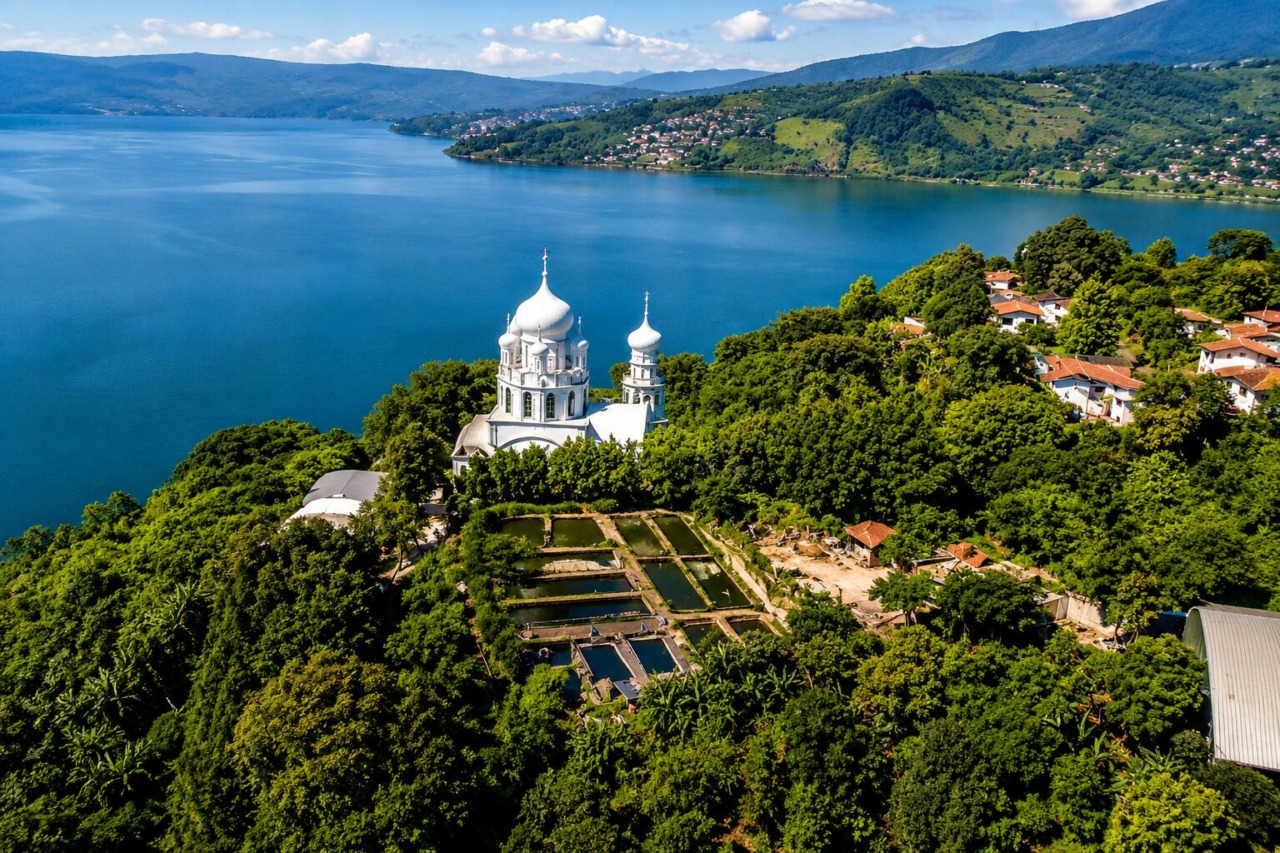
Inside, visitors encounter what defines Orthodox spirituality – icons, silence, prayerful atmosphere, and sacred imagery that evoke the feeling of Serbian monasteries despite the thousands of kilometers separating them from the Balkans.
One of the monastery’s most fascinating aspects is that local believers also embraced Orthodoxy, transforming it into a place not only for preserving Serbian identity but also for introducing Orthodox spirituality to a completely different cultural environment. Because of this, Holy Trinity Monastery represents far more than an unusual location – it stands as an important symbol of Serbian Orthodox presence beyond traditional geographic boundaries.
3. Saint Sava Church in New York – The Serbian Church That Survived a Fire
In the heart of Manhattan, surrounded by skyscrapers and the fast pace of one of the world’s busiest cities, stands one of the most important Serbian Orthodox churches in the diaspora.
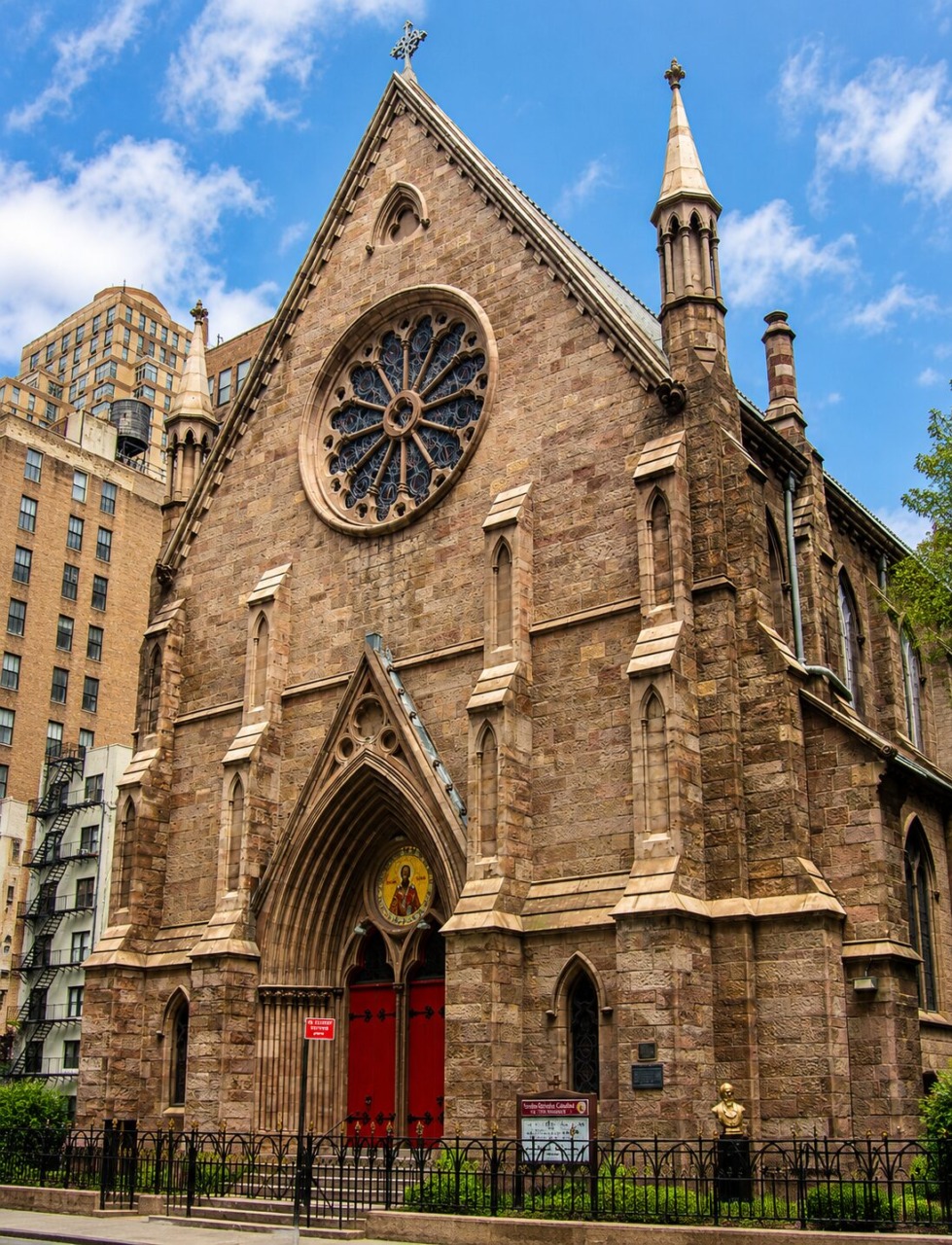
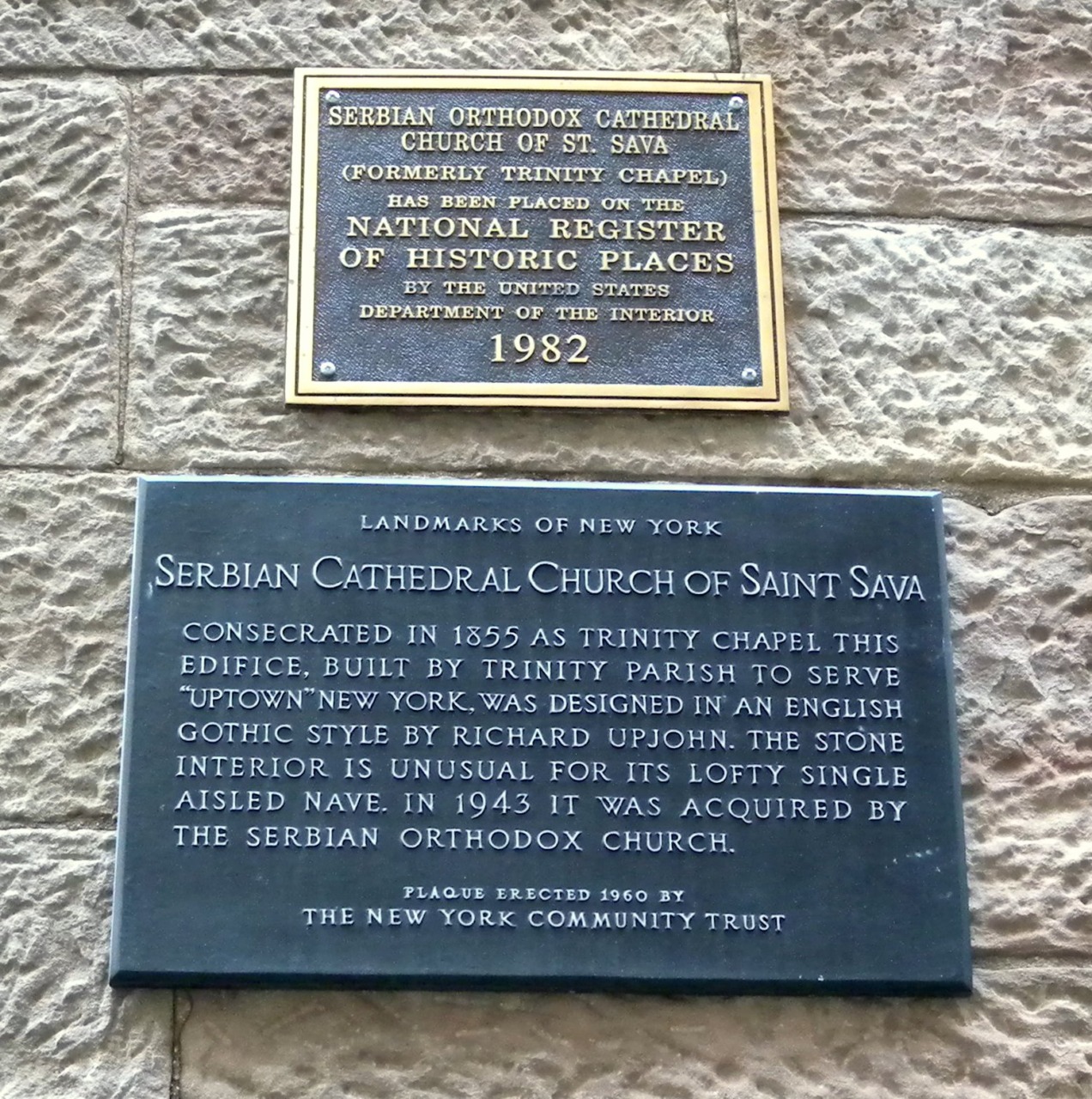
Saint Sava Church in New York occupies a former Episcopal church dating back to the 19th century, built in the Gothic Revival style. Its monumental stone façade, grand rose window, and pointed architectural elements make it look very different from what many imagine a Serbian Orthodox church to be. That contrast is precisely what makes it remarkable.
From the outside, it resembles a classic New York cathedral. Inside, however, Serbian Orthodox tradition shaped its identity for decades. Over time, the church became the spiritual and cultural heart of the Serbian community in America – hosting liturgies, celebrations, religious holidays, and preserving Serbian identity in the diaspora.
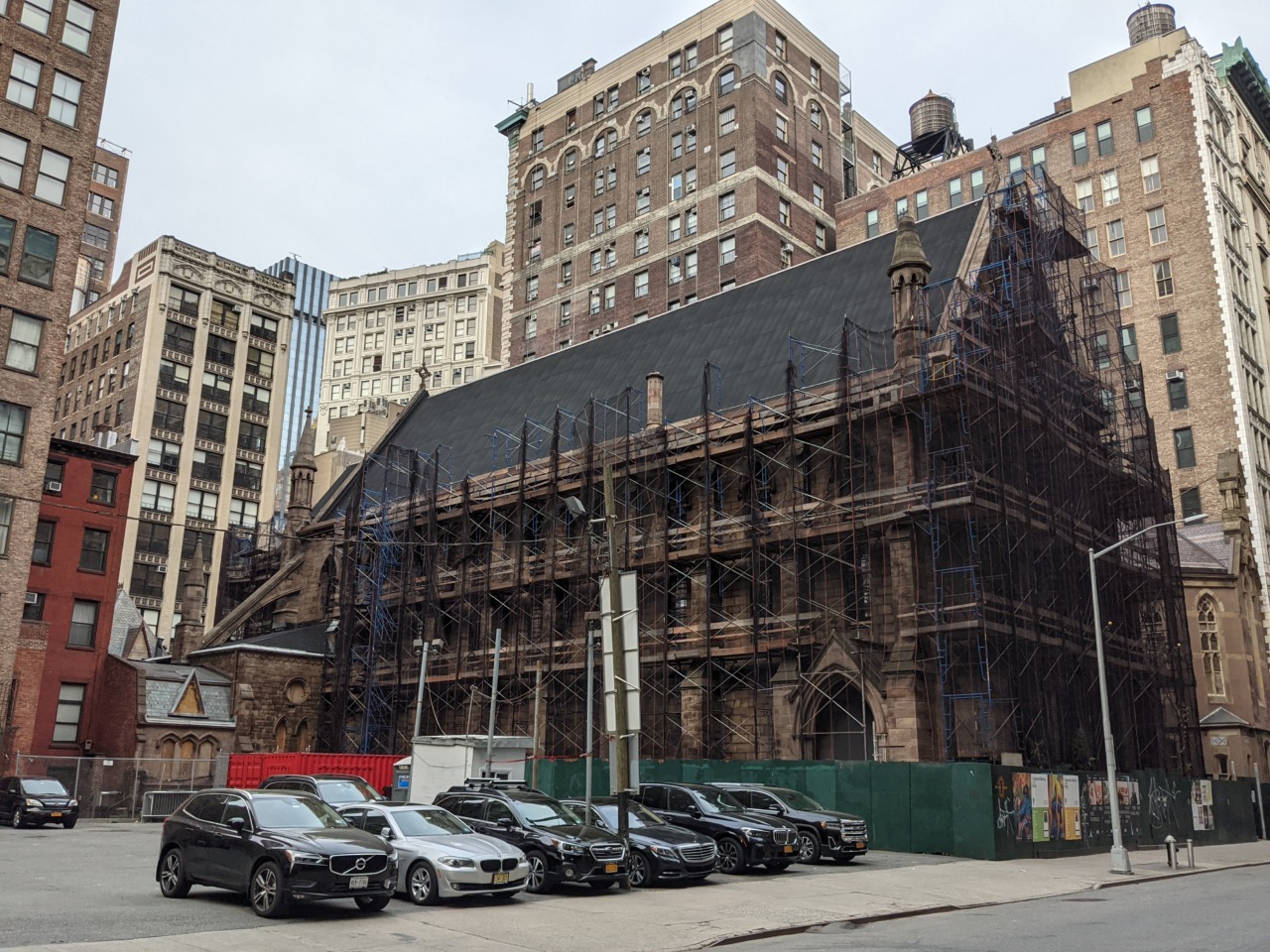
One of the most devastating moments in its history came in 2016, when a major fire broke out only hours after Orthodox Easter services. The blaze almost completely destroyed the interior, leaving the Serbian community heartbroken. Yet the story did not end there.
The rebuilding of the church became a symbol of resilience and unity for the Serbian diaspora. Today, its restoration represents something much greater than rebuilding a structure – it is an effort to preserve one of the strongest symbols of Serbian heritage in America.
4. Saint Sava Serbian Orthodox Church in Stockholm, Sweden
In northern Europe, in a country known for minimalist architecture and long winter days, stands another unexpected Serbian Orthodox church.
Saint Sava Church in Stockholm serves as an important spiritual center for the Serbian community in Sweden, a country that became home to many people from the former Yugoslavia during the second half of the 20th century.
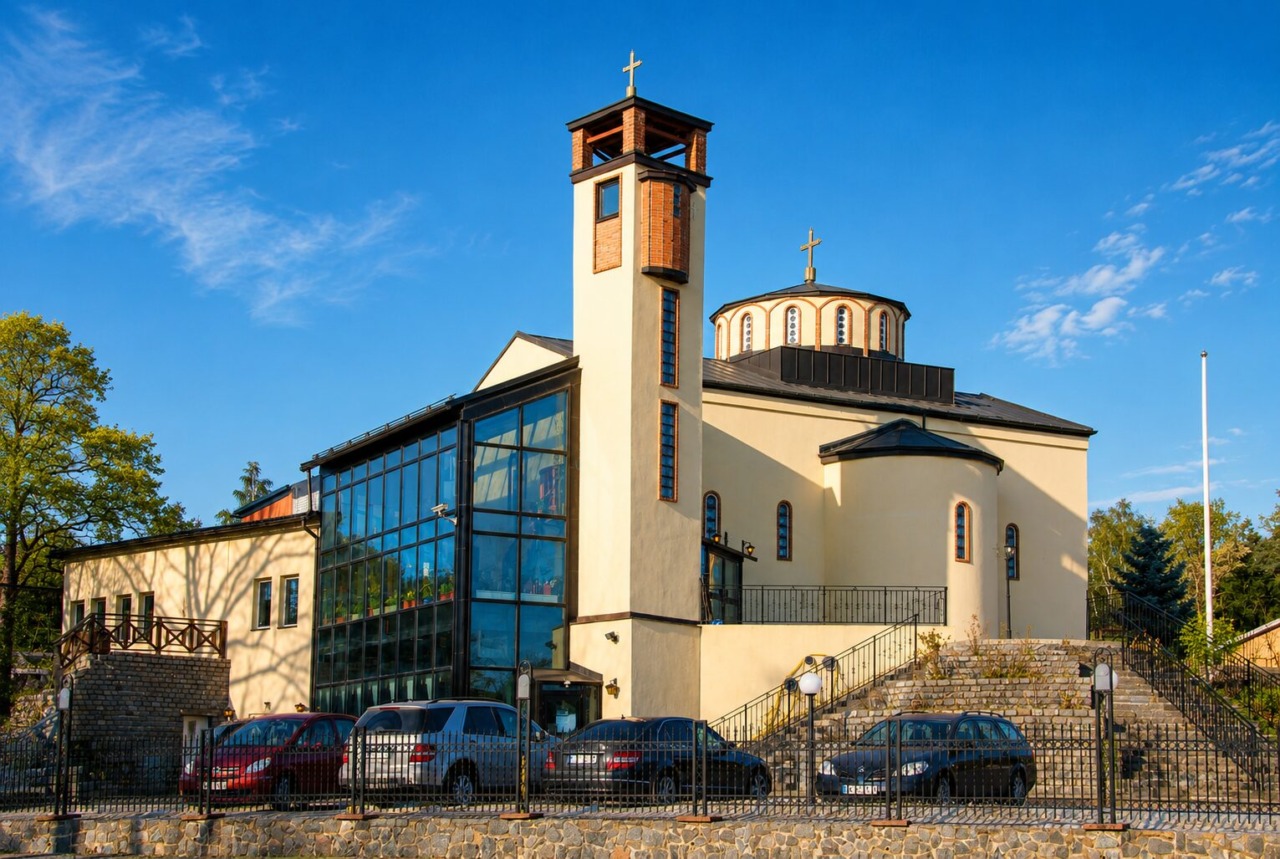
Its architecture is particularly interesting because it blends modern elements with traditional Orthodox features. While simpler in form than grand Serbian monasteries, its dome and liturgical organization clearly reflect Serbian Orthodox identity. Inside, the atmosphere feels warm and deeply familiar. Icons, candlelight, and sacred imagery create a space that often reminds worshippers of churches back home.
For many Serbian families, this church became much more than a religious institution. It hosts Serbian language schools, cultural gatherings, folklore events, and celebrations of major Orthodox holidays – helping preserve identity for younger generations born far from Serbia.
5. Saint Nicholas Serbian Orthodox Cathedral in Hamilton, Ontario, Canada
In Ontario, Canada, stands one of the most architecturally impressive Serbian Orthodox churches in North America.
Saint Nicholas Serbian Orthodox Cathedral in Hamilton is recognizable for its elegant domes, warm brick façade, and monumental entrance that reflects a contemporary interpretation of Serbian-Byzantine architecture. The cathedral was built through the dedication of the Serbian community in Canada, which created not only a religious space but also a cultural center for future generations.
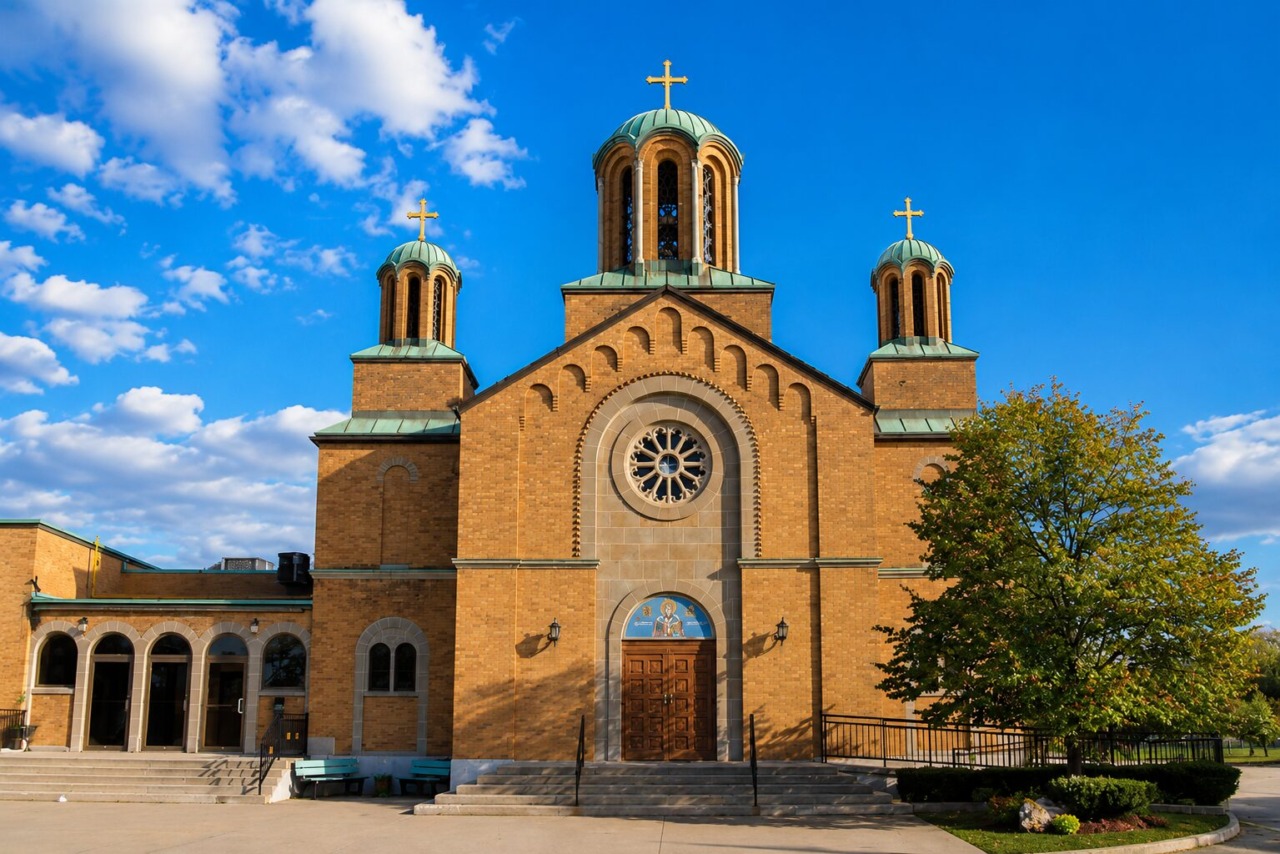
Its interior is particularly striking, featuring rich iconography, sacred decoration, and a spacious liturgical setting. As in many Serbian Orthodox churches abroad, the iconostasis forms the visual and spiritual center of worship.
Beyond religious services, the cathedral functions as an important gathering place – where holidays are celebrated, traditions are preserved, and younger generations maintain a connection with Serbian roots. In many ways, churches like this become bridges between an old homeland and a new one.
Serbian Sacred Places Around the World – A Story Still Unfolding
From Africa and Guatemala to Canada, Sweden, and Manhattan, Serbian Orthodox churches reveal the remarkable determination of communities to preserve faith, language, customs, and belonging far from the Balkans.
Yet this is still only part of a much larger story.
Serbian churches and monasteries can also be found in Argentina, Australia, Norway, Austria, France, Switzerland, the United Kingdom, and many other countries – often in places where you would least expect them.
Related Articles