

-
Serbia at a Glance
Discover All -
Arts & Culture
Discover All -
Identity & Heritage
Discover All -
Famous Serbs
Discover All
-
Regions
Discover All -
Cities
Discover All -
Nature
Discover All -
Cultural Landmarks
Discover All
-
Outdoor & Wellness
Discover All -
Food & Drink
Discover All -
Tours
Discover All -
Urban Experiences
Discover All -
Seasonal Experiences
Discover All
Partner with Serbia.com
Let's create lasting impact together
Partner with Serbia.com to reach travellers through trusted recommendations, inspiring editorial stories and thoughtfully designed campaigns. Together, we create meaningful visibility that supports your goals and remains valuable long after publication.
Explore partnership opportunities- Serbian Favorite Rituals Everyday traditions and little things that make life in Serbia special.
- Villages of Serbia Charming villages, local stories and authentic rural life.
- Serbia Told By You Personal stories, local perspectives and authentic experiences from across Serbia.
- Is it Worth Visiting in Serbia? Honest destination guides to help you decide which places are worth visiting.
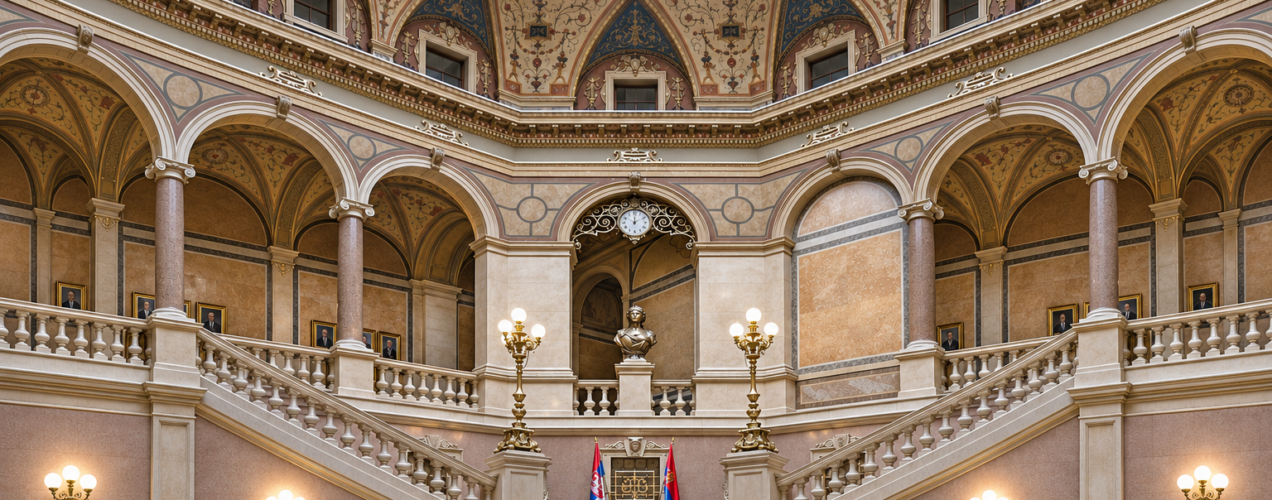
Some of Belgrade’s most fascinating stories begin when you step inside a building. Behind a façade you pass every day, you might find a painted room, an elegantly furnished salon or an entire art collection that gives no hint of its presence from the street.
From a scientist’s home to the monumental spaces of the Palace of Serbia, these interiors reveal different sides of Belgrade: domestic and royal, private and public, intimate and grand.
Colder days offer a good reason to explore them. Some can be visited during museum opening hours, while others require advance booking or open only for special programmes.
1. Palace of Serbia: Art on a Monumental Scale
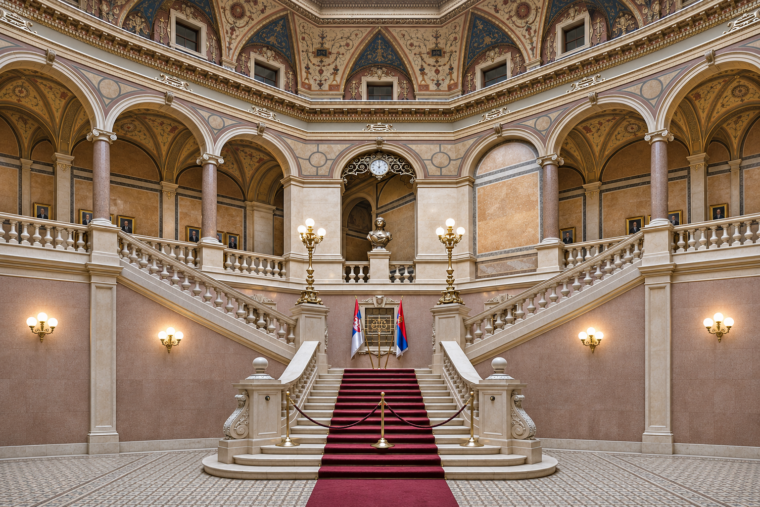
Most people recognise the Palace of Serbia from photographs of official meetings. Its exterior, however, reveals only part of the story. Inside, architecture, artworks, furniture and materials come together in ceremonial spaces designed to make a lasting impression.
That combination makes the building so compelling. Art is experienced alongside the setting for which it was chosen. Monumental surfaces, decorative details and the relationship between salons and large halls reveal how interior design was used to represent the state. The palace holds an important collection of fine and applied art, cared for by the Administration for Joint Services of Republic Bodies.
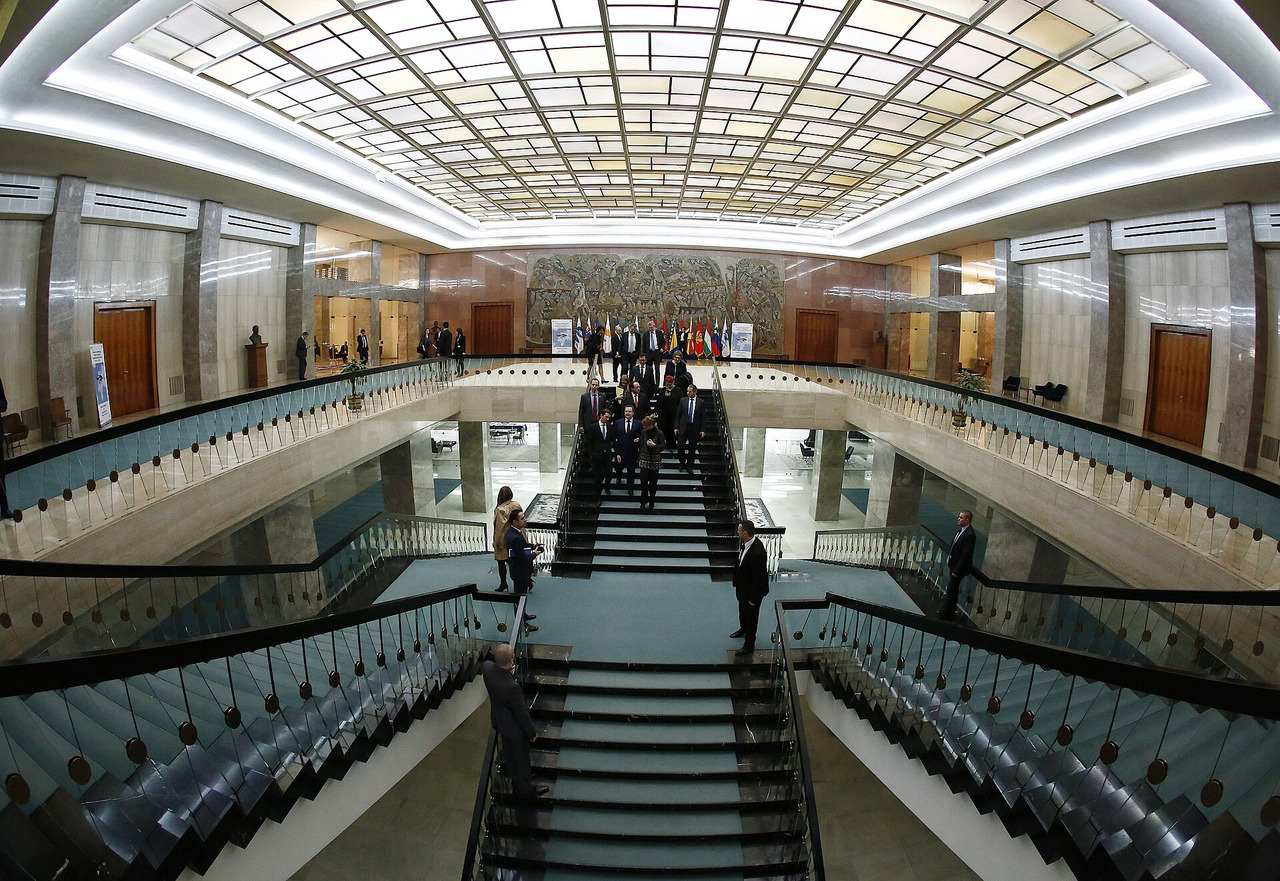
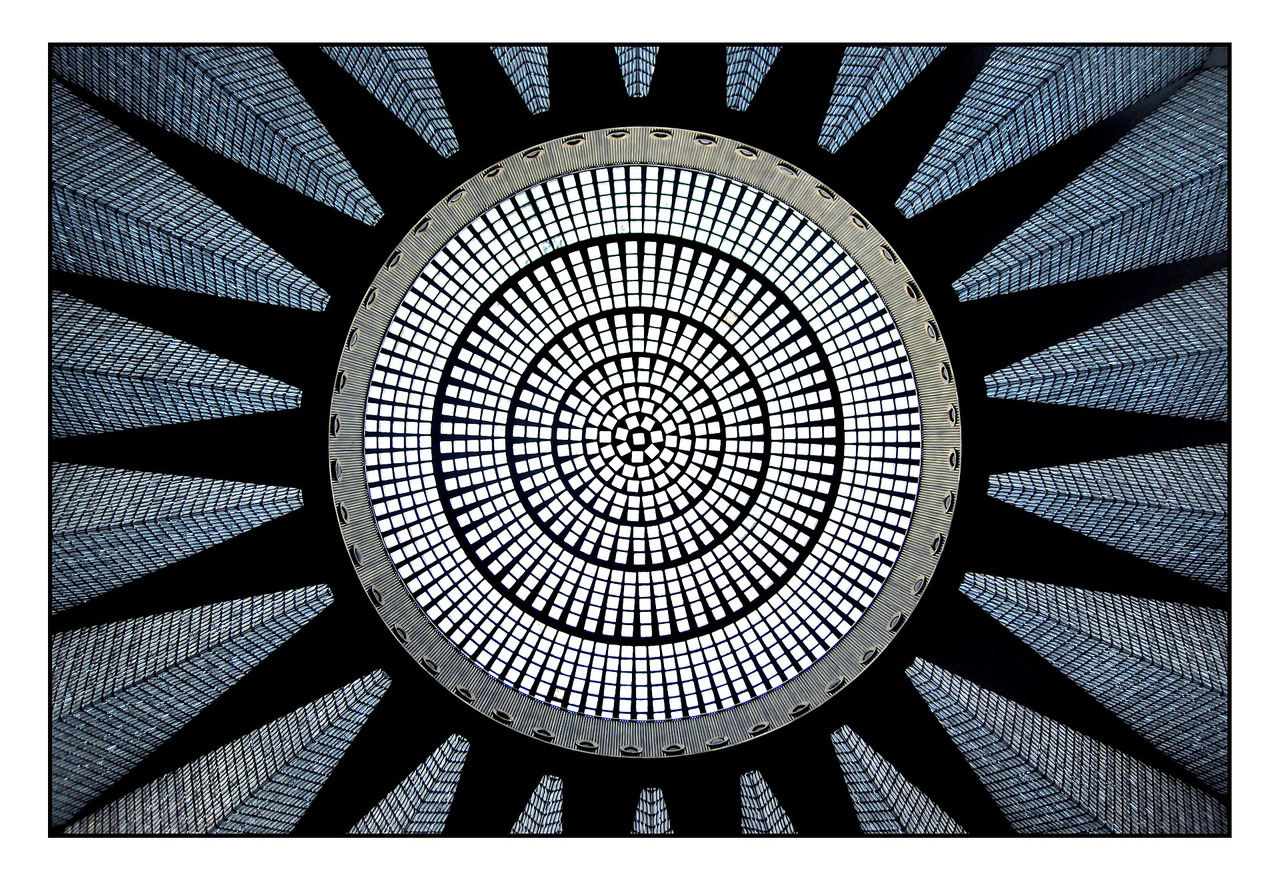
The Palace of Serbia: Tomic Djordje, Fotokratija
If you have the opportunity to visit, consider each room as a whole: how the flooring, wall surfaces, lighting and furniture work together. Individual details become more meaningful when seen as part of the complete design.
Planning your visit: The Palace of Serbia does not have confirmed regular museum-style opening hours. Organised tours were included in European Heritage Days in October 2026, with compulsory registration through the Tourist Organisation of Belgrade. No November tour date had been confirmed when this guide was prepared, so check availability before planning a visit.
National Bank of Serbia – grandeur behind a formal façade
At 12 Kralja Petra Street, the National Bank of Serbia conceals an interior that draws your gaze from its sweeping staircase to its painted vaults. Coloured marble, decorative arches and intricate detailing give the building the atmosphere of a palace. Architect Konstantin Jovanović designed both the building and its interiors. A particular highlight is the white marble staircase, overlooked by Serbia, a bronze bust by sculptor Đorđe Jovanović.
You can combine your visit with an exhibition exploring the history of money in Serbia. Access to the exhibition, however, should be distinguished from a tour of the ceremonial interiors: check for special guided visits if you wish to see the grand hall and other representative spaces.
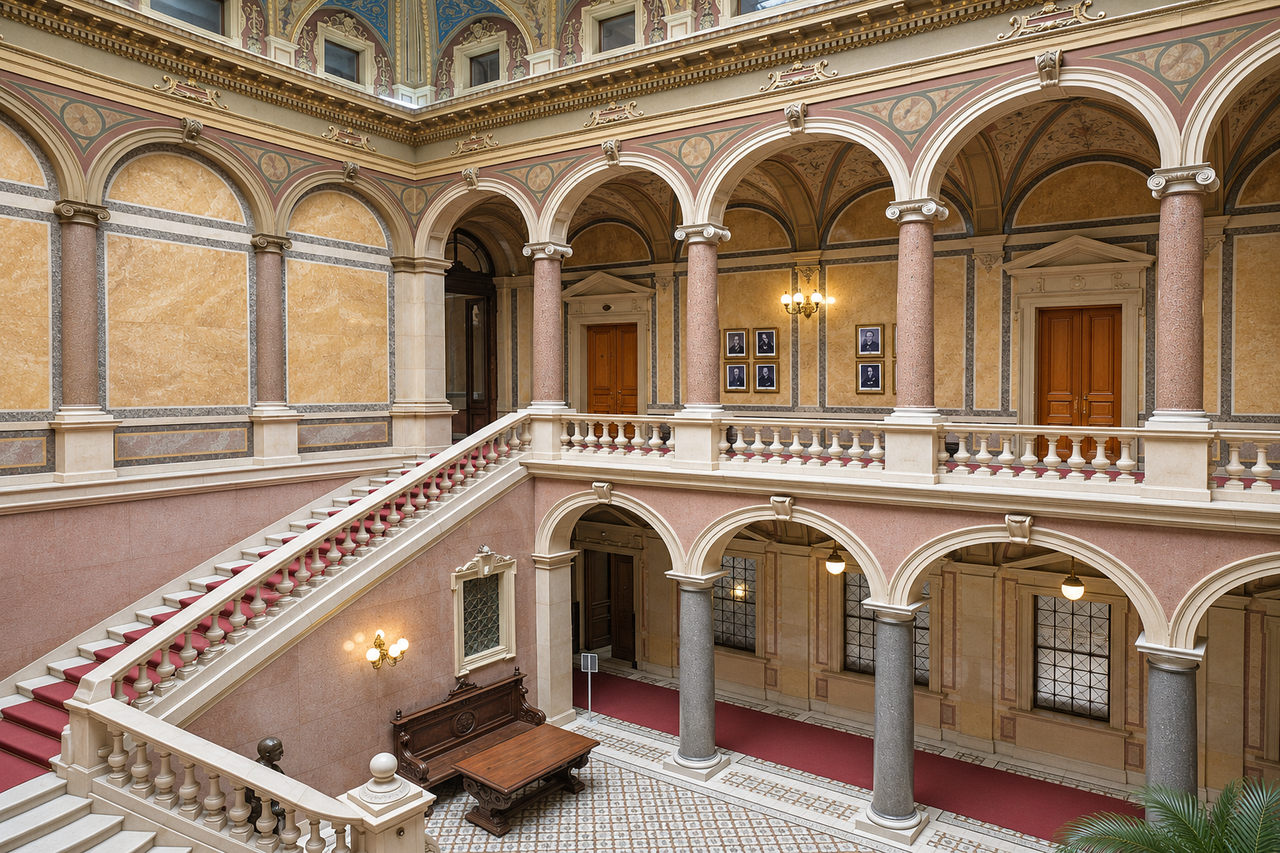
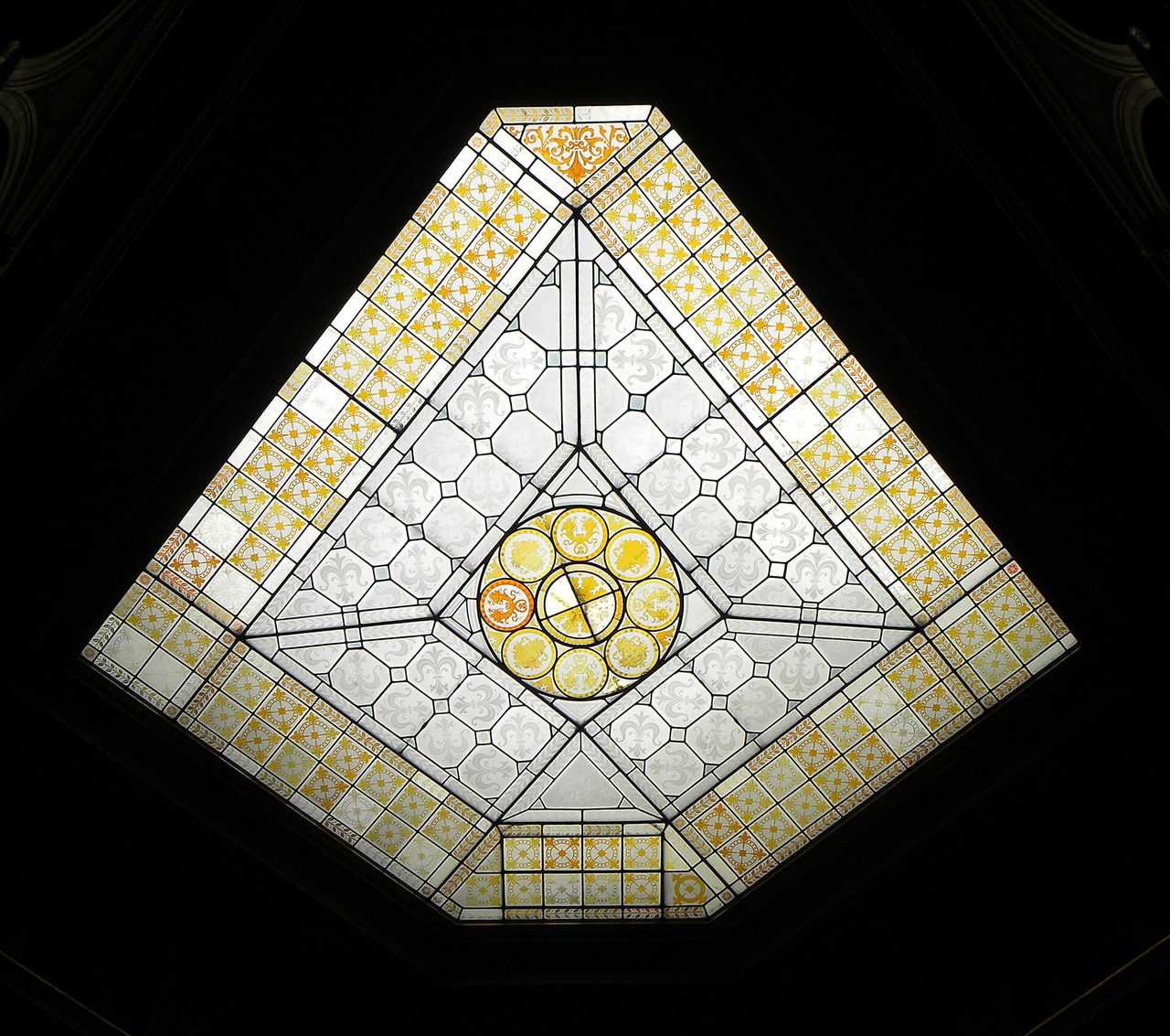
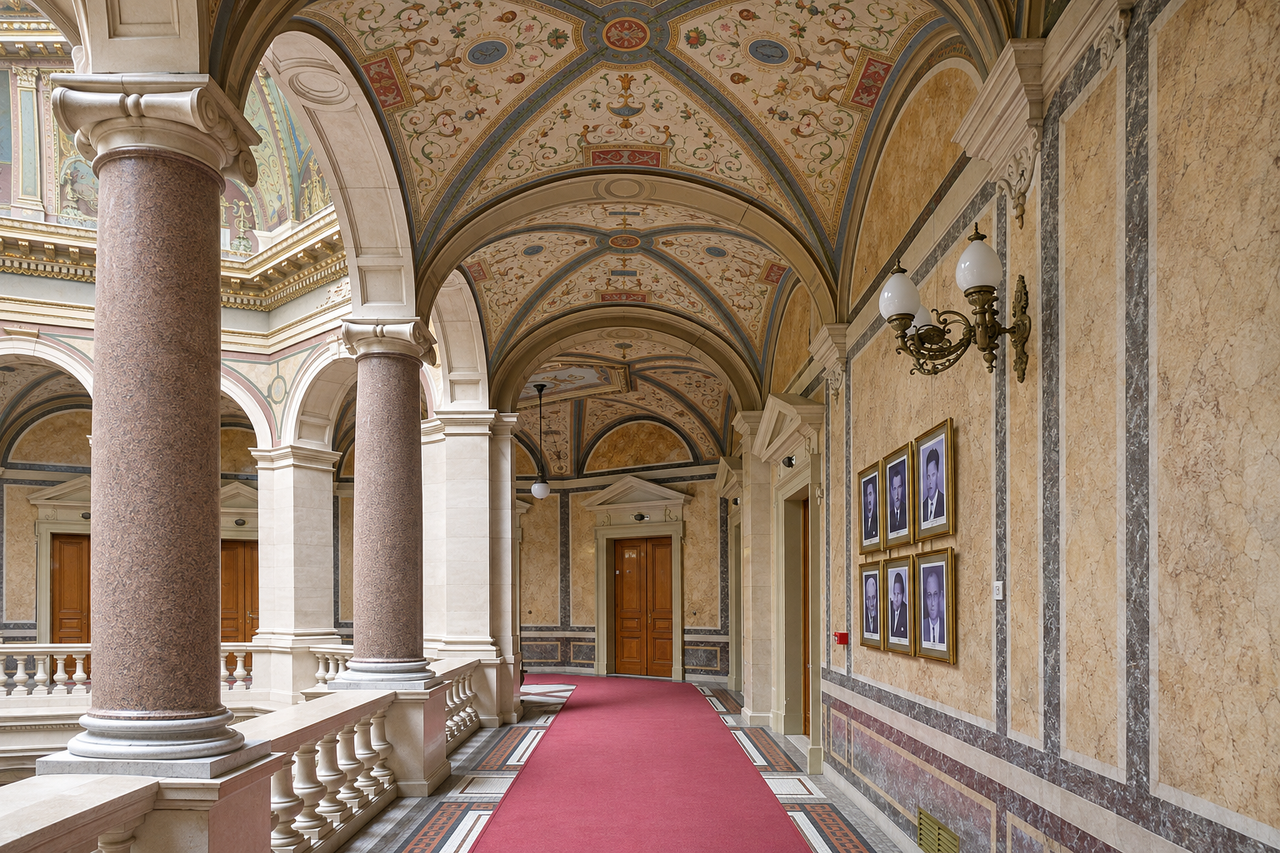
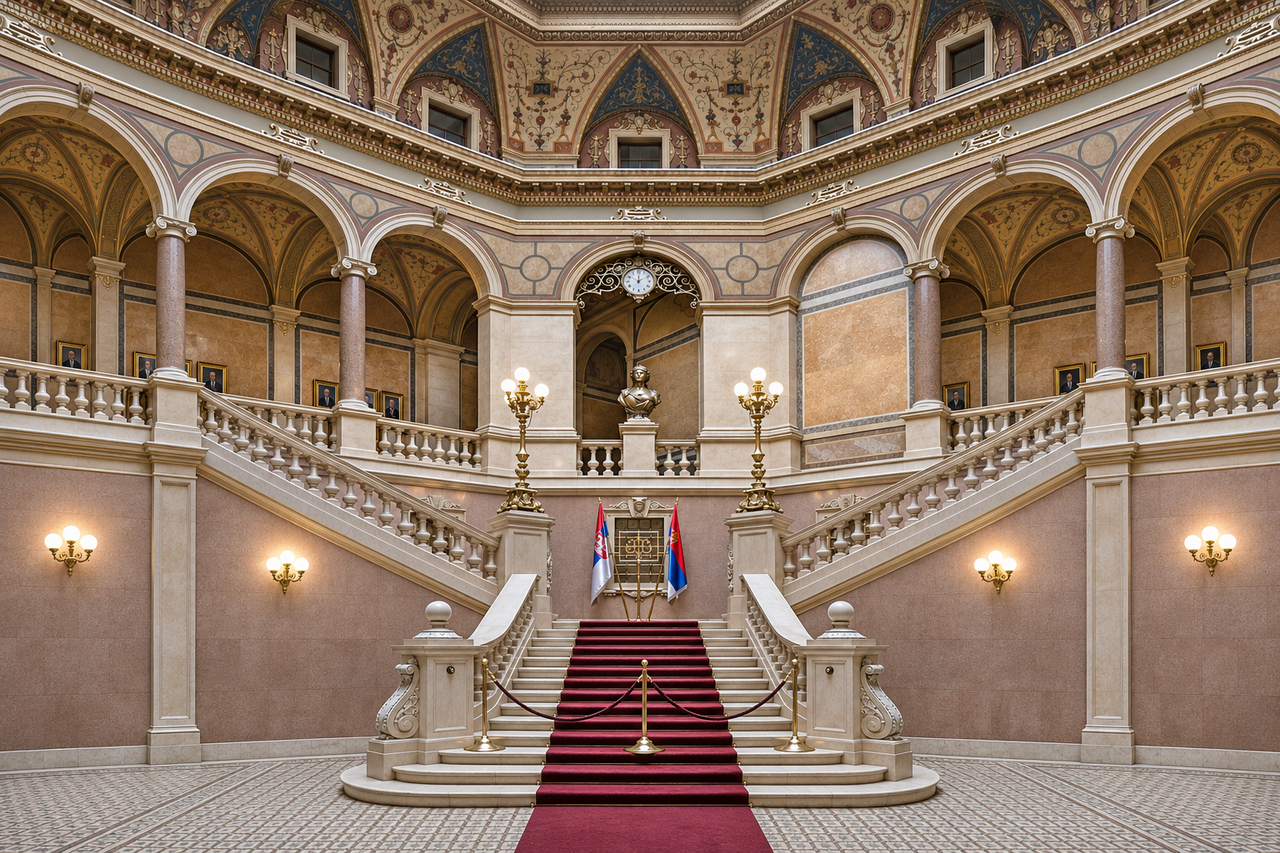
Plan your visit: The exhibition space is open on weekdays, 10 am–4 pm, with free admission. Individual exhibition visits require no advance booking; groups must book ahead. Enquiries: izlozba@nbs.rs.
3. Princess Ljubica’s Residence: From Divanhana to European Salon
At Princess Ljubica’s Residence, changes in interior design tell the story of changing ways of life.
The permanent exhibition, Interiors of 19th-Century Belgrade Homes, moves from Ottoman-style rooms to salons shaped by Central and Western European influences. Furniture, paintings and decorative objects reveal the domestic surroundings of the ruling dynasty and prominent Belgrade families.
Spend a little longer in the divanhana, a space intended for gathering. Its position beside the windows and its seating arrangement suggest a different rhythm of home life: conversation, coffee and time spent together.
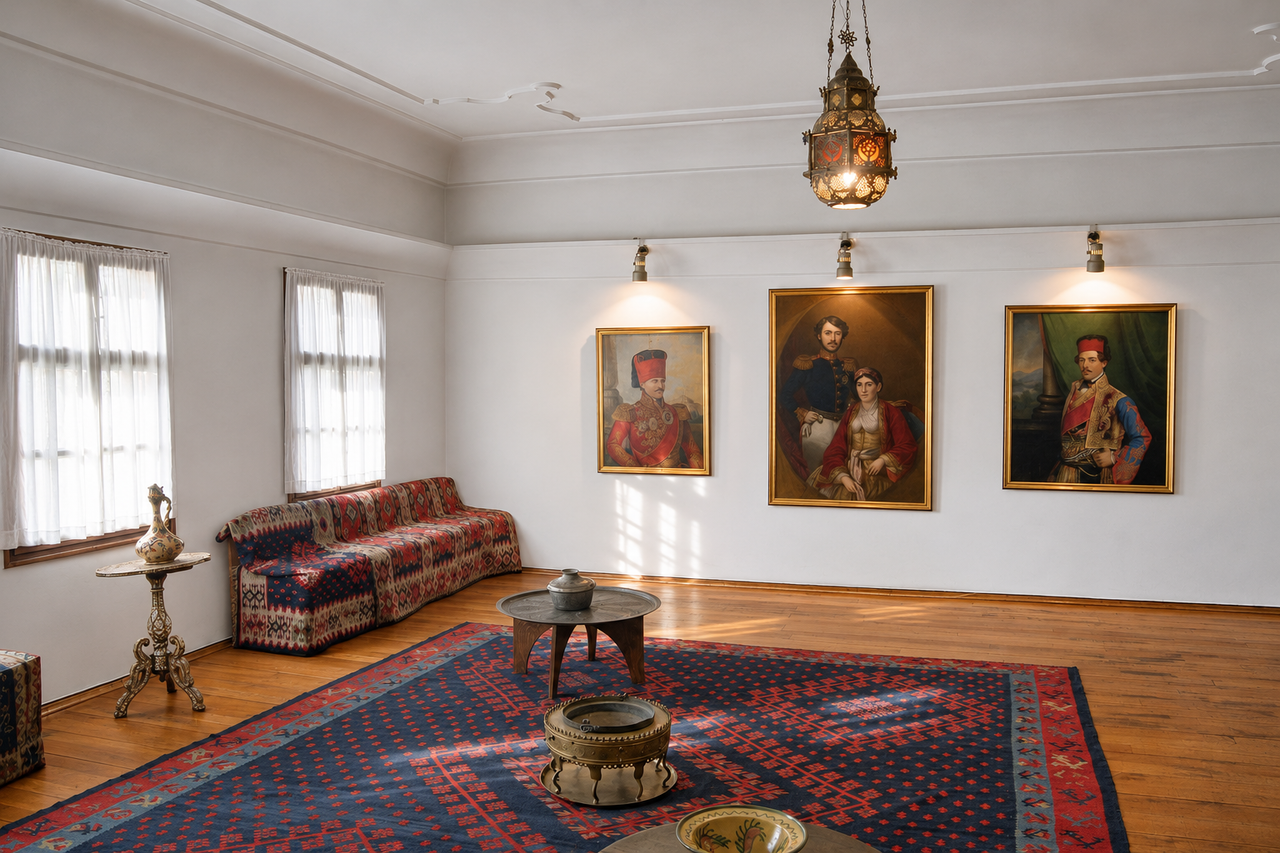
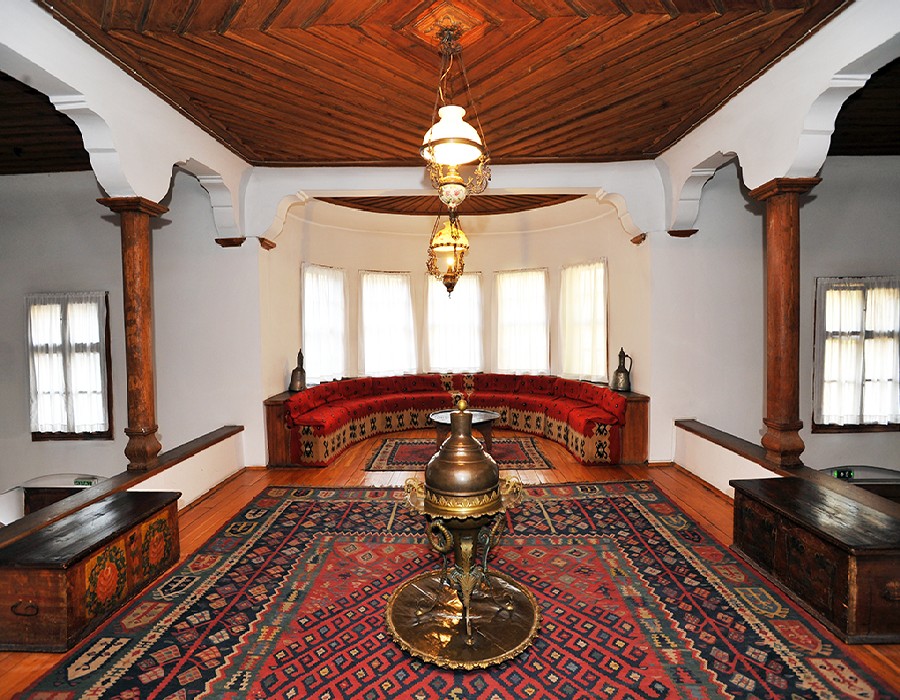
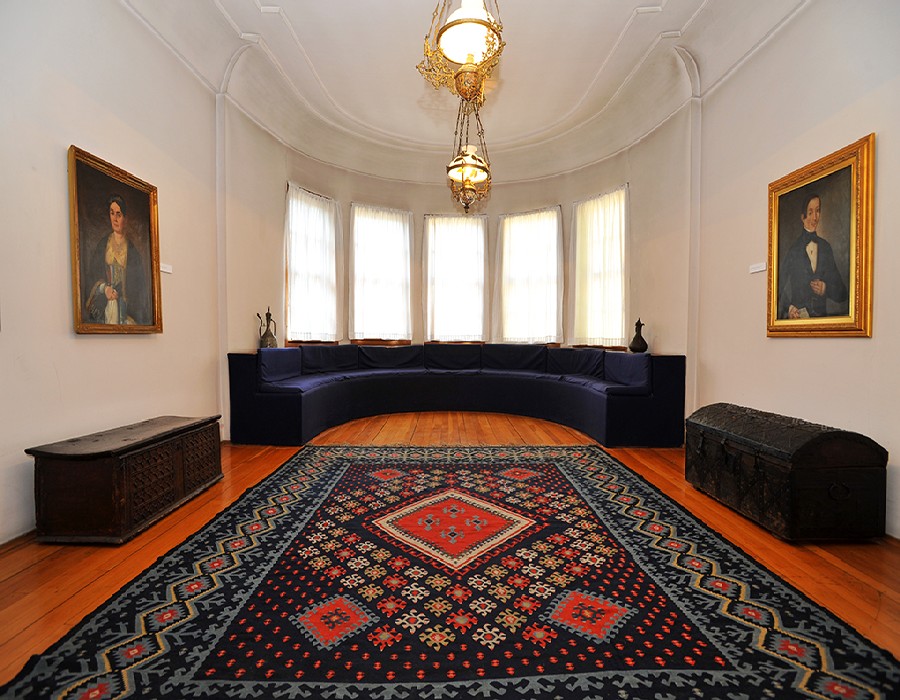
Then compare this setting with the European-style salons. Differences in furniture and decoration also reveal changing habits, tastes and ways of welcoming guests.
Bear in mind that this is a museum display assembled from objects of different origins, rather than an untouched home with every possession in its original place.
Planning your visit: The residence is at 8 Kneza Sime Markovića Street. Check opening hours and current special programmes, which may require a separate reservation.
4. House of the National Assembly: A Library, Salons and Art Behind a Familiar Façade
Even if you know this building’s exterior well, a tour inside offers a different understanding of its character.
According to the Tourist Organisation of Belgrade’s tour description, visitors explore the entrance vestibule, central hall, small and large assembly chambers, library and Prince Paul’s Salon. The tour also provides an opportunity to see artworks by artists including Sava Šumanović, Petar Lubarda and Nadežda Petrović.
Shift your attention from the building’s familiar public role to its interiors. Notice the transitions between large shared spaces and more intimate rooms. The library and salon reveal an atmosphere quite different from the one usually seen on television.
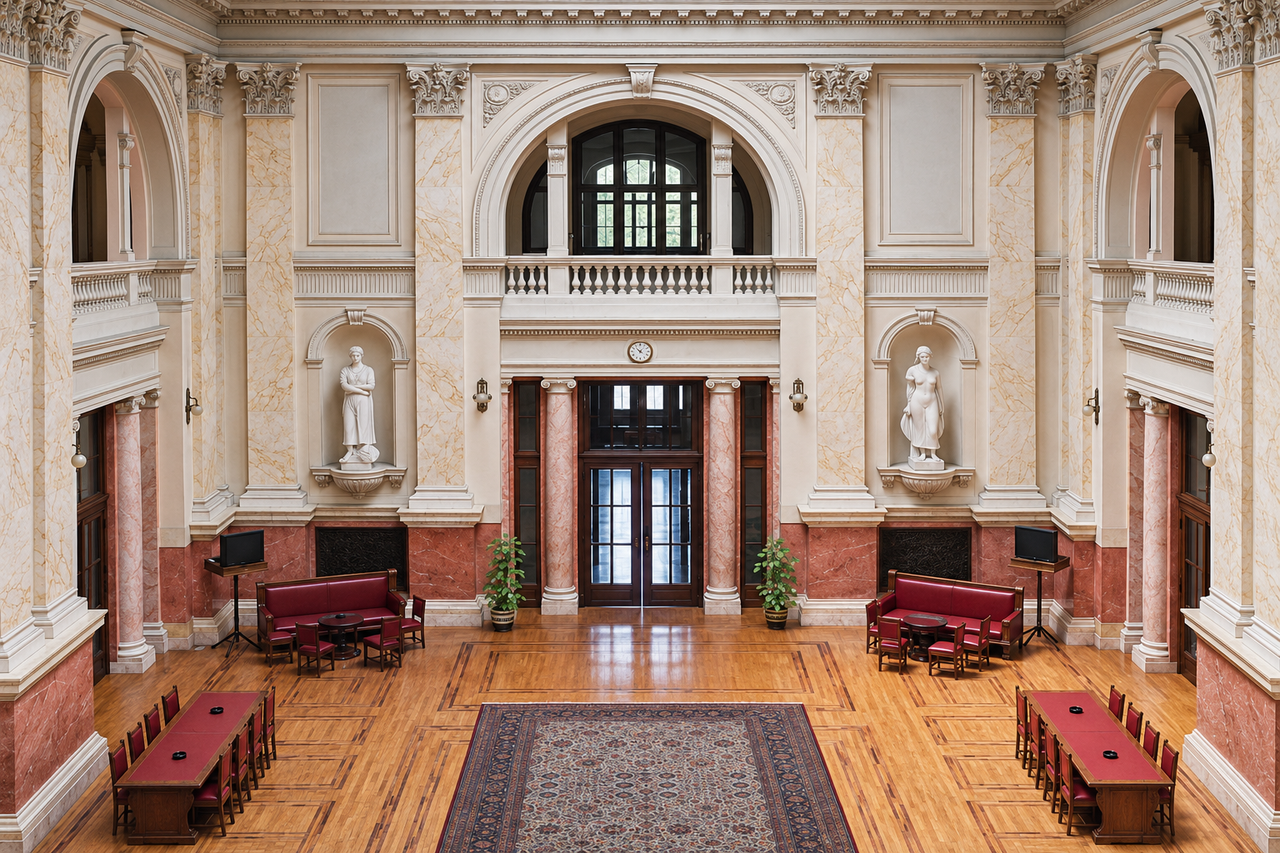
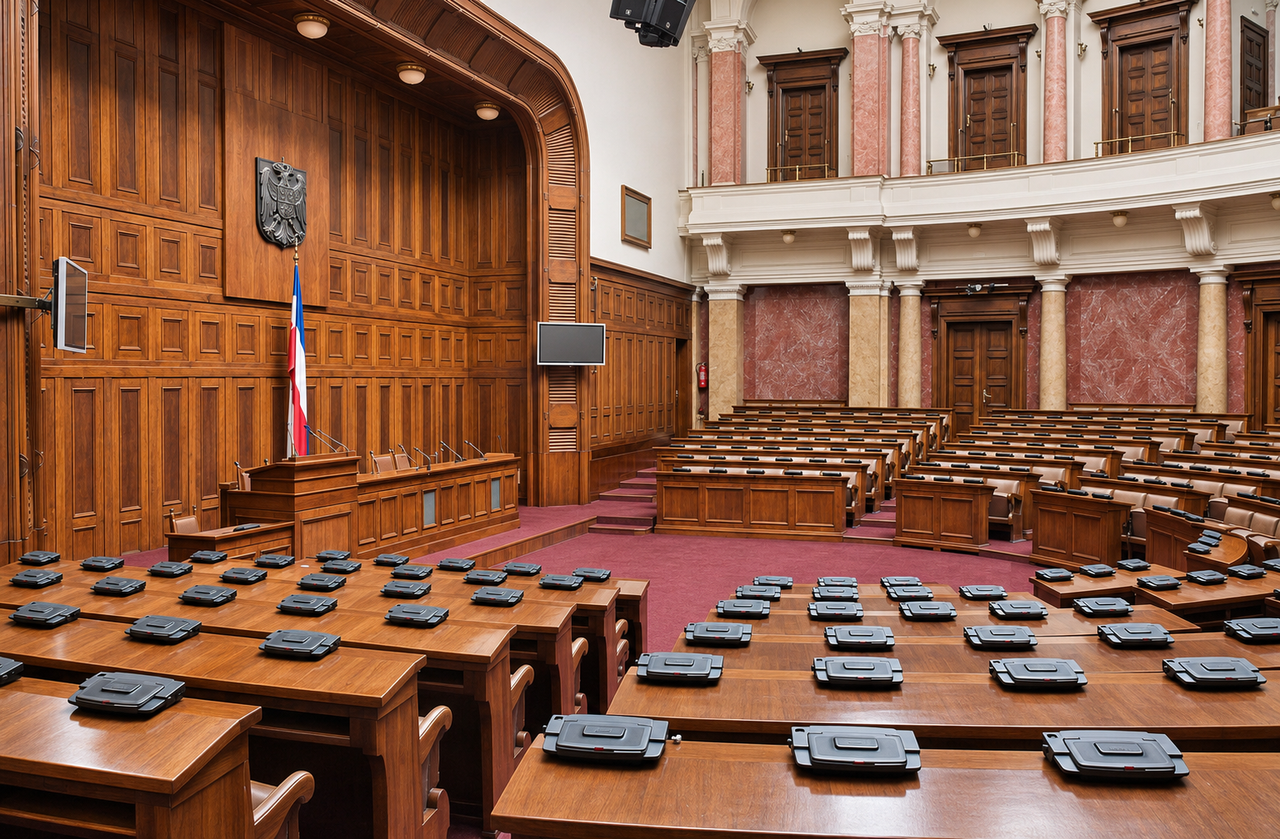
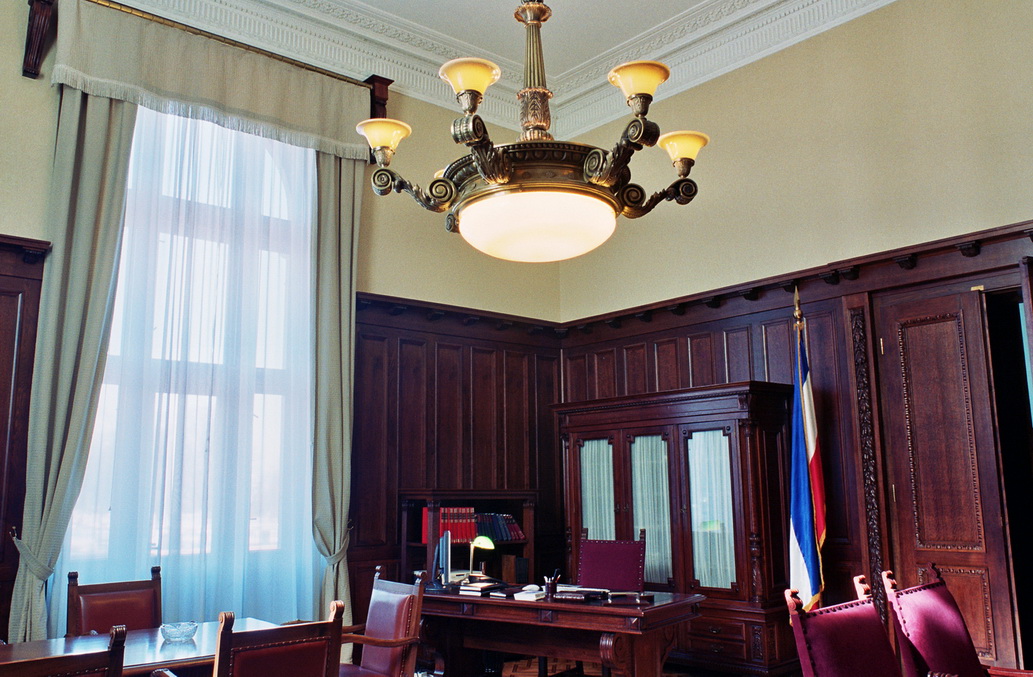
A guided visit is particularly valuable here, connecting the spaces, their functions and the art displayed within them.
Planning your visit: Advance booking is required. The National Assembly lists both group and individual visits, arranged by emailing edukacija@parlament.rs. Confirm the date and entry requirements beforehand.
5. The Royal and White Palaces: Two Perspectives on Royal Life
An organised visit to the Royal Compound in Dedinje offers an introduction to the Royal Palace, the White Palace and the Royal Chapel of Saint Andrew the First-Called.
The most interesting approach is to compare them: the impression each space creates, the arrangement of artworks and the way the interiors combine ceremonial and residential functions. A guide provides context that photographs alone cannot convey.
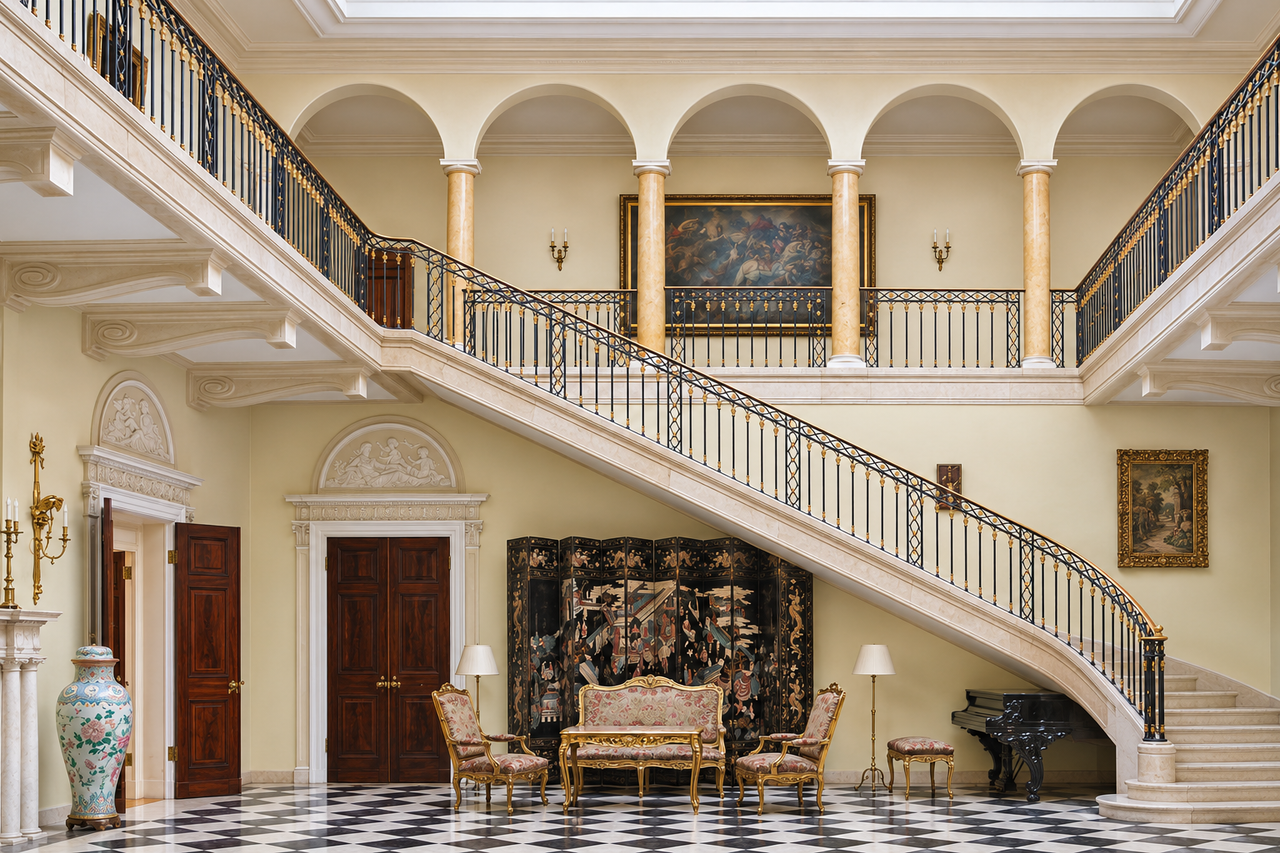
According to the official visitor information, the tour lasts approximately two hours and includes walking through the grounds. Expect to spend time outdoors, even if the interiors are your main reason for visiting.
Planning your visit: Tourist tours are organised through the Tourist Organisation of Belgrade on agreed dates. The official website lists a season running from April to November; a specific November date must be confirmed. Interior photography is not permitted.
6. The House of Jevrem Grujić: Inside Old Belgrade’s Family Salons
On Svetogorska Street, right next to Atelje 212 theatre, one house preserves a more intimate history of Belgrade – revealed through family portraits, salon furniture and objects passed down through generations. The House of Jevrem Grujić offers a glimpse into the world of a family whose story brings together diplomacy, politics and art.
Take time to notice the details: ornate picture frames, carved armchairs, porcelain and decorative objects. Together, they evoke a home filled with memories, while the art collection and family possessions reveal the tastes, habits and connections of its former residents.
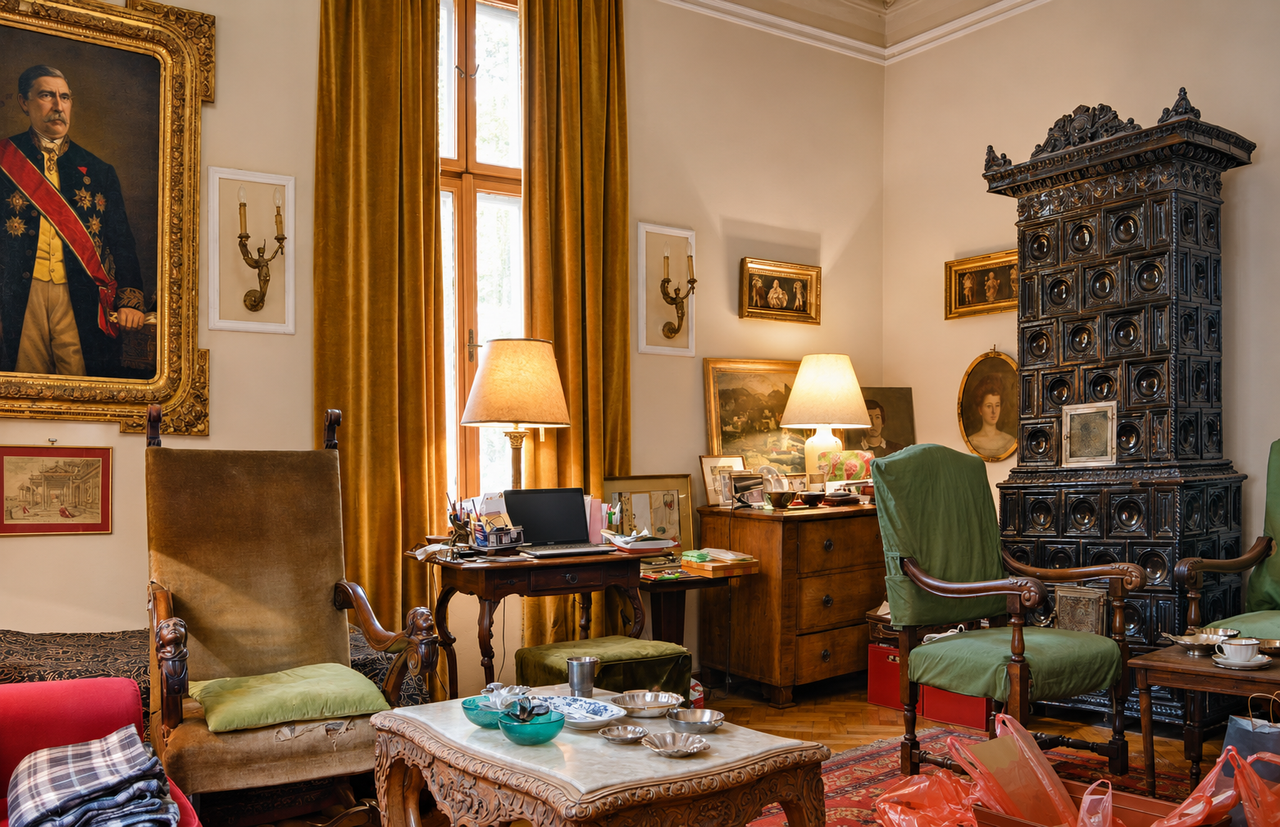
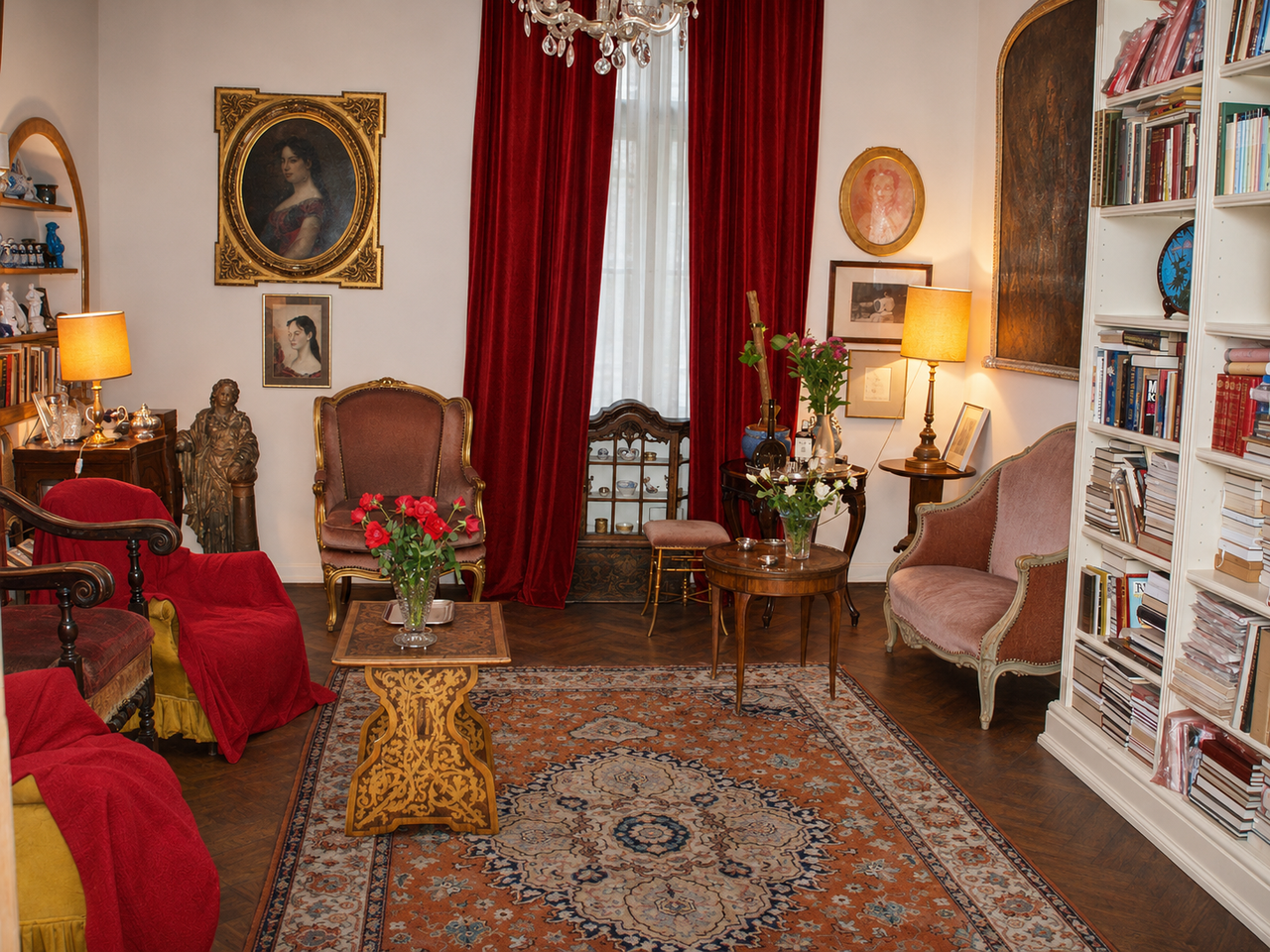
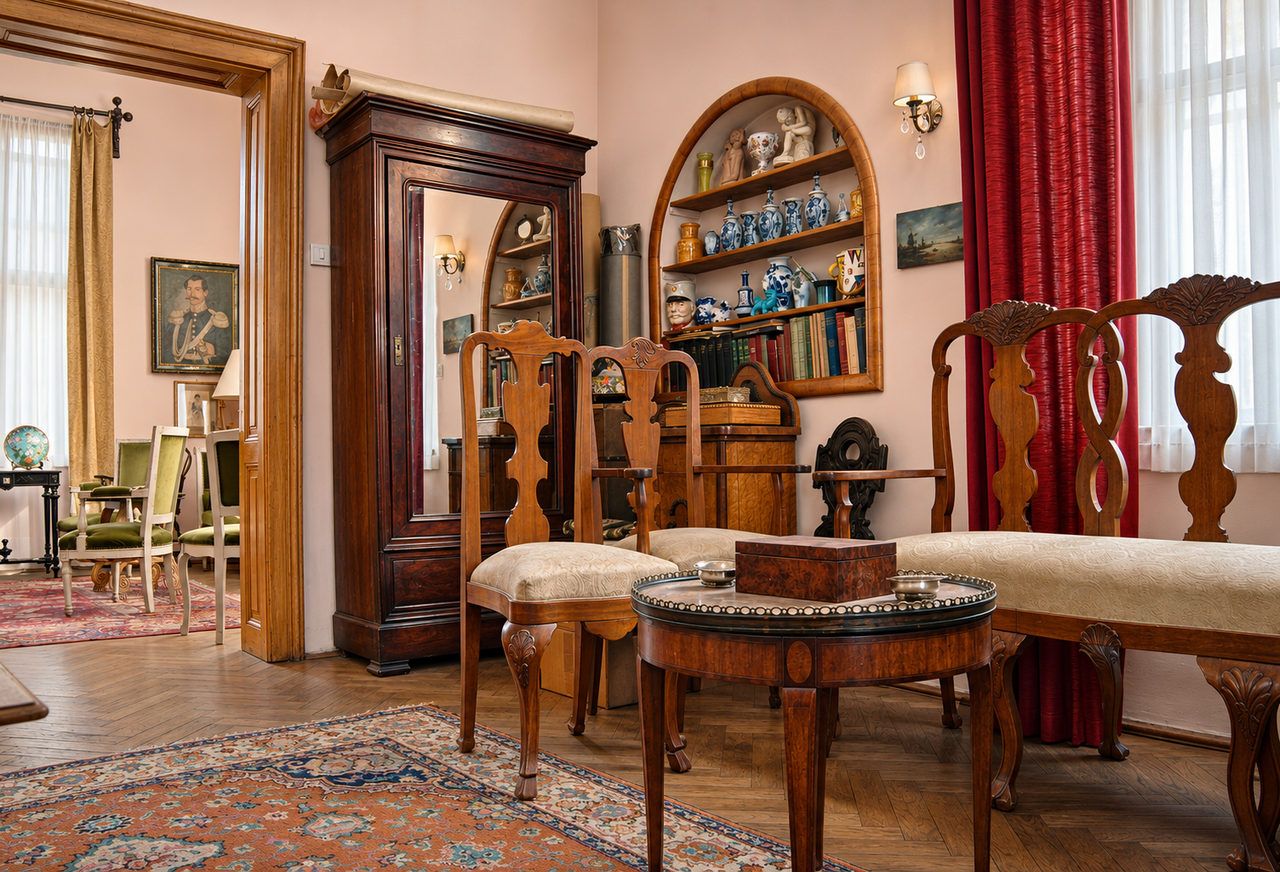
Why visit: for the combination of a historic domestic setting, art and family stories that give major historical events a personal dimension.
Planning your visit: the house is located at 17 Svetogorska Street. Check current exhibitions and tour times before arriving; visits outside the museum’s regular programmes must be arranged in advance.
7. Paja Jovanović Museum: An Artist’s World in a Salon Apartment
The Paja Jovanović Museum brings a quieter, more personal conclusion to this exploration of Belgrade’s interiors.
The painter wanted to leave Belgrade objects from his work and studio that were worth preserving, creating a space where visitors could learn more about him. Opened in 1970, the museum presents his legacy through artworks and personal possessions.
One distinction matters: the salon apartment housing the museum was not the painter’s own home. The value of the visit lies in encountering his legacy and the way it is presented within this setting.
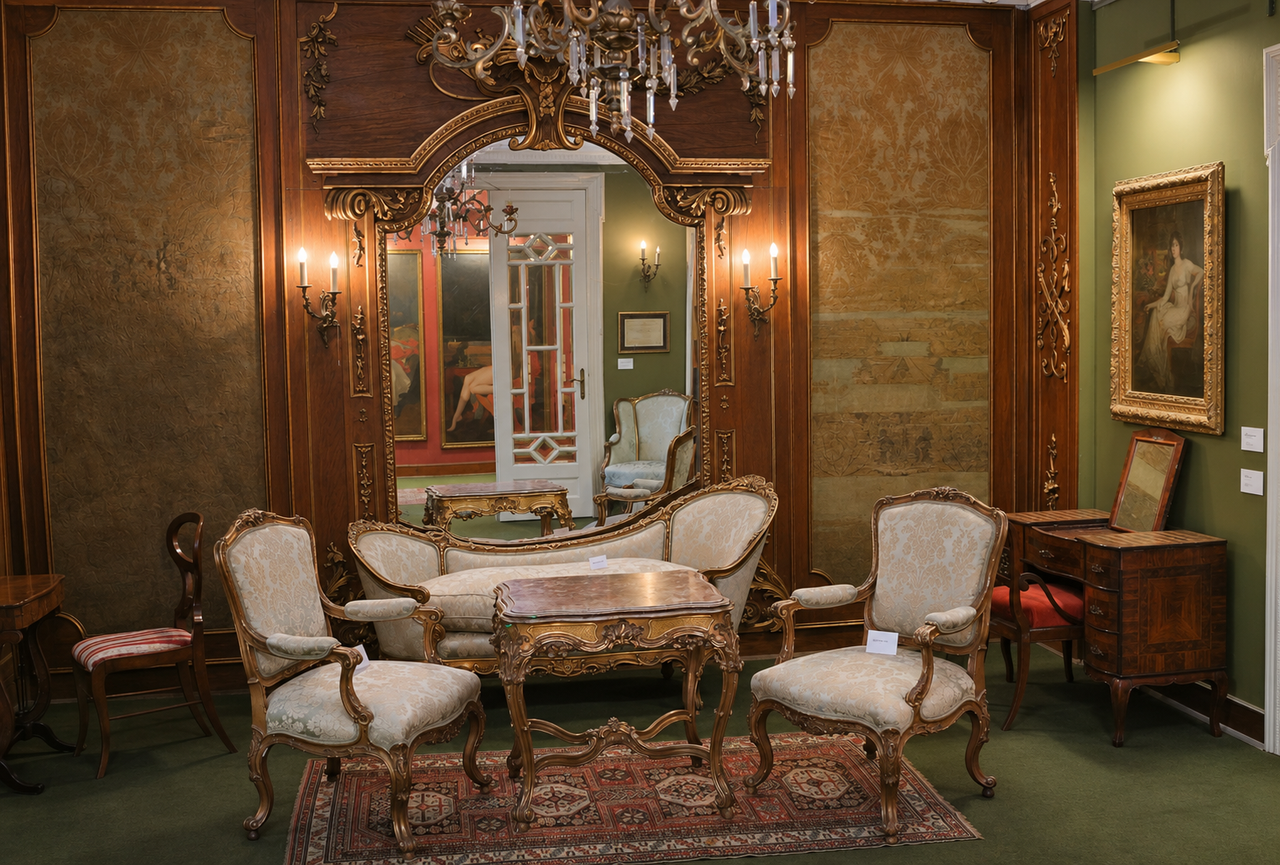
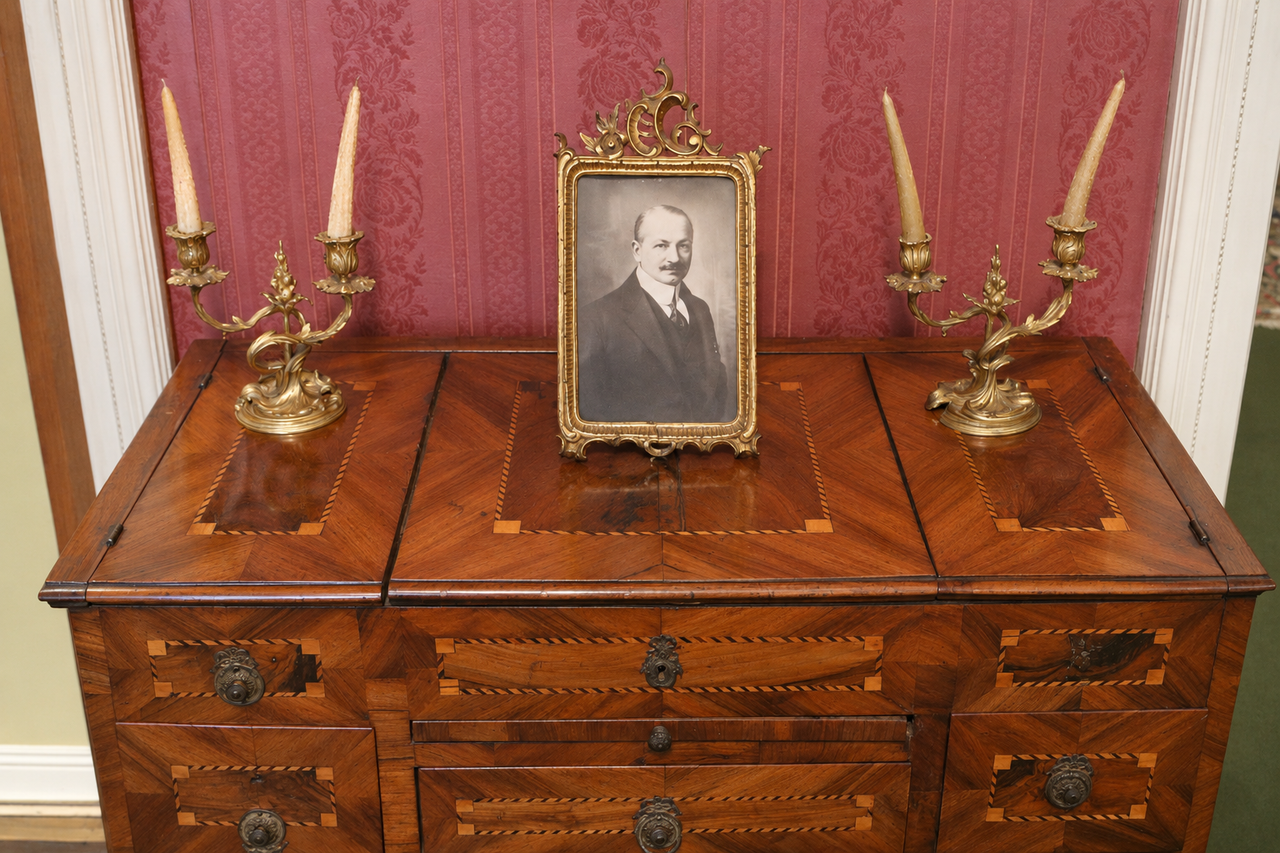
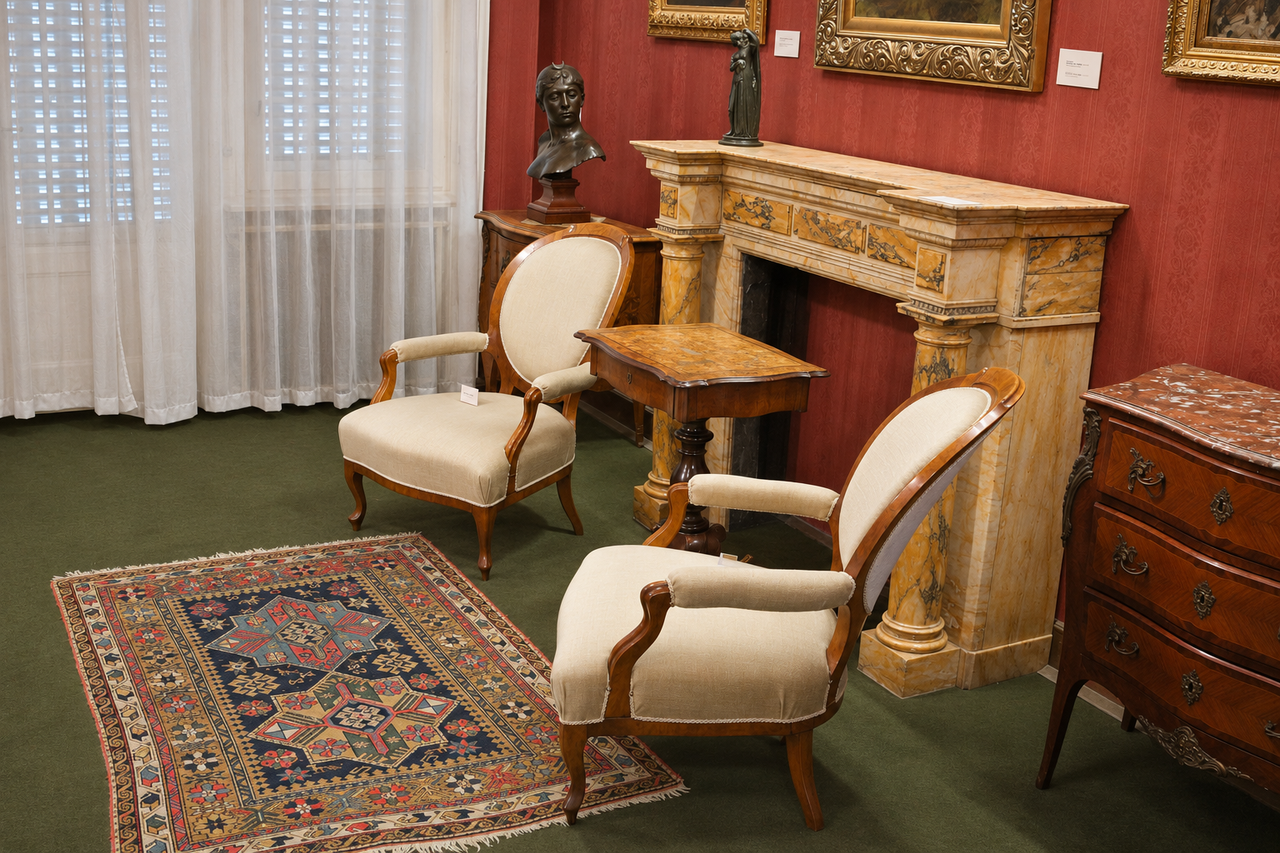
Rather than trying to remember every exhibited work, choose a few details that draw your attention. Consider how the artist’s world emerges through portraits, objects and the atmosphere of the display.
Planning your visit: The museum is at 21 Kralja Milana Street, inside a residential building. Check museum opening hours and entry instructions before arriving.
Planning Your Own Interior Tour
Do not try to visit all seven places in a single day. For an enjoyable outing, choose two interiors and leave time for a walk and a break between them.
Princess Ljubica’s Residence and the Sekulić Icon Collection could form the basis of a day in the historic centre, provided you coordinate visiting times in advance. Visit Cvijić’s house while exploring Kopitareva Gradina, and allow a separate outing for the Royal Compound.
For the Palace of Serbia and the House of the National Assembly, start with a confirmed tour date and plan the rest of your day around it.
Practical note: Before setting out, check opening hours, reservations, photography rules and accessibility. For smaller museums in houses and apartments, ask specifically about stairs and entrances if you are bringing a pushchair or require step-free access.
In these spaces, Belgrade reveals itself through details: a painted wall, the arrangement of chairs, a view from a divanhana or a painting in an unexpected place. Choose a door and give yourself time to discover what lies behind it.
Serbia.com recommends
Handpicked places, stays and experiences to make your journey through Serbia even more memorable.
Plan your visit
Everything you need to plan your perfect trip.