




Where to pause for a view, which gates to walk through and what to notice along the way – a walking guide for anyone who wants to get to know Belgrade Fortress a little better.
Many visits to Kalemegdan follow a familiar pattern: walk to the Victor monument, admire the rivers, take a photograph and head back towards the city. Yet between the park paths, stone passages and ramparts, there are plenty of reasons to linger.
One gate preserves traces of medieval Belgrade, another frames a tower, while below the familiar viewpoints lie churches, a historic fountain and paths leading to the Lower Town. In autumn, changing leaves and cooler air give the walk a particularly inviting backdrop.
This guide connects the highlights into a walk you can adapt to your schedule, with short detours and time to rest along the way.
Before You Begin: Kalemegdan and the Fortress Are Not Quite the Same
Although Kalemegdan is often used as the name for the whole complex, it is the park surrounding Belgrade Fortress. The fortress comprises the Upper and Lower Towns, with their gates, towers, ramparts and other historic structures. Knowing the distinction also helps you find your way: reaching the park does not mean you have already seen the most interesting parts of the fortifications.
Allow around two to three hours for this suggested walk, at a relaxed pace and without extended visits inside individual attractions. Add more time if you plan to visit the museum or walk down to Nebojša Tower.
Start at the end of Knez Mihailova Street, take a short detour along the Sava Promenade, then head towards the main fortress entrance.
1. The Sava Promenade: Your First View and a Place to Pause
Before entering the fortress, stroll along the Sava Promenade. Views open towards the Sava River, New Belgrade and Zemun, offering a first impression of the fortress’s position above the rivers.
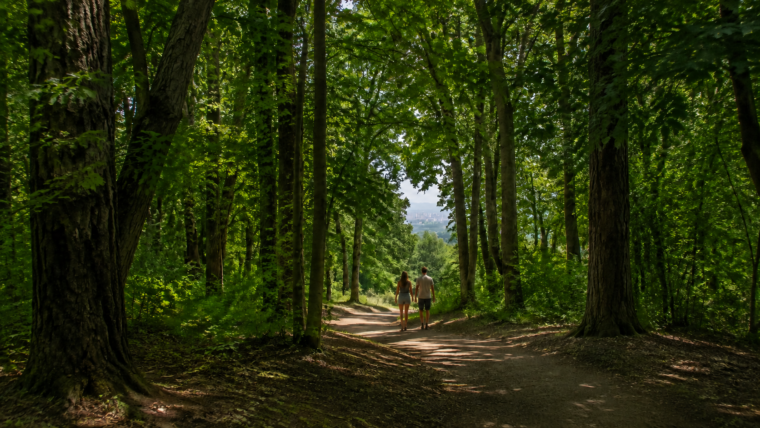
Look beyond the widest panorama. Notice how the path, benches and branches frame the scenery. In autumn, these details can give your photographs a distinctive character.
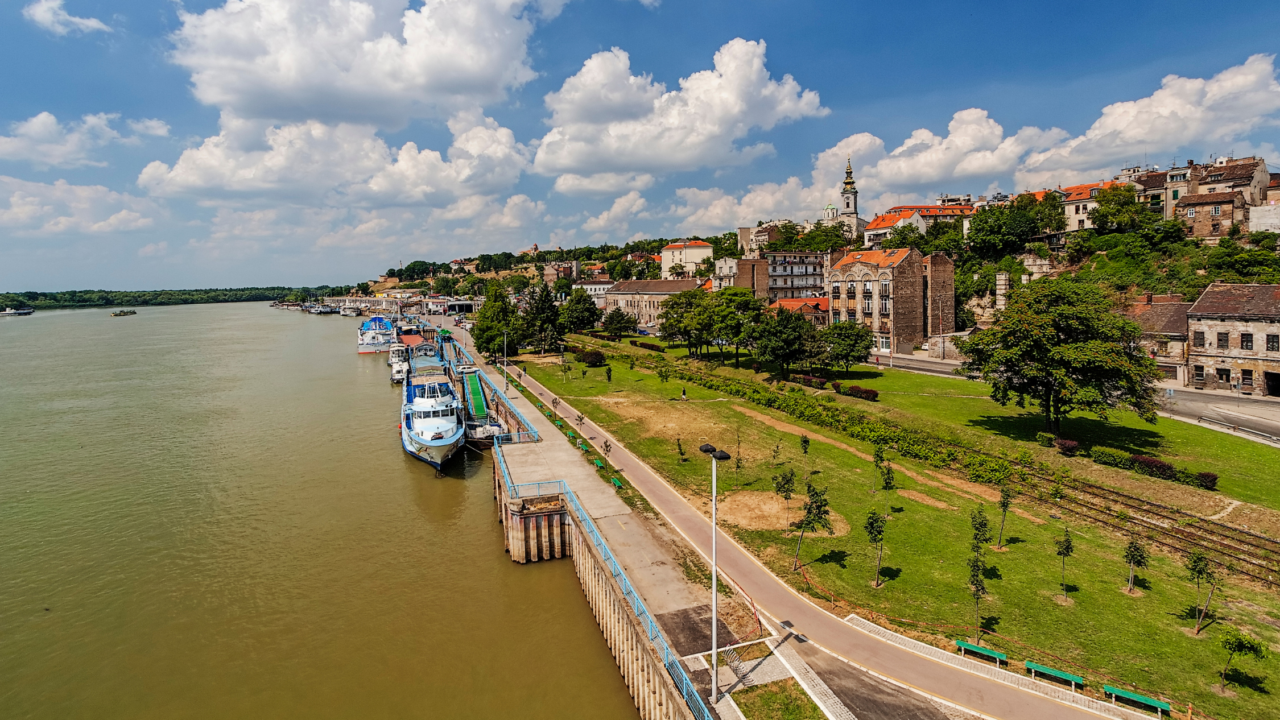
For a photograph: include a stretch of the promenade or a branch in the foreground, rather than filling the entire frame with river and sky.
For a break: this would be our choice for a longer rest on a bench. Pause now, or return towards the end of your visit.
2. The Stambol Gates: Entering the Fortress Before the Clock Tower
From the park, make your way towards the main fortress approach. This route takes you through the Outer and Inner Stambol Gates, followed by the Clock Gate.
Slow down here. Rather than treating the passages simply as a way to reach the next landmark, notice the layers of the entrance: gates, walls and changes of direction gradually lead you into the fortifications.
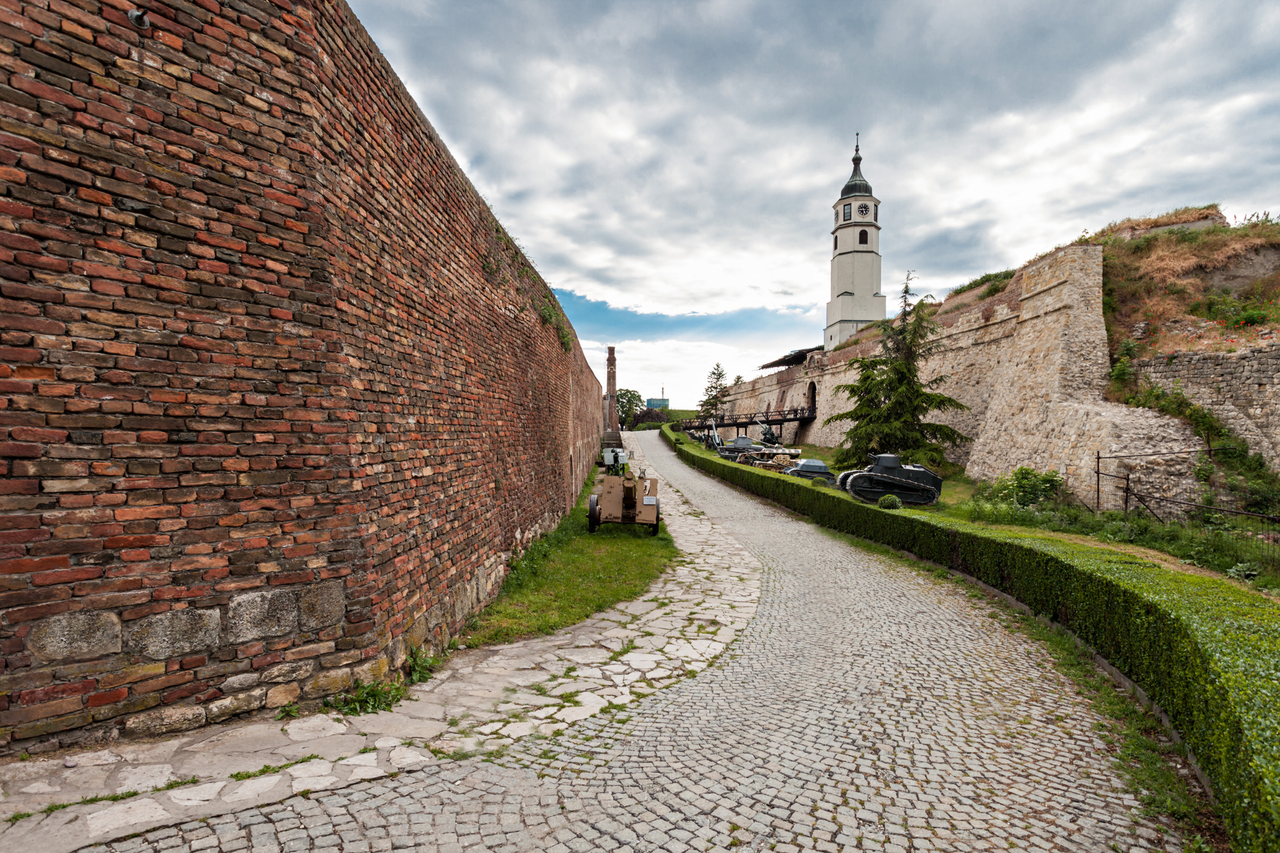
Pause before a passage, then turn around after walking through it. The same gate can look surprisingly different from either side.
For a photograph: use a stone arch to frame the scene beyond. Wait for the passage to clear a little, or leave a walker in the frame to give a sense of scale.
3. The Clock Gate and Clock Tower: Look Up – and Inside
The Clock Tower is one of the easiest landmarks to navigate by. But while most eyes turn towards the clock, there are details worth noticing beneath it.
The gate is older than the tower that gave it its name. Inside the passage, part of an earlier vault built from thin bricks survives – a small trace of the fortress’s past that is easy to miss as you walk through.
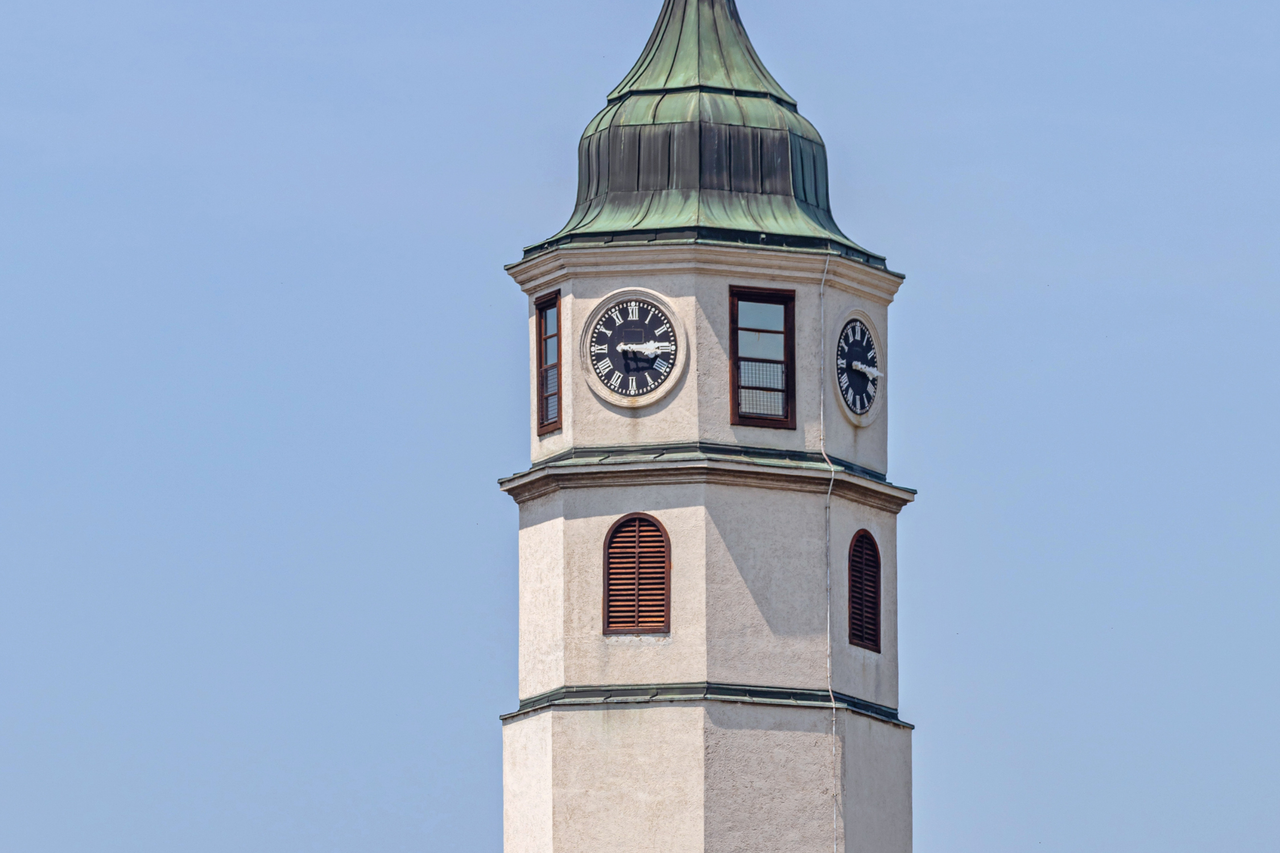
Take a moment to look at the vault before stepping into the open space of the Upper Town.
For a photograph: try two different compositions: one showing the whole tower from the approach, and another looking from the shaded passage towards the brighter space outside.
4. The Military Museum: A Brief Stop or a Visit of Its Own
The Military Museum stands along the approach to the Upper Town. If military history interests you, a museum visit could become a substantial part of your day. For this walk, you can pause in the surrounding area before continuing into the fortress.
This is a good point to decide what kind of visit you want. If you enter the museum, give it enough time. If your priority is a walk through gates and viewpoints, continue and save the museum for another occasion.
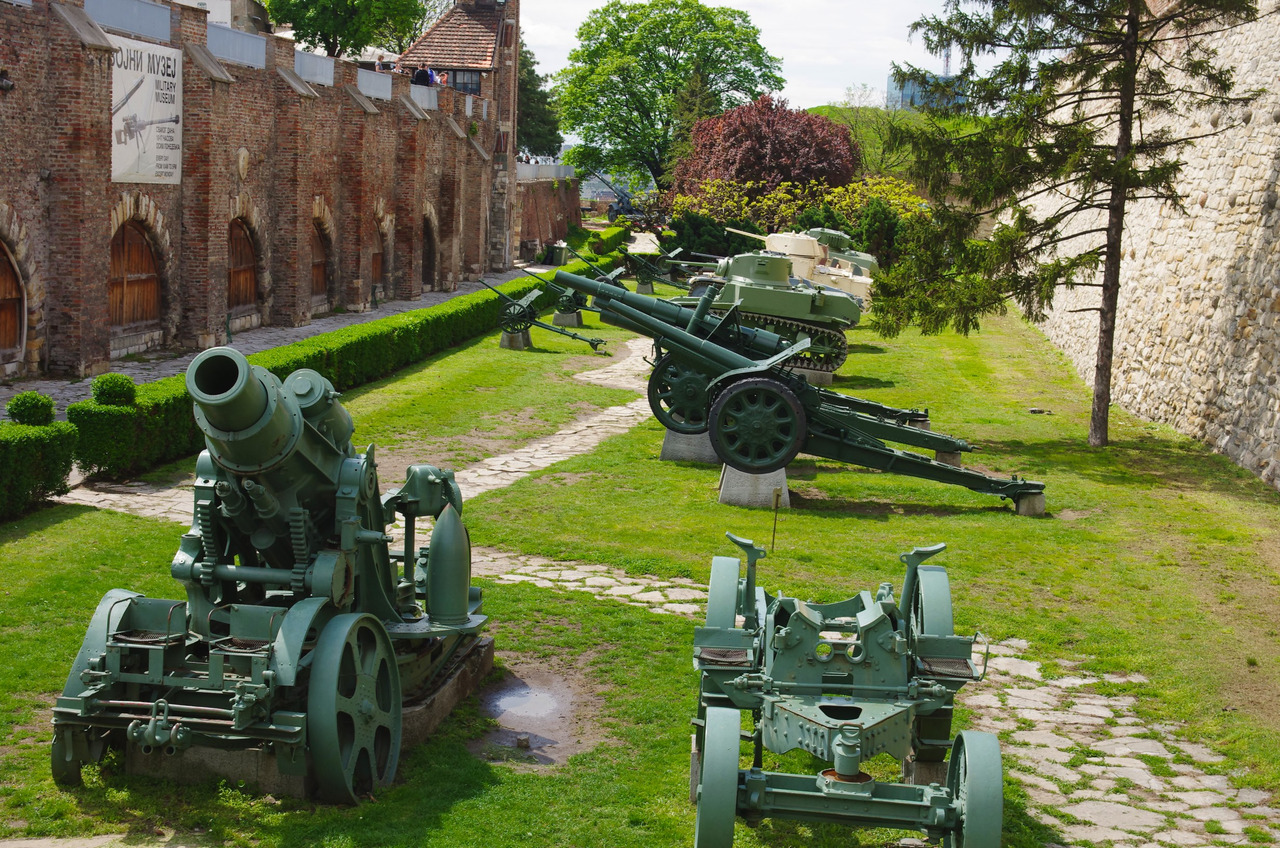
Practical tip: plan a museum visit separately from your walk through the grounds, and check its current opening hours.
5. The Victor Monument: A Panorama Worth Lingering Over
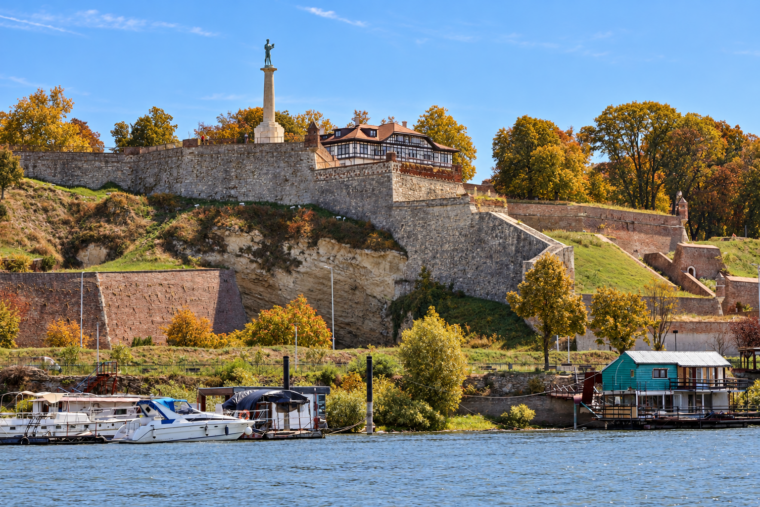
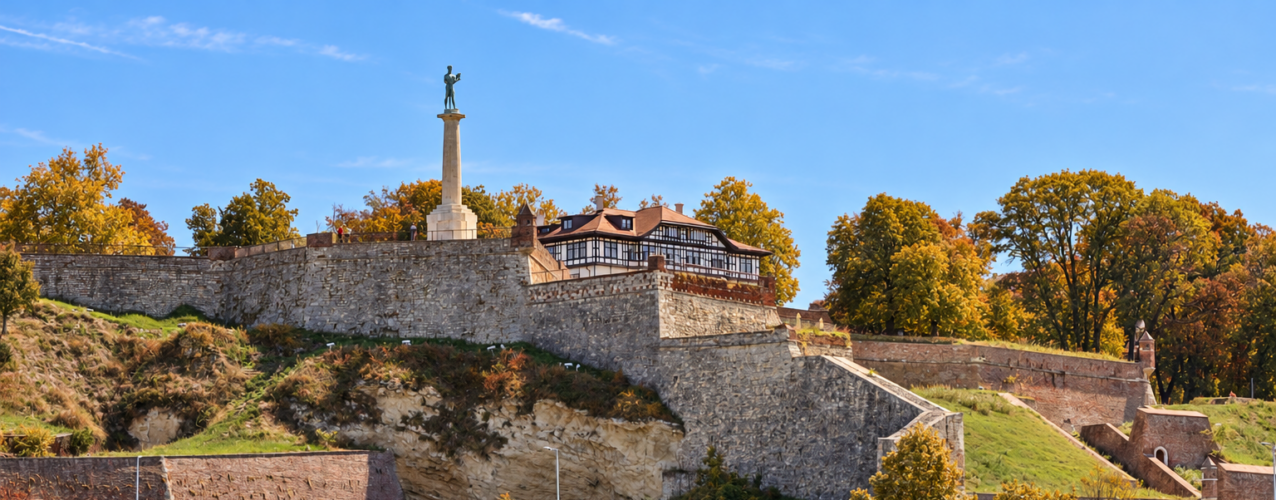
From the Clock Gate, continue across the Upper Town towards the Victor monument, known locally as Pobednik. Here, the space opens up and the rivers and wide sky immediately draw your attention.
Created by sculptor Ivan Meštrović, the monument was unveiled at the fortress in 1928. Interestingly, it was originally intended to form part of a fountain on Terazije Square – its present location was not the first plan.
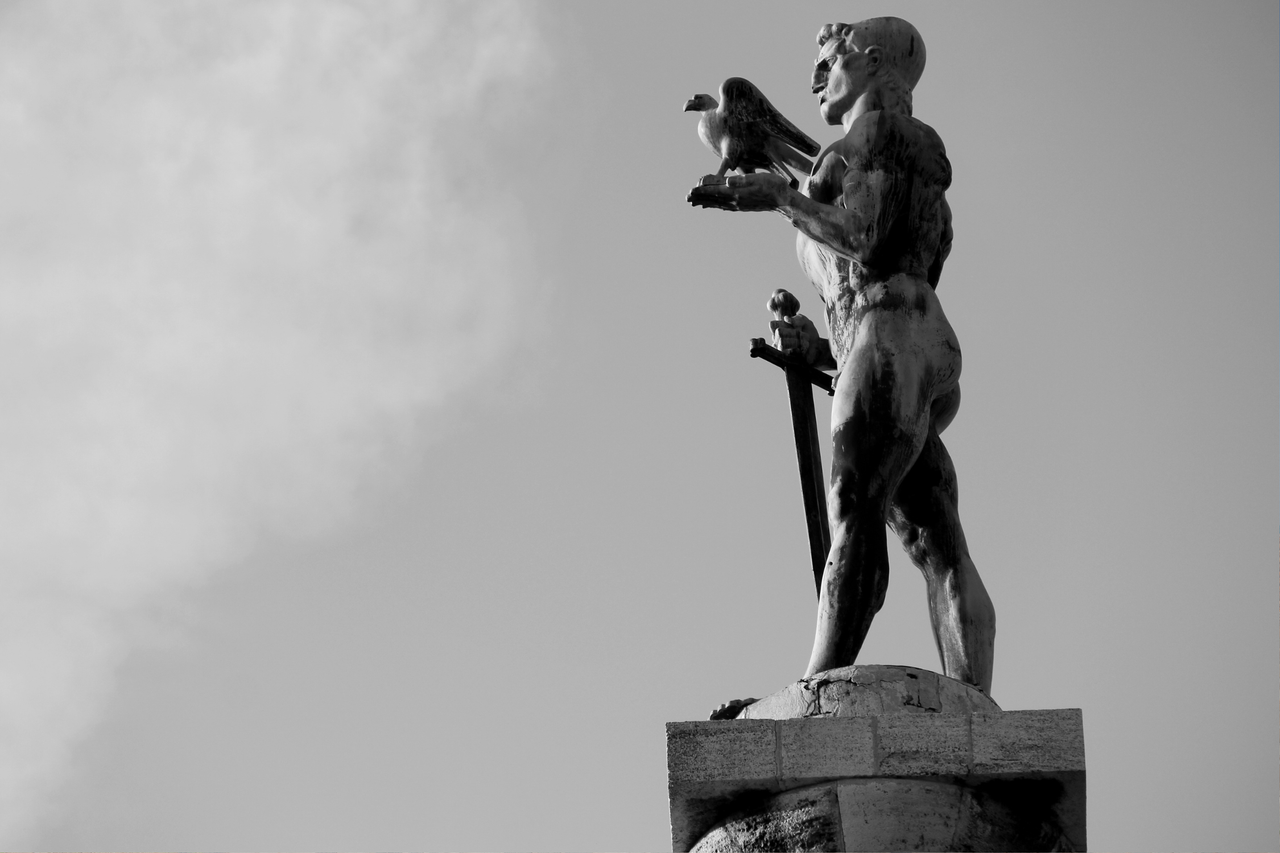
For a first visit, this is our choice for the main panoramic stop. Pause, find the confluence of the Sava and Danube, and take in the way the city stretches along the riverbanks.
For a photograph: step back far enough to include both the monument and its surroundings. Then try a second photograph of the panorama without the monument.
For the light: late afternoon can bring warmer tones and stronger silhouettes. To capture more detail on the sculpture, choose an angle that keeps the sun out of your lens.
6. The King Gate and Roman Well: A Short Detour Near the Monument
Near the Victor monument, look for the King Gate and Roman Well. This area is worth including even if you do not plan to enter the well. Step away from the main plateau and notice how the passages fit into the ramparts.
The well’s name holds a surprise: it is not Roman. The surviving structure dates from the Austrian reconstruction of the fortress in the first half of the 18th century. A document held in Vienna confirms that construction was completed in 1731.
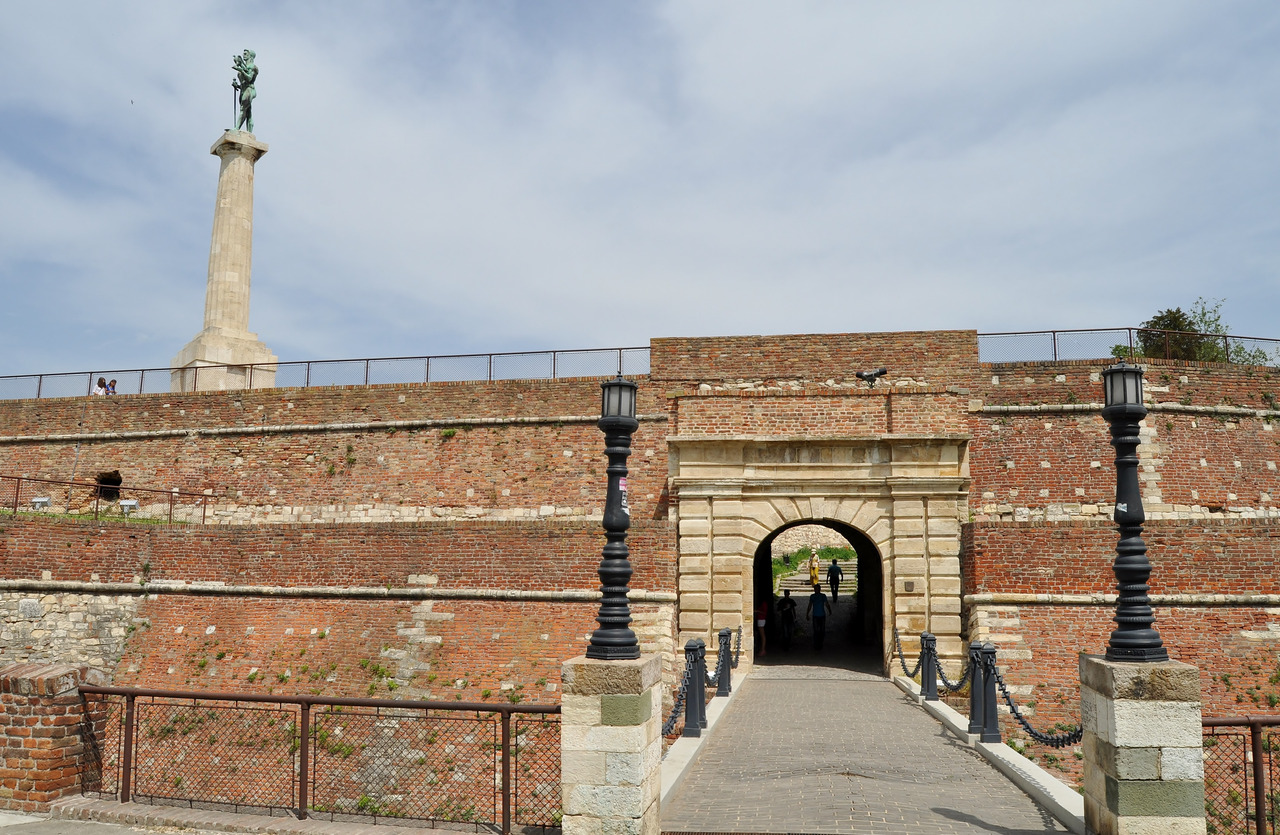
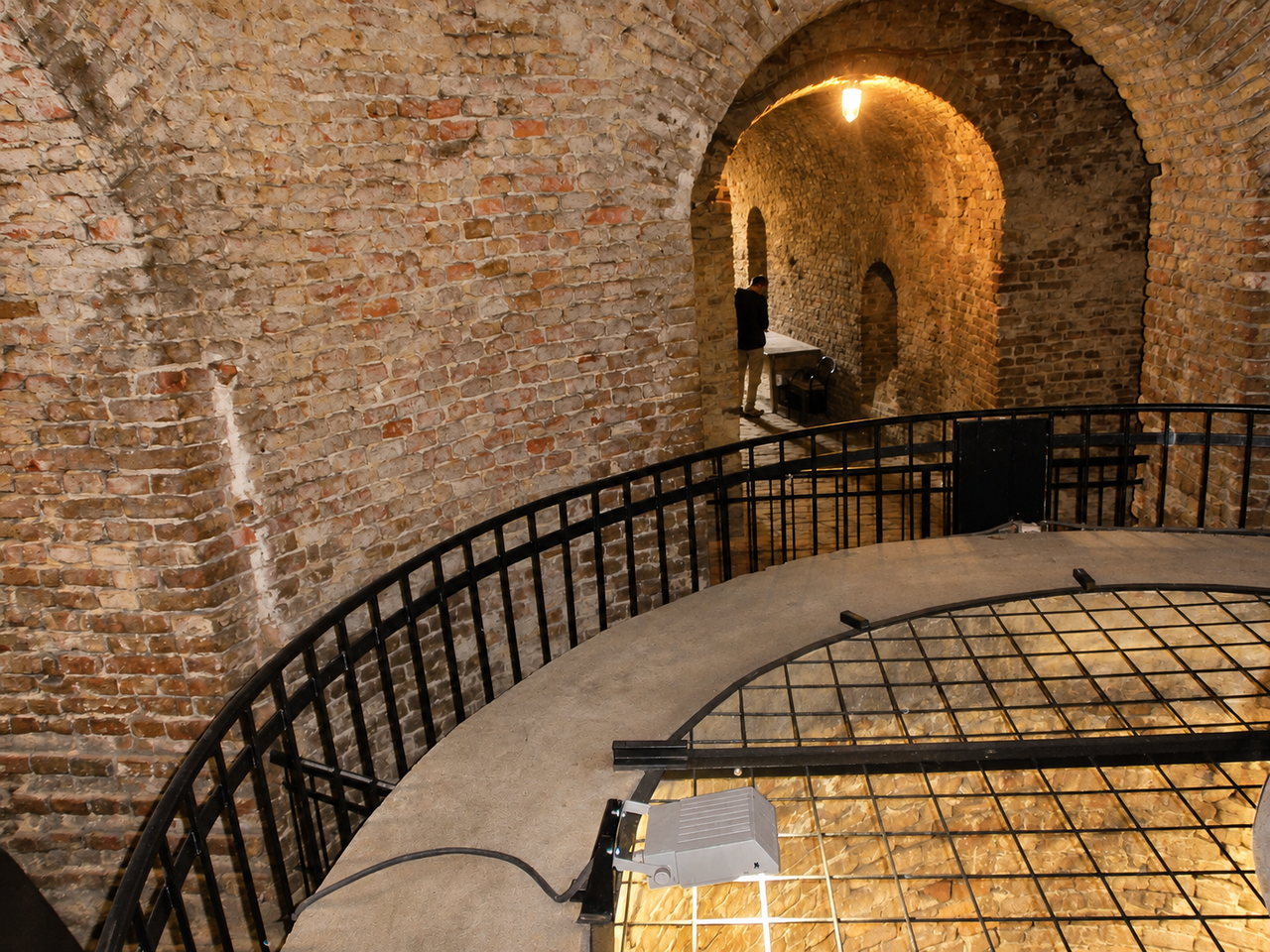
For a photograph: look for stone textures, the depth of the passages and contrasts between light and shadow.
Practical tip: access inside the well depends on opening hours and visitor arrangements. Check ahead if it is an important part of your plans.
7. The Defterdar Gate and Mehmed Pasha Sokolović Fountain: Easily Missed Details
Return to the Upper Town and continue towards the northwestern rampart and the Defterdar Gate. This is a good place to shift your attention from the panorama to the fortress itself.
Nearby is the Mehmed Pasha Sokolović Fountain, built in 1576–1577. Its surroundings once looked very different: the fountain stood in a moat beneath a bridge leading towards the main gate of the former castle.
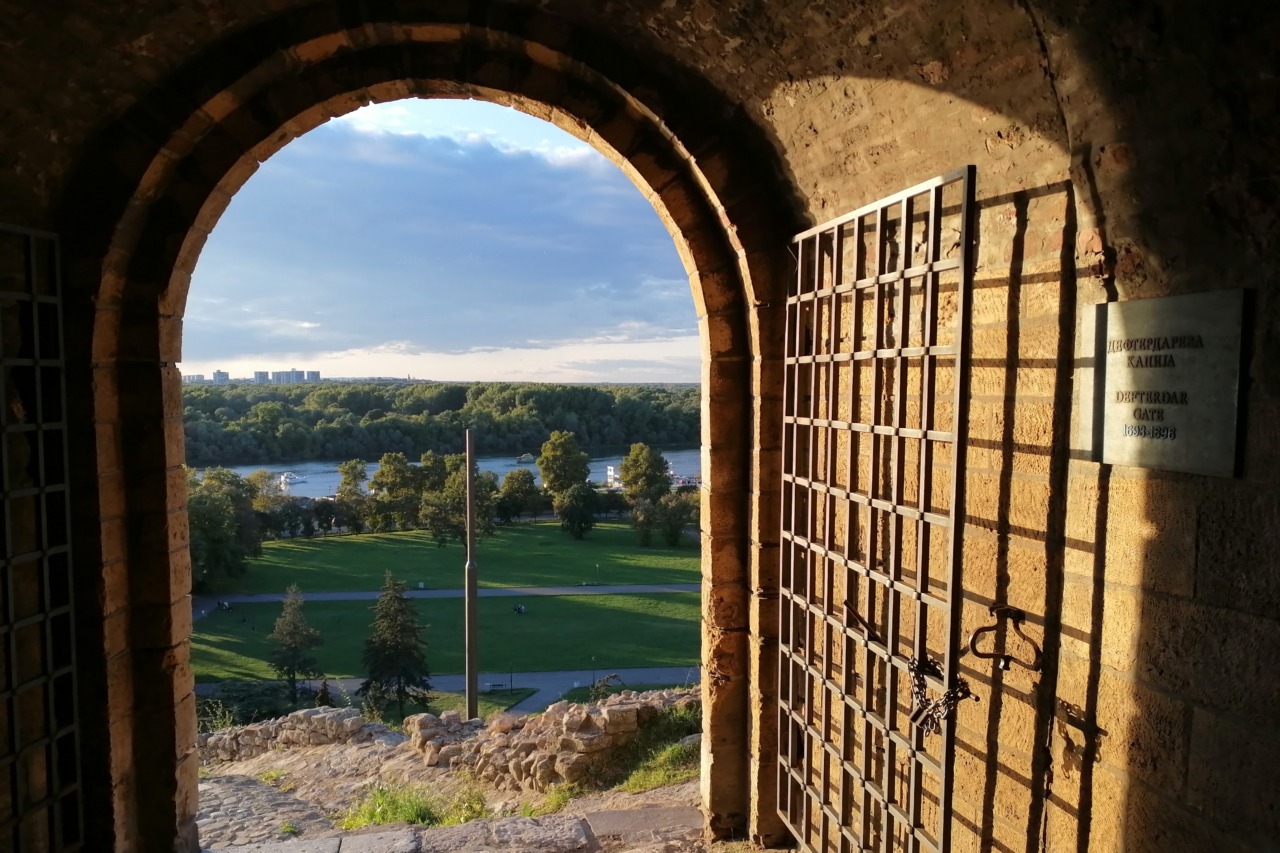
Details like this help you imagine the fortress as a place that changed repeatedly over time. What now appears to be a quiet corner once occupied a very different position in the complex.
Pause for: the stonework, changes in ground level and the relationship between the gate, fountain and surrounding walls.
After this short detour, return to the Upper Town plateau and continue towards the Despot Gate.
8. The Despot Gate and Dizdar Tower: A Glimpse of Medieval Belgrade
The Despot Gate and Dizdar Tower are among the most rewarding stops for understanding the older fortress. The main medieval entrance stood here, and the gate and adjoining northeastern rampart preserve an important part of the Upper Town’s early 15th-century heritage.
Notice the massive square tower, the passage and the way the gate connects to the walls. After the open space around the Victor monument, enclosed views and defensive architecture come into focus again.
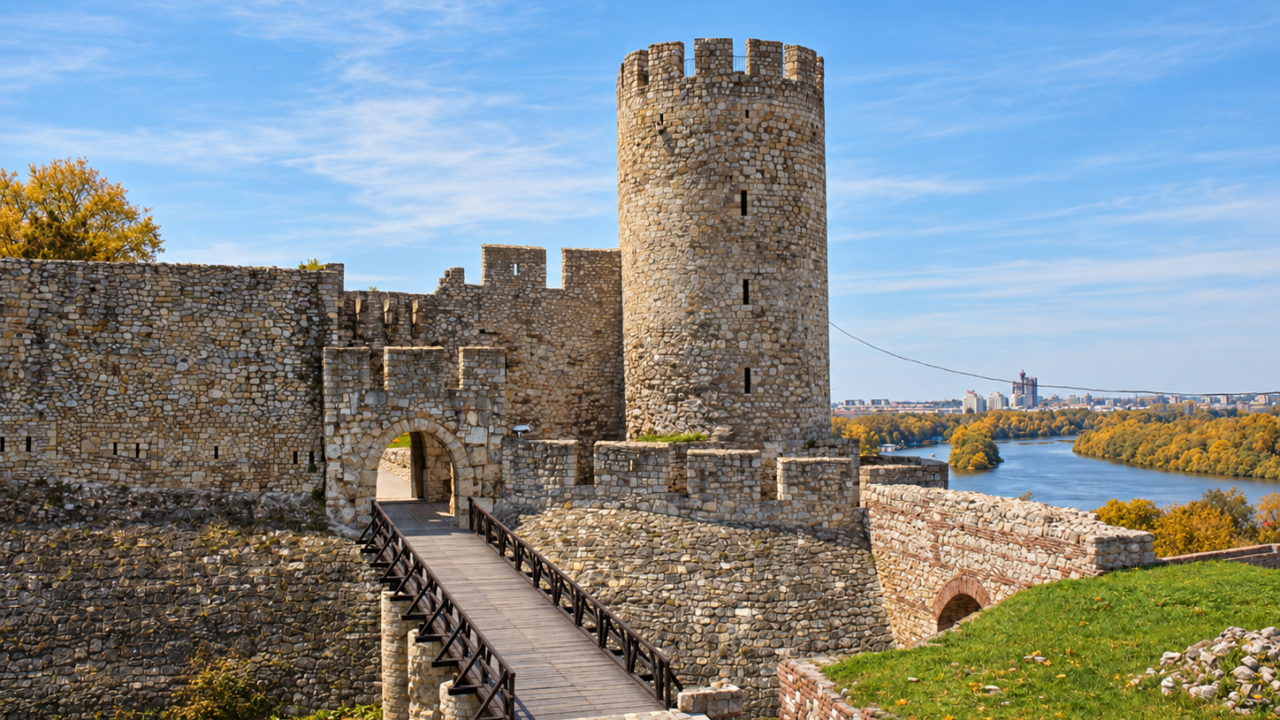
For a photograph: move a few steps away from the entrance to capture the tower and gate together. Then come closer to isolate a detail in the stonework.
9. The Zindan Gate: Towers, a Bridge and a Striking Photograph
After passing through the Despot Gate, continue towards the Zindan Gate. Two massive semicircular towers, with a passage between them, make this one of the fortress’s most recognisable settings.
The gate was built in the mid-15th century to strengthen the eastern approach. A moat and wooden drawbridge once stood in front of it. Its present name is associated with the towers’ later use as prisons.
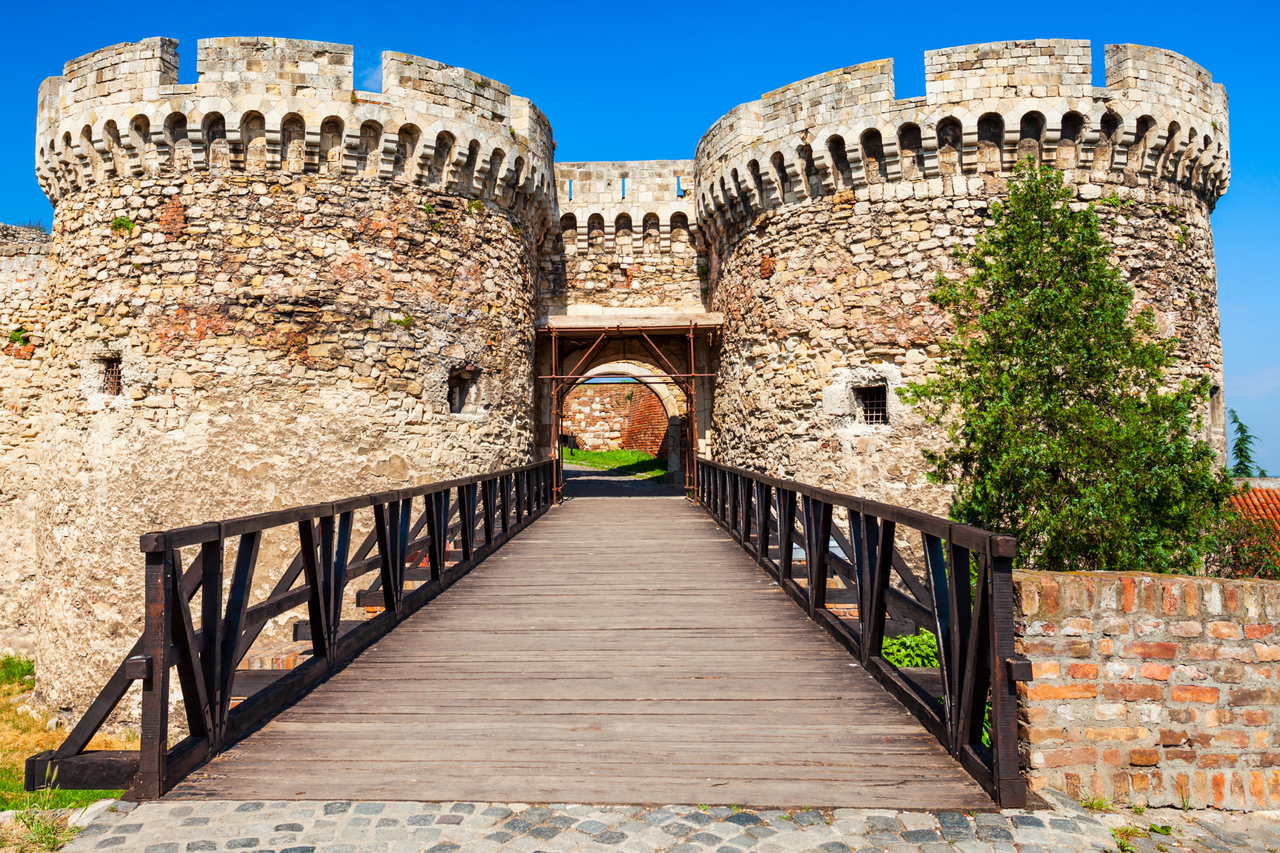
For a photograph: this is one of our favourite stops for a picture with someone in the frame. The bridge draws the eye towards the gate, while a person gives a sense of the towers’ scale. Keep the passage clear when other visitors are crossing.
10. Ružica Church and the Chapel of Saint Petka: A Change of Pace
From the area around the Zindan Gate, follow the signs and steps towards Ružica Church and the Chapel of Saint Petka. Ružica’s climbing greenery attracts attention, but its interior also deserves a look when visiting is possible. Among its unusual features are large chandeliers made from First World War trophy weapons, reflecting the church’s history as a military place of worship.
Nearby stands the Chapel of Saint Petka. The present building was constructed in 1937 above a spring associated with the saint, and its interior is decorated with mosaics.
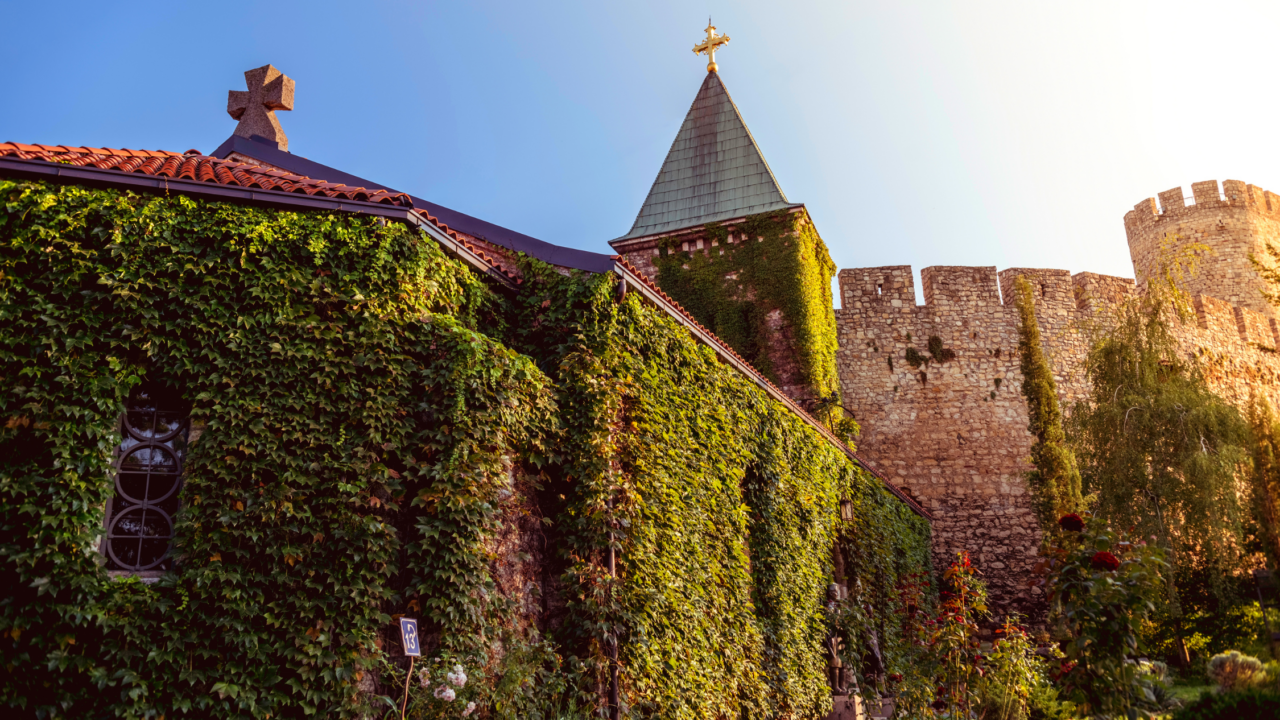
Take this section slowly. How peaceful it feels will depend on the timing of your visit: services and religious holidays can draw many worshippers.
For a photograph: focus on exterior details and the approaches to the churches. Check the rules before photographing inside, and respect those attending worship.
With More Time: The Lower Town and Nebojša Tower
From the churches, you can extend your walk towards the Lower Town and Nebojša Tower. This adds more walking and a different perspective: instead of looking down towards the river, you see the fortress from below.
Nebojša Tower stands in the riverside part of the complex and can also be visited separately. Check its opening hours if you would like to go inside.
Choose this extension if you have enough time and energy for the walk out of the complex or the climb back up. For a shorter visit, return towards the Zindan Gate and continue through the Leopold Gate towards the park.
Where to Stop for Views, Photographs and a Rest
| If you are looking for… | Our suggestion |
|---|---|
| A broad panorama and a view towards the confluence | The plateau around the Victor monument |
| A rest on a bench | The Sava Promenade |
| A photograph with gates and towers | The Zindan Gate |
| A view framed by a stone passage | The Clock Gate |
| Details that are easy to overlook | The Defterdar Gate and Mehmed Pasha Sokolović Fountain |
| A slower section of the walk | Ružica Church and the Chapel of Saint Petka, outside busy visiting times |
If You Only Have an Hour
Focus on the Stambol Gates, Clock Gate, Victor monument, Despot Gate and Zindan Gate. Leave indoor visits and the descent to the Lower Town for another time, adjusting your stops to your pace.
If sunset is your priority, arrange the walk so that you return towards the Victor monument or Sava Promenade near the end.
Practical Tips Before You Go
Wear shoes suitable for stone surfaces, uneven paths and steps. Some sections can be slippery after rain, while an extra layer is useful on the exposed plateaus. If visiting with a pushchair or someone with limited mobility, plan a shorter route through the park and main approaches, checking access to individual areas beforehand.
Check separate arrangements for indoor attractions. The Military Bunker and Great Gunpowder Magazine require advance booking for organised visits, while the Roman Well and Nebojša Tower have their own opening schedules.
You do not need to see everything in one visit. Leave time to sit, watch the rivers and return to a detail that caught your eye – those moments can make Kalemegdan one of the most memorable parts of a day in Belgrade.
Serbia.com recommends
Handpicked places, stays and experiences to make your journey through Serbia even more memorable.
Related Articles