
-
Serbia at a Glance
Discover All -
Arts & Culture
Discover All -
Identity & Heritage
Discover All -
Famous Serbs
Discover All
-
Regions
Discover All -
Cities
Discover All -
Nature
Discover All -
Cultural Landmarks
Discover All
-
Outdoor & Wellness
Discover All -
Food & Drink
Discover All -
Tours
Discover All -
Urban Experiences
Discover All -
Seasonal Experiences
Discover All
Partner with Serbia.com
Let's create lasting impact together
Partner with Serbia.com to reach travellers through trusted recommendations, inspiring editorial stories and thoughtfully designed campaigns. Together, we create meaningful visibility that supports your goals and remains valuable long after publication.
Explore partnership opportunities- Serbian Favorite Rituals Everyday traditions and little things that make life in Serbia special.
- Villages of Serbia Charming villages, local stories and authentic rural life.
- Serbia Told By You Personal stories, local perspectives and authentic experiences from across Serbia.
- Is it Worth Visiting in Serbia? Honest destination guides to help you decide which places are worth visiting.
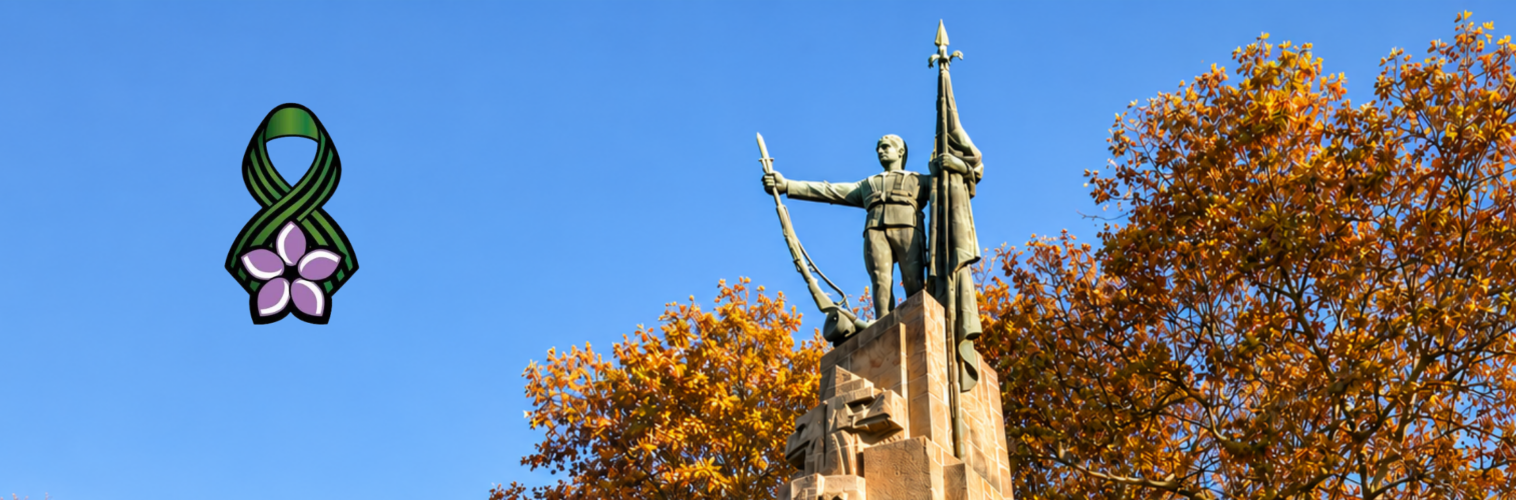
Why is Armistice Day observed on 11 November, how did Natalie’s ramonda become its symbol, and where can you find traces of the war in Belgrade today? This route starts on the Danube waterfront in Dorćol and leads to the memorial ossuary at the New Cemetery.
If you’ve walked along the Danube waterfront, you may have passed the Monument to the Defenders of Belgrade near the Milan Gale Muškatirović Sports Centre. It’s worth stopping to read the inscription. Its words take you back to October 1915, when soldiers fought to defend the capital along this stretch of river. Three years later, on 1 November 1918, Belgrade was liberated. Ten days after that, the armistice that gave the day its name was signed in a railway carriage in France.
What happened on 11 November 1918?
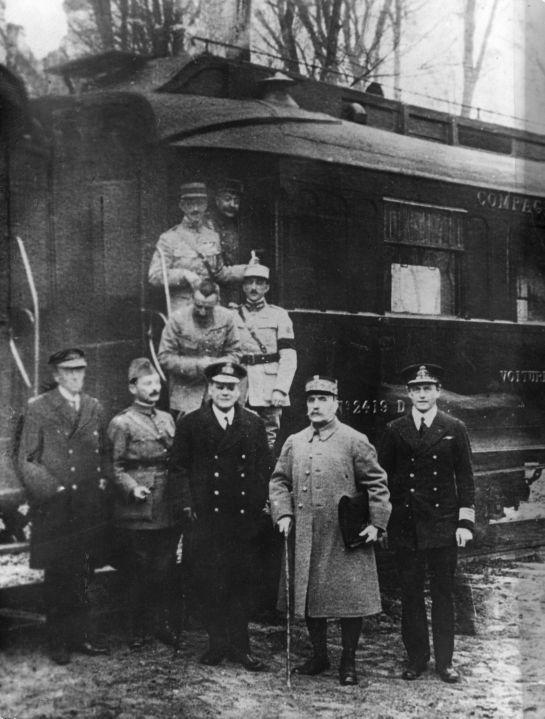
The Allies and Germany signed an armistice in a railway carriage near Compiègne in northern France. It came into effect at 11 a.m. on 11 November 1918, bringing the fighting on the Western Front to a halt. Serbia and many other countries mark the eleventh day of the eleventh month to commemorate the end of the First World War and remember those who lost their lives.
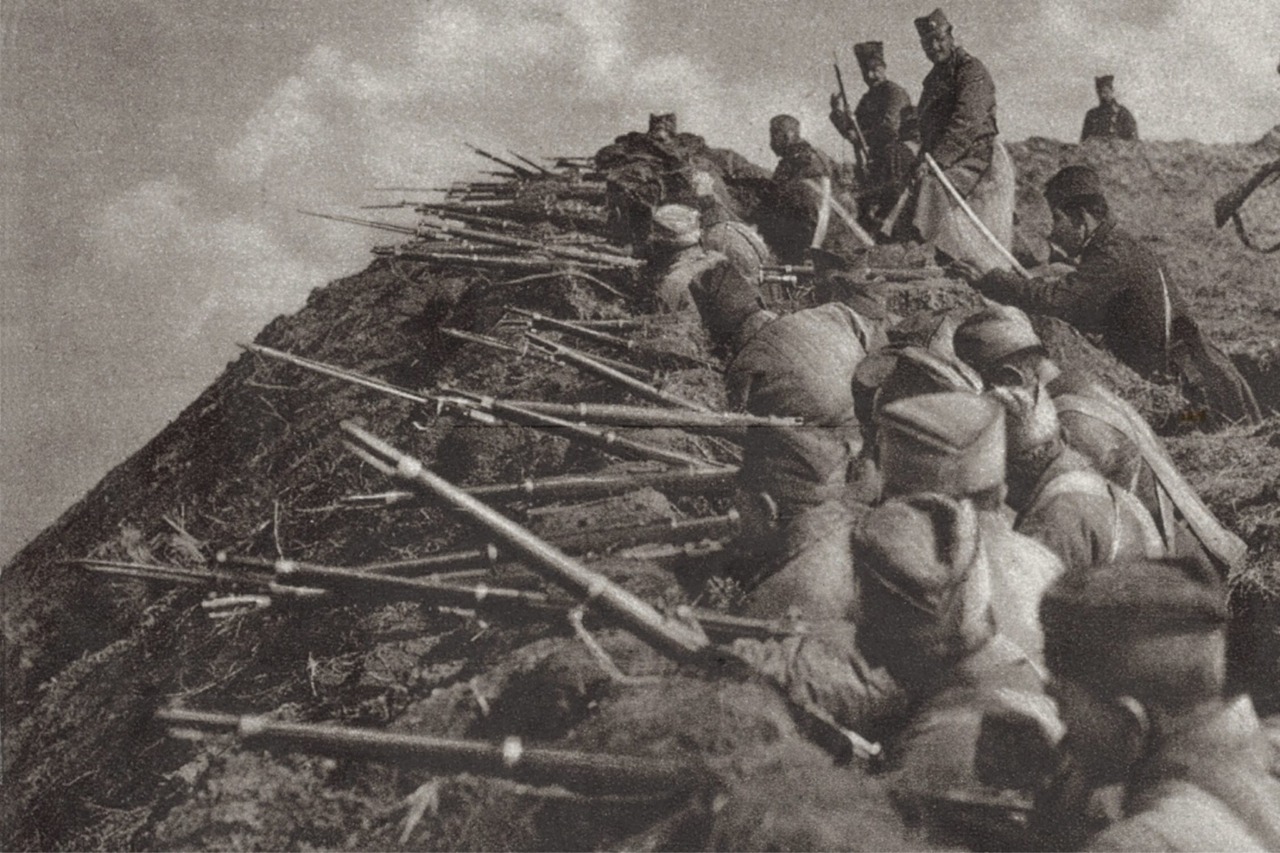
For Serbia, the road to that November led from the battles of 1914 and 1915 through the retreat across Albania to the breakthrough on the Salonika Front in September 1918 and the liberation of the country. Two places in Belgrade bring that history closer. In Dorćol, you can stand by the riverbank that soldiers defended. At the New Cemetery, you can visit a memorial to those who died defending and liberating the city.
Why do people wear Natalie’s ramonda?
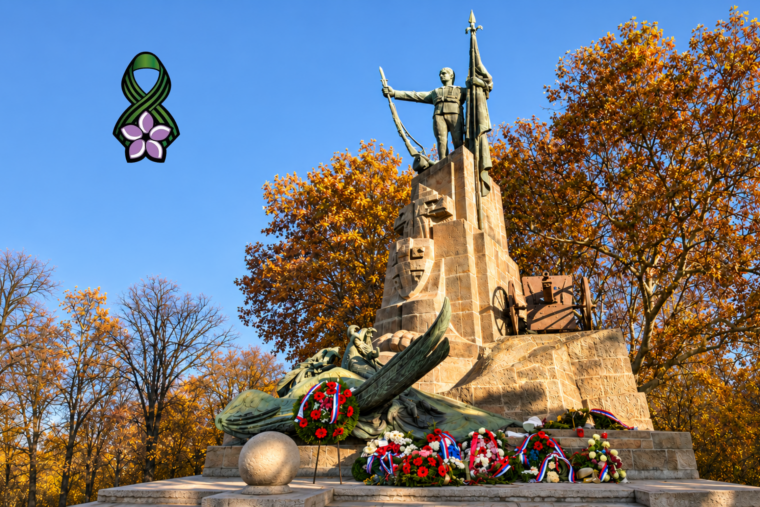
The purple flower on the lapel badge you may see in Serbia around 11 November is Natalie’s ramonda (Ramonda nathaliae). Named after Queen Natalija Obrenović, it is also known as the phoenix flower. The plant can survive drying out and recover when it receives water again. That ability made it a symbol of what Serbia endured during the war and how the country recovered.
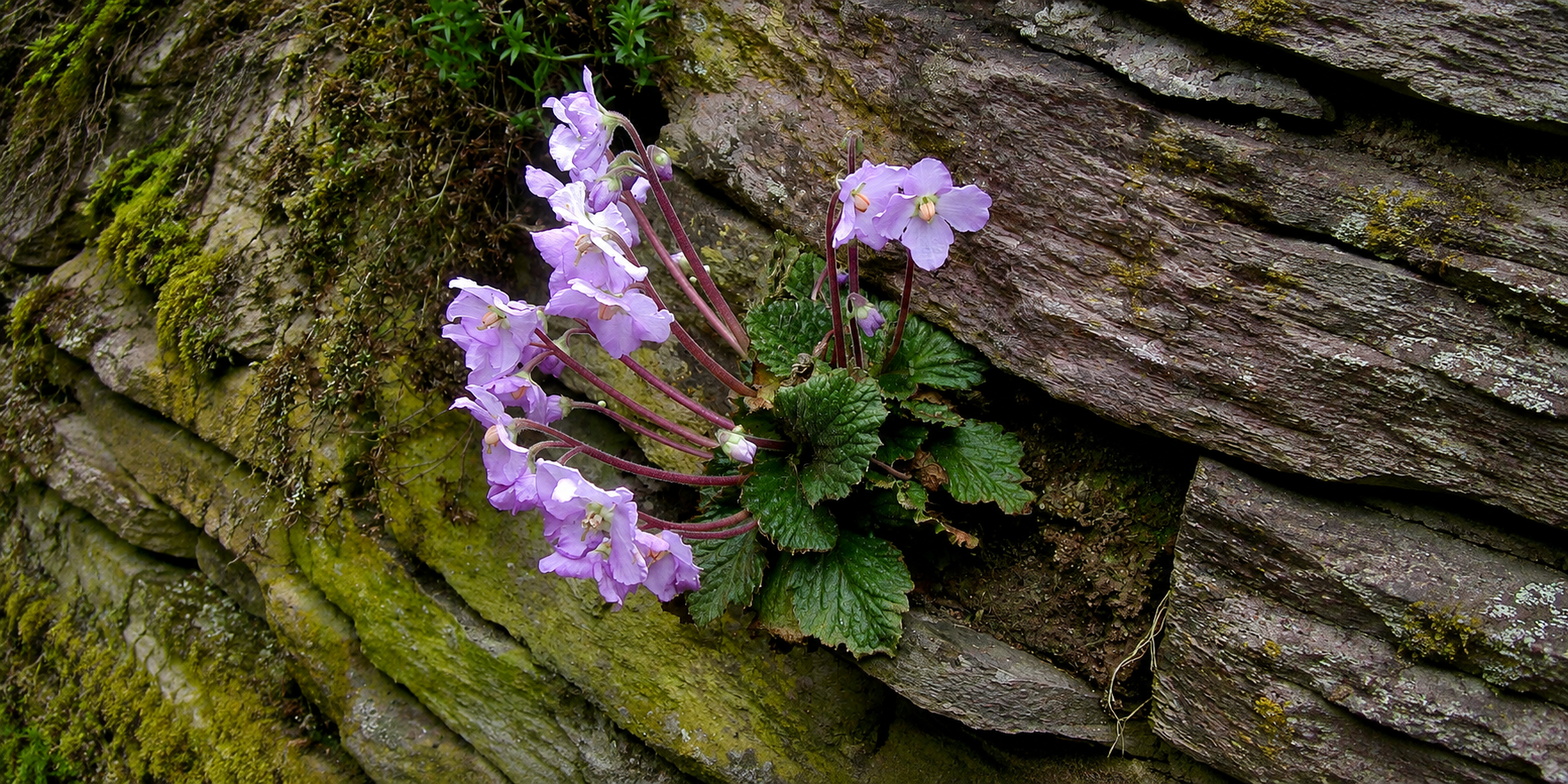
Look closely at the ribbon behind the flower. Its colours come from the Albanian Commemorative Medal, established in remembrance of the Serbian army’s retreat across Albania. The badge was introduced in 2012 for Armistice Day. The ribbon recalls the retreat, while the flower represents the recovery that followed.
First stop · The Danube waterfront in Dorćol
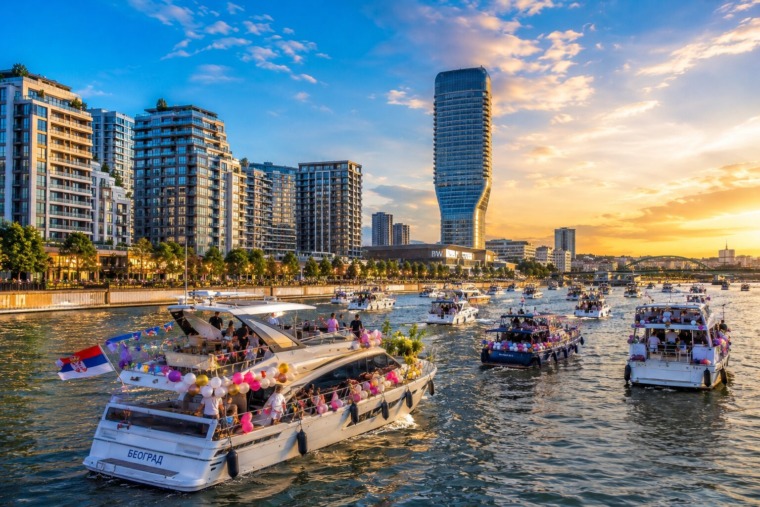
Start at the Milan Gale Muškatirović Sports Centre and follow the waterfront to the Monument to the Defenders of Belgrade in 1915. Before one of the charges in which Serbian troops tried to drive enemy forces back from the riverbank, Major Dragutin Gavrilović addressed his men.
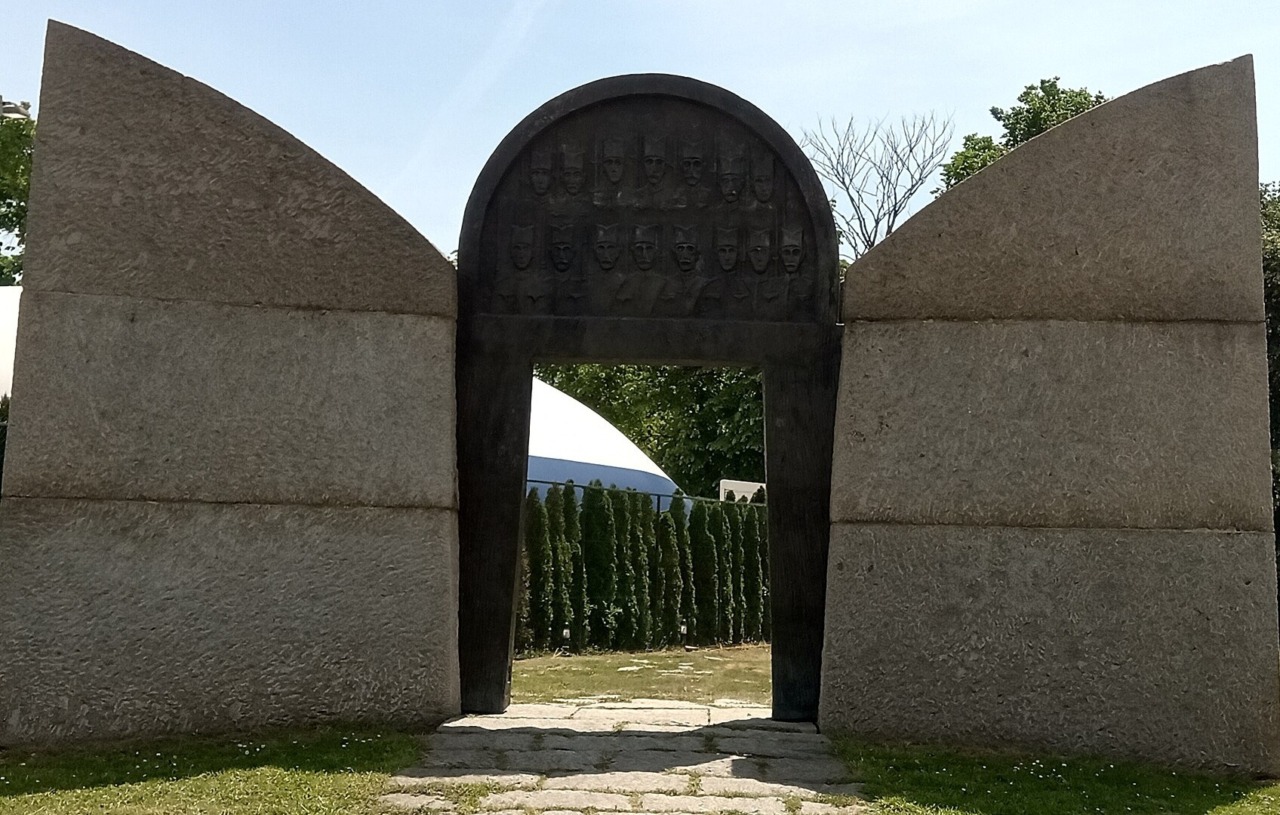
His speech is inscribed on the monument. After reading it, look out over the Danube. Standing on the riverbank helps you understand why this particular stretch of the city is so closely tied to the story of its defence.
Second stop · The memorial ossuary at the New Cemetery
At the New Cemetery, 50 Ruzveltova Street, you’ll find the memorial ossuary built in 1931. It holds the remains of soldiers who died defending Belgrade in 1915 and those who fell during the final battles to liberate it in 1918. The defence and liberation of the city, separated by three years of war, are commemorated here in one place.
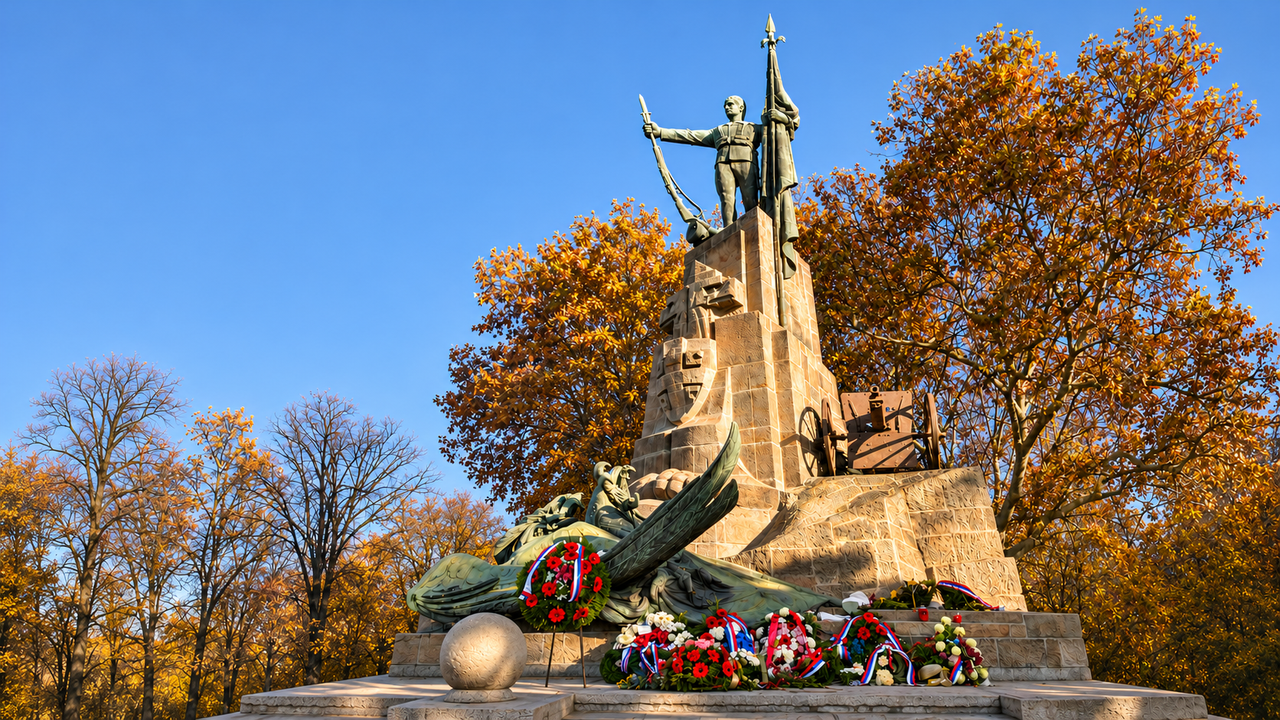
Plan to visit the exterior of the memorial during daylight. A detailed map of the cemetery is available on the Belgrade Cemeteries website. Regular winter visiting hours are 7 a.m. to 6 p.m.
Armistice Day programme · 11 November 2026
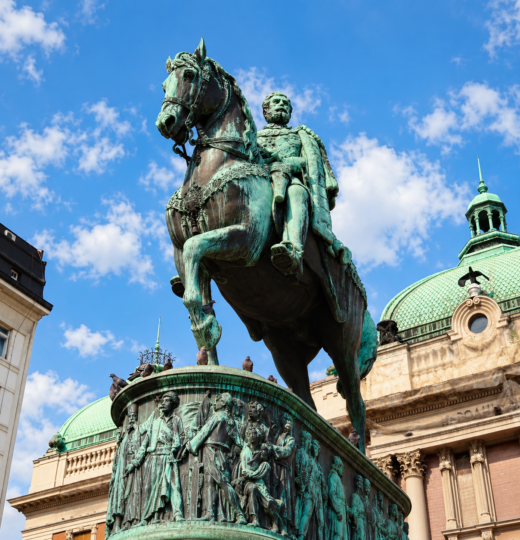
If you’re following the route on Armistice Day, you can finish at Republic Square. The National Museum of Serbia is hosting a talk on the Serbian army’s contribution to the Allied victory in the First World War from 4 to 5 p.m. Dr Slobodan Đukić of the Military Academy will give the talk. Admission is free and advance registration is not required.
Read more about Armistice Day and its symbol.
Plan your visit
Everything you need to plan your perfect trip.