
-
Serbia at a Glance
Discover All -
Arts & Culture
Discover All -
Identity & Heritage
Discover All -
Famous Serbs
Discover All
-
Regions
Discover All -
Cities
Discover All -
Nature
Discover All -
Cultural Landmarks
Discover All
-
Outdoor & Wellness
Discover All -
Food & Drink
Discover All -
Tours
Discover All -
Urban Experiences
Discover All -
Seasonal Experiences
Discover All
Partner with Serbia.com
Let's create lasting impact together
Partner with Serbia.com to reach travellers through trusted recommendations, inspiring editorial stories and thoughtfully designed campaigns. Together, we create meaningful visibility that supports your goals and remains valuable long after publication.
Explore partnership opportunities- Serbian Favorite Rituals Everyday traditions and little things that make life in Serbia special.
- Villages of Serbia Charming villages, local stories and authentic rural life.
- Serbia Told By You Personal stories, local perspectives and authentic experiences from across Serbia.
- Is it Worth Visiting in Serbia? Honest destination guides to help you decide which places are worth visiting.
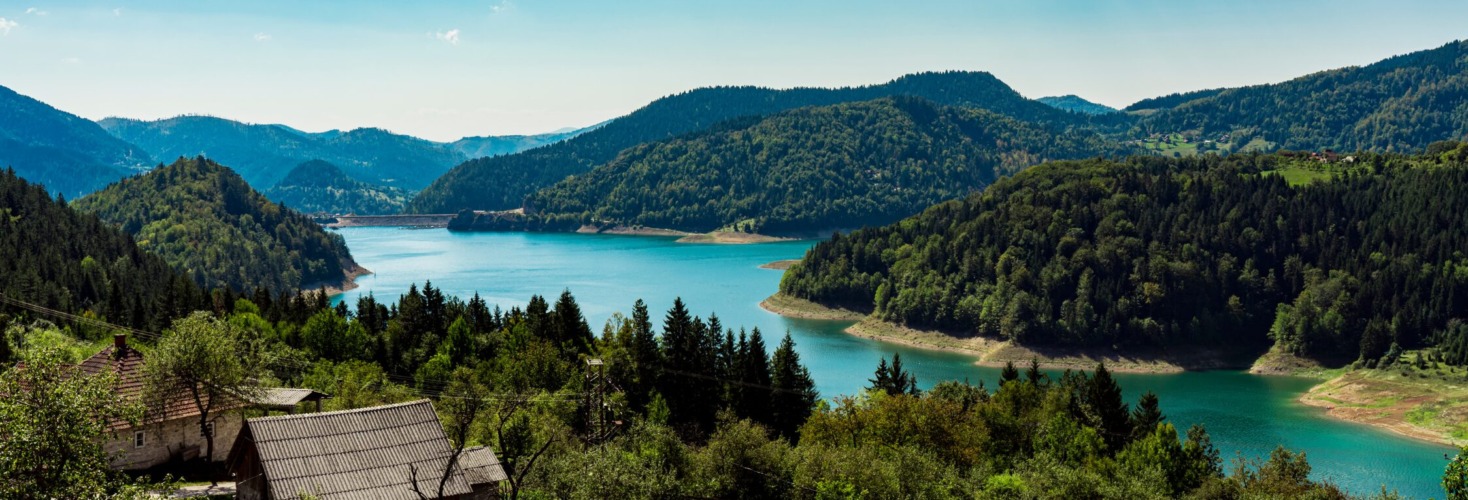
There are rivers you visit, and there are rivers that become part of the journey itself. The Drina belongs to the latter.
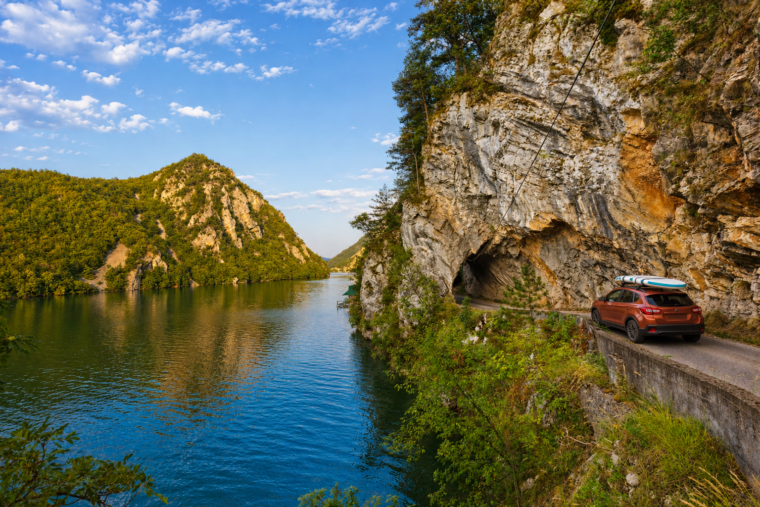
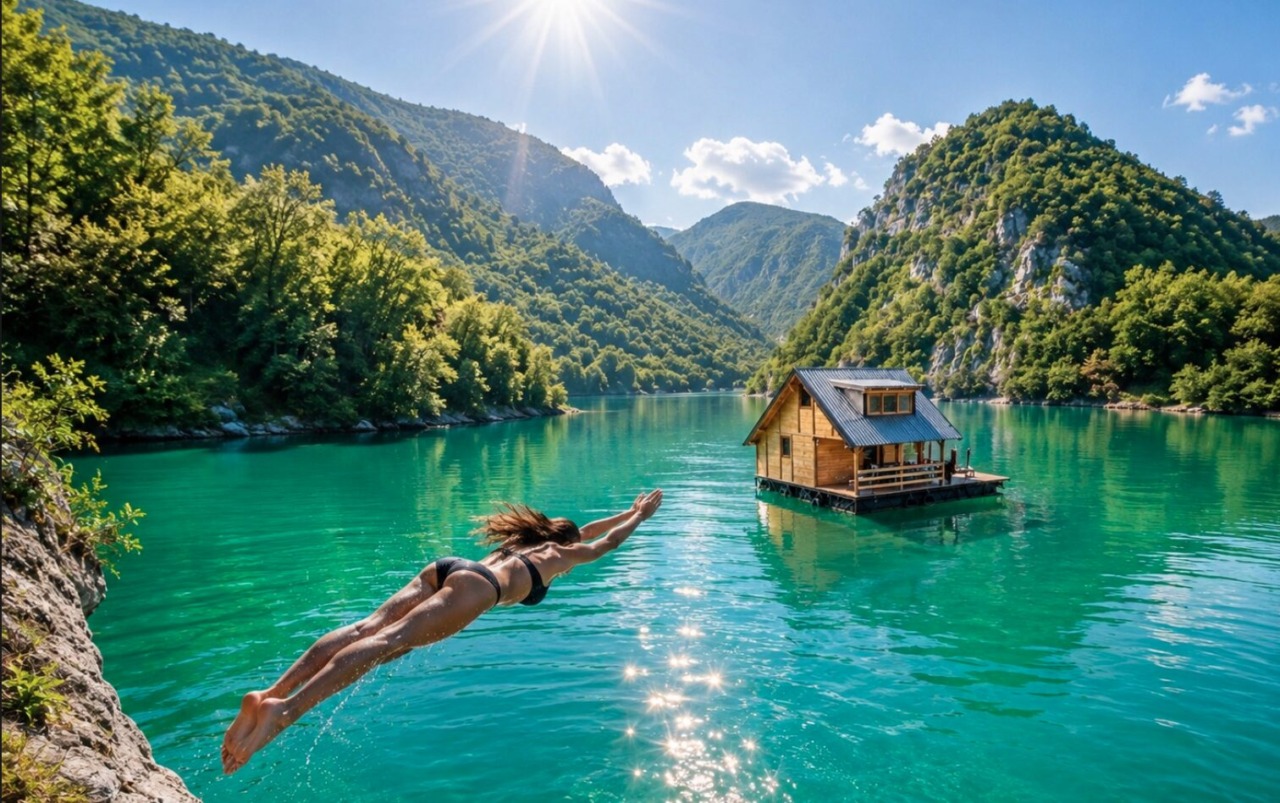
Long before it became one of Serbia’s most recognizable landscapes, the Drina shaped the valleys, forests, villages, and traditions that still define life along its banks today. In summer, however, the river reveals its most beautiful side. Its emerald waters become places to swim, paddle, and simply pause for a while, while winding roads invite travelers to leave the motorway behind and discover western Serbia at a slower pace.
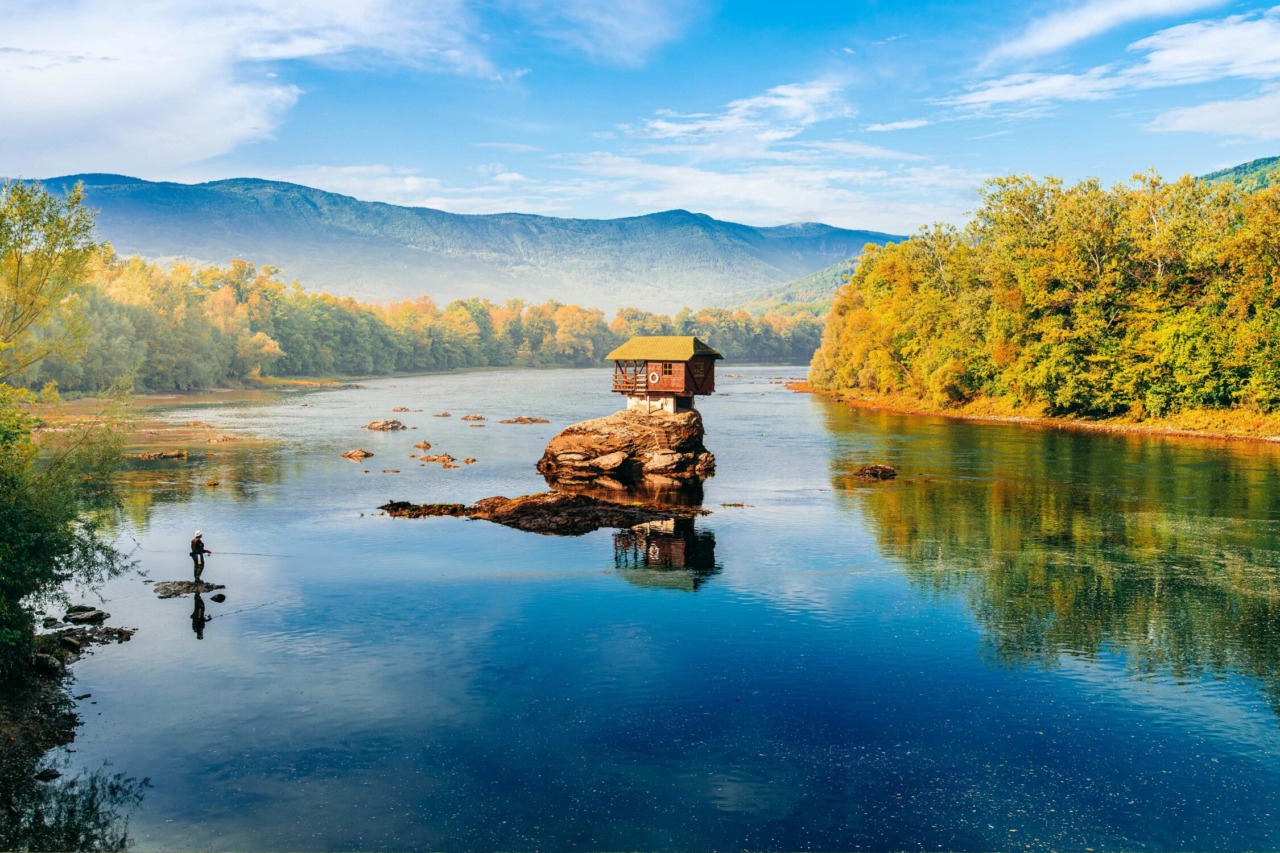
Some visitors come for Tara National Park and the famous House on the Drina. Others arrive for rafting adventures, panoramic viewpoints, or peaceful days beside Perućac Lake. But those who choose to follow the river a little further discover something even more rewarding – a landscape where every bend reveals another hidden beach, mountain viewpoint, traditional restaurant, or quiet village waiting to be explored.
Part of the Summer Escapes in Serbia editorial series, this story explores one of the country’s most remarkable regions through the landscapes, local experiences, and slower rhythms that make summer in Serbia so special.
Where Summer Begins
There is no single “best” place on the Drina. The beauty of the valley lies in the journey itself. As the river flows through western Serbia, the landscape constantly changes. Dense forests give way to dramatic cliffs, quiet coves become lively beaches, and mountain viewpoints are replaced by peaceful riverside towns.
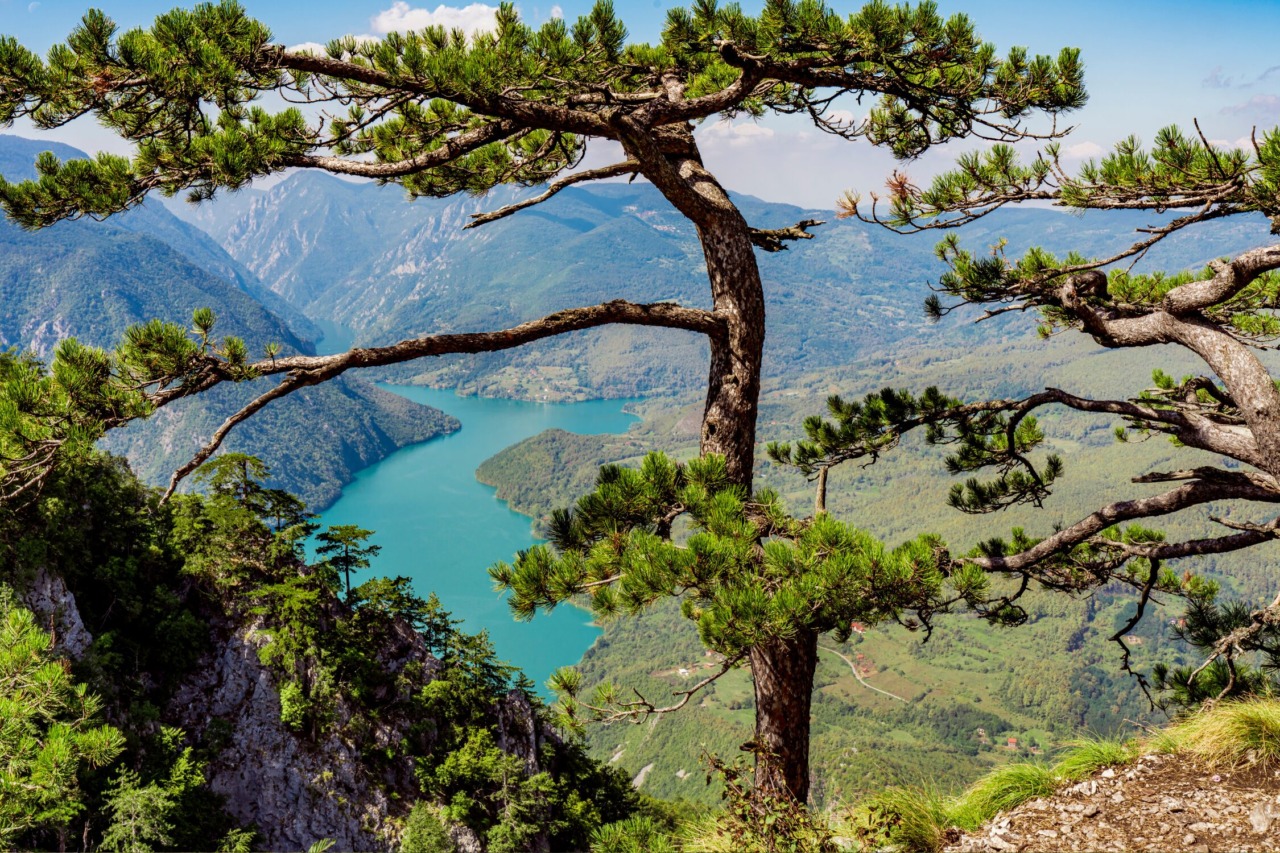
Rather than choosing one destination, the best way to experience the Drina is to spend a few days following its course, allowing each stop to reveal a different side of the valley. It is this diversity that makes the Drina one of Serbia’s greatest summer destinations.
The Upper Drina: Tara, Perućac and Serbia’s Most Iconic Views
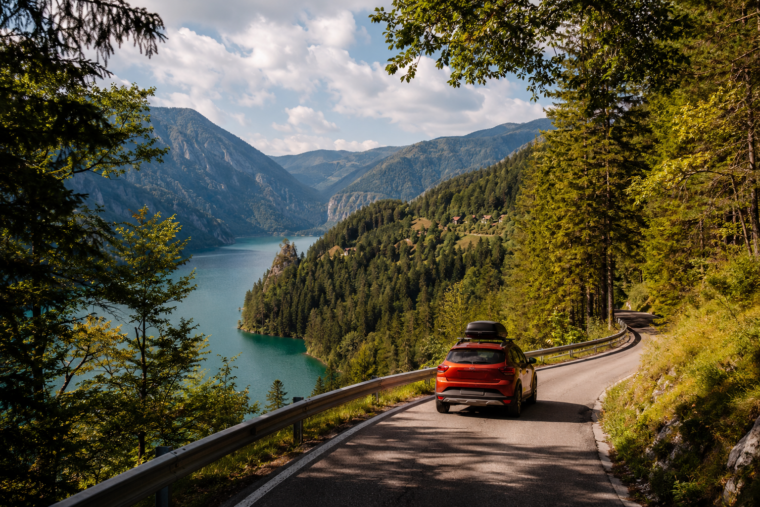
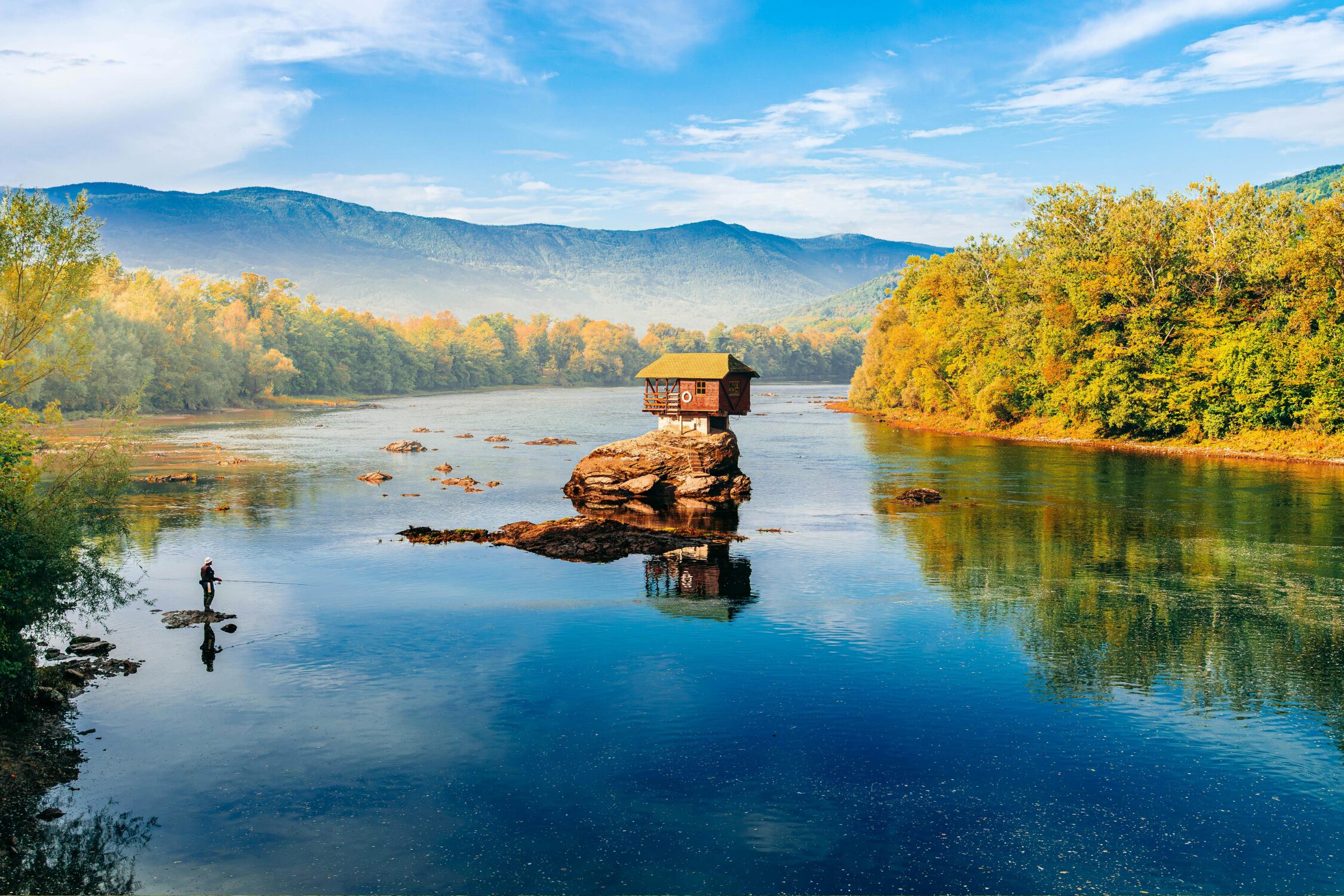
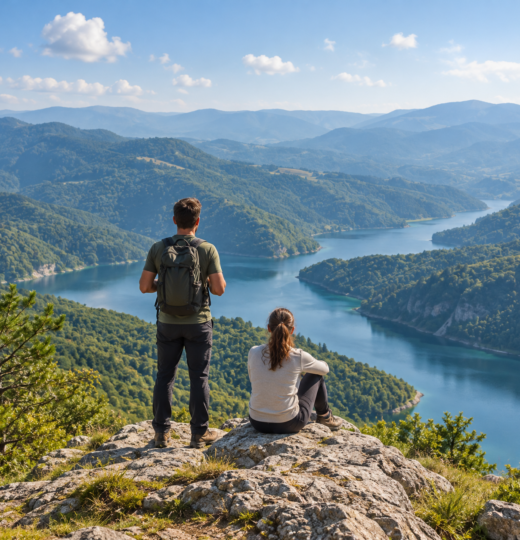
For many travelers, the journey begins where the river meets the forests of Tara National Park. Few places capture the essence of a Serbian summer better than Perućac Lake. Surrounded by pine-covered mountains, its calm emerald waters invite visitors to swim, kayak, paddleboard, or simply spend an entire afternoon beside the shore. Nearby, the famous House on the Drina continues to surprise first-time visitors, standing alone on a rock in the middle of the river as one of Serbia’s most recognizable landmarks.
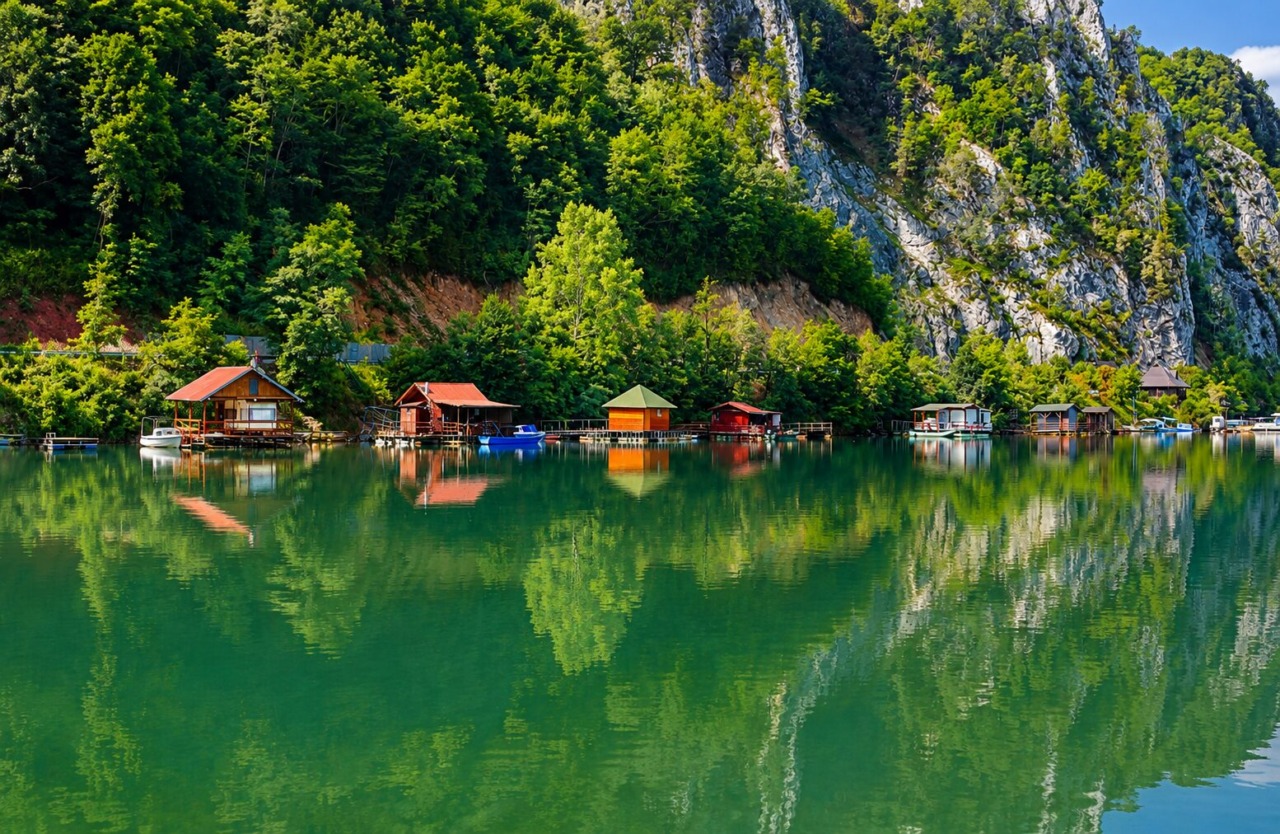
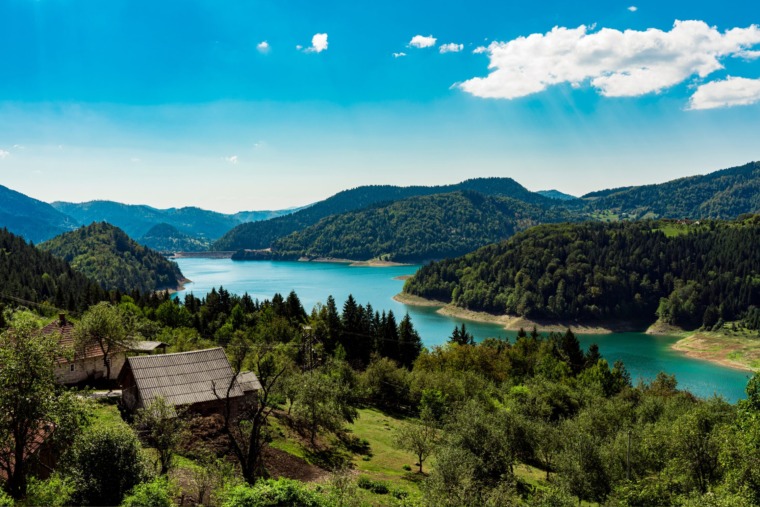
Just above the valley, Lake Zaovine offers an entirely different atmosphere. Cooler temperatures, peaceful coves, and mountain scenery make it the perfect escape during the hottest days of summer, while panoramic viewpoints such as Banjska Stena reveal why this part of Serbia has become one of the country’s most photographed landscapes.
It is easy to understand why so many travelers stop here. But the Drina has much more to offer.
Beyond the Famous Landscapes
As the river continues toward Ljubovija, everything becomes quieter. The traffic fades, the viewpoints become less crowded, and the pace of life slows to match the rhythm of the river itself. This is where many locals spend their summers.
Riverside beaches appear one after another, families gather beneath the shade of old trees, and cafés overlook the water instead of busy streets. It is also one of the best places to experience the Drina actively – whether rafting through gentle stretches of the river, exploring hidden coves by kayak, or simply floating downstream on a warm summer afternoon.
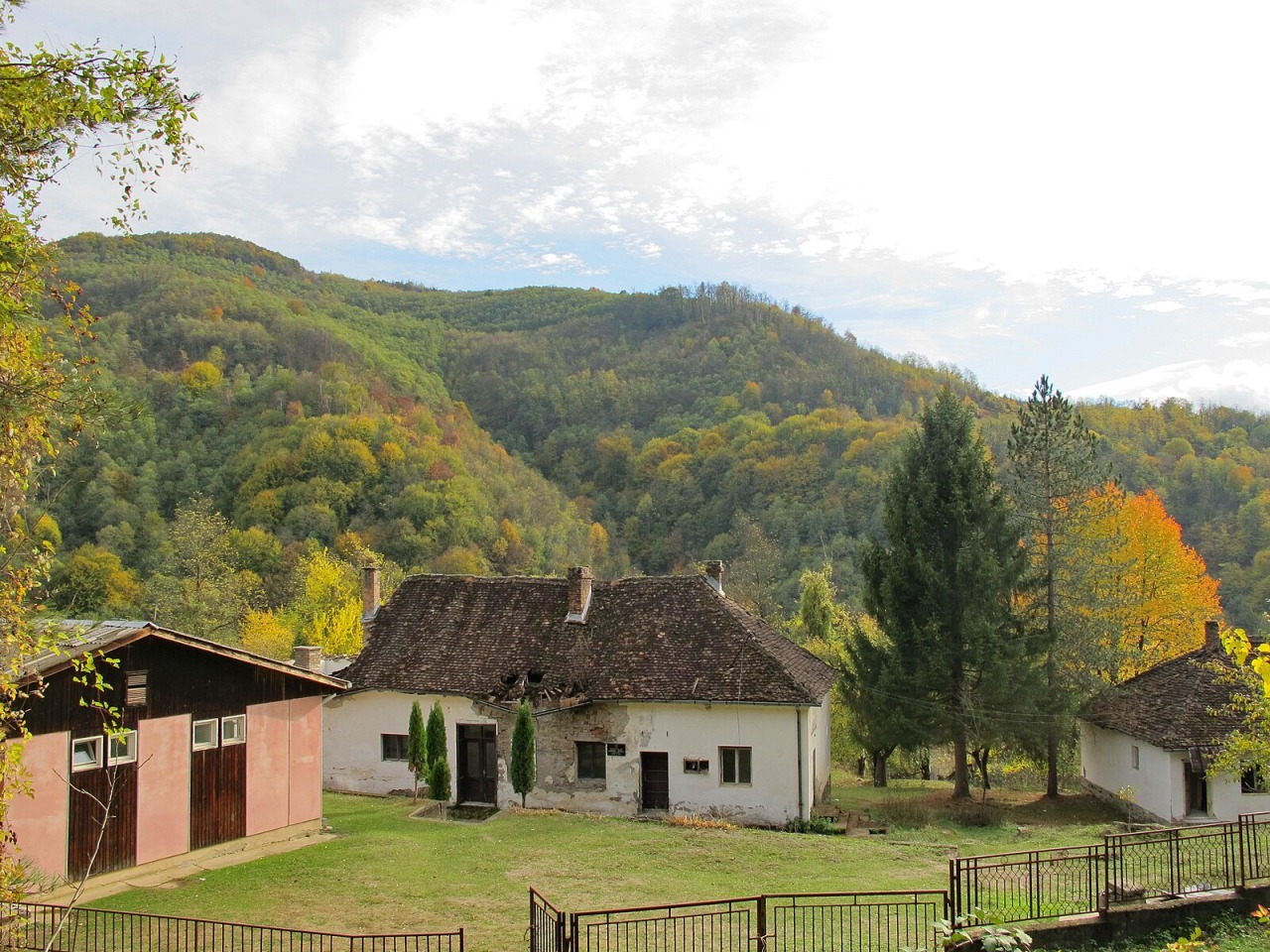
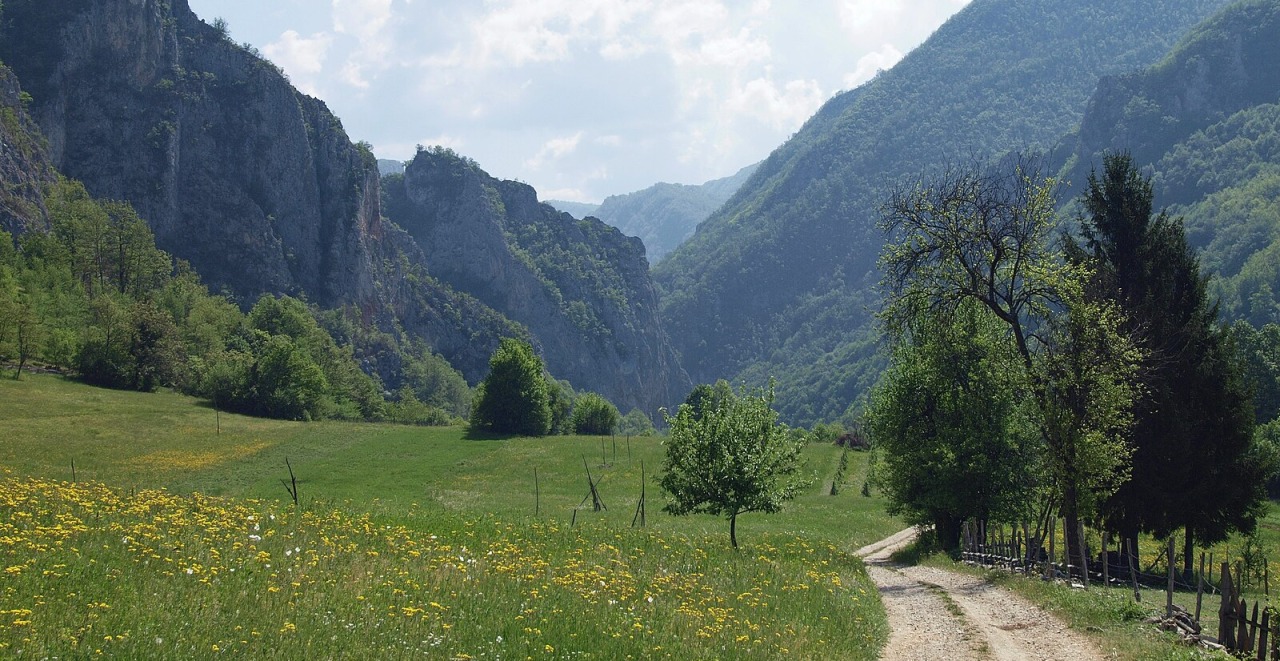
Above the valley rises Mount Bobija, one of western Serbia‘s best-kept secrets. Its viewpoints overlook endless green hills stretching toward the horizon, while quiet mountain roads offer one of the region’s most scenic drives.
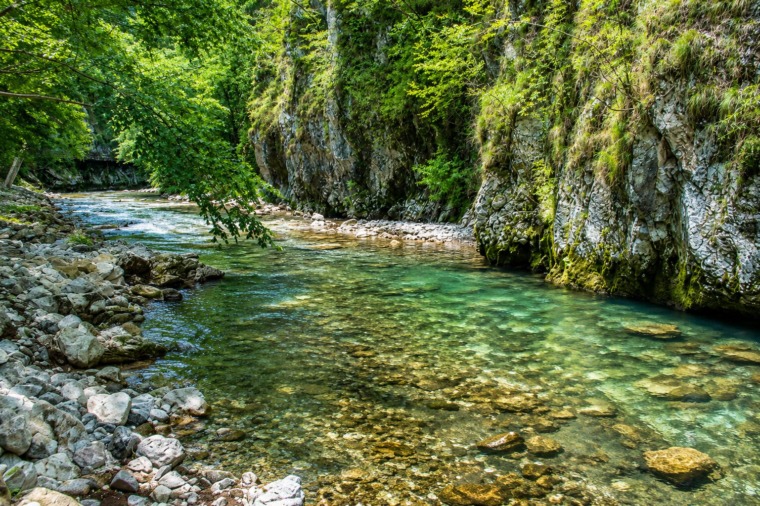
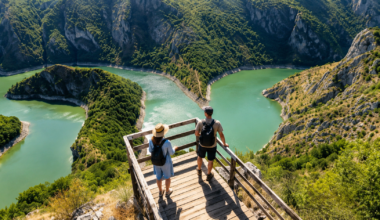
Nearby, the spectacular Trešnjica Gorge tells another story. Known for its dramatic limestone cliffs and one of Europe’s southernmost colonies of griffon vultures, it remains one of Serbia’s least crowded protected landscapes. Standing above the canyon, watching these magnificent birds circle on warm air currents, is an experience few visitors expect to find just beyond the river.
The Valley Slows Down
Further downstream, the Drina changes once again. Around Mali Zvornik, the river widens into the calm waters of Zvornik Lake, creating a landscape that feels almost Mediterranean during the height of summer. Fishing boats drift quietly across the water, small beaches invite refreshing swims, and evenings are best spent watching the last light reflect across the lake.
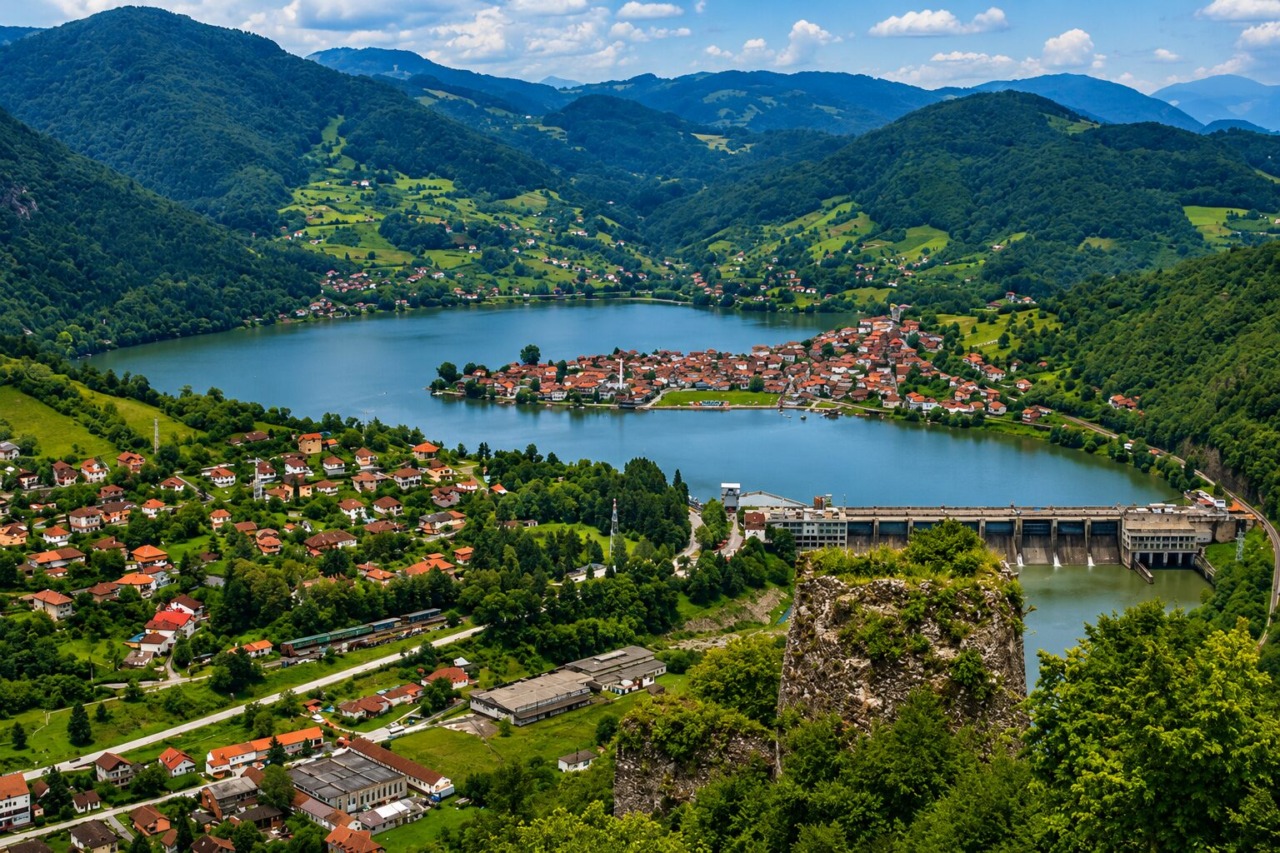
The town itself hides one of Serbia’s most unusual historical sites – the underground residence built for King Alexander Karađorđević, carved directly into the rock above the river. It is another reminder that the Drina Valley is full of unexpected discoveries for travelers willing to venture beyond its most famous attractions.
Taste the Drina Valley
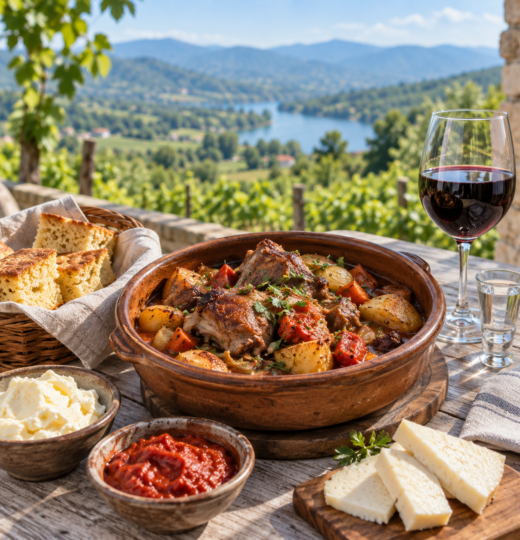
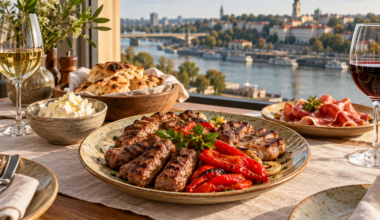
Like the river itself, the local cuisine is simple, authentic, and deeply connected to nature. Summer lunches often begin with homemade bread, fresh kajmak, local cheeses, and tomatoes picked straight from the garden. Grilled trout from the Drina remains one of the region’s signature dishes, accompanied by seasonal salads and homemade elderflower juice or raspberry syrup during the hottest days of the year.
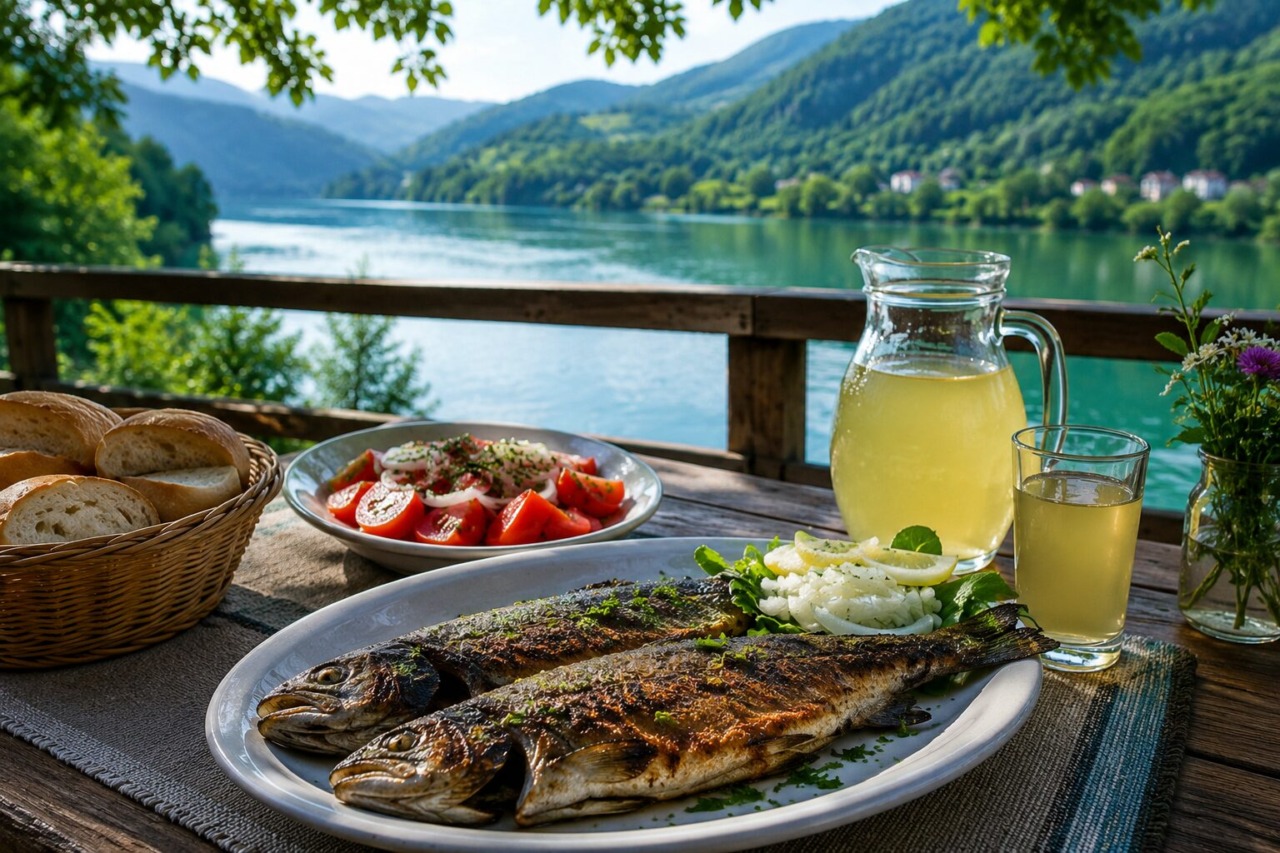
Along the way, roadside stalls overflow with freshly picked raspberries, blackberries, honey, and other local produce that make every stop feel like part of the journey. Some of the best meals you’ll have here won’t be found in fine dining restaurants, but on shaded terraces overlooking the river, where time seems to move just a little more slowly.
How to Experience the Valley
The Drina isn’t a destination to rush through. Wake up early to enjoy the river before the day warms up. Stop whenever a quiet beach catches your eye. Take the road that climbs toward a viewpoint even if it adds another hour to the journey.
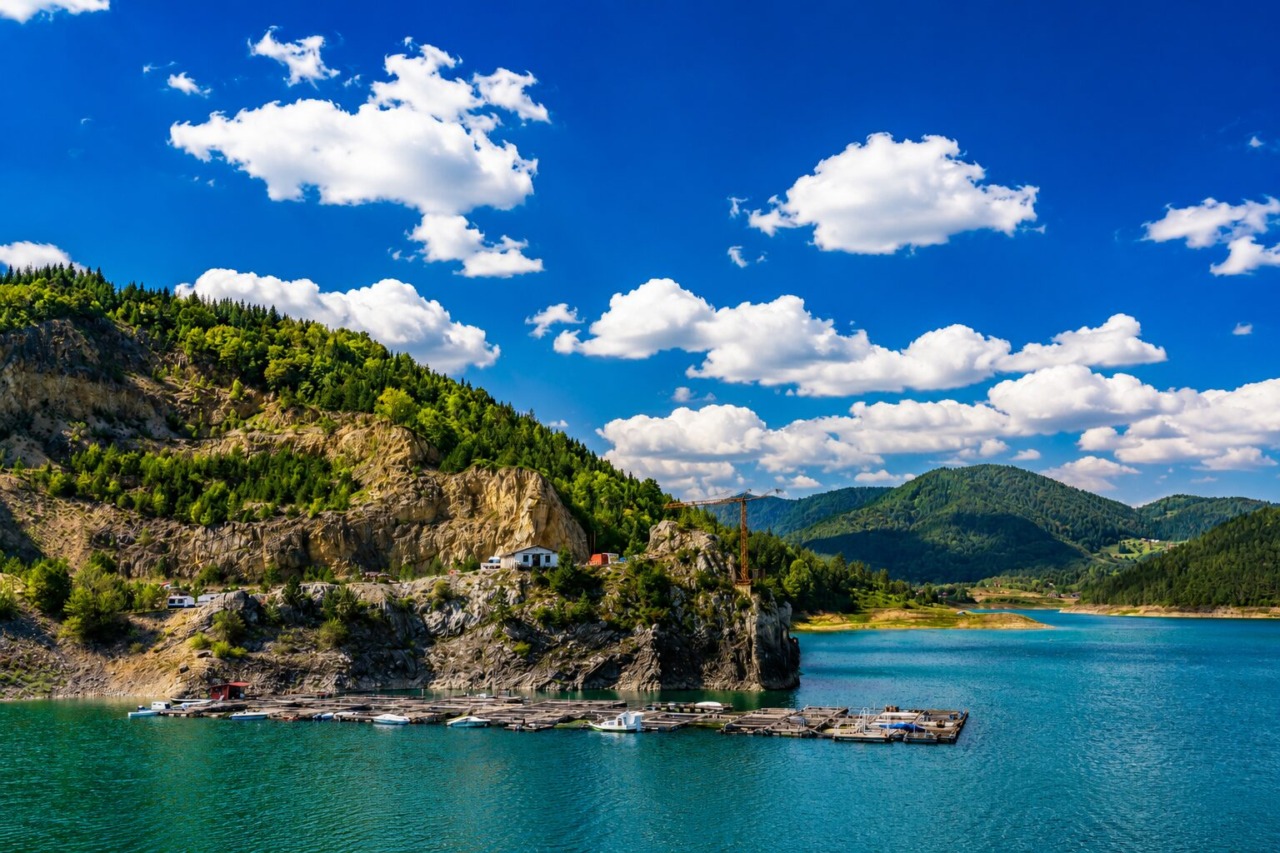
Sit down for lunch where locals recommend, and leave enough time to simply watch the river flow. Along the Drina, those unplanned moments often become the highlights of the trip.
A Perfect Long Weekend Along the Drina
A few days are enough to discover just how many faces the valley has. Begin among the forests, viewpoints, and emerald waters of Tara and Perućac before continuing toward Ljubovija, where rafting, hidden beaches, Bobija, and the Trešnjica Gorge reveal a quieter side of the river.
Finish the journey around Mali Zvornik and Zvornik Lake, where peaceful evenings provide the perfect ending to one of Serbia’s most scenic summer road trips.
Because the real beauty of the Drina isn’t found in a single place. It is found in the journey between them.
Plan your visit
Everything you need to plan your perfect trip.

Related Articles