
-
Serbia at a Glance
Discover All -
Arts & Culture
Discover All -
Identity & Heritage
Discover All -
Famous Serbs
Discover All
-
Regions
Discover All -
Cities
Discover All -
Nature
Discover All -
Cultural Landmarks
Discover All
-
Outdoor & Wellness
Discover All -
Food & Drink
Discover All -
Tours
Discover All -
Urban Experiences
Discover All -
Seasonal Experiences
Discover All
Partner with Serbia.com
Let's create lasting impact together
Partner with Serbia.com to reach travellers through trusted recommendations, inspiring editorial stories and thoughtfully designed campaigns. Together, we create meaningful visibility that supports your goals and remains valuable long after publication.
Explore partnership opportunities- Serbian Favorite Rituals Everyday traditions and little things that make life in Serbia special.
- Villages of Serbia Charming villages, local stories and authentic rural life.
- Serbia Told By You Personal stories, local perspectives and authentic experiences from across Serbia.
- Is it Worth Visiting in Serbia? Honest destination guides to help you decide which places are worth visiting.
Roman remains beneath busy streets, a historic school library, a former bishop’s palace and reading rooms that have welcomed generations of students. These libraries reveal Serbia through architecture, literature and the stories they preserve.
As the days grow shorter and city walks call for a warm indoor break, libraries deserve a place on your travel itinerary. Some host literary evenings and exhibitions; others offer the chance to explore a cultural landmark through a visit arranged in advance.
You do not need to be a researcher or an expert in rare books to enjoy them. Curiosity is enough: what did education look like two centuries ago? What lies beneath Belgrade’s Knez Mihailova Street? And why does a city library have a balcony supported by sculpted stone figures?
We have selected seven libraries in five cities and towns. Before visiting, check which spaces are open to visitors: attending a public event, using a reading room and viewing a special collection may involve different arrangements.
1. Belgrade City Library: An Encounter with the Ancient City
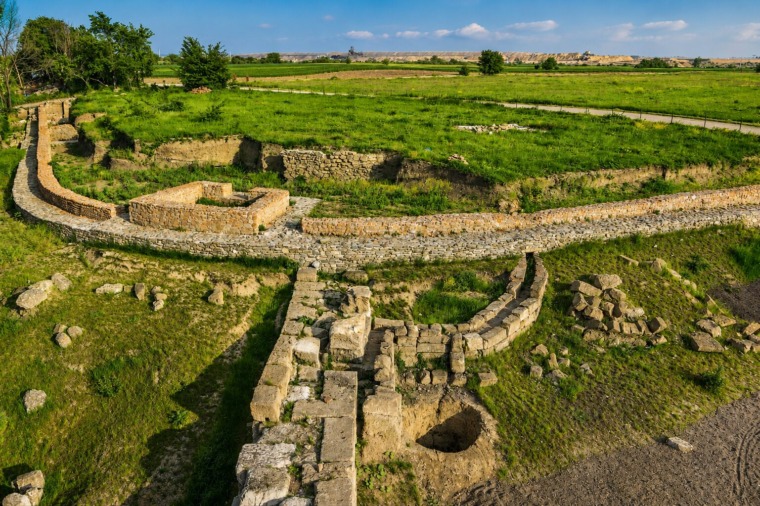
At the end of Knez Mihailova Street, near the entrance to Kalemegdan, Belgrade City Library holds an unexpected discovery for anyone interested in urban history. Its Roman Hall contains archaeological remains preserved where they were found, alongside a lapidarium displaying ancient stone monuments and other objects. These include sculptures, altars and stelae associated with Singidunum and the Roman Danube region.
What makes the space particularly interesting is its present-day use. Literary gatherings, lectures, concerts and other cultural events take place among the remains of the ancient city. A visit can therefore bring together two very different experiences: Roman heritage and contemporary cultural life in Belgrade.
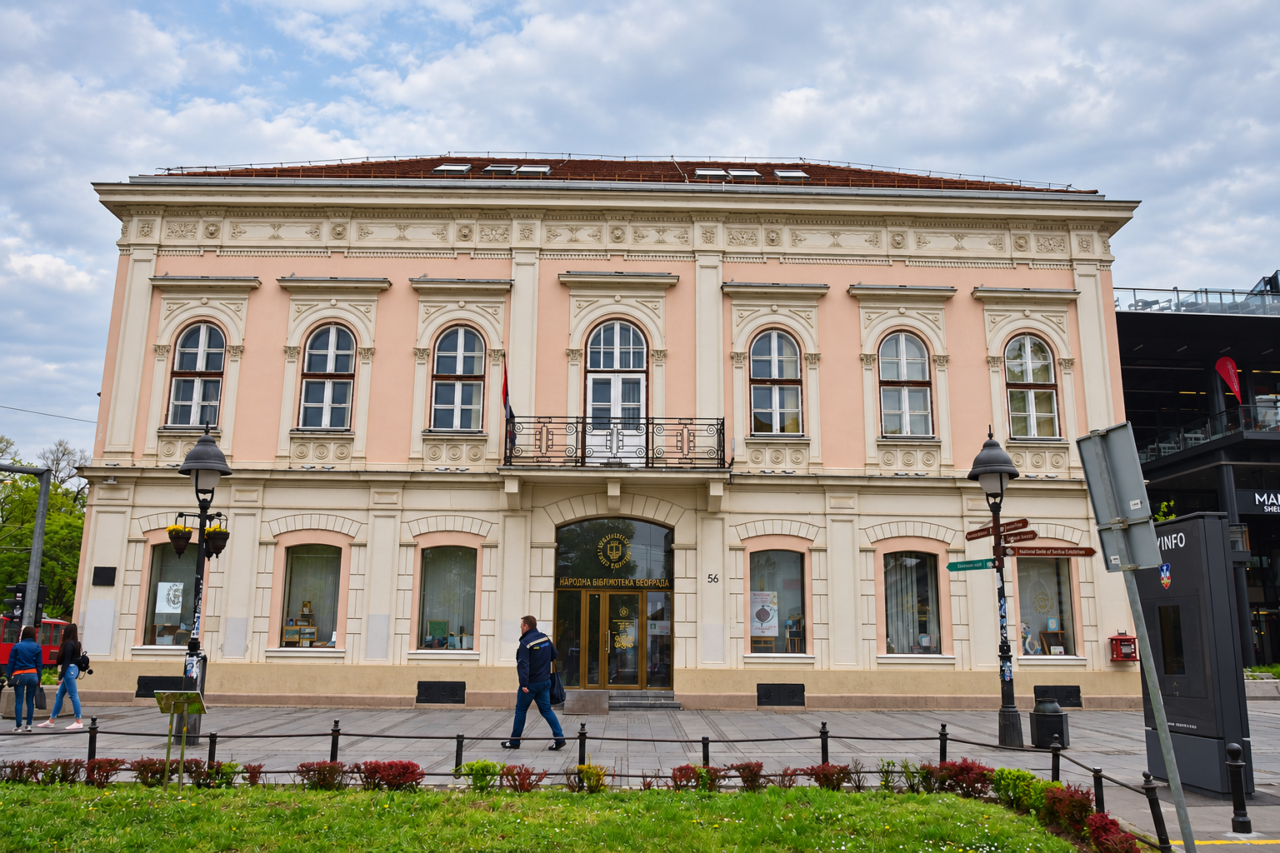
What to see: the Roman Hall, archaeological remains and lapidarium, when the space is accessible to visitors.
How to plan your visit: check the events calendar or ask about opportunities to view the hall. Attending an event that interests you is a rewarding way to include the library in an evening walk through the city centre.
2. University Library “Svetozar Marković”: A Century of Student Life in Belgrade
On Bulevar kralja Aleksandra stands a library that generations of students have associated with exams, research and long days spent with books. Opened in 1926, the University Library “Svetozar Marković” celebrates its centenary in 2026, providing a timely reason to discover its history.
The “Andrew Carnegie” reading room is one of its distinctive spaces, but a visit should extend beyond the wish to photograph a working study hall. The library has a gallery and hosts exhibitions, lectures and literary events, offering ways to explore its heritage while respecting the daily work of its users.
Its appeal lies in the connection between a historic setting and an institution that continues to serve students and researchers.
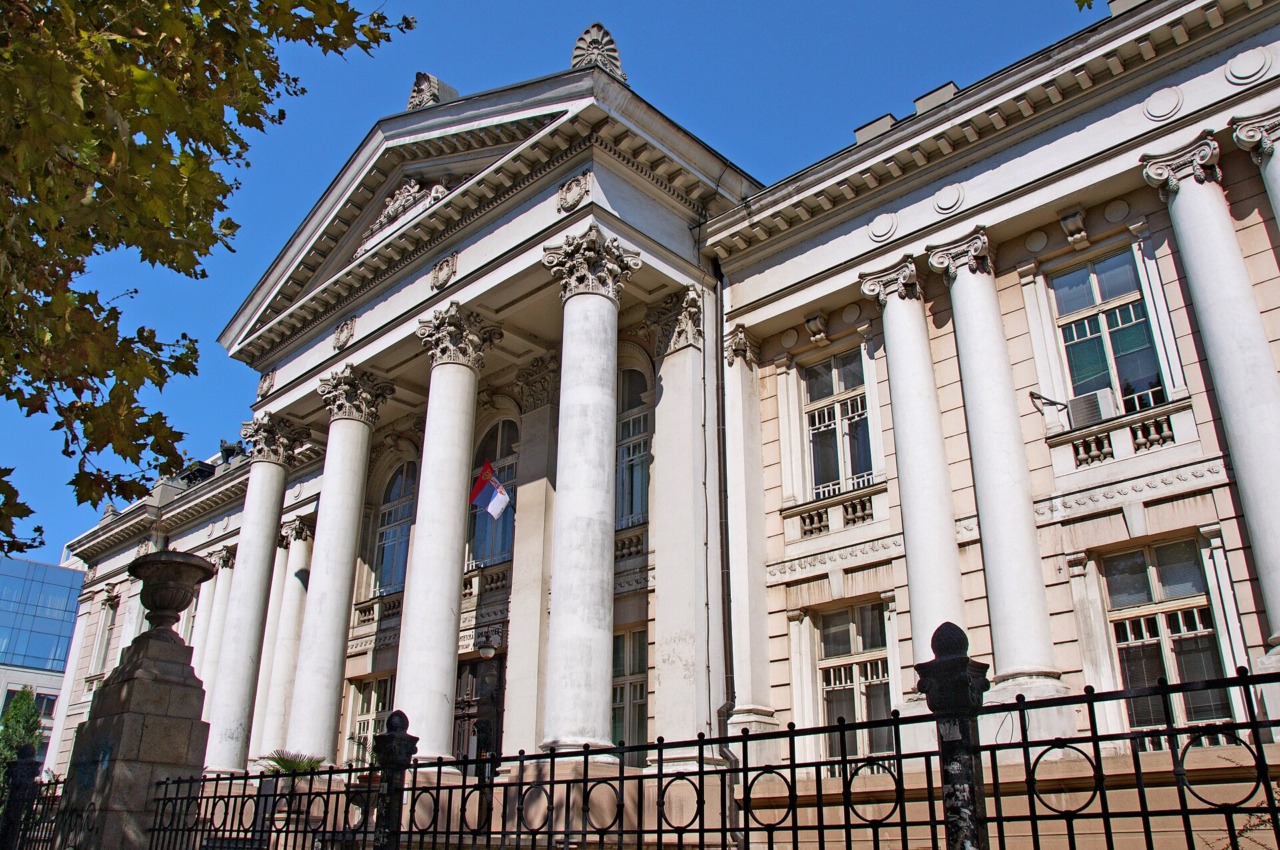
What to see: current exhibitions and accessible gallery spaces, with historic reading rooms viewed as part of an approved visit.
How to plan your visit: check the current programme and ask about arrangements for a visit. Reading-room use is subject to library regulations and membership requirements.
3. National Library of Serbia: Behind the Scenes of Cultural Memory
Beside the Church of Saint Sava, the National Library of Serbia is sometimes overlooked during a walk through Vračar. Yet its architecture and history deserve attention in their own right. The present building was designed by Ivo Kurtović and officially opened in 1973. It is protected as a cultural property.
An organised tour is the best way to get to know it. The library welcomes groups by prior arrangement, with visits covering its history and role, accessible reading rooms and current exhibitions. According to its published visitor information, tours last approximately one hour and accommodate groups of five to 25 people.
This is an opportunity to learn how a library collects, preserves and presents its holdings, and how much work takes place before a book reaches a reader.
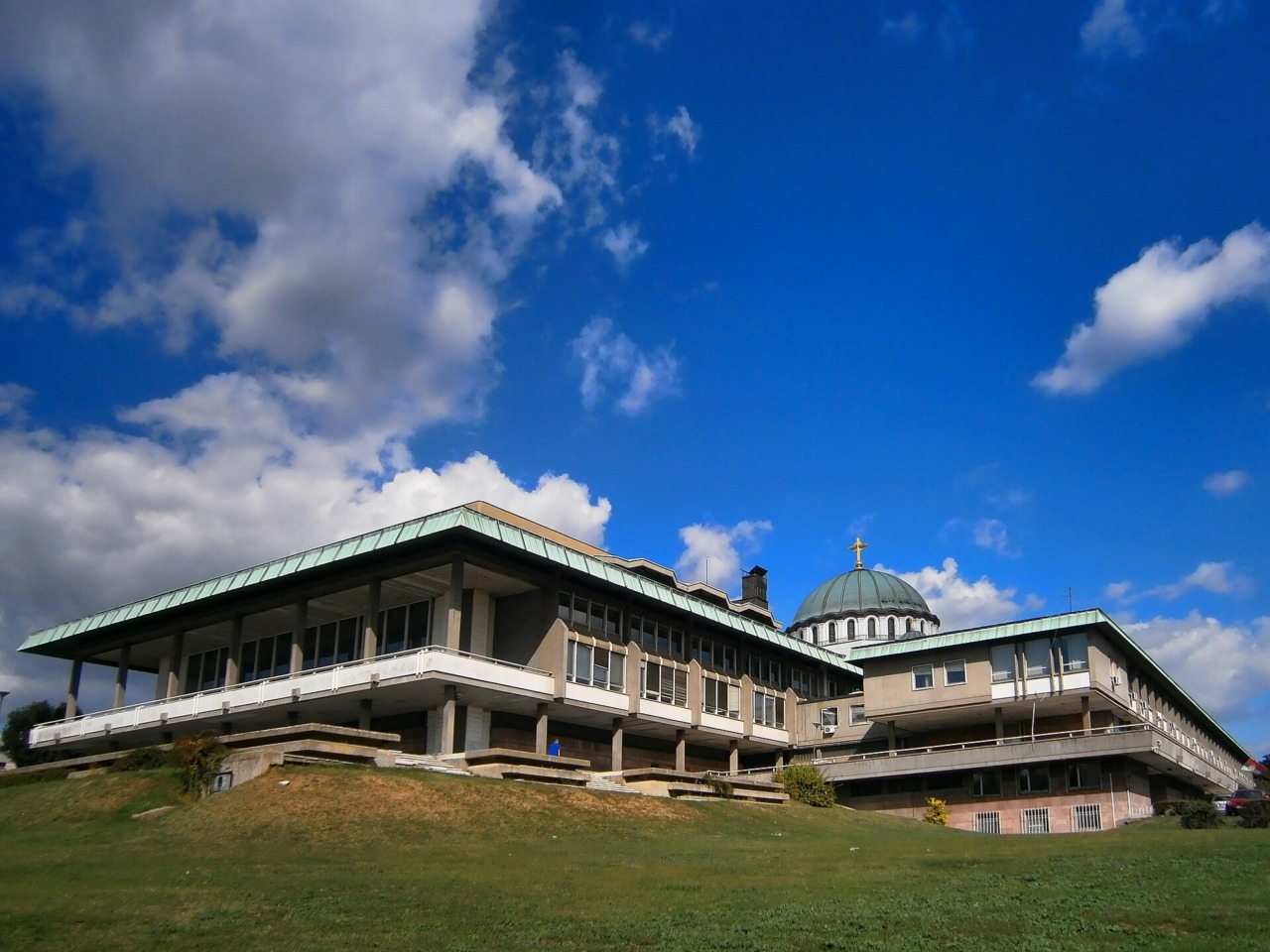
What to see: the building’s architecture, reading-room spaces included in the tour and exhibitions available at the time of your visit.
How to plan your visit: arrange group tours in advance. If visiting independently, ask about public events and accessible exhibitions.
4. Matica Srpska Library, Novi Sad: Two Centuries Among Books
For an introduction to Novi Sad’s literary and cultural identity, Matica Srpska Library is an important stop. Established in 1826 in Pest, alongside Matica Srpska, it is the oldest Serbian library of national significance and the first public scholarly library among Serbs.
Its importance extends beyond the size of its collection. Themed exhibitions and digital resources offer ways to explore how books, periodicals and individual authors have shaped cultural life.
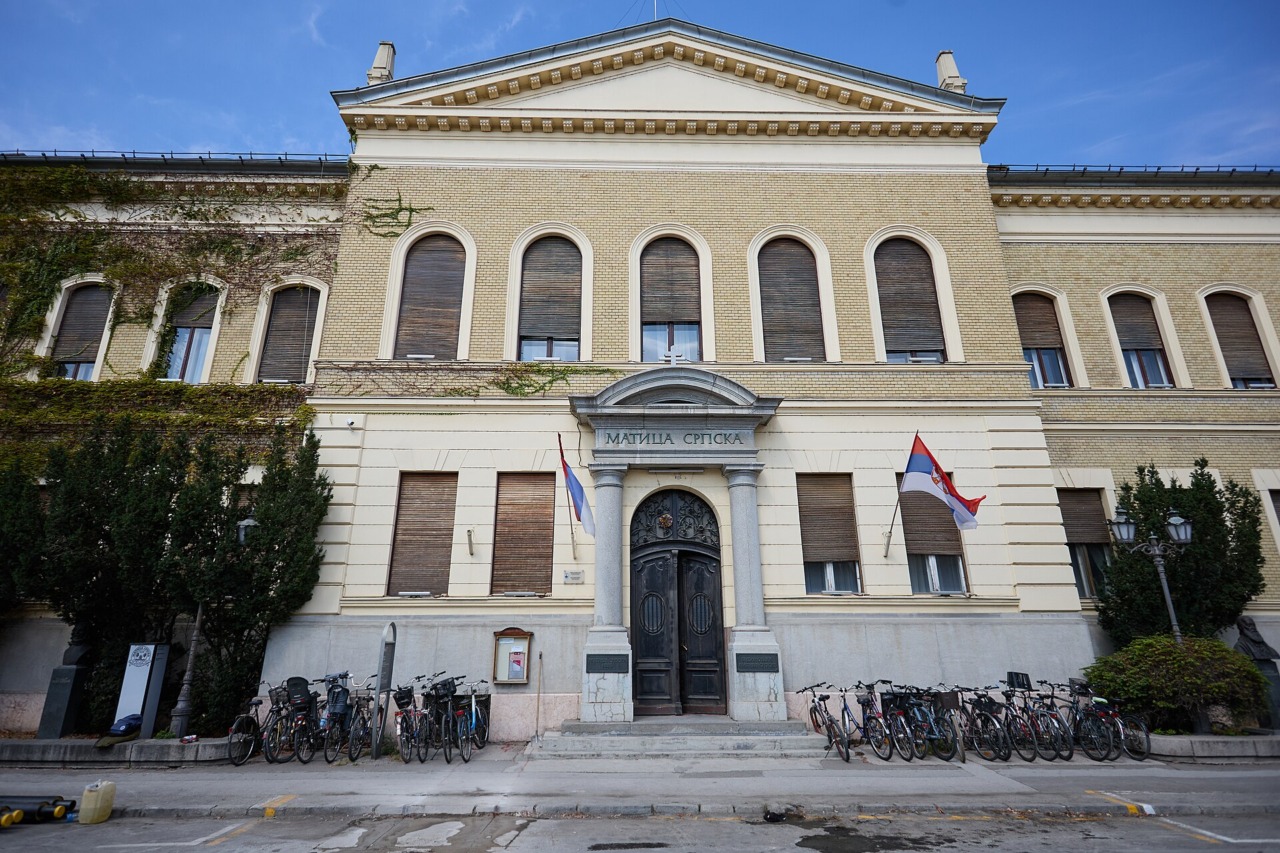
A library exhibition invites a different kind of attention from a large museum display. A title page, an inscription or an early edition can open a story about a writer, their readers and the period in which a book appeared. Before visiting, check whether an advertised exhibition is physical or electronic, and where it is presented.
What to see: current exhibitions and available presentations of library material. The digital library provides an introduction to the collections before you arrive.
How to plan your visit: check the programme and exhibition access arrangements, or contact the library beforehand to ask about visiting. Matica Srpska Library and the Gallery of Matica Srpska are separate institutions, so pay attention to the event location.
5. Subotica City Library: A Landmark to Admire Before You Step Inside
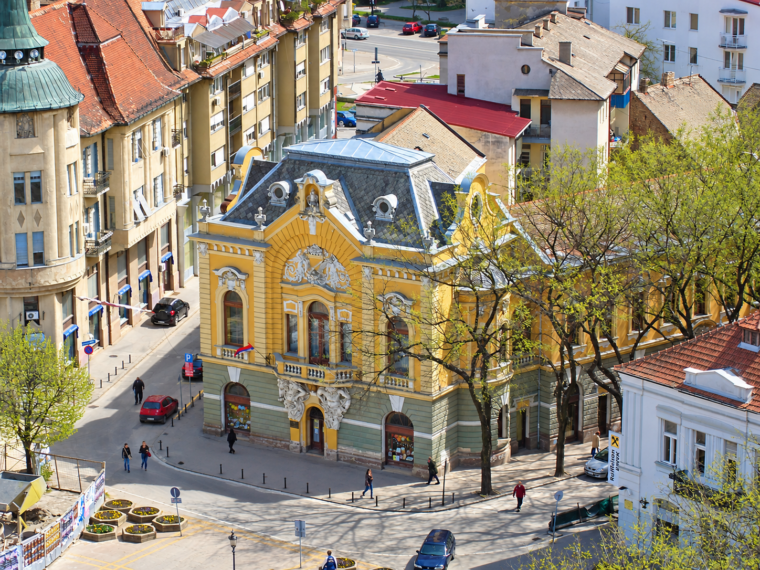
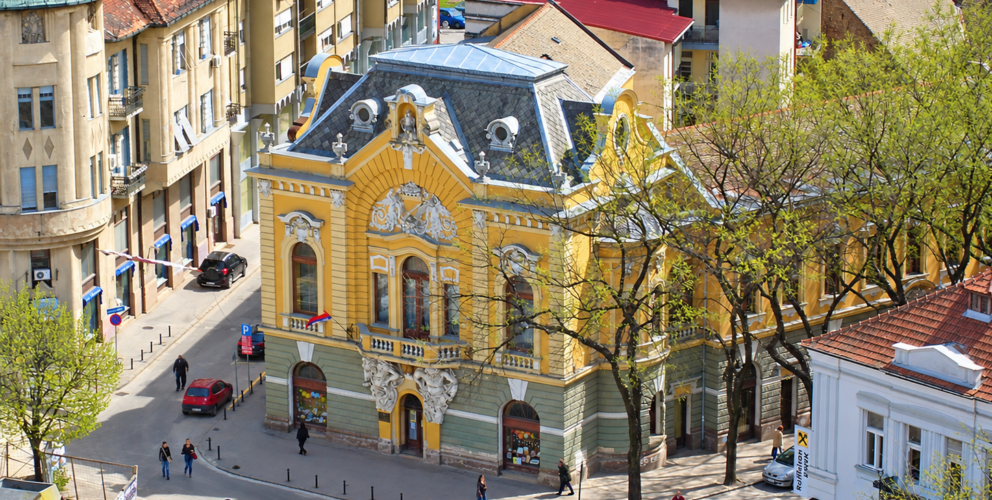
In Subotica, a library visit begins in the square. Its neo-Baroque building, designed by Ferenc Raichle, is recognisable by the two sculpted male figures supporting an ornate balcony. This detail alone makes it worth pausing, even if you do not plan to go inside.
The library fits naturally into an architectural walk through the city centre. After visiting City Hall, turn your attention to its façade, sculptures and windows, then check what is happening inside that day.
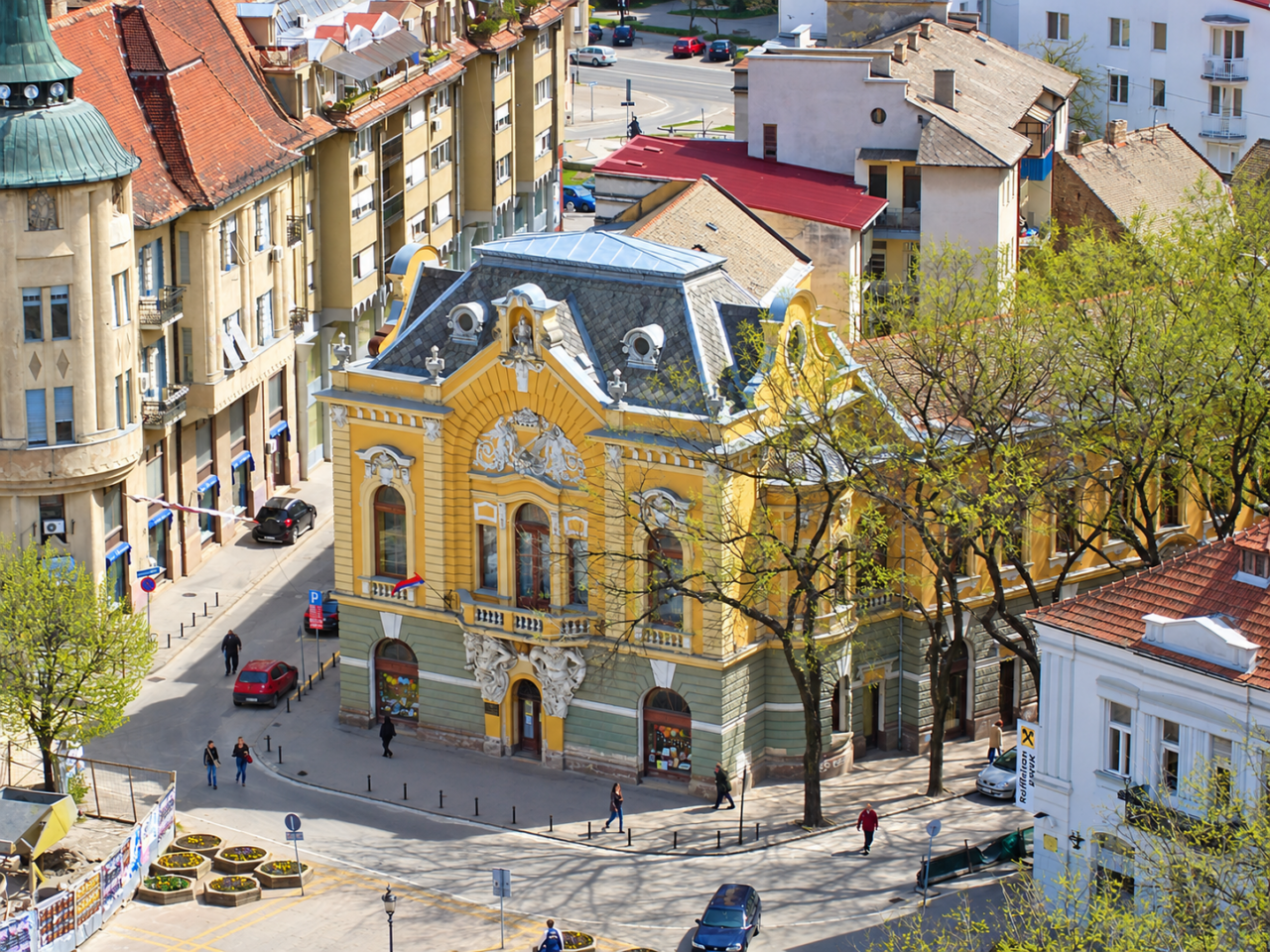
Literary evenings, book launches and exhibitions offer opportunities to experience the institution’s contemporary life. Such a visit adds another dimension to an architectural tour: behind the striking façade is a library used by local readers every day.
What to see: the façade with its sculpted figures and balcony, along with public events and exhibitions when scheduled.
How to plan your visit: ask at the information desk about viewing the interior. The presence of a valuable collection does not mean it is permanently displayed or available for unrestricted browsing.
6. Šabac Library: Books in a Former Bishop’s Palace
Šabac Library is a good reason to allow more time for a cultural walk around the city. Its home is the former Bishop’s Palace, while the city’s library tradition dates back to the founding of the Šabac Reading Society in 1847.
The historic building takes on added meaning through the events held there. Literary evenings and exhibitions form part of its programme, while concerts are particularly appealing: the library highlights the acoustics of the Bishop’s Palace, and events also take place in the “Vinaver” hall in the annex.
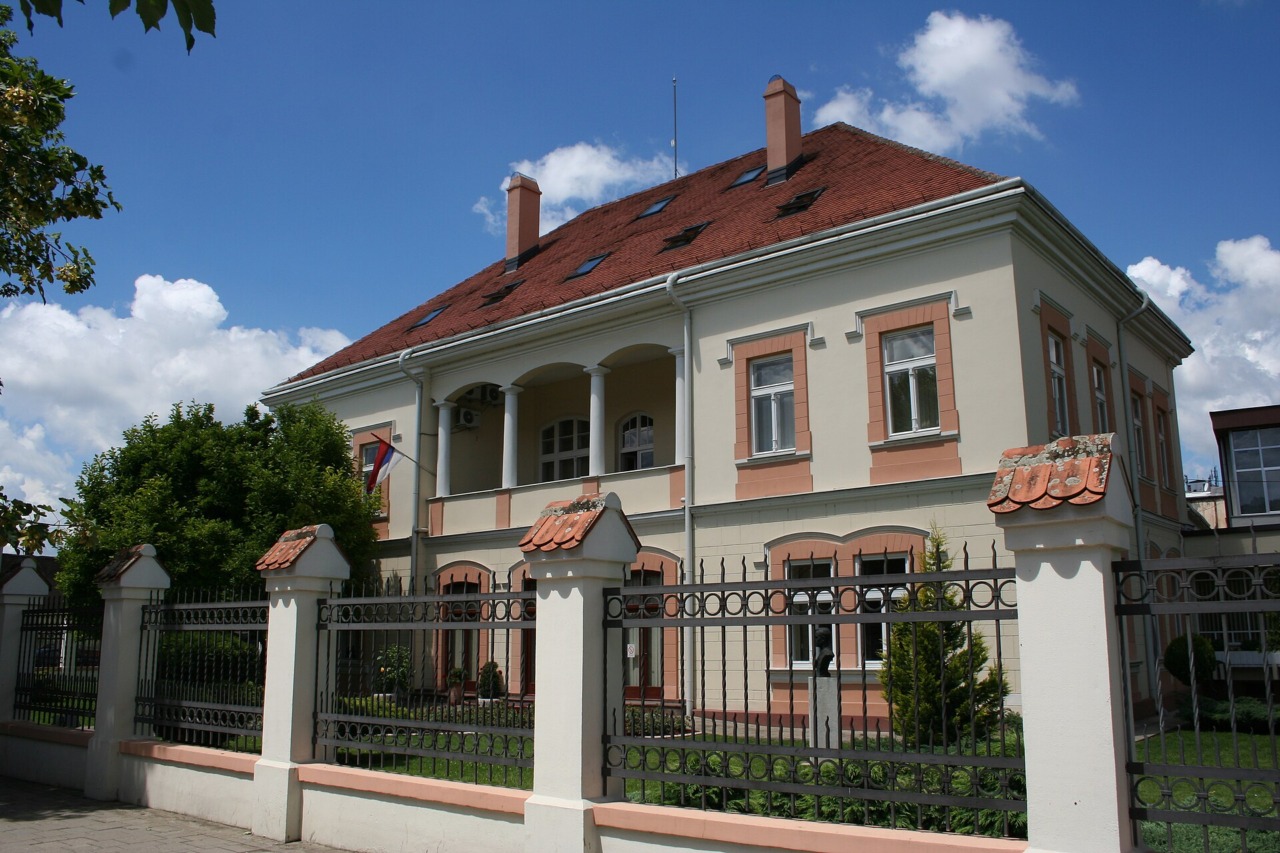
This makes a scheduled event an especially rewarding way to experience the library. Your visit becomes an encounter with both the architecture and the living space: how it sounds, how it is used and the role it plays in the city.
What to see: the historic building and exhibition or event spaces open to the public.
How to plan your visit: follow the library’s calendar and choose a literary evening, exhibition or concert. Ask about advance arrangements if you would like a separate tour of the historic section.
7. The Memorial Library of Karlovci Grammar School: Educational History Among Old Shelves
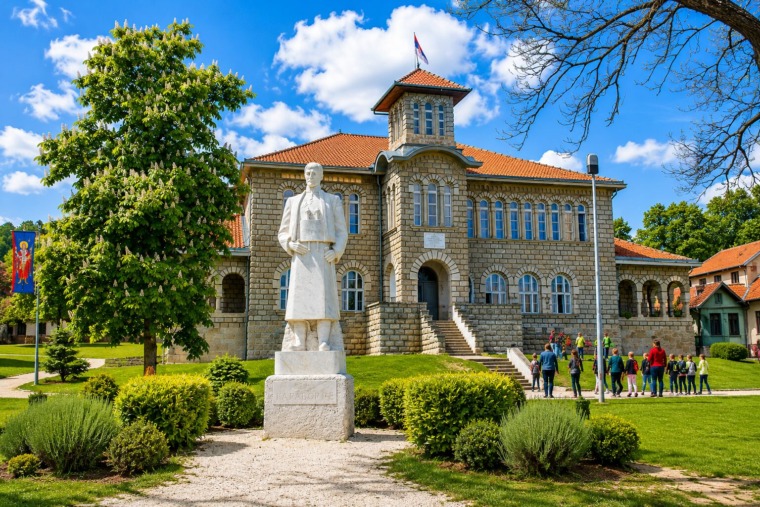
In Sremski Karlovci, a library can be one of the main reasons to visit. Karlovci Gymnasium, founded in 1791, houses a Memorial Library with rare and valuable books, its collection enriched by gifts from benefactors and former pupils.
Among the treasures highlighted in presentations of the collection are Božidar Vuković’s collection printed in 1539, the Four Gospels printed at Mrkšina Crkva in 1562 and a facsimile edition of Miroslav’s Gospel. These examples connect the school’s history with the broader story of printing, education and book preservation.

Discovering such a collection within a school that still operates today gives the experience particular significance. During a visit to Karlovci, it brings a more tangible, human dimension to the historic façades and names of celebrated former pupils.
What to see: the Memorial Library’s interior and the selection of material available during an arranged tour.
How to plan your visit: contact the school or tourist organisation in advance and specifically confirm whether the tour includes the library. Visits must fit around school activities and guide availability.
Make a Library Part of Your Autumn Outing
The most rewarding visit begins with a simple question: what would you like to experience? Choose the Roman Hall for archaeology, an arranged collection visit for historic books, or an exhibition, discussion or concert for a relaxed cultural evening.
Before setting out, check: whether advance booking is required, and whether the institution welcomes individuals or organised groups. What is accessible that day, including exhibitions and special rooms. Whether photography is permitted, particularly in reading rooms and around historic material.
Leave time for the city around the library, too: a walk through Kalemegdan or Vračar, or the centres of Novi Sad, Subotica, Šabac or Sremski Karlovci. An exhibition or tour can become the focus of an entire outing – especially on an autumn day when spending a little time among books feels particularly inviting.
Plan your visit
Everything you need to plan your perfect trip.
Related Articles