
There is a moment in the Serbian autumn when the season appears to change its mind. The mornings are already cool, a few rainy days may have passed, and jackets have returned to everyday life. Then the clouds clear. The sun grows unexpectedly warm, café terraces fill again, and the countryside glows in shades of gold, copper and red. For several days – sometimes longer, sometimes only briefly – summer seems to return. In Serbia, this period is known as Miholjsko leto.
The expression is often translated as “Indian summer”, but the Serbian phrase carries a more local meaning. It is connected not only with the weather, but also with the traditional calendar, village life and the feeling of a final warm pause before late autumn settles in.
Miholjsko leto is not a festival, a fixed week or a season that arrives on command. It is one of those experiences defined as much by atmosphere as by temperature: sunlight on turning leaves, mist lifting from a river, the smell of roasted peppers and the unexpected pleasure of sitting outside in October without feeling cold.
What Is Miholjsko Leto?
In everyday Serbian, Miholjsko leto describes a spell of stable, relatively warm and often sunny weather during autumn, most commonly associated with October. The days feel milder than expected for the season, although mornings and evenings can still be distinctly cool.
It is not an official meteorological season and there is no single temperature that marks its beginning. A few sunny days after a colder or wetter period may be enough for people to announce that Miholjsko leto has arrived. In other years, the warm spell may be longer and more noticeable. Similar expressions for warm autumn spells are informal rather than strictly defined meteorological terms.
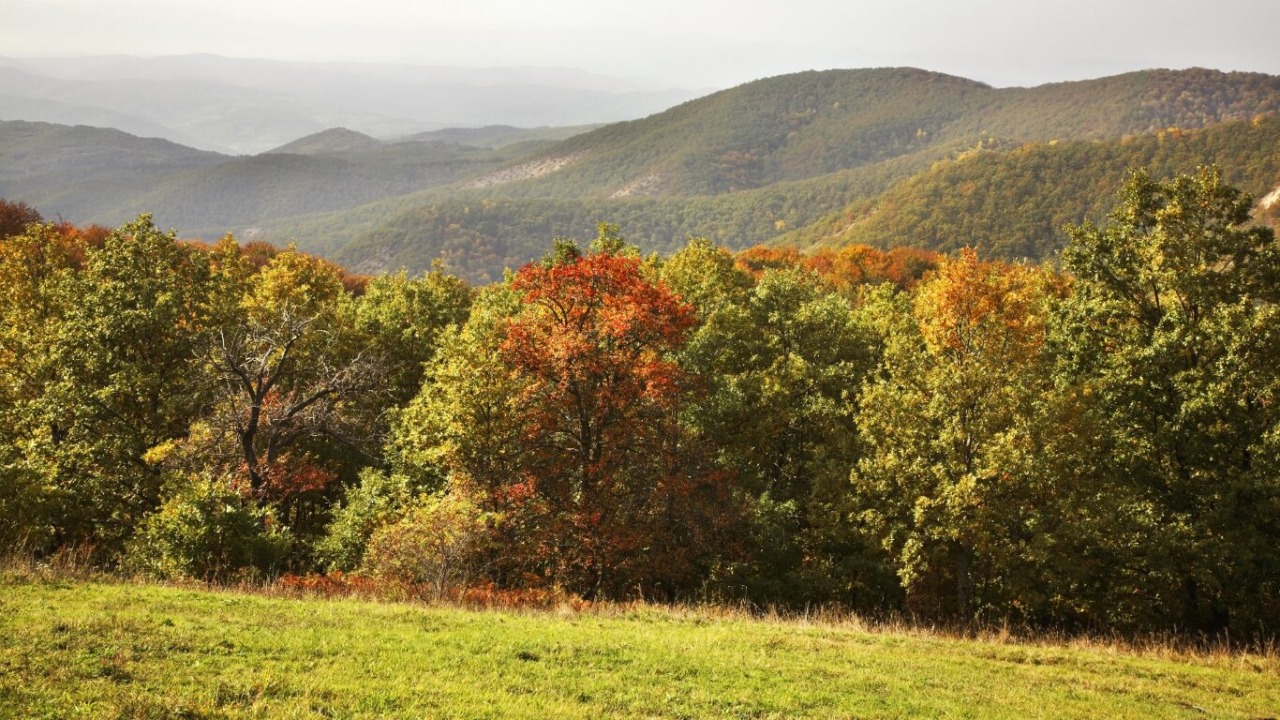
The atmosphere is often shaped by a period of settled weather. Clearer skies allow daytime temperatures to rise, while longer nights and the season itself keep mornings fresh. This difference between cool beginnings and warm afternoons is one of the most recognisable features of Miholjsko leto.
That is also why it should never be confused with a return to true summer. The sun sets earlier, shaded paths remain cold, fog may linger in valleys, and the temperature can fall quickly after sunset. Miholjsko leto belongs unmistakably to autumn — it simply reveals the season’s gentler side.
The Story Behind the Name
The name is traditionally associated with Miholjdan, observed on 12 October in the Serbian Orthodox calendar and dedicated to Saint Kyriakos the Anchorite. Warm weather around or after this date gradually became connected with the feast in popular speech.
Similar ideas exist in many parts of Europe, where late warm spells are named after saints’ days or traditional points in the calendar. What makes the Serbian expression distinctive is how naturally it remains part of everyday language. Weather forecasts, newspaper headlines and ordinary conversations still use it without explanation.

Yet Miholjsko leto does not need to begin precisely on Miholjdan. It may arrive earlier in October, appear later, last only a few days or fail to develop clearly at all. The name belongs to tradition; the weather follows its own rhythm.
This distinction matters because Miholjsko leto is sometimes presented as though it were an annual event with guaranteed dates. It is better understood as a familiar autumn weather pattern that Serbian culture has given its own name and emotional character.
More Than a Weather Forecast
For people in Serbia, Miholjsko leto often feels like borrowed time. In cities, café tables return to the pavement and parks fill with walkers who know that colder days are approaching. Windows are opened again in the afternoon. A light jacket that felt essential in the morning is carried over the arm by lunchtime.
In villages, the period has long coincided with practical autumn work. Orchards, vineyards, gardens and fields do not follow the tourist calendar. Depending on the region and the year, families may still be gathering late fruit, preparing firewood, completing work around the house or turning peppers, cabbage, tomatoes and other produce into winter preserves.
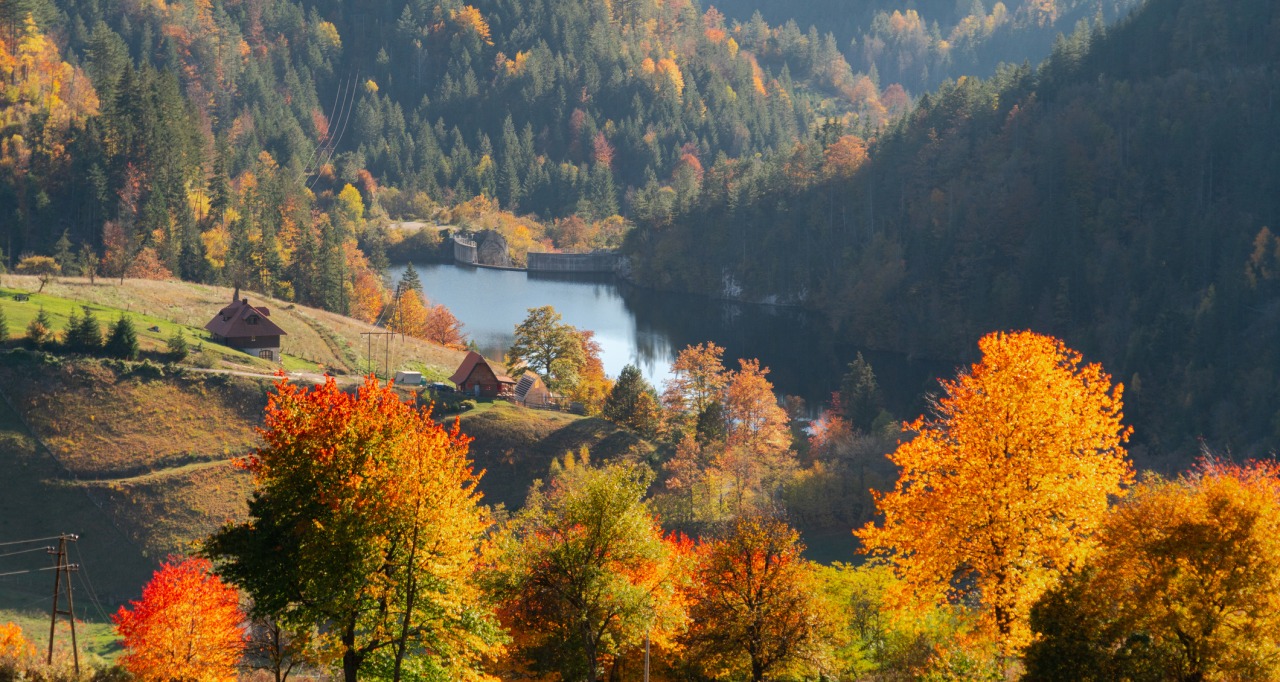
The light is different too. The sun sits lower than it does in summer, giving buildings, vineyards and forests a softer, warmer appearance. Even an ordinary road can become memorable when it passes through a canopy of yellow leaves or opens onto fields covered by a thin morning mist.
This is why Miholjsko leto is not experienced only through a thermometer. It is found in the contrast between the seasons: warm sun and cold shade, green grass beneath copper trees, an outdoor lunch followed by an evening beside a stove.
Where Miholjsko Leto Feels Most Beautiful
There is no single destination for Miholjsko leto. Its charm lies in the way it transforms places across the country.
Fruška Gora and Sremski Karlovci
Forests, vineyards, monasteries and small towns make Fruška Gora one of the most natural settings for a warm autumn day. A morning walk can be followed by a monastery visit, lunch in the countryside or a pre-arranged wine tasting.
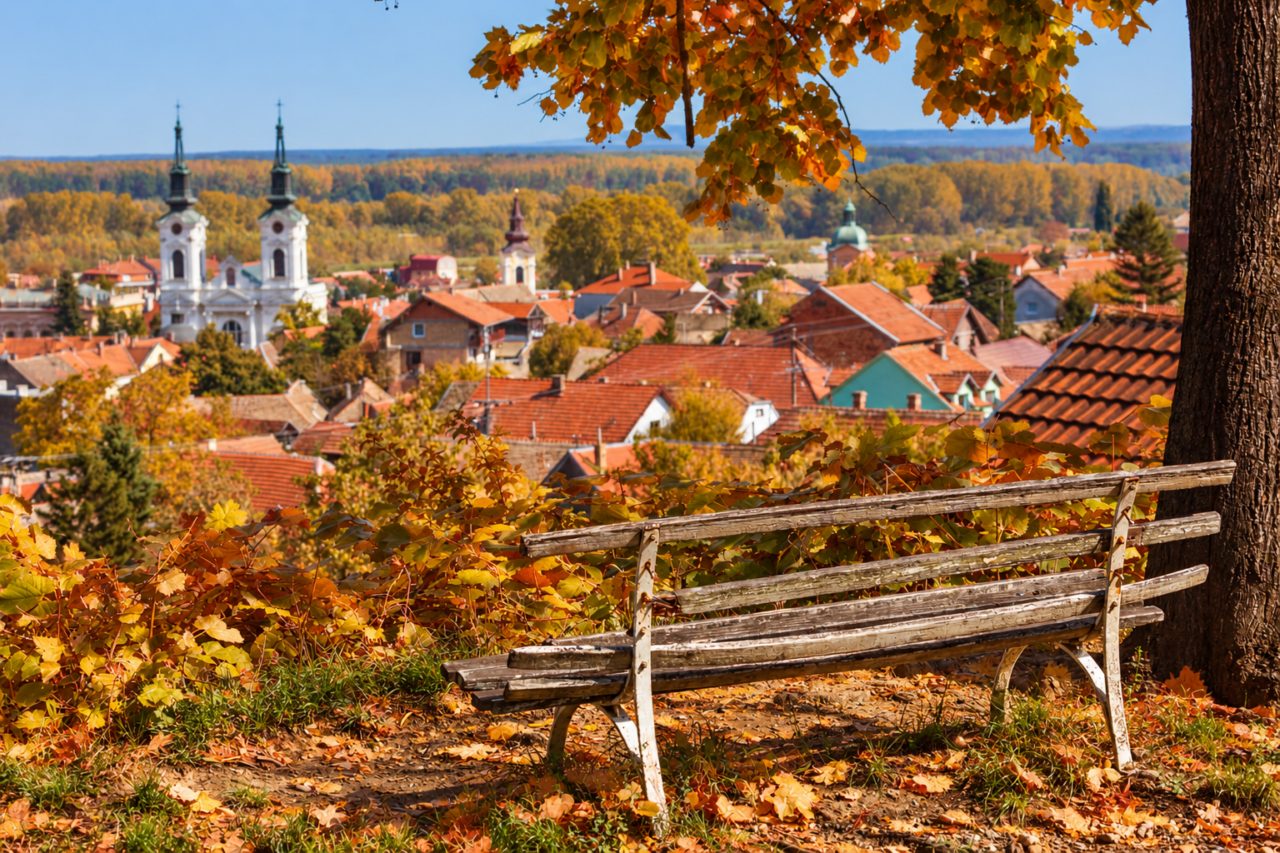
Nearby Sremski Karlovci becomes especially atmospheric under soft October light. The baroque centre, red rooftops and surrounding vineyards create a scene that feels both elegant and unhurried. It is close enough to Novi Sad for a day trip, but slow enough to deserve more than a quick stop.
Šumadija and Oplenac
The rolling landscapes of central Serbia suit the season perfectly. Around Topola and Oplenac, vineyards, orchards and wooded hills surround one of the country’s most important royal heritage sites.
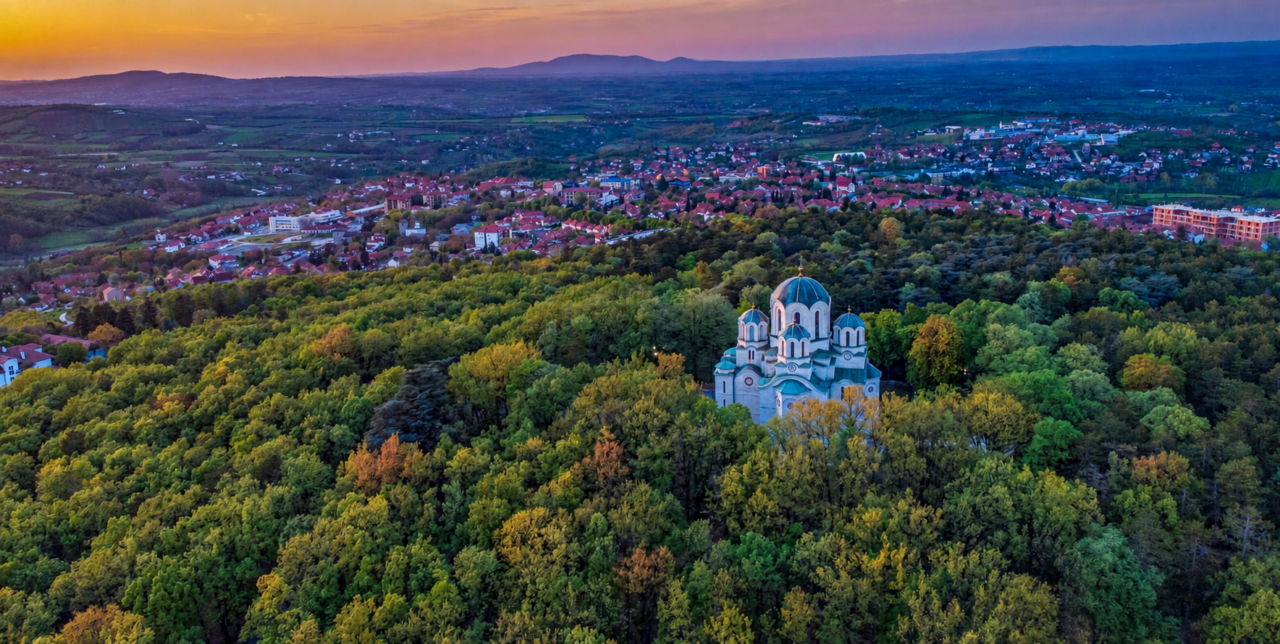
Visit the Church of Saint George, drive through the countryside and leave time for a winery or regional lunch. During Miholjsko leto, the journey between stops may be as memorable as the landmarks themselves.
Tara and Western Serbia
In western Serbia, autumn is more dramatic. Dark evergreen forests contrast with golden beech trees, while mist gathers in valleys below the mountain roads.
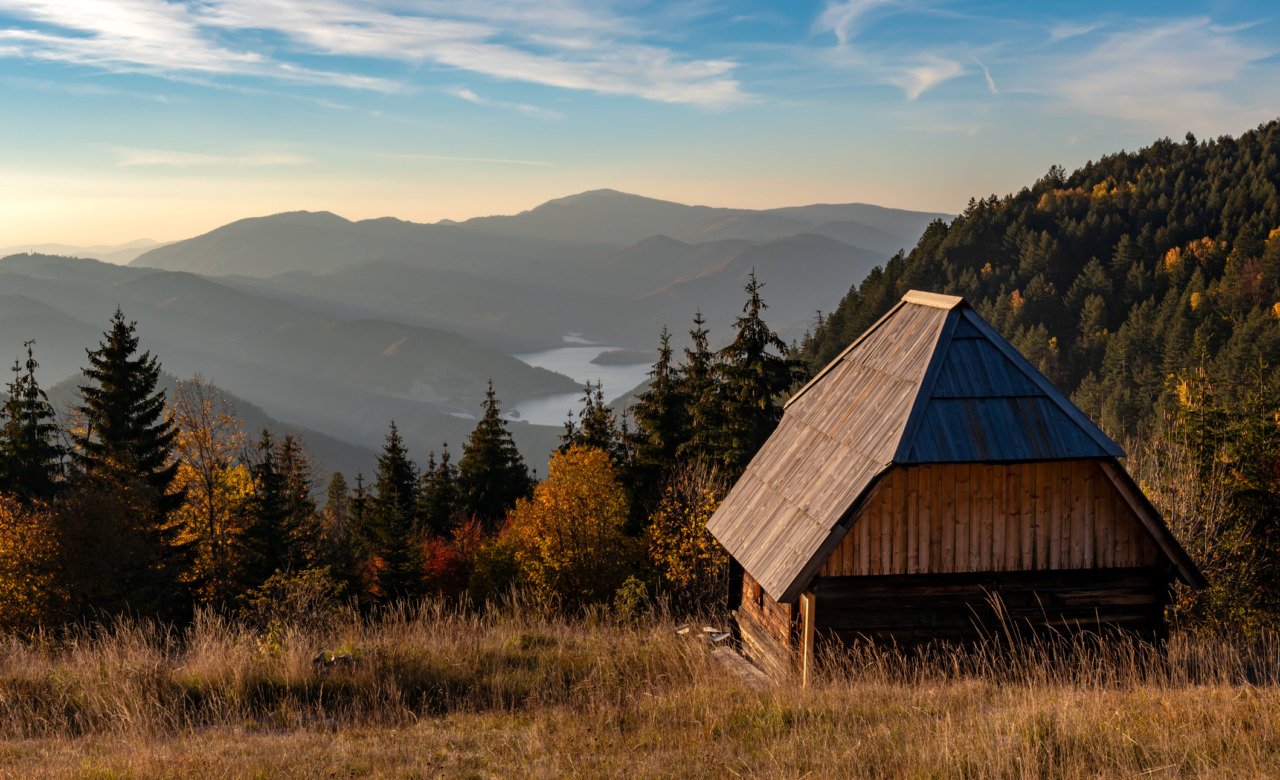
Tara rewards travellers who resist the urge to rush between every viewpoint. Choose a marked walk, spend time around Mitrovac or Kaluđerske Bare, and allow the weather to determine the day. Warm sunshine can make a mountain afternoon feel gentle, but temperatures drop quickly once the sun disappears.
The Danube and Đerdap
Along the Danube, Miholjsko leto brings together water, history and autumn colour. Golubac Fortress provides a striking beginning to a journey through the Iron Gate, while the road towards Lepenski Vir and Donji Milanovac follows one of Serbia’s most impressive landscapes.
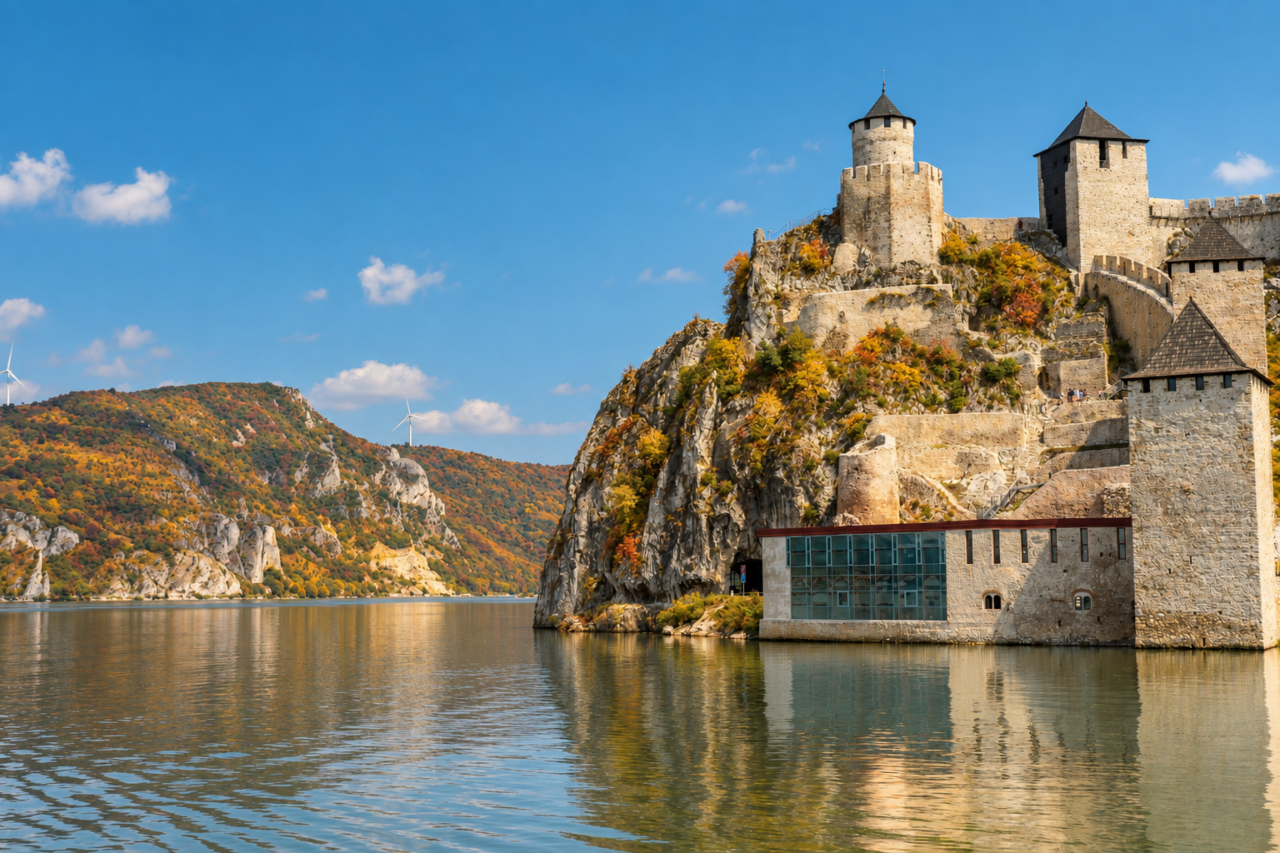
On clear days, the river reflects the changing slopes above it. On misty mornings, fortresses and cliffs take on a quieter, more mysterious character. Both belong to the season.
Belgrade and Novi Sad
Miholjsko leto is not limited to the countryside. In Belgrade, it can be felt on Kalemegdan, beside the Sava and Danube, in Topčider and Košutnjak, or at a café table unexpectedly returned to the sun.
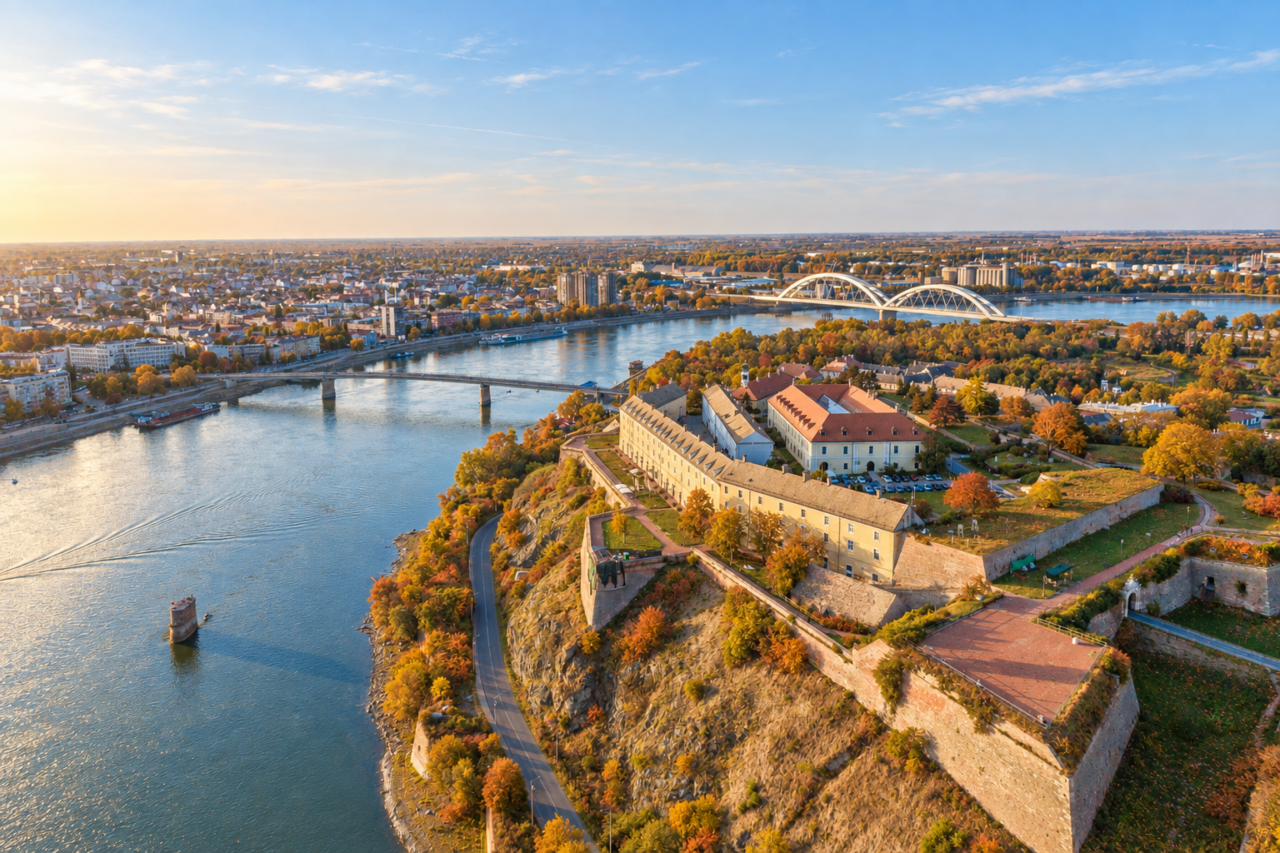
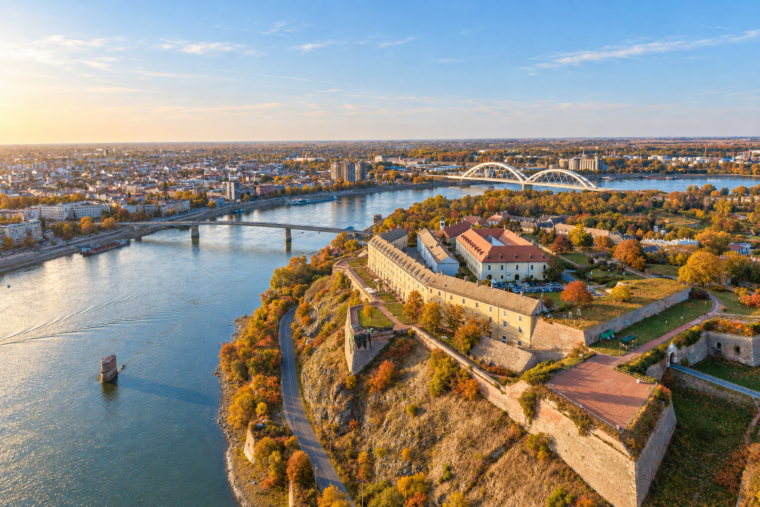
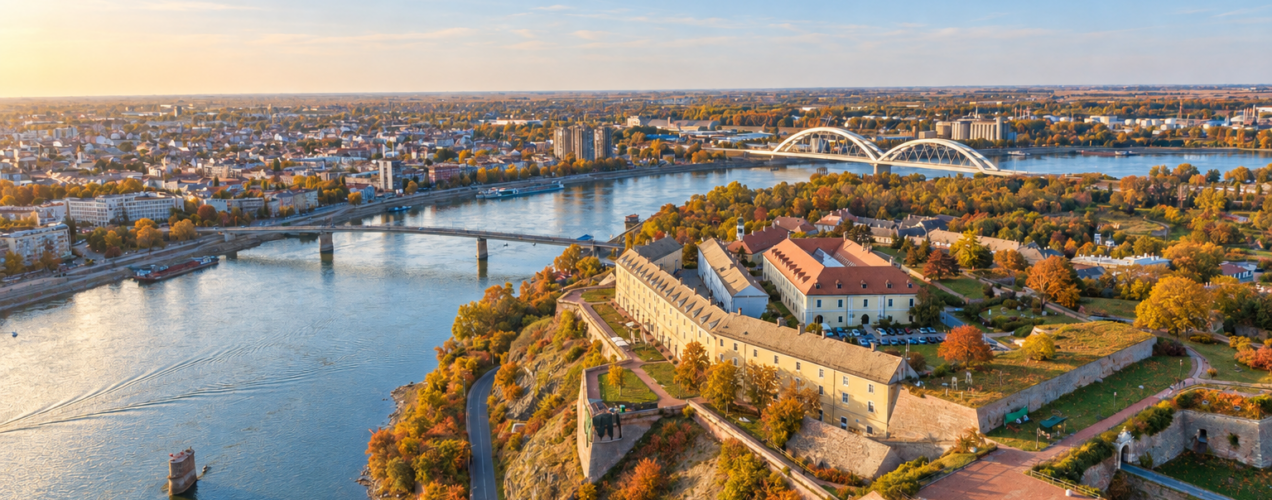
In Novi Sad, combine the historic centre and Petrovaradin Fortress with a walk beside the river or a short escape towards Fruška Gora. These cities are particularly practical during changeable weather because outdoor plans can easily be balanced with museums, galleries and long lunches.
The Flavours of Serbia’s Late Warm Days
Miholjsko leto arrives when Serbian kitchens and markets are moving from summer abundance towards winter comfort. Red peppers remain one of the defining ingredients. This is the season of ajvar, roasted peppers, pinđur and ljutenica – recipes that preserve the flavours and colours of warmer months. Markets also carry pumpkins, apples, pears, grapes, mushrooms, walnuts and late garden produce.
Restaurant menus begin to feel more substantial. Beans, stews, roasted meat, mushrooms and freshly baked pies suit cooler evenings, while a sunny afternoon may still call for a lighter lunch on a terrace.
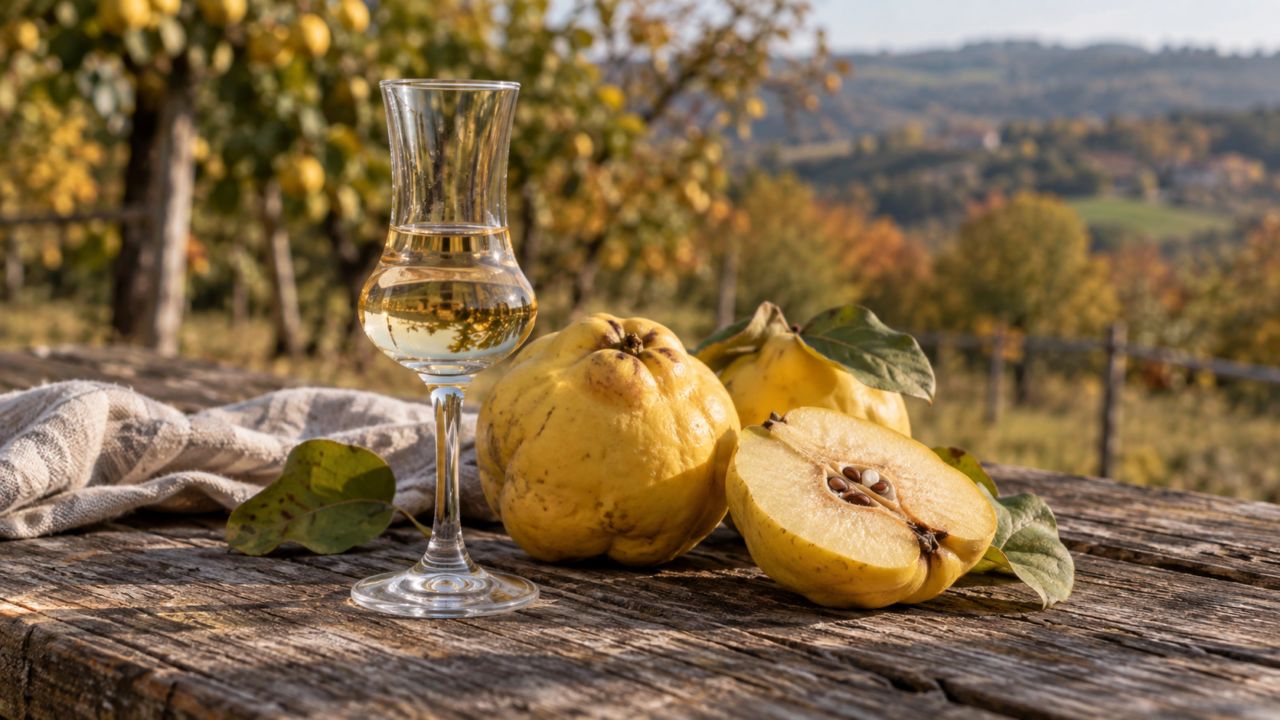
Wine has a special place in this landscape. By October, the busiest days of the grape harvest may be ending, but vineyards and wineries remain deeply connected to the season. Fruška Gora, Šumadija, Župa, the Vršac area and Negotinska Krajina each offer a different wine identity and setting. Smaller wineries should always be contacted in advance rather than treated as everyday walk-in attractions.
Rakija also belongs to autumn gatherings, but it is best enjoyed slowly and with food. Ask what fruit it was made from, try a small amount and never combine tasting with driving.
Will Serbia Have Miholjsko Leto in 2026?
Serbia’s national hydrometeorological service includes “Miholjsko leto” in its seasonal outlook for October 2026 and anticipates temperatures above the long-term average. For travellers, that is an encouraging signal – but not a guarantee of uninterrupted sunshine.
Seasonal forecasts describe broader tendencies rather than the exact weather on a particular weekend. Rain, fog, colder mornings and sudden changes remain possible. The most useful approach is to check a reliable local forecast shortly before travelling and keep the itinerary flexible.
If the warm spell arrives, treat it as an opportunity rather than a promise. Choose the clearest day for viewpoints, hiking or countryside drives, and keep museums, wineries, monasteries, spas or long lunches as alternatives when the weather changes.
How to Travel During Miholjsko Leto
Dress in layers. A warm afternoon can follow a cold morning, particularly in valleys and mountains.
Carry a light waterproof jacket. Autumn weather can change quickly even after a clear start.
Check the time of sunset. Days are shorter, and forest trails become dark earlier than open areas.
Wear proper footwear. Fallen leaves can hide wet stones, roots and slippery ground.
Confirm opening hours. Smaller attractions, rural restaurants and boat services may already be operating outside their summer schedules.
Reserve winery visits. Family wineries often receive guests by arrangement rather than through fixed daily opening hours.
Expect fog on the road. River valleys and mountain routes can have reduced visibility in the morning and after sunset.
Above all, avoid building a schedule that leaves no space for the season itself. Miholjsko leto is best enjoyed without rushing: one forest walk, one historic town, one local meal and enough time to stop when the road becomes unexpectedly beautiful.
The Last Warm Pause Before Winter
Miholjsko leto is one of Serbia’s quiet seasonal pleasures. It does not announce itself with a ceremony, and it cannot be booked for exact dates. It simply arrives when autumn briefly becomes warmer, softer and more generous than expected.
For travellers, it offers a chance to see Serbia between its most familiar seasons. Summer has ended, winter is still distant, and the country belongs to vineyards, changing forests, village smoke, city parks and golden afternoon light.
Perhaps that is why the expression has endured. Miholjsko leto is not only a description of the weather. It is the name Serbia gives to the feeling that autumn has offered one last day outside – and that it would be a shame not to take it.
Related Articles