Serbian literature is rich in prolific writers and poets whose works include some of the country’s finest literary achievements.
From the Miroslav Gospel, the oldest surviving manuscript of Serbian literature included in UNESCO’s Memory of the World Register, to contemporary works of exceptional value and significance, this field of Serbian culture has been shaped by numerous literary treasures.
Among the most notable works of Serbian medieval literature are The Life of Saint Simeon, the Hilandar Typikon, and the Nomocanon of Saint Sava, written by Serbia’s first archbishop, Saint Sava. Other important works include the nun Jefimija’s Praise to Prince Lazar, The Life of Despot Stefan Lazarević by Constantine the Philosopher, as well as writings by Stefan the First-Crowned, Teodosije of Hilandar, Jelena Lazarević Balšić, Konstantin Mihailović, and others.
During Ottoman rule, a rich tradition of oral epic and lyric poetry of exceptional beauty developed throughout the region. These works were passed orally from one generation to the next, with the finest poems performed and narrated by folk singers accompanied by the gusle. Thousands of long and short epic and lyric poems marked this period of Serbian literature. Epic poetry primarily celebrated heroes, historic struggles, and victories during the uprisings, while lyric poetry explored folk customs, rituals, love, family life, and sorrow.
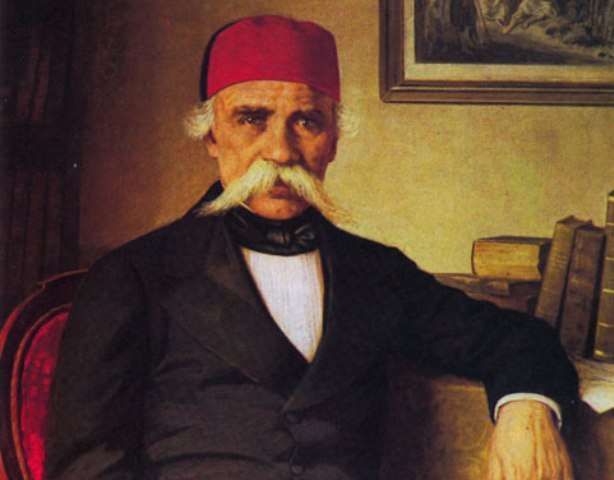
Vuk Stefanović Karadžić was the first to record many of these poems in written form and was himself responsible for some of the most important achievements in Serbian literature and linguistics. His works that helped establish the foundations of the modern standard Serbian language include the first and second editions of the Serbian Dictionary, as well as his translation of the New Testament. This period also produced major works such as Njegoš’s The Mountain Wreath and Sterija’s Kir Janja, together with celebrated poems including Tell Me, Tell Me, As I Thought of Dying, My Fatherland, and Evening.
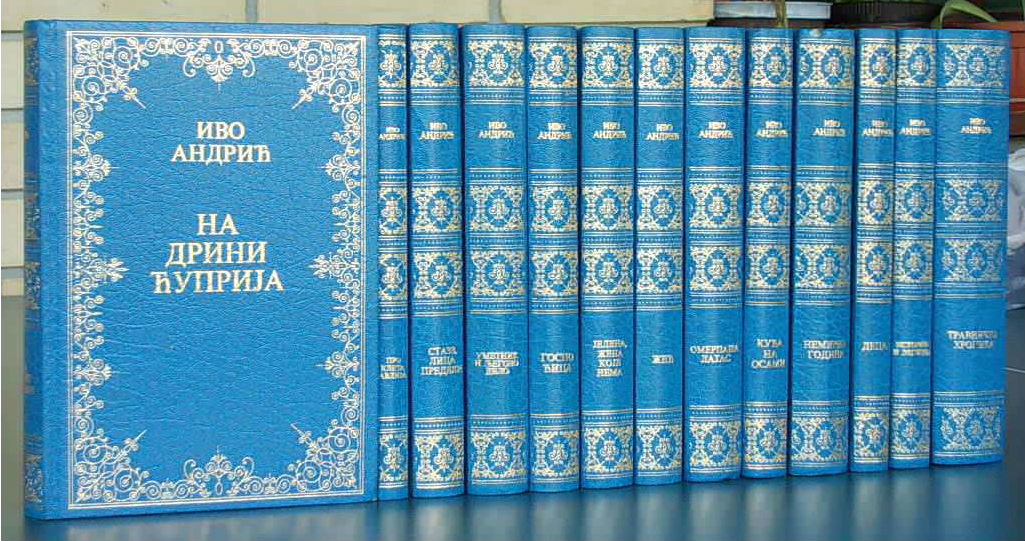
Some of the best-known works of Serbian literature were written by Ivo Andrić, one of the most important writers of the 20th century and the country’s only Nobel Prize laureate in literature. The Bridge on the Drina, Travnik Chronicle, The Woman from Sarajevo, The Damned Yard, Ex Ponto, and Signs by the Road have been translated into numerous languages.
Alongside Andrić’s works, the novels Death and the Dervish and The Fortress by Meša Selimović are regarded as major achievements of Serbian literature. The same is true of Ivko’s Feast, Zona Zamfirova, and Priest Ćira and Priest Spira by Stevan Sremac, one of Serbia’s most widely read writers.
Among the greatest achievements of modern Serbian literature are Danilo Kiš’s novels Garden, Ashes and Hourglass, The Golden Fleece by Borislav Pekić, When the Pumpkins Blossomed by Dragoslav Mihailović, and Dušan Kovačević’s legendary works The Marathon Family, Balkan Spy, and Tragedy Burlesque.
This section takes you on a fascinating journey through some of the greatest achievements of Serbian literature.