
On the gentle slopes above Kragujevac lies a place where history is encountered not only through dates and museum exhibits. Open meadows, long avenues of trees, mass graves and monumental sculptures together make Šumarice one of Serbia’s most important places of remembrance.
The “October in Kragujevac” Memorial Park, better known as Šumarice, was established on the grounds where German occupation forces executed thousands of residents of Kragujevac and the surrounding villages in October 1941. The victims included workers, teachers, students, craftspeople, civil servants and children.
Today, Šumarice is more than a memorial to one of the most tragic events in the city’s history. It is a place of silence, art and education, as well as a powerful warning about the consequences of violence. Its message belongs neither only to Kragujevac nor only to the past – it speaks of our responsibility never to take peace, human dignity and life for granted.
The Kragujevac Massacre of October 1941
In the autumn of 1941, during the German occupation of Serbia, Kragujevac and its surroundings became the site of mass reprisals against the civilian population. Following clashes between the occupation forces and resistance fighters, the German army carried out arrests and executions across the city and nearby villages.
On 21 October 1941, groups of detained citizens were taken to different locations in Šumarice and executed. Among them were students and teachers from Kragujevac schools, which is why the tragedy became deeply connected with the city’s identity and educational institutions.
Over time, the murdered schoolchildren became one of the most recognisable symbols of the Kragujevac tragedy. However, the story of Šumarice encompasses a much wider circle of people – families, several generations and residents of numerous surrounding communities whose lives were taken during those October days.
Because historical records differ, sources provide varying estimates of the total number of victims. What remains undisputed is the scale of the crime and the fact that thousands of civilians were killed in reprisals whose consequences Kragujevac remembers to this day.
From a Place of Execution to a Memorial Park
The “October in Kragujevac” Memorial Park was established in 1953 to preserve the mass graves and commemorate the execution sites with dignity.
Rather than being built around a single central monument, Šumarice was designed as an expansive memorial landscape. Roads and paths connect the individual sites, while monuments stand among open meadows and trees. Visitors move gradually through the park, encountering one story and one symbol after another.
This concept distinguishes Šumarice from a conventional memorial complex. Nature is not simply a backdrop for the monuments. The transition between open spaces, woodland and silence becomes part of the experience itself.
Today, the park contains numerous monuments and artistic ensembles created by prominent Yugoslav artists and architects. Each memorial is dedicated either to a particular group of victims or to universal themes of suffering, resistance, grief and freedom.
The Monument to the Executed Students and Teachers
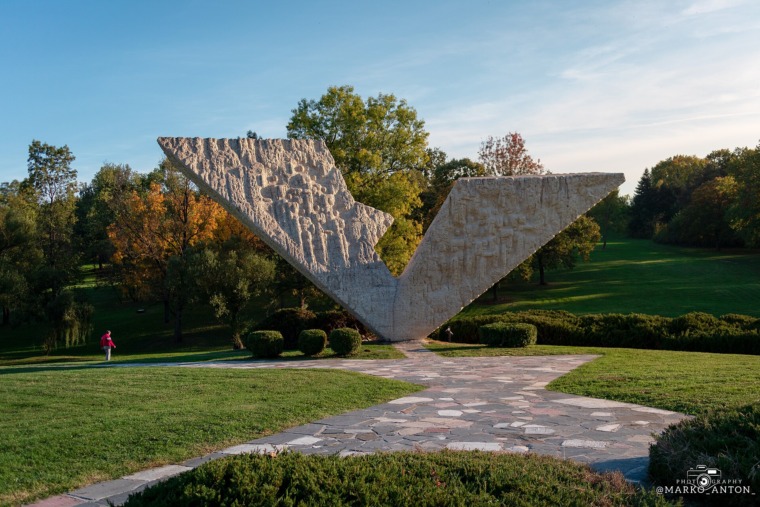
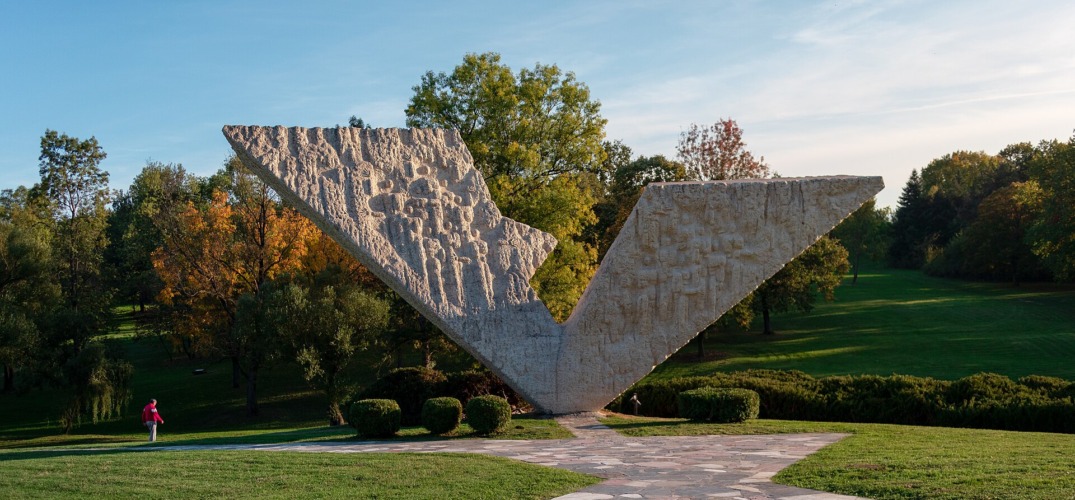
The most recognisable symbol of Šumarice is the Monument to the Executed Students and Teachers, also known as “Interrupted Flight”. Created by sculptor Miodrag Živković, its monumental white form resembles a pair of wings stopped before they could take flight. Through this symbolism, the monument has become one of the most powerful representations of childhood and youth cut short.
Its shape may evoke a bird, open school notebooks or human figures with raised arms. Standing alone in a wide meadow, the monument derives even greater power from the simplicity of its surroundings.
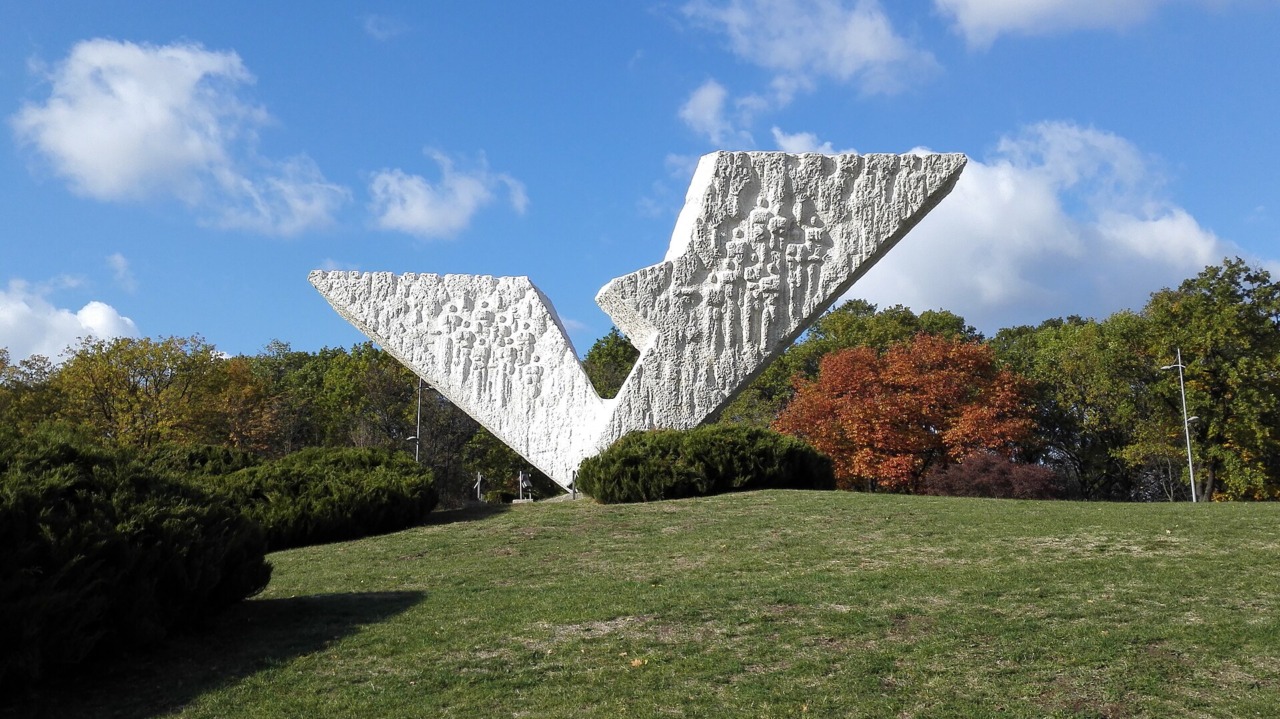
Every year on 21 October, the Great School Lesson, an anti-war music and theatre event dedicated to the victims of the Kragujevac massacre, is held at this site.
Monuments Across the Landscape
Although “Interrupted Flight” is the park’s best-known landmark, understanding Šumarice requires visiting its other memorial sites as well.
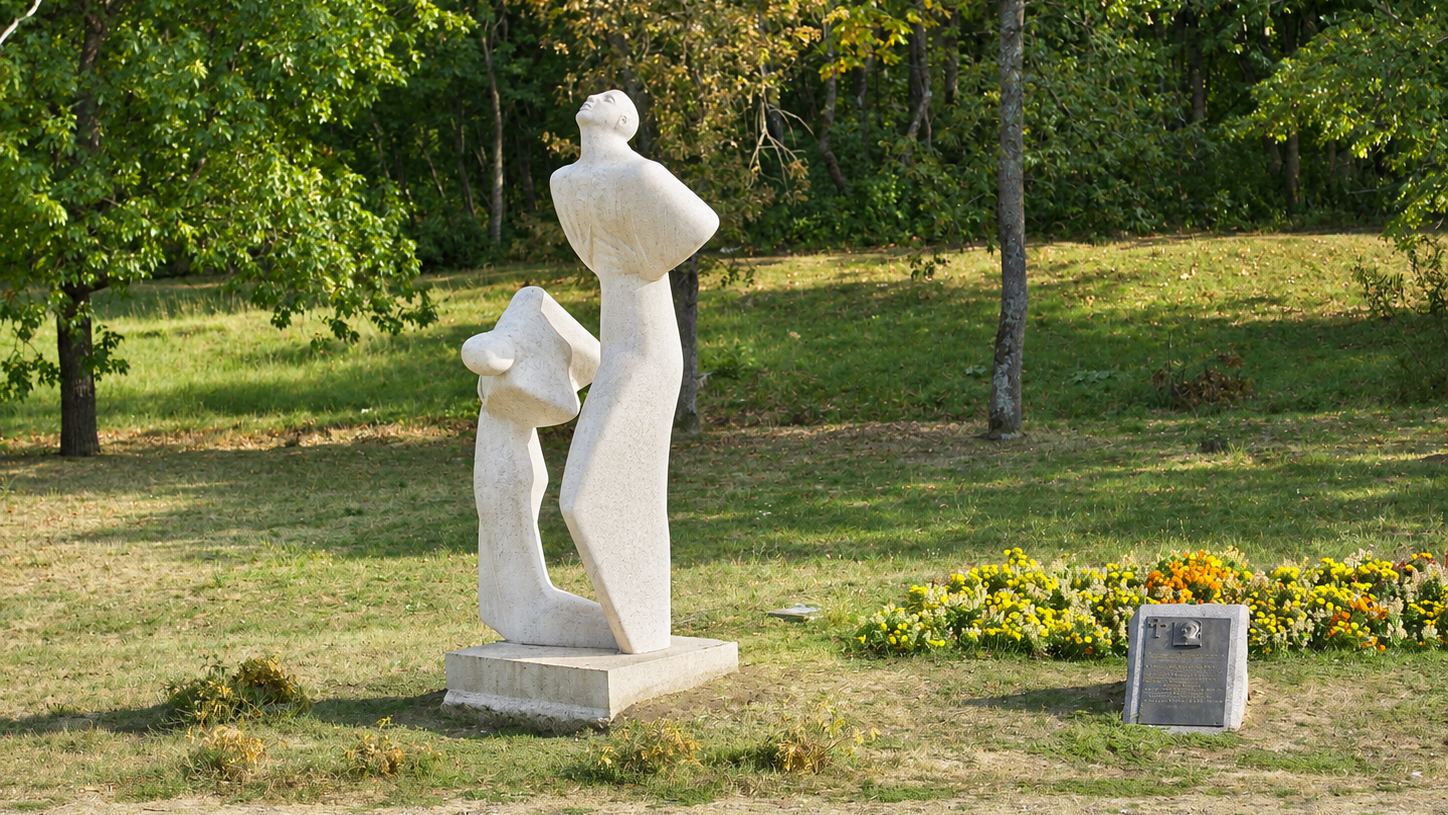
The Pain and Defiance Monument depicts a female figure suspended between suffering and resistance. Its message is not only one of grief for a life lost, but also a refusal to surrender human dignity in the face of violence.
The Crystal Flower is dedicated to the youngest victims, including boys who worked as shoeshiners. The image of a flower only beginning to open further emphasises the lives that were ended before they had truly begun.
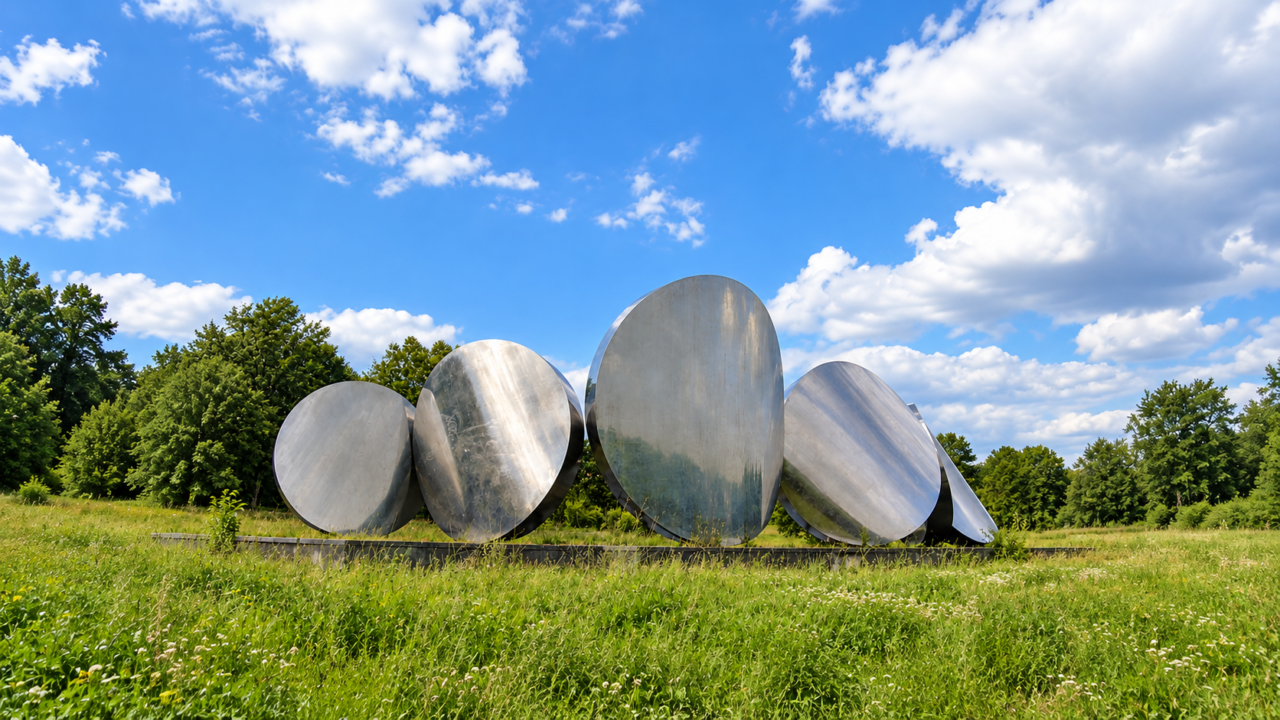
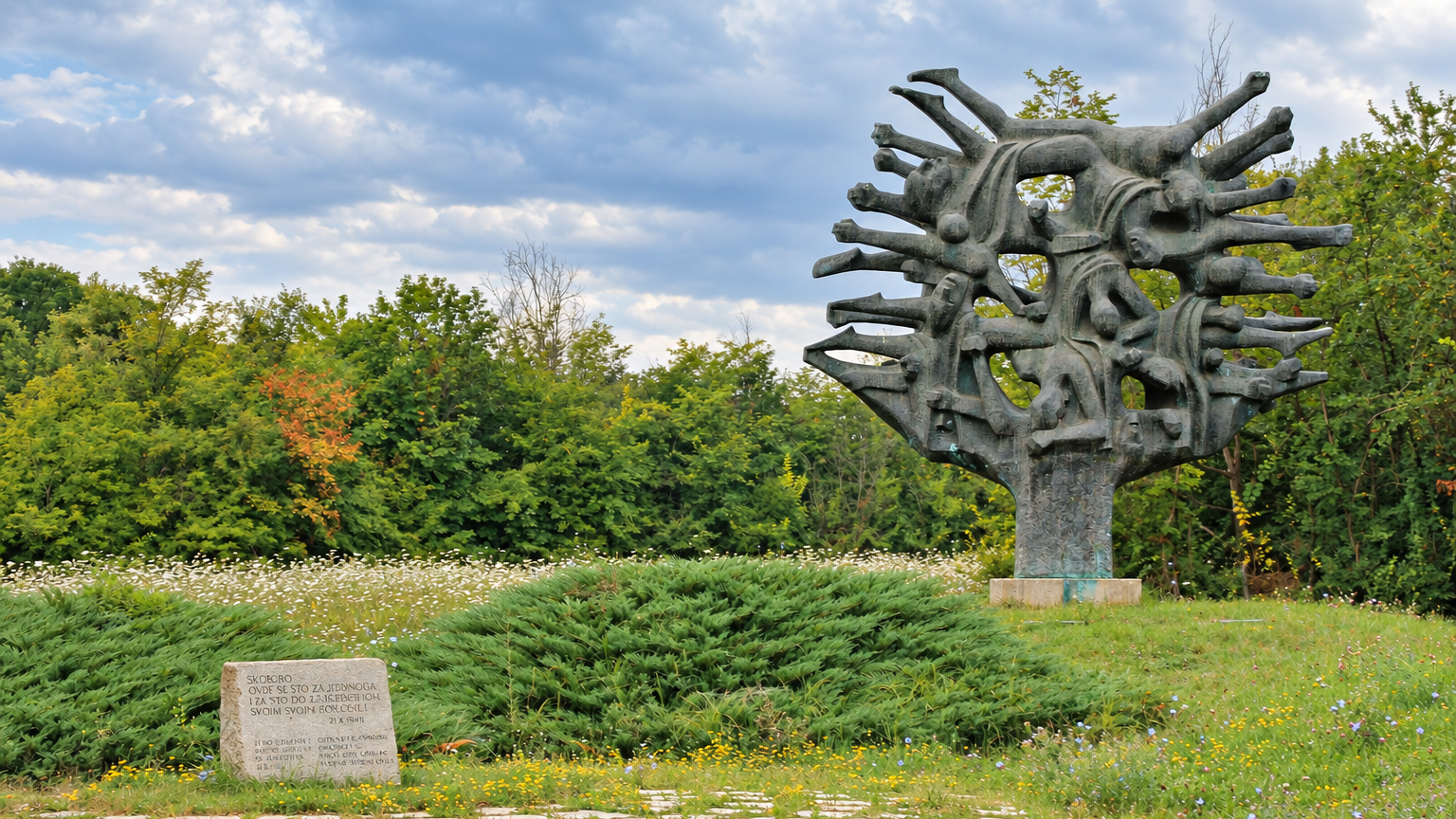
The One Hundred for One Monument, through both its name and monumental form, recalls the brutal policy of reprisals imposed by the occupation forces against the civilian population.
Other memorials throughout the park honour the victims, resistance and solidarity. Together, they form more than a conventional collection of sculptures. They create a journey through individual human stories and the ways in which a society confronts a traumatic past.
The 21 October Museum
At the entrance to the memorial complex stands the 21 October Museum. Its permanent exhibition is dedicated to the events leading up to the executions, the victims themselves and the ways in which the tragedy has been preserved in collective memory.
The museum holds documents, photographs, personal belongings, letters and other testimonies that restore a human dimension to the historical event. Instead of allowing the victims to remain only a number, the exhibition introduces visitors to their lives, families, occupations and final days.
Particularly powerful are the messages that some of those detained managed to send to their families. These short sentences, written shortly before their deaths, are among the most moving testimonies preserved in the museum.
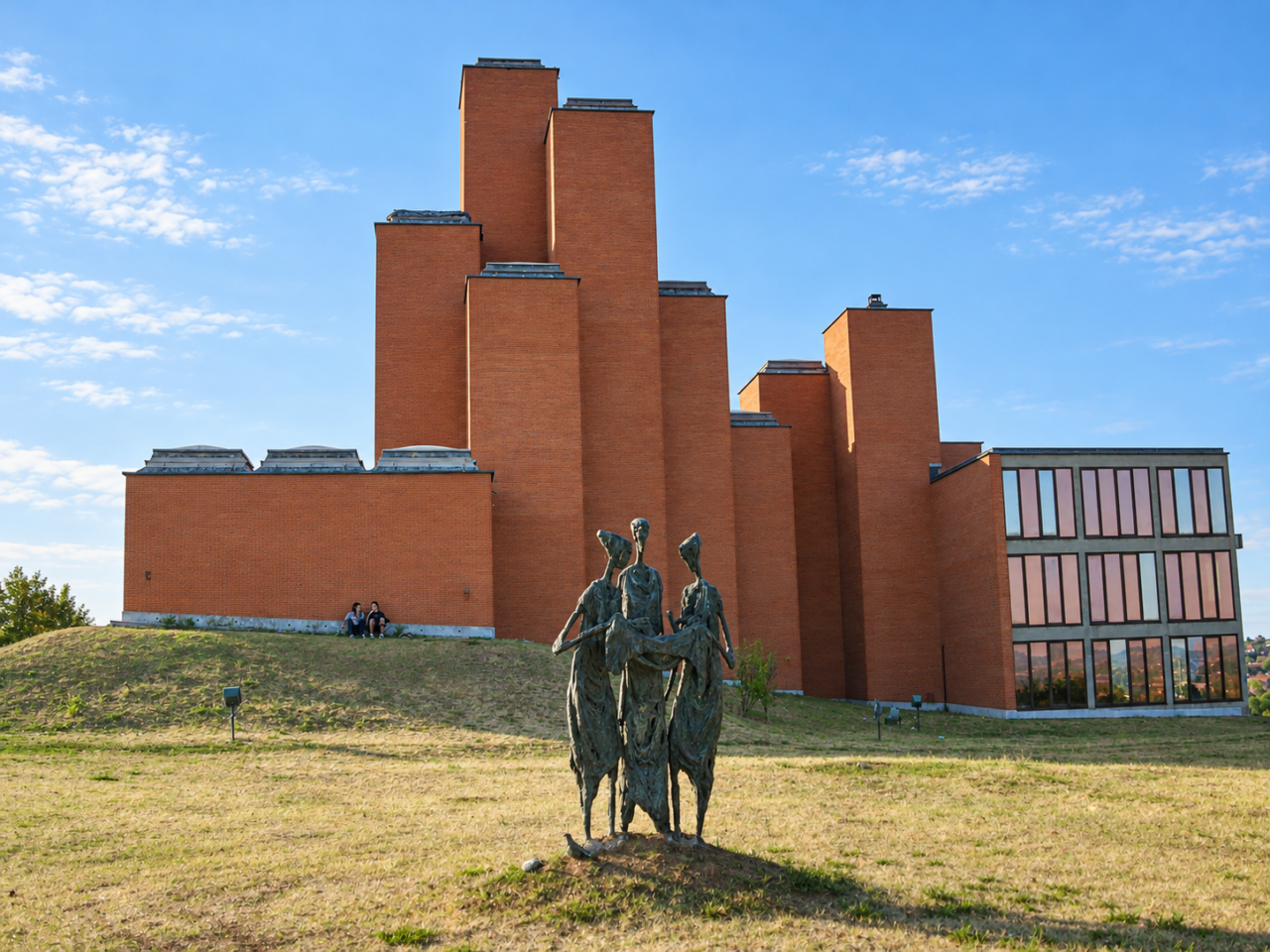
The architecture of the building is also deeply symbolic. Enclosed forms, the almost complete absence of conventional windows and strong vertical elements create a sense of confinement and inescapability, while light entering from above draws the eye towards the sky.
It is best to visit the museum before walking through the park. The exhibition provides historical context that makes the monuments and execution sites easier to understand.
The Great School Lesson
Every year on 21 October, the Great School Lesson is held beside the Monument to the Executed Students and Teachers.
This anti-war commemoration brings together students, artists, representatives of public institutions and visitors from Serbia and abroad. Through literature, music and theatre, it preserves the memory of the victims while sending a message of peace to future generations.
The Great School Lesson is not a conventional historical reconstruction. Its purpose is to allow each generation to find its own way of speaking about the past and understanding why it is important to resist hatred, violence and dehumanisation.
One message has become inseparably connected with Šumarice over the decades: “One Šumarice is enough for the world.”
Šumarice Today
Today, Šumarice is both a memorial site and the largest green area in Kragujevac. Its expansive meadows, woodland, lake and long walking paths attract local residents who come here to walk, run or spend time in nature.
This dual role may initially appear unusual, but the presence of everyday life demonstrates that remembrance does not have to be separated from the contemporary city. Visitors should, however, remain aware that the park contains mass graves and execution sites, and their behaviour should reflect the nature of the place.
Loud music, inappropriate photography and conduct that disregards the memorial purpose of the park are unsuitable, particularly near the monuments and burial sites.
Featured photo: Marko Anton Photo, CC BY-SA 4.0 https://creativecommons.org/licenses/by-sa/4.0, via Wikimedia Commons
Related Articles