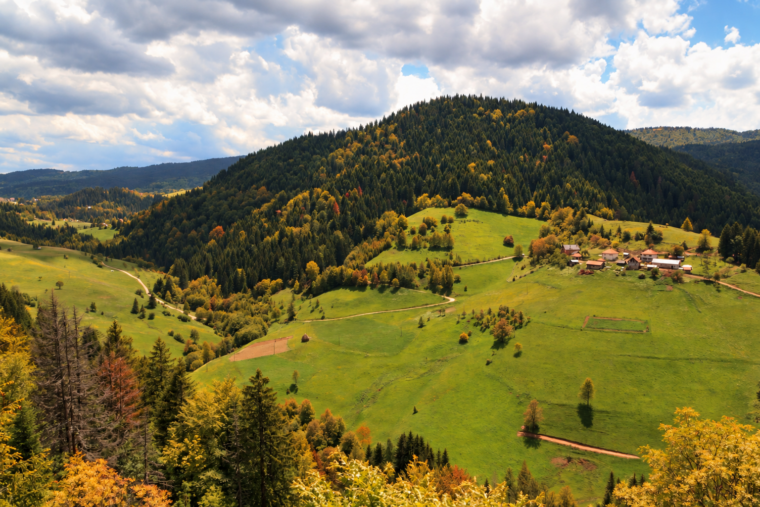

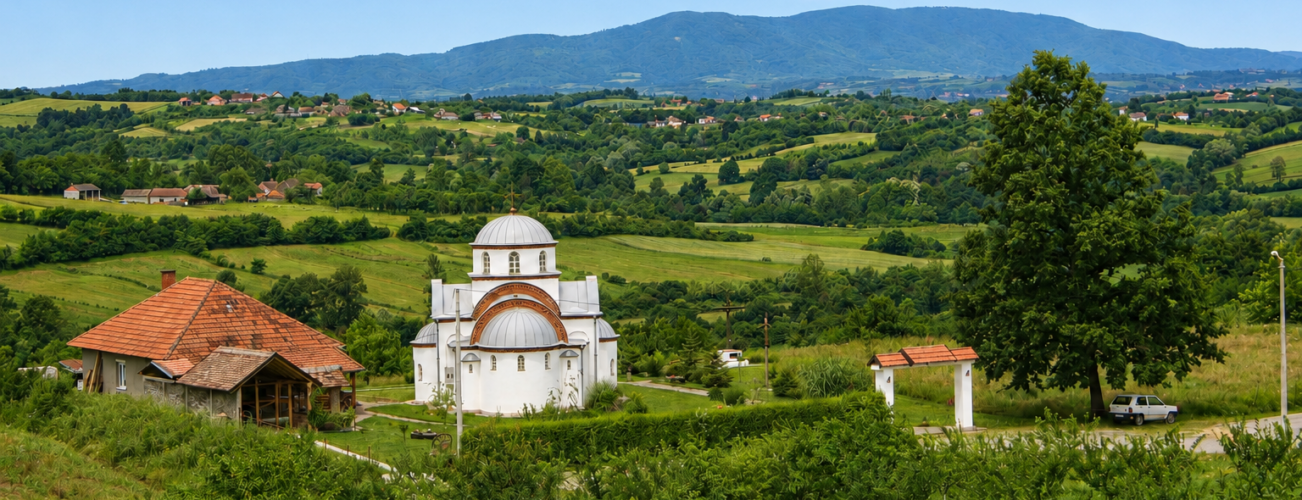
Between the Sava River, green rural landscapes and the centuries-old Kaona Monastery, this small town near Šabac becomes an international stage for folklore, tradition and friendship from 9 to 13 August.
Some places do not draw attention with famous attractions, rarely appear on tourist maps and require no carefully planned itinerary. Here, days unfold more slowly – through peaceful walks, conversations with locals, the shade of old trees and roads winding between fields, orchards and small villages.
Vladimirci is exactly that kind of place. Located in the Mačva District, only 18 kilometres from Šabac, it is the natural centre of the gentle Posavotamnava region – an area stretching between Mačva, Pocerina, the Kolubara Basin and the right bank of the Sava River. For most of the year, the town follows the quiet rhythm typical of smaller communities in western Serbia. In mid-August, however, its streets and squares become livelier as traditional costumes, music and dances from different parts of the world transform Vladimirci into a small international stage.
From 9 to 13 August 2026, the town hosts the International Folklore Festival, offering the perfect reason to discover a region that most travellers only glimpse through their car windows on the way to better-known destinations.
A Small Town with a Long History
The territory of present-day Vladimirci Municipality has been inhabited since ancient times, thanks to its fertile soil, abundant water and favourable position between the Sava River and Serbia’s interior. Different historical influences have shaped the area over the centuries, yet local life has remained deeply connected to the land, family farms and traditional customs.
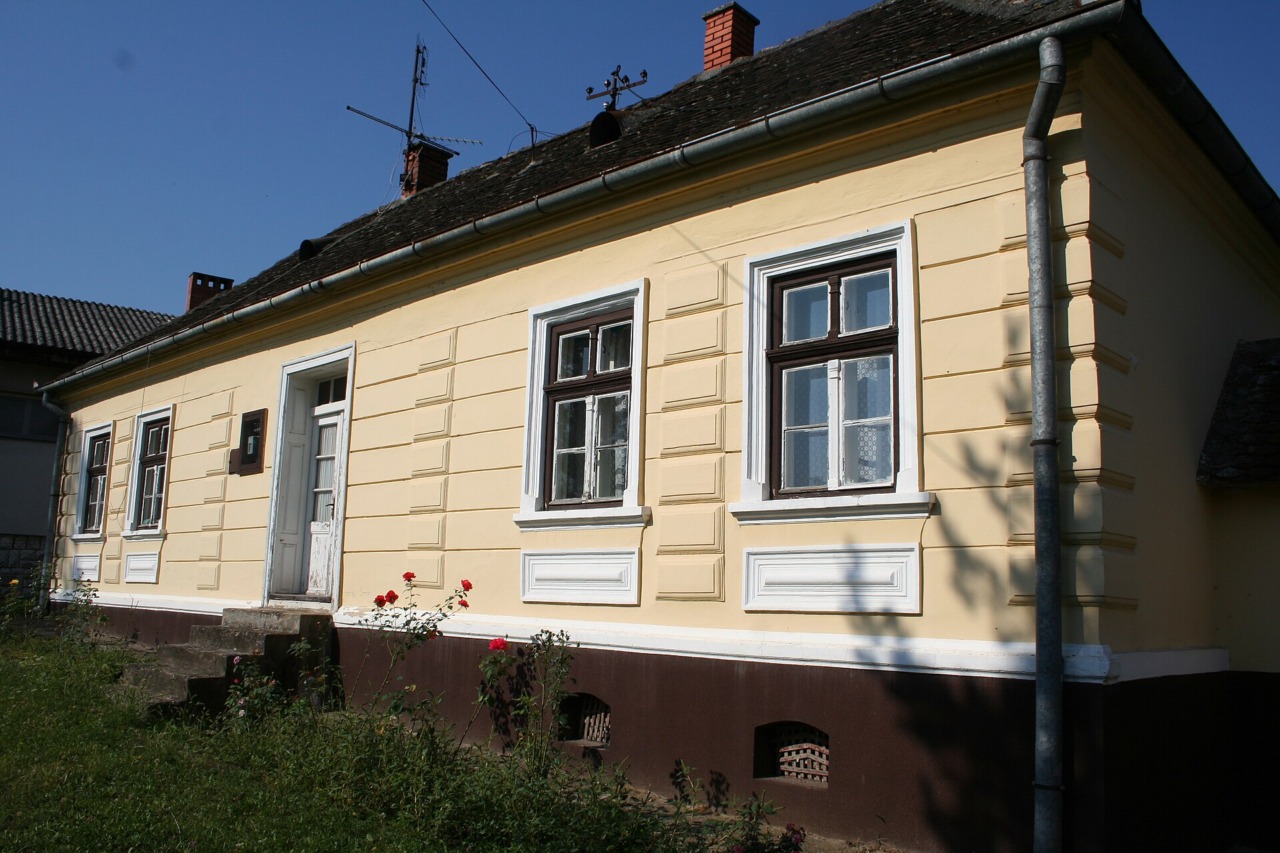
Modern Vladimirci developed as the administrative, commercial and cultural centre of the surrounding villages. It gained municipal status in 1924 by decree of King Alexander I Karađorđević. Although the town has changed over time, it has preserved the recognisable character of a small community where people know one another, everyday life moves at an unhurried pace and tradition remains part of local identity rather than merely a memory of the past.
This sense of closeness is one of Vladimirci’s greatest charms. Visitors do not come here for a single monumental sight, but for the atmosphere of the entire region – quiet roads, green fields, old houses, orchards and villages scattered between streams, forests and the banks of the Sava.
Kaona: The Spiritual and Cultural Heart of the Region
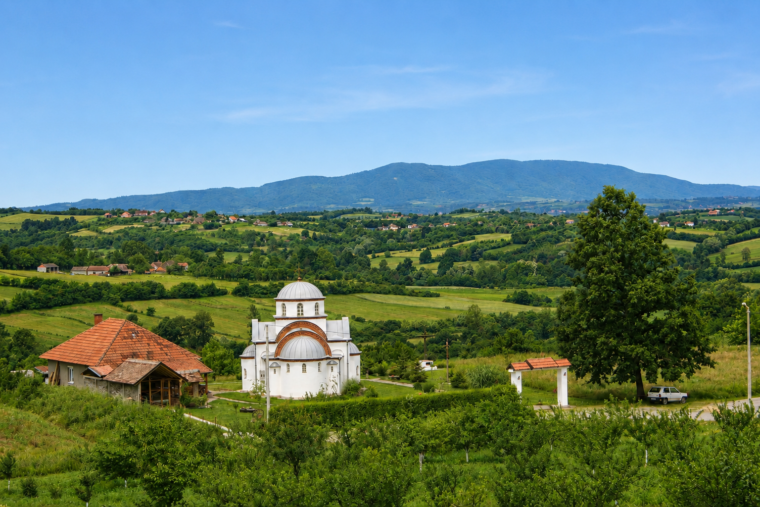
The most important place to visit near Vladimirci is Kaona Monastery, located in the village of the same name, in a green valley surrounded by forests and gentle hills. The monastery belongs to the Eparchy of Šabac and is protected as a cultural monument. Historical records place the foundation of the monastery in the 14th century, while the first church on the site is believed to have dated from the second half of the 11th century. According to local tradition, its creation is connected with Ikonija, the sister of Miloš Obilić. Legend says that she recognised this peaceful spot as an ideal place for a sanctuary and decided to build a church here.
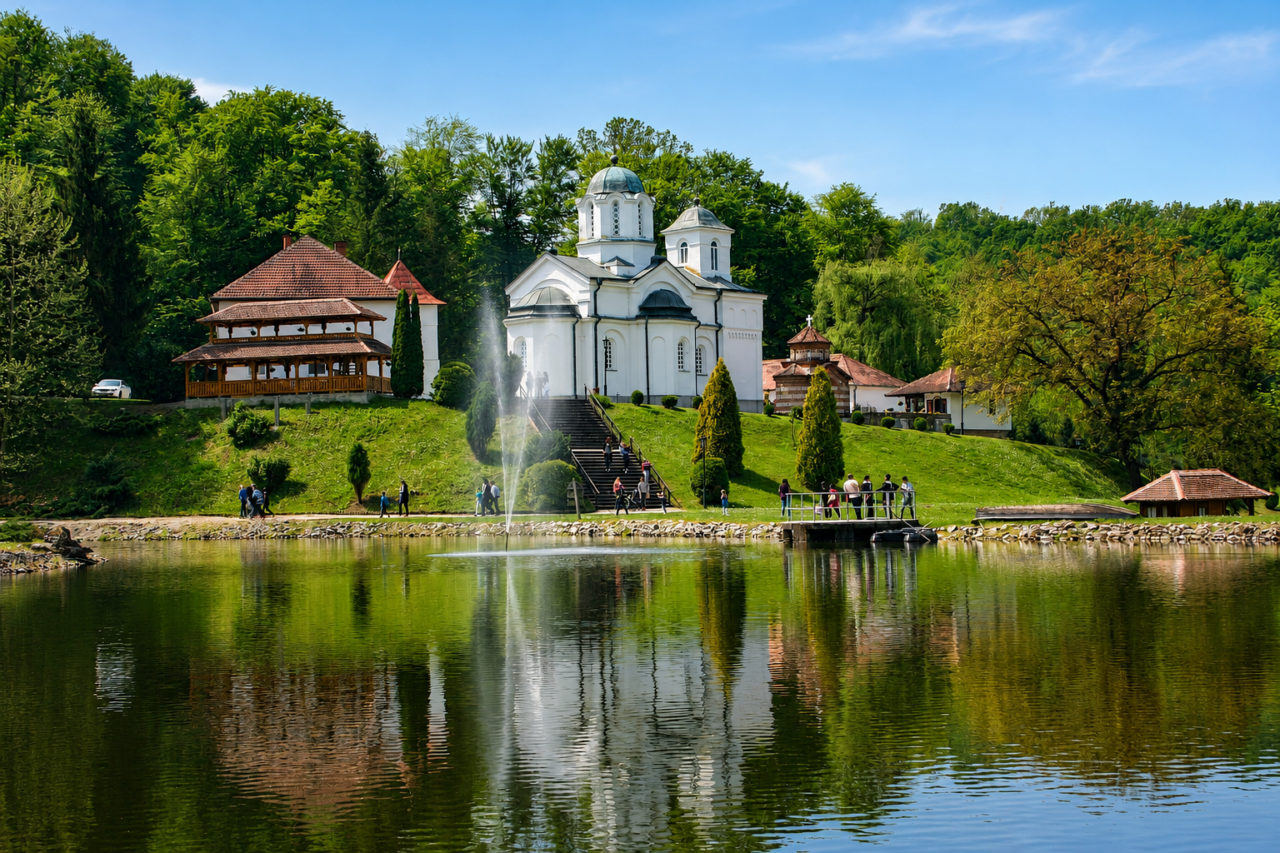
Today’s church is dedicated to Saint Michael the Archangel. The monastery complex includes landscaped grounds, a small lake, a chapel, a spring and several buildings harmoniously incorporated into their natural surroundings. Its carved wooden interior details are particularly notable, as is the cave chapel of the Nativity of Christ beside the lake. Kaona, however, is remembered not only for its architecture and history. Its silence, greenery and the gentle sound of water create a special atmosphere that also appeals to visitors who are not primarily interested in religious tourism. The monastery is ideal for a quiet walk and a break from the summer heat, with due respect for the rules and tranquillity of the sanctuary.
Karađorđe’s Oaks and Traces of Revolutionary Serbia
The history of this region has also been preserved in its natural landscape. In the village of Trbušac stand Karađorđe’s Oaks, ancient trees connected by local tradition with the First Serbian Uprising and Karađorđe’s travels through Posavotamnava.
Regardless of where documented history ends and legend begins, these old trees are powerful symbols of endurance and collective memory. Such places often reveal how history is passed down in smaller communities – not only through books and monuments, but also through stories preserved for generations and attached to a particular landscape.
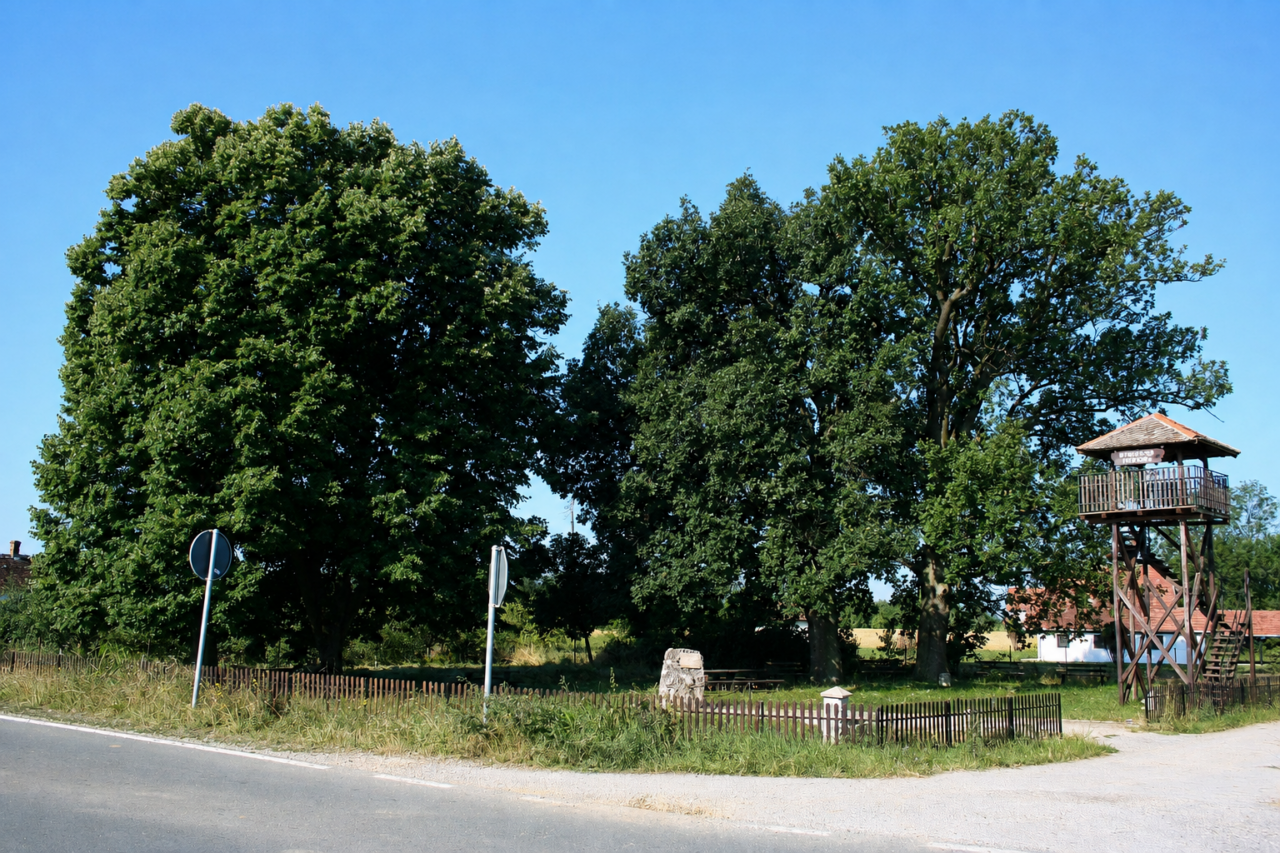
A visit to Karađorđe’s Oaks can easily be combined with a drive through the surrounding villages, without a strict schedule or any need to hurry. The scenes encountered along the way – old farmsteads, peaceful country roads and cultivated fields – are an essential part of the experience.
Vukošić Lake and Summer by the Water
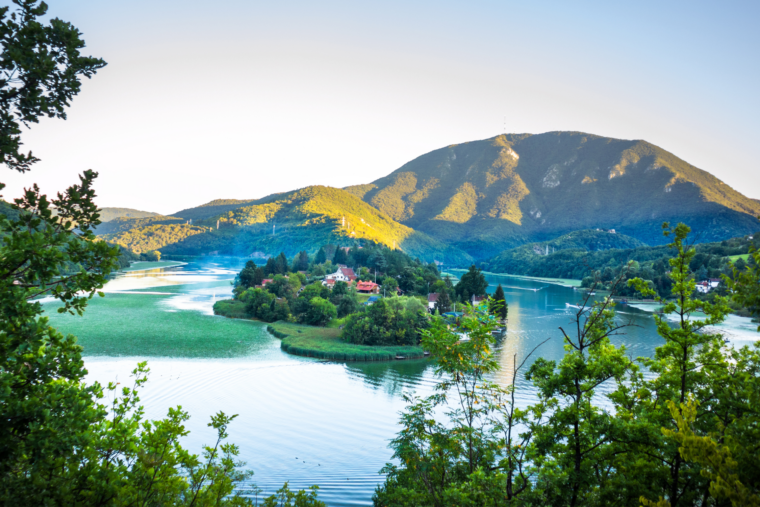
Near the village of Vukošić lies Vukošić Lake (Vukošića Bara), a natural body of water surrounded by greenery and agricultural landscapes. It is not a developed tourist resort filled with facilities, but a quiet corner of nature particularly suited to photography, birdwatching and gentle walks.
Vladimirci Municipality also extends along approximately 28 kilometres of the Sava’s right bank. The river is an important part of local life, especially during summer, when its banks become places for gathering, relaxing, fishing and spending time outdoors. Visitors should not expect fully developed riverside resorts at every turn – the appeal of the area lies precisely in its rural and largely untouched character.
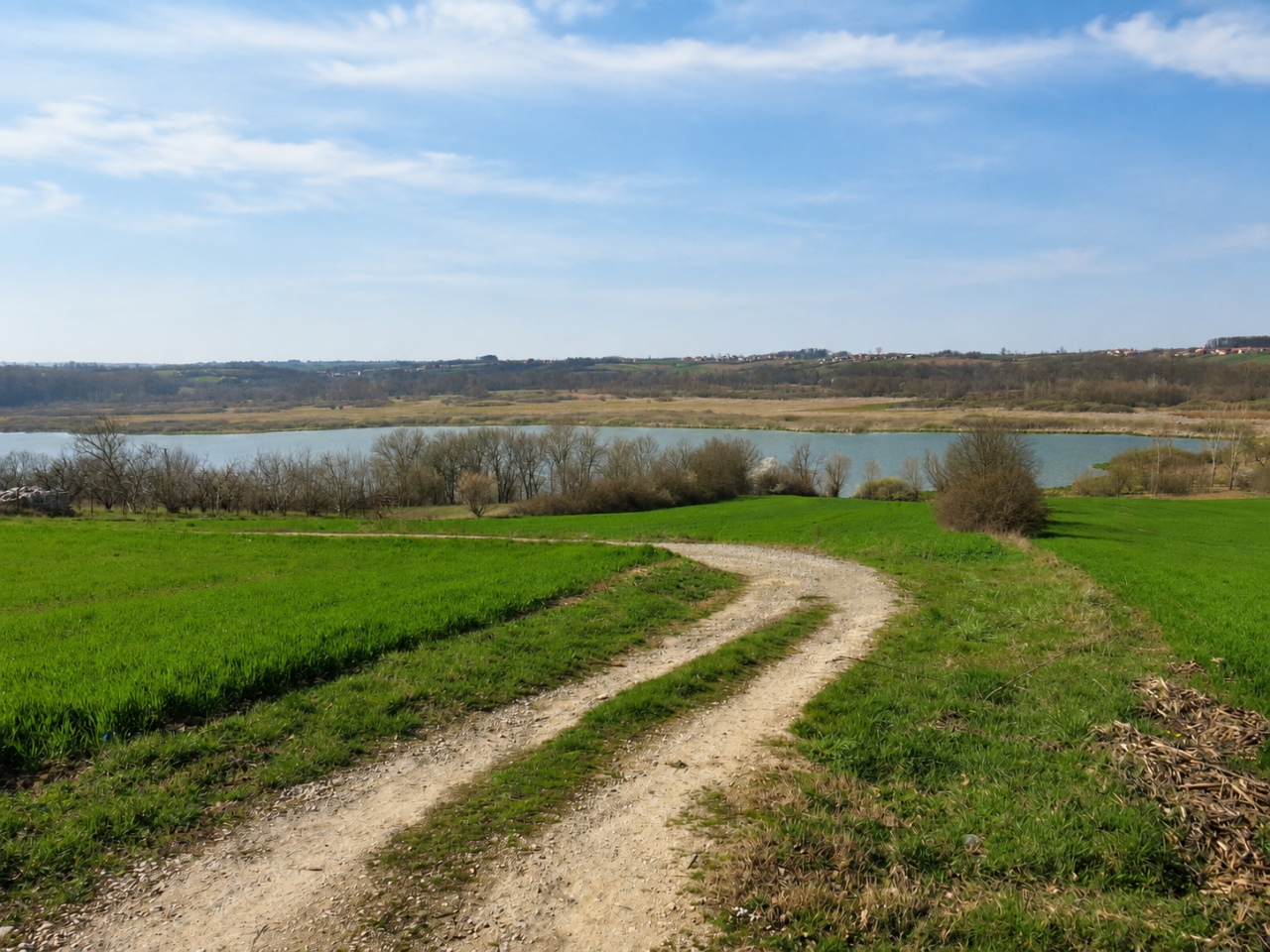
For a more traditional summer day, Vladimirci also has outdoor swimming pools popular with local families and visitors from neighbouring towns. A visit to the pools can provide a relaxing end to a day spent exploring Kaona and the surrounding landmarks, particularly during the hottest days of August.
Discovering Posavotamnava at a Slower Pace
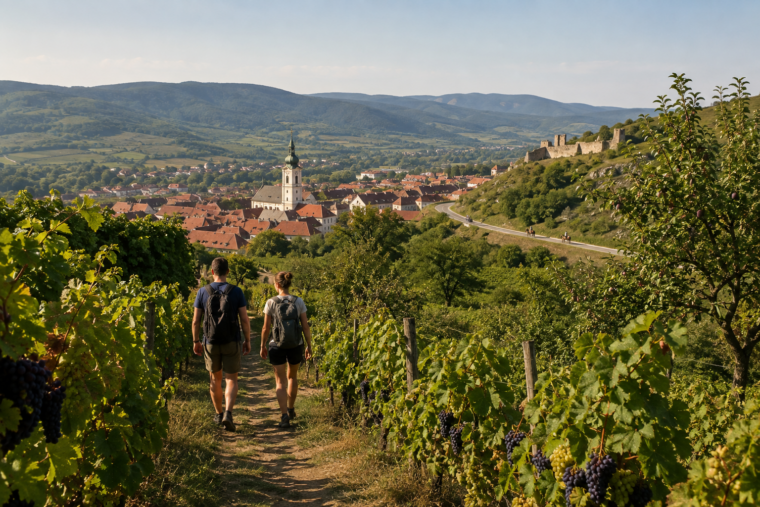
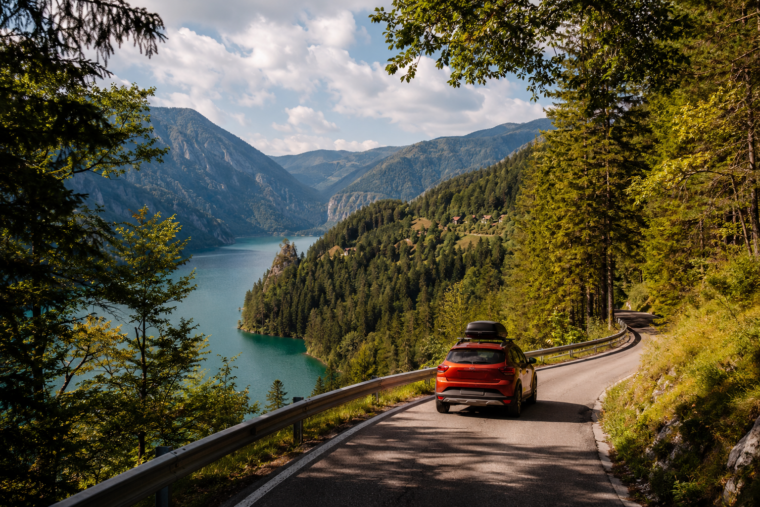
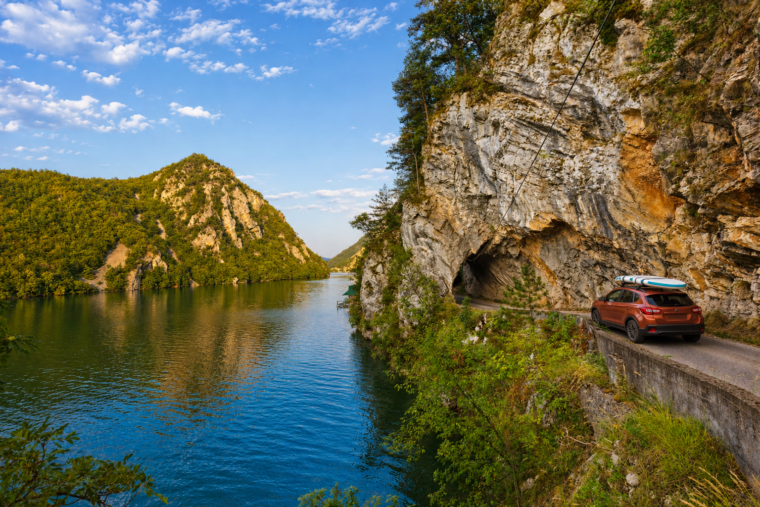
The best way to explore the area around Vladimirci is by car, without planning too many fixed stops. The landscape shifts between plains, gentle hills, cornfields, orchards and courtyards that preserve the appearance of traditional rural households.
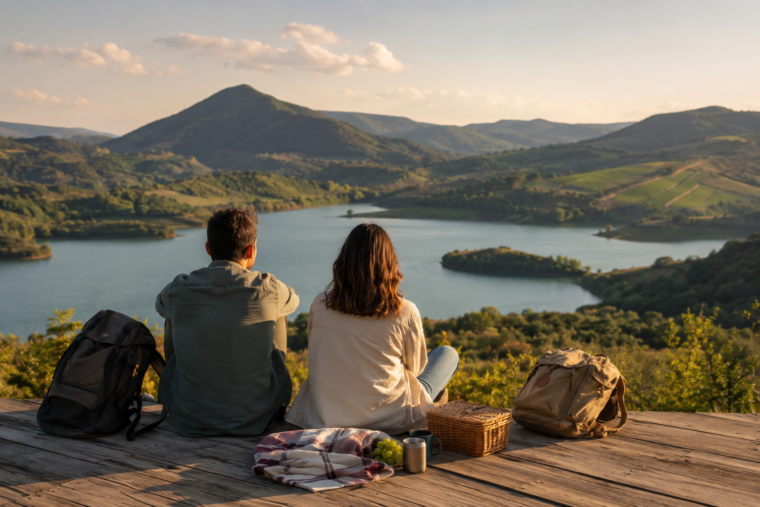
This is not a destination designed for rushing from one attraction to another. It is better suited to travellers who appreciate small discoveries – a local market, a conversation over coffee, homemade food, an old tree beside the road or fields glowing beneath the late-summer sun.
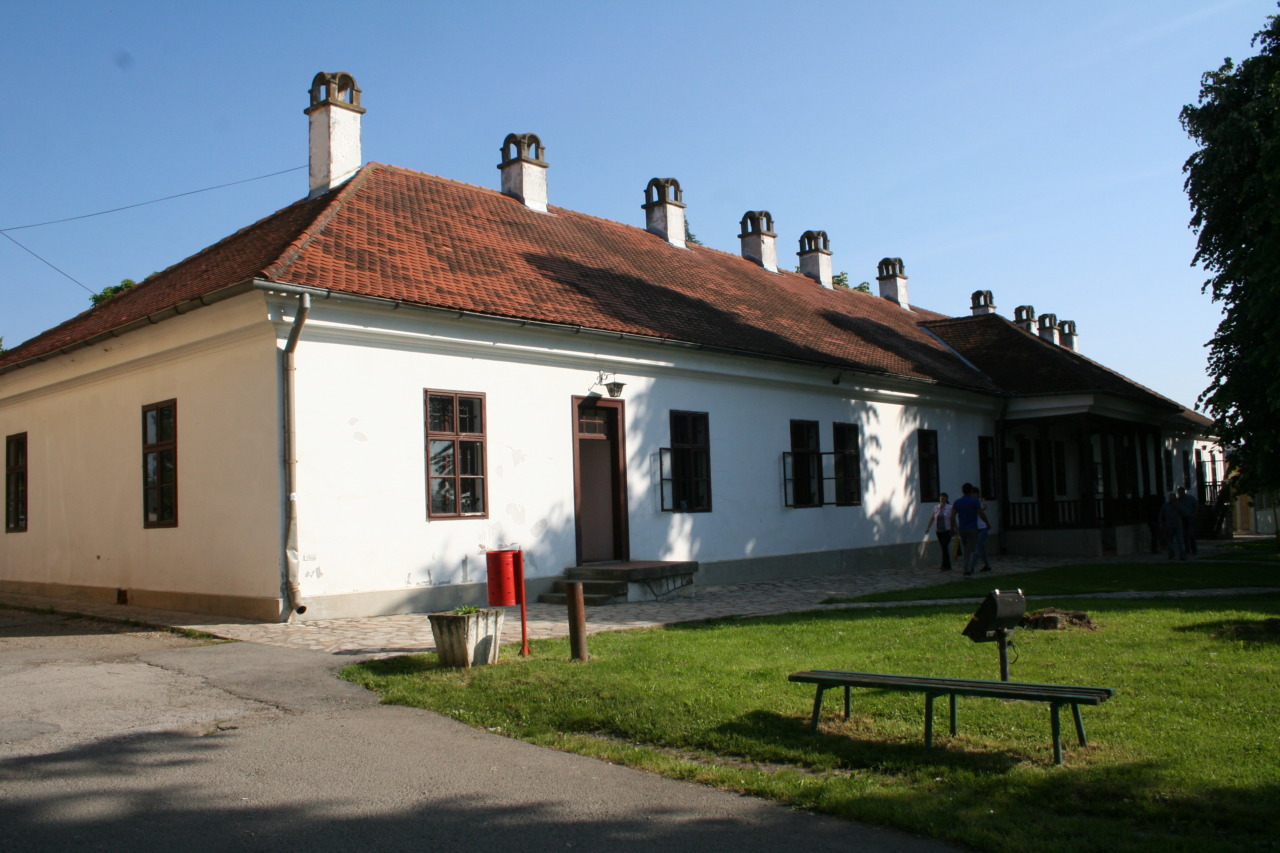
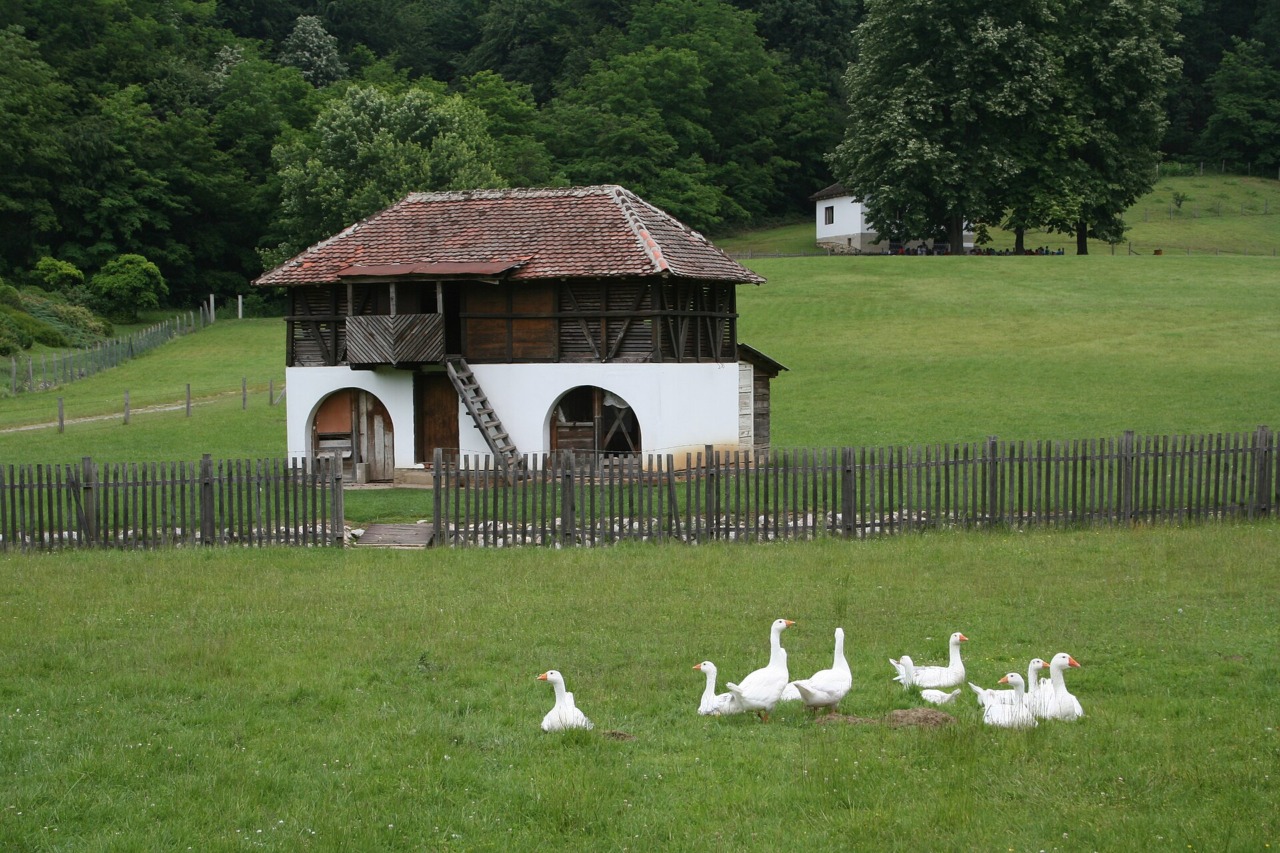
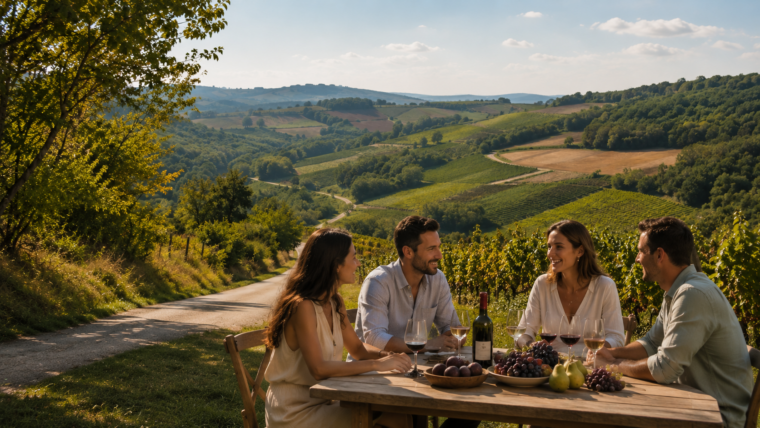
Rural households in the surrounding villages offer opportunities to experience traditional food and hospitality more directly. The local table is shaped by the cuisine of western Serbia and the Sava region, featuring homemade soups, roasted dishes, pies, seasonal vegetables, cheese, kajmak and fruit products. As the offer varies between households, visits and meals usually need to be arranged in advance.
When Vladimirci Becomes an International Stage
The liveliest days of August in Vladimirci begin on 9 August with the opening of the International Folklore Festival. Running until 13 August 2026, the event brings together folklore ensembles from Serbia and abroad. The festival is organised through the cooperation of Vladimirci Municipality and the Diša Atić Cultural and Artistic Society, named after a respected teacher, poet and cultural figure from this region. Over several days, audiences can experience traditional dances, costumes, music and customs from different countries and regions.
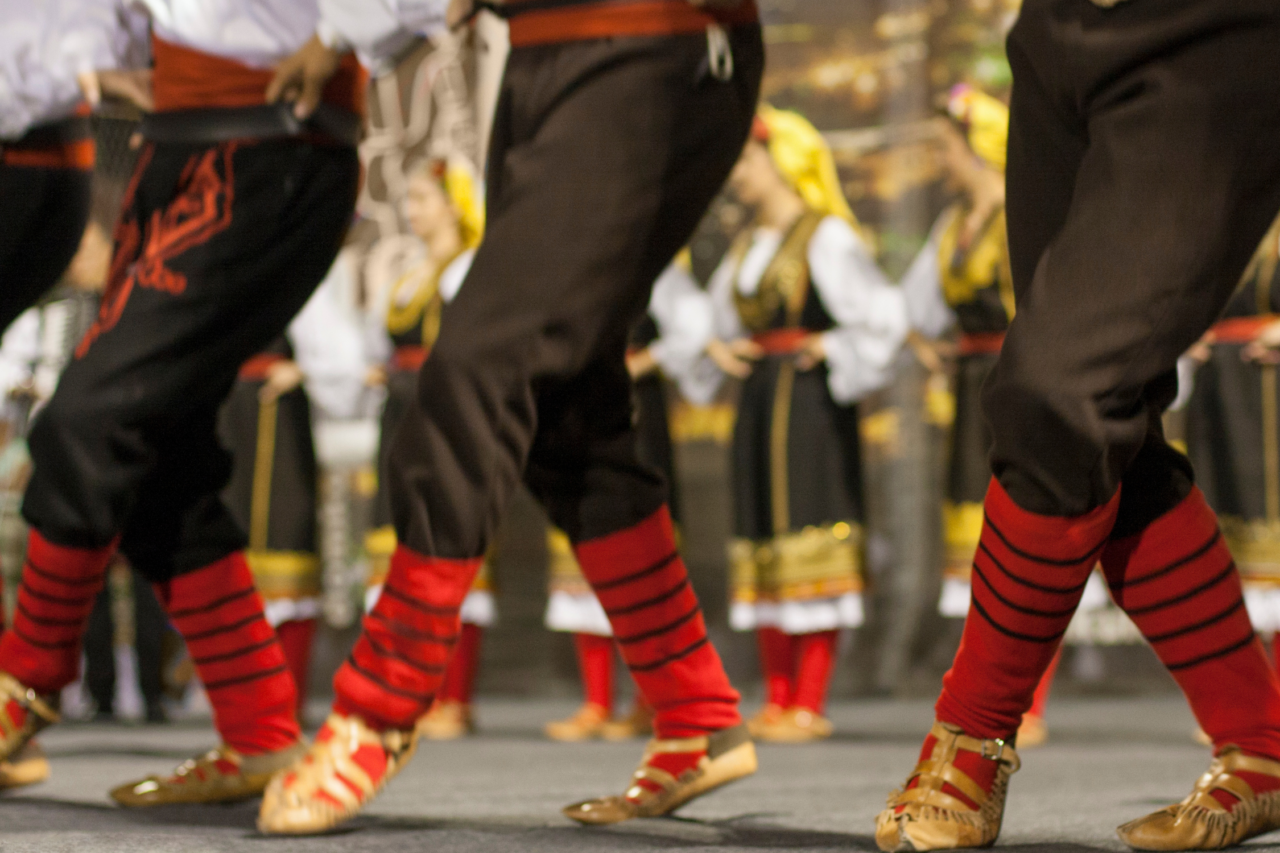
Folklore is not presented here as something confined to the past. Instead, it becomes a shared language between performers who may not speak the same language but understand one another through music, rhythm and movement. Parades and performances bring a different energy to the town, while encounters between performers and spectators create a sense of closeness rarely found at large festivals. The size of the town gives the event its distinctive character. Performers are not separated from their audience, the festival programme becomes part of everyday life and the entire community participates in the celebration for several days.
An Idea for a Day Trip
Vladimirci is around an hour and a half from Belgrade and less than half an hour from Šabac, making it suitable for a day trip. The day can begin with a visit to Kaona Monastery, continue with a drive through the surrounding villages and a stop at Karađorđe’s Oaks or Vukošić Lake, and end at the swimming pools or with an evening performance at the International Folklore Festival.
Visitors planning a longer weekend can combine Vladimirci with Šabac, a walk beside the Sava and a trip to Mount Cer. In this way, little-known Posavotamnava becomes part of a broader journey through northwestern Serbia – a region where the plains meet the first hills and history meets living rural tradition.
Vladimirci may not be a destination worth travelling hundreds of kilometres for on its own. Yet this is precisely where its value lies. It does not try to impress visitors at first sight. Instead, it gradually reveals its character through the silence of Kaona, the shade of ancient oaks, the landscapes along the Sava and the warmth of a festival that brings traditions from around the world to one small Serbian town.
This August, between the 9th and the 13th, there is one more reason to leave the main road and turn towards Vladimirci – to discover a corner of Serbia that still exists far beyond the tourist crowds.
Featured photo: Ванилица, CC BY-SA 4.0 https://creativecommons.org/licenses/by-sa/4.0, via Wikimedia Commons