
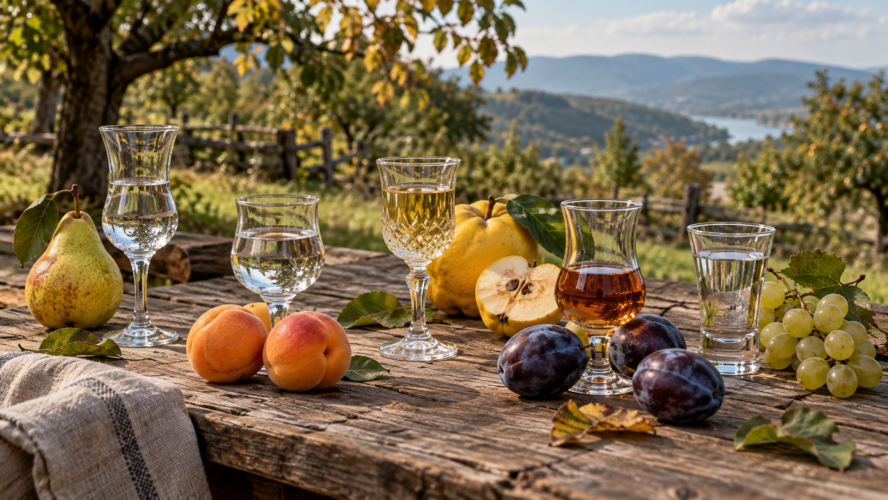
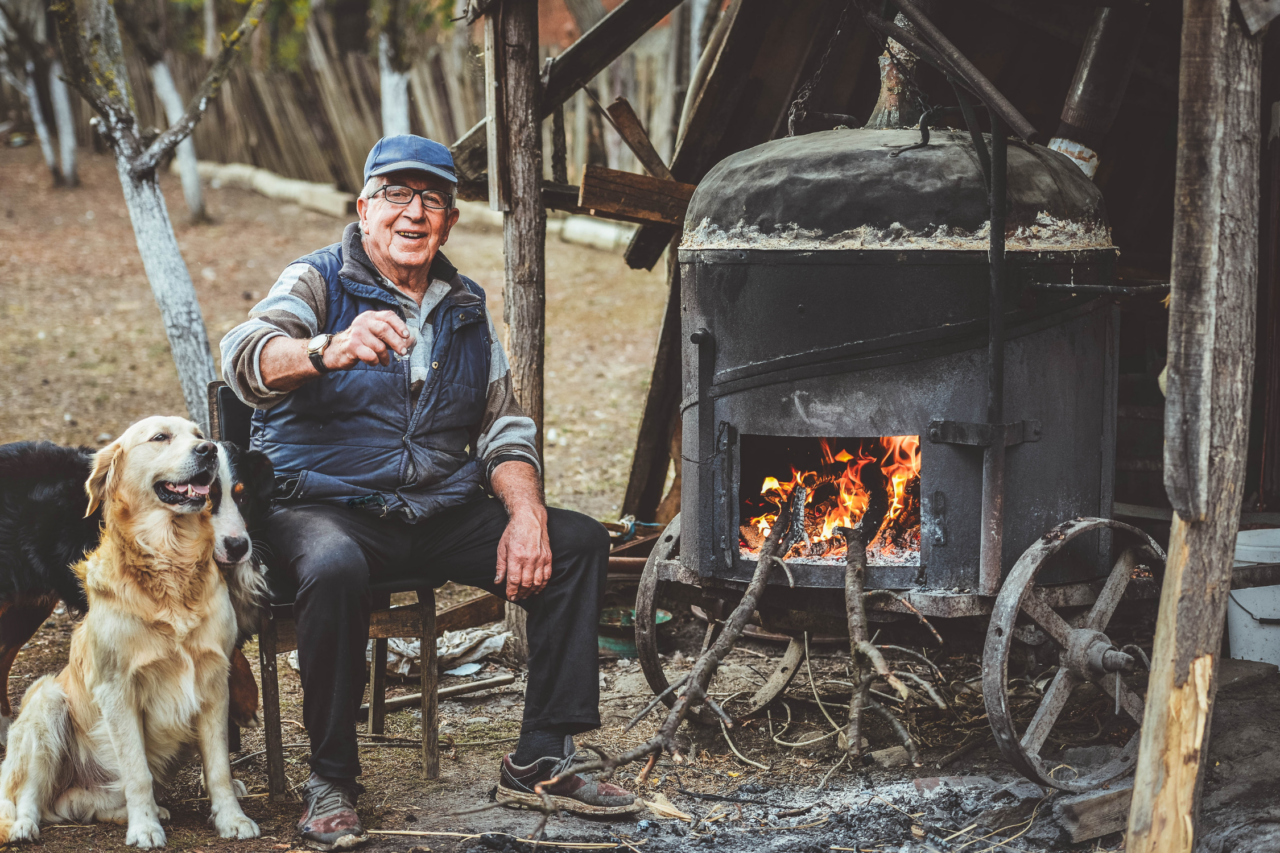
When autumn settles over Serbia, the orchards grow quiet and the unmistakable scents of woodsmoke and ripe fruit begin to drift through village courtyards. Family members, friends and neighbours gather around copper stills, tending the fire for hours as conversations unfold at the same unhurried pace as the drops emerging from the vesela mašina – the “merry machine”, as the rakija still is affectionately known.
The season of rakija-making has begun – one of the most enduring traditions of the Serbian autumn.
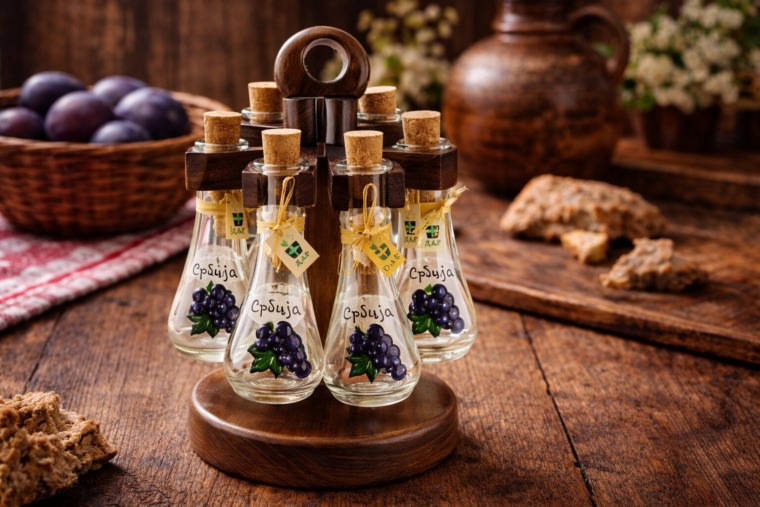
In Serbia, rakija is far more than a strong alcoholic drink. It is an essential part of hospitality, family gatherings and life’s most important moments. It is served to welcome guests, raised in toasts at weddings and slavas, and shared to celebrate births, successful harvests and new beginnings. Special bottles are kept for special occasions, offered as meaningful gifts and sometimes passed from one generation to another – together with family recipes, knowledge and stories about the fruit from which they were made.
Almost every part of Serbia has its preferred type of rakija, and nearly every family that produces it has a small secret it is reluctant to reveal. Differences begin in the orchard: with the fruit variety and its ripeness, continuing through fermentation and distillation, and finally ageing in wooden barrels. This is why two rakijas made from the same fruit can have entirely different aromas, flavours and character.
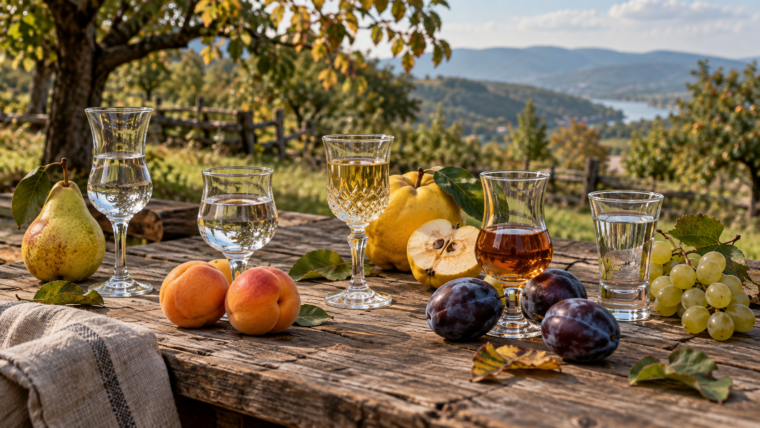
Although rakija is produced from many kinds of fruit in Serbia, five varieties stand out for their tradition, popularity and distinctive character.
1. Šljivovica – Serbia’s Undisputed Symbol
When people in Serbia speak of rakija, šljivovica is usually the first variety that comes to mind. Made from ripe, healthy plums, it can be light and fruity, bold and intense, or deep and beautifully rounded after several years of ageing.
For centuries, the plum has been one of the most important fruits of rural Serbia, particularly in the western and central parts of the country, Šumadija, the Drina Valley and the area around Valjevo. Different varieties, including Požegača, Crvena Ranka and the Čačak plums, produce rakijas with distinct personalities – from delicate and aromatic to rich, warm and complex.
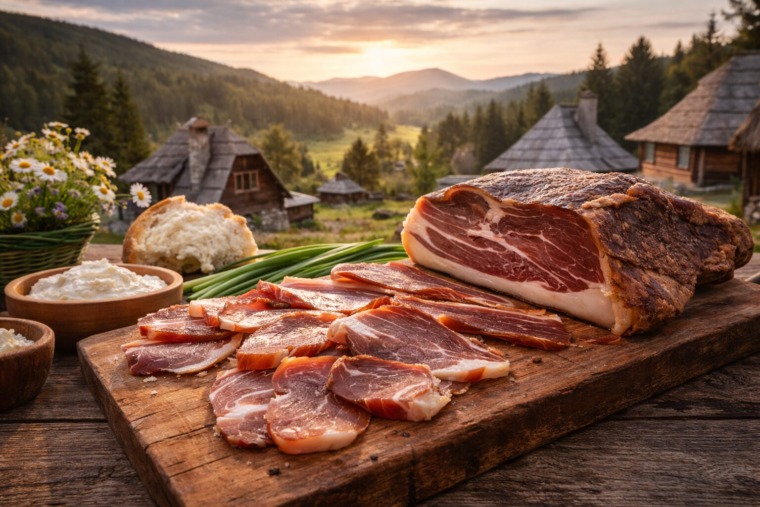
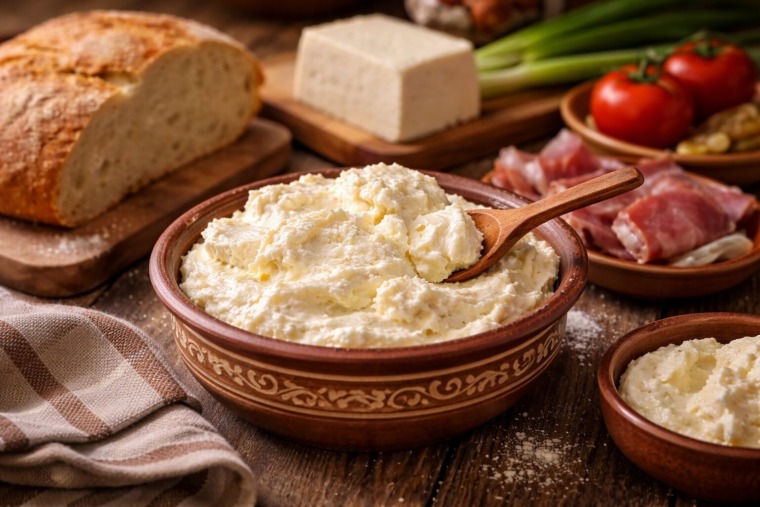
A good young šljivovica is generally clear and retains the fresh aroma of the fruit. When matured in an oak barrel, it develops a golden or amber colour, a softer texture and notes of vanilla, dried fruit, spices and wood. Paired with traditional Serbian meze, prosciutto, kajmak, mature cheeses or roast meat, it becomes part of a complete Serbian gastronomic experience.
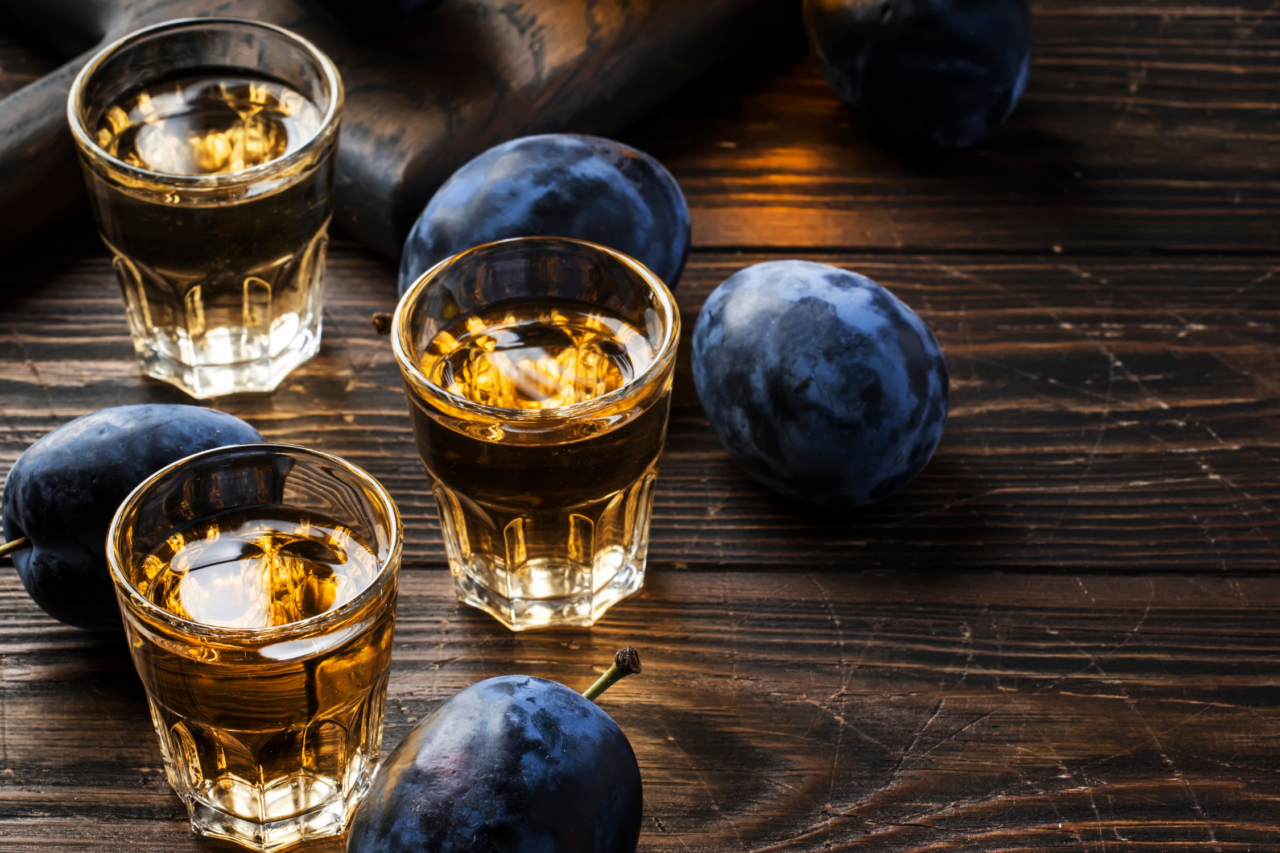
The importance of šljivovica extends far beyond the drink itself. In 2022, the social practices and knowledge related to its preparation and use were inscribed on UNESCO’s Representative List of the Intangible Cultural Heritage of Humanity. The recognition encompasses the entire tradition – from growing and harvesting plums to family distillation, ceremonial toasts, customs and the transmission of knowledge to younger generations.
2. Dunjevača – The Luxurious Aroma of Late Autumn
Quince is among the last fruits to be harvested each year. Its large golden fruit and intense fragrance are closely associated with cool autumn days, traditional Serbian homes and the old custom of placing quinces on top of wardrobes to fill the room with their scent.
Dunjevača, or quince rakija, is appreciated for its rich, distinctive aroma, but it is also demanding to produce. Quinces contain less juice than many other fruits, so a large quantity of ripe fruit is needed to produce even a small amount of high-quality rakija. This is one of the reasons why a good dunjevača is usually among the more highly valued fruit spirits.
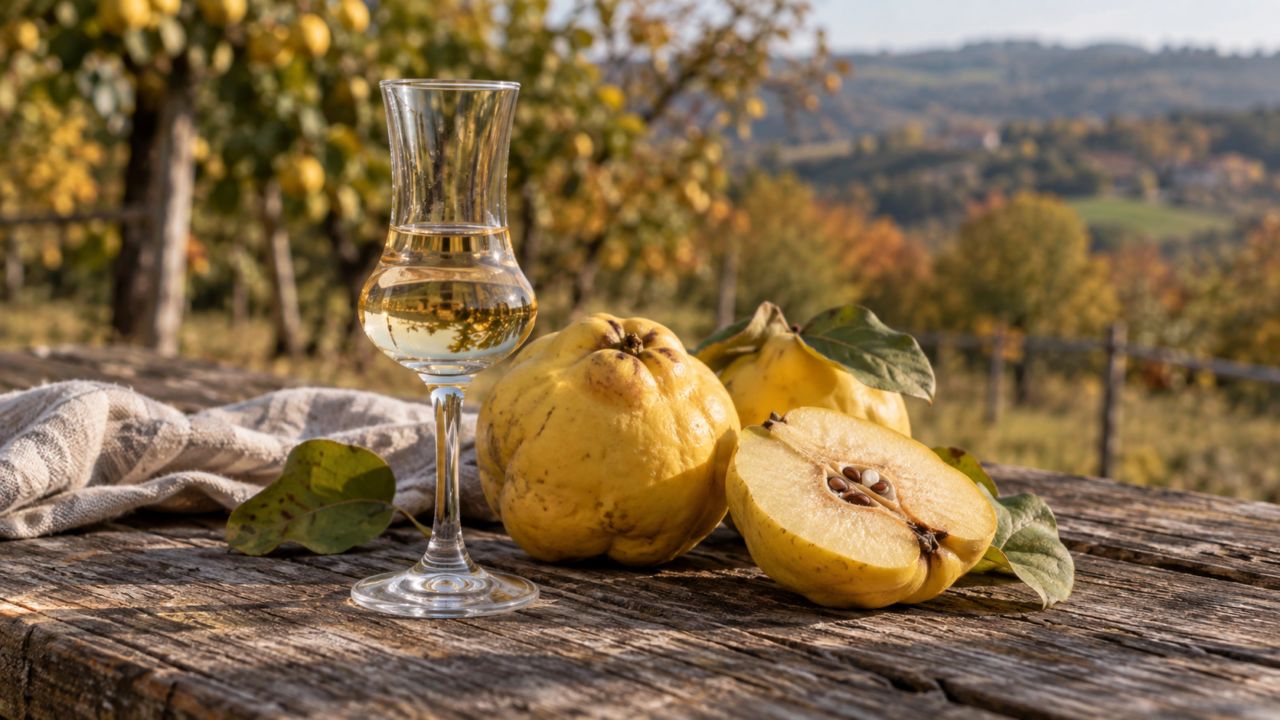
Its aroma is intense, floral and honeyed, balanced by a fine freshness that prevents the flavour from becoming too heavy. Dunjevača is usually served as an aperitif and enjoyed slowly from a small glass that allows its fragrance to develop gradually. It pairs particularly well with mild cheeses, dried fruit and desserts made with walnuts, honey or vanilla.
While šljivovica carries the rustic spirit of the Serbian countryside, dunjevača often feels more elegant and luxurious – like the scent of late autumn captured in a glass.
3. Kajsijevača – Summer Preserved in a Bottle
Although rakija is most often associated with autumn, kajsijevača preserves the fragrance of warm summer days. It is made from fully ripened apricots, whose delicate aroma can easily be lost if the fruit is not handled with care.
A high-quality kajsijevača should be clear, smooth and intensely aromatic, with recognisable notes of fresh apricot, blossom and stone fruit. Unlike šljivovica, it is generally not aged for long periods in wooden barrels, as strong woody aromas could overpower its delicate fruit character.
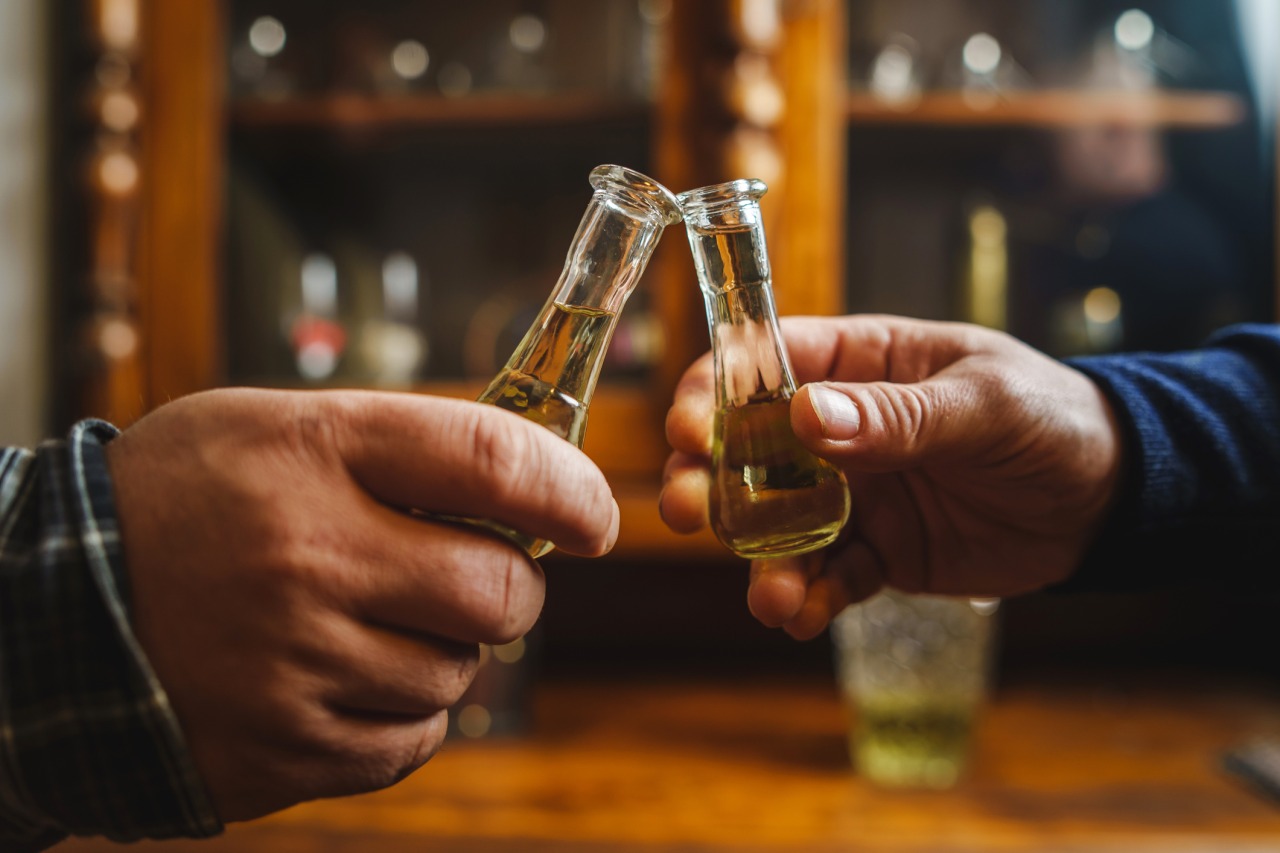
Kajsijevača is particularly popular with those just beginning to explore the world of rakija because of its pleasant aroma and rounded flavour. Its fruitiness, however, can be deceptive: behind that soft and fragrant first impression is still a strong spirit that should be tasted slowly.
It is best served slightly chilled, but never ice-cold, so that its aromas remain open and recognisable.
4. Lozovača – The Strength of the Vineyards
Lozovača, often simply called loza, is produced by distilling fermented grapes. It should not be confused with komovica, which is made by distilling fermented grape pomace – the skins, seeds and other solids left after the grapes have been pressed for wine.
Its character depends on the grape variety, the wine-growing region and the production method. It can be clean, strong and dry, but also highly aromatic when made from fragrant grape varieties. Particularly interesting examples are produced from Tamjanika, a variety known for its expressive floral and spicy aromas.
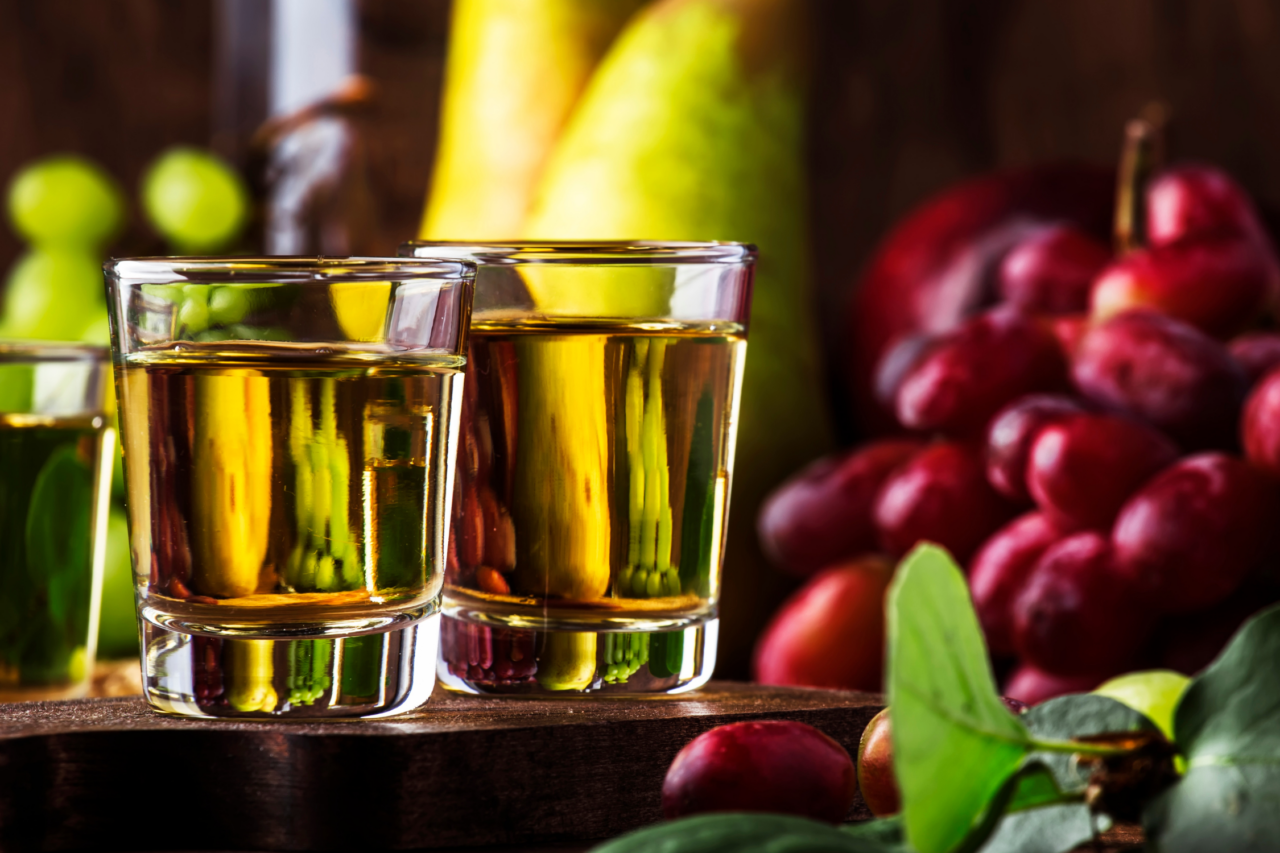
Lozovača is naturally connected to Serbia’s historic wine regions, including Župa, Fruška Gora, Šumadija and Negotinska Krajina. Once the grape harvest has finished and the cellars are filled with young wine, part of the crop begins a new life through distillation.
Compared with the lush fruitiness of dunjevača or kajsijevača, a good lozovača often has a cleaner and more serious character. It can be served with meze, mature cheeses, cured meats and richer dishes, but it also works well as a digestif after a meal.
5. Viljamovka – The Distinctive Fragrance of Pear
Viljamovka is made from Williams pears and is recognised by its clean, fresh and highly expressive aroma. In a well-made rakija, the fragrance of a ripe pear is immediately noticeable, while the flavour is soft and elegant, with a subtly sweet finish – even when no sugar has been added.
Producing high-quality viljamovka requires carefully selected, fully ripened fruit. If the pears are harvested too early, the rakija will not develop enough aroma. If they are overripe or damaged, undesirable flavours may appear. This sensitivity is precisely what makes a good viljamovka so highly prized.
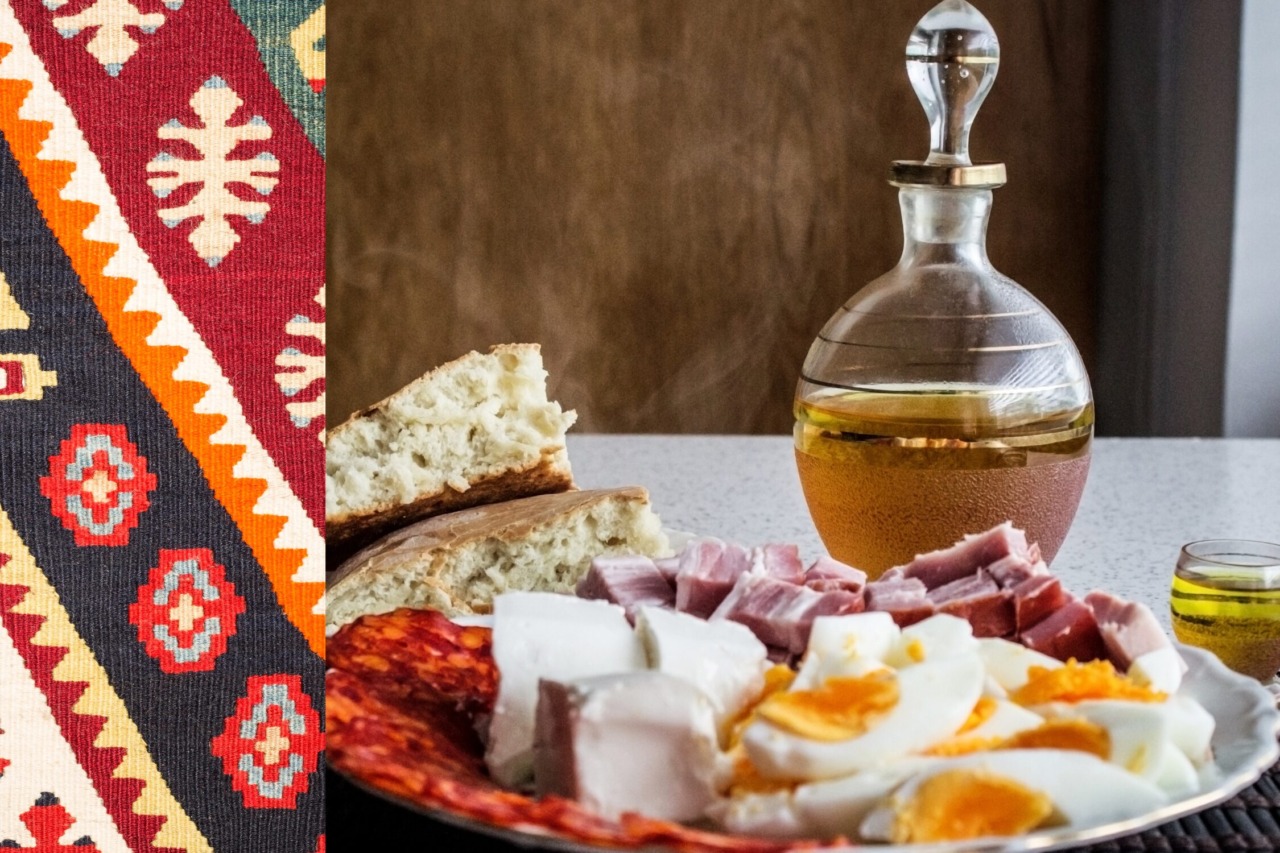
It is generally stored in glass or neutral containers to preserve its clear colour and pure fruit character. Served slightly chilled, it works well as an aperitif or as the final note of a meal and pairs beautifully with mild cheeses, almond cakes and pear-based desserts.
How Many Types of Rakija Are There?
The five best-known varieties are only the beginning. The diversity of Serbia’s orchards has given rise to a remarkable range of rakijas. Some have strong regional identities, while others are produced in small quantities, almost exclusively by individual households.
Jabukovača is made from apples and can have a fresh, gentle and slightly rustic character. Trešnjevača and višnjevača capture the expressive aromas of cherries and sour cherries, while raspberry and blackberry rakijas offer more delicate, unusual and often more expensive flavours.
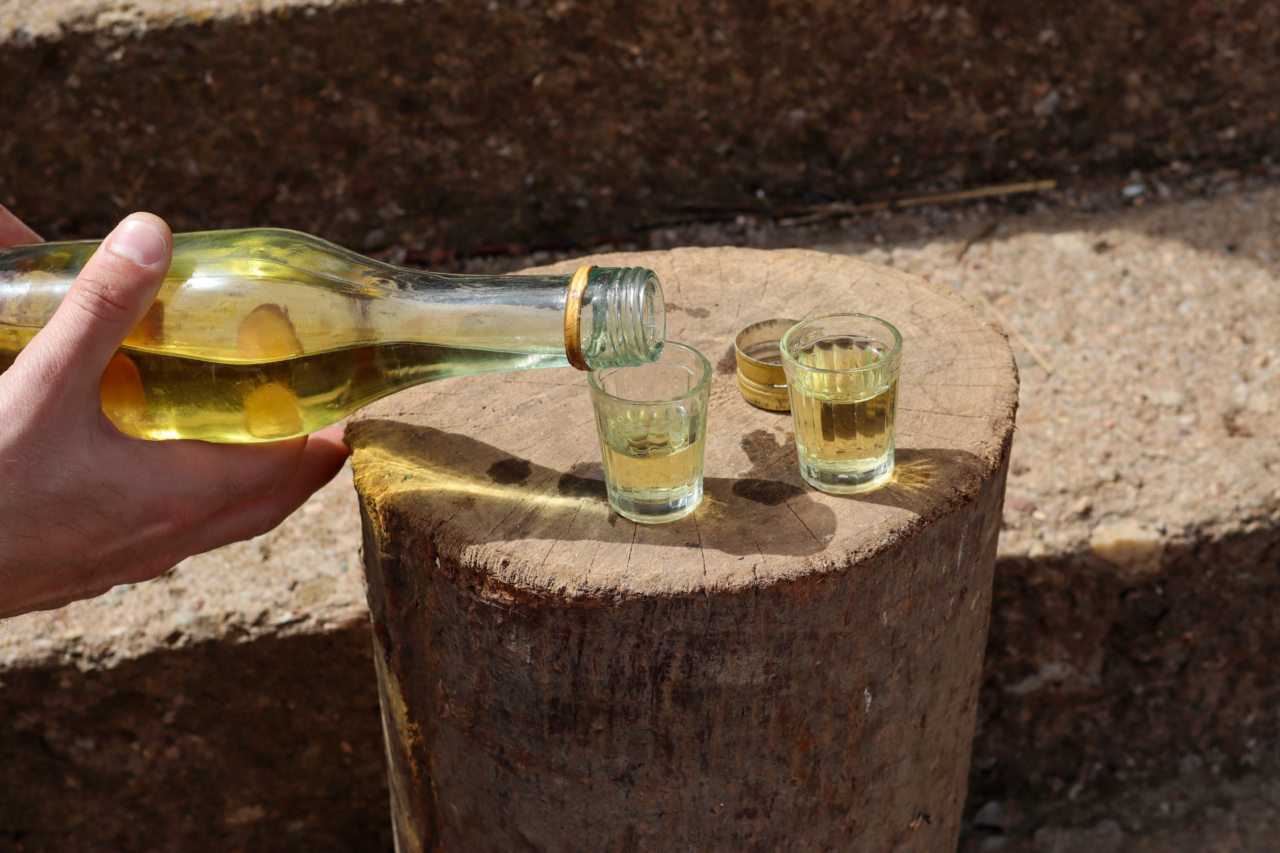
In some parts of Serbia, rakija is also produced from mulberries, figs, medlars, cornelian cherries and even the rare service tree fruit. Juniper berries are used to make klekovača, a speciality particularly associated with western Serbia, while fruit, medicinal herbs, honey, walnuts and other ingredients can be added to rakija to create distinctive flavoured varieties.
There are also medovača, or honey rakija, orahovača made with green walnuts, and travarica flavoured with selected herbs. These are generally spirits infused or enriched with additional ingredients rather than distillates made directly from them.
From Orchard to Glass
Everything begins with good fruit. It is harvested when fully ripe, prepared and then left to ferment. During fermentation, the fruit’s natural sugars are converted into alcohol, after which the fermented fruit is distilled in a traditional still.
In Serbian household tradition, the time spent around the still can be almost as important as the production process itself. Distillation can last for hours, often stretching into cold autumn evenings. While the fire crackles, food is served, bottles from previous years are opened and everyone tries to predict the quality of the new spirit.
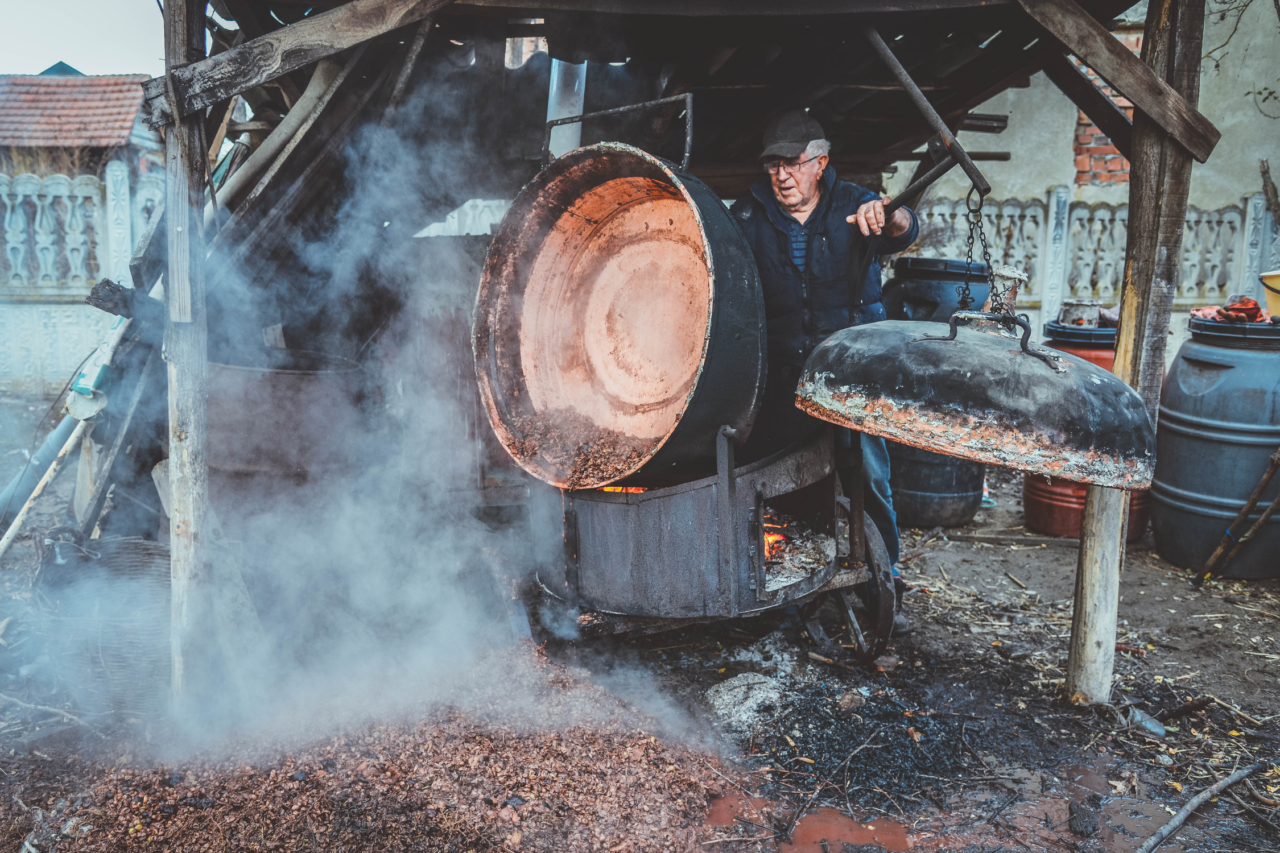
Some rakijas are then left to mature. Šljivovica responds particularly well to ageing in oak barrels, where it gradually develops colour, softness and more complex aromas. More delicate fruit rakijas are usually kept in glass or neutral containers to preserve the original fragrance of the fruit.
More Than a Drink
In Serbia, rakija is a language of hospitality. The question “Would you like a rakija?” is often more than an offer of a drink. It is an invitation to sit down, take a break and begin a conversation.
Rakija accompanies both ceremonial occasions and ordinary moments. The best bottle is saved for important guests, glasses are raised to health and happiness, and the quality of a family’s rakija can be a source of genuine pride. Knowledge about selecting fruit, fermentation, distillation and ageing has traditionally been passed down within families through observation, participation and shared work.
Modern Serbian distilleries are adding controlled production, carefully selected fruit varieties, refined packaging and guided tastings to this heritage. Yet the essence remains unchanged: in every good rakija, it should be possible to recognise the fruit, the landscape and the patience of the person who made it.
The best way to discover rakija is therefore slowly – not through quantity, but through differences in aroma, flavour, fruit varieties and regions. From deep, mature šljivovica and luxurious dunjevača to fragrant kajsijevača, powerful lozovača and elegant viljamovka, every glass reveals a different side of Serbia.
And in autumn, once the harvest is complete and the copper stills are lit again, it becomes clear that rakija is not simply a product of fruit. It is a story of the land, family, hospitality and traditions that remain very much alive.
Related Articles