
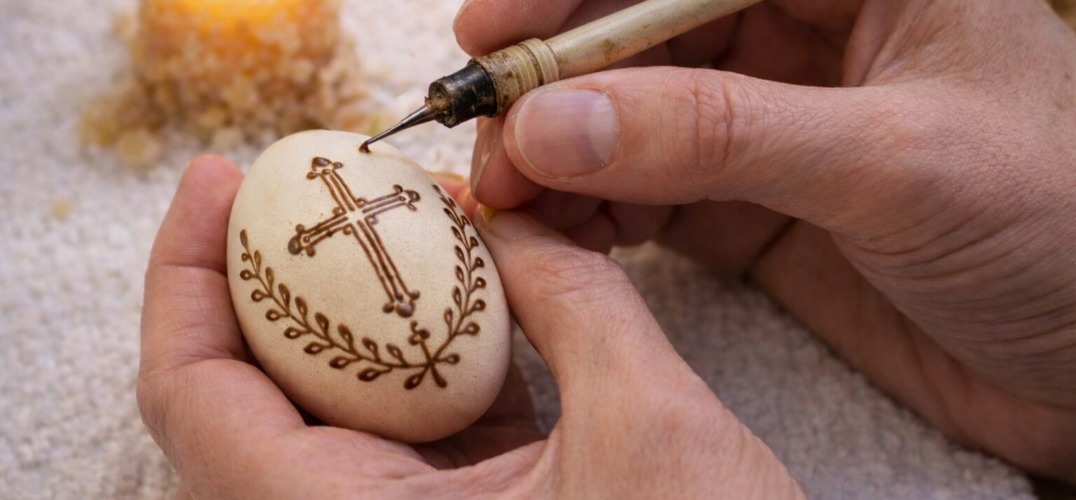
There are traditions that don’t seek attention – they simply hold it. Quietly, naturally, almost effortlessly. The art of decorating Easter eggs with wax belongs to that kind of heritage. It is not just a technique, but a ritual that brings together patience, faith, and a deep sense of beauty, creating moments where time slows down and every movement gains meaning.
Although most deeply rooted in Kosovo and Metohija, this tradition can still be found in parts of Serbia today, preserved within families and passed down through observation rather than instruction. It lives in memory, in repetition, and in hands that remember.
How a wax-decorated egg is made
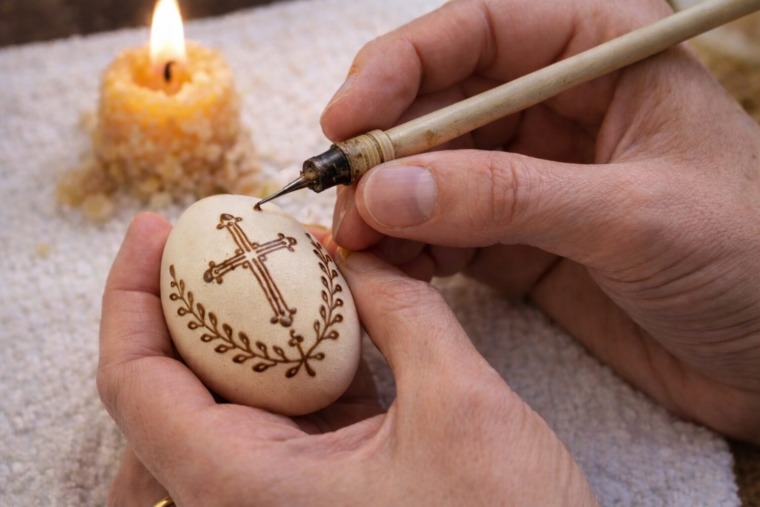
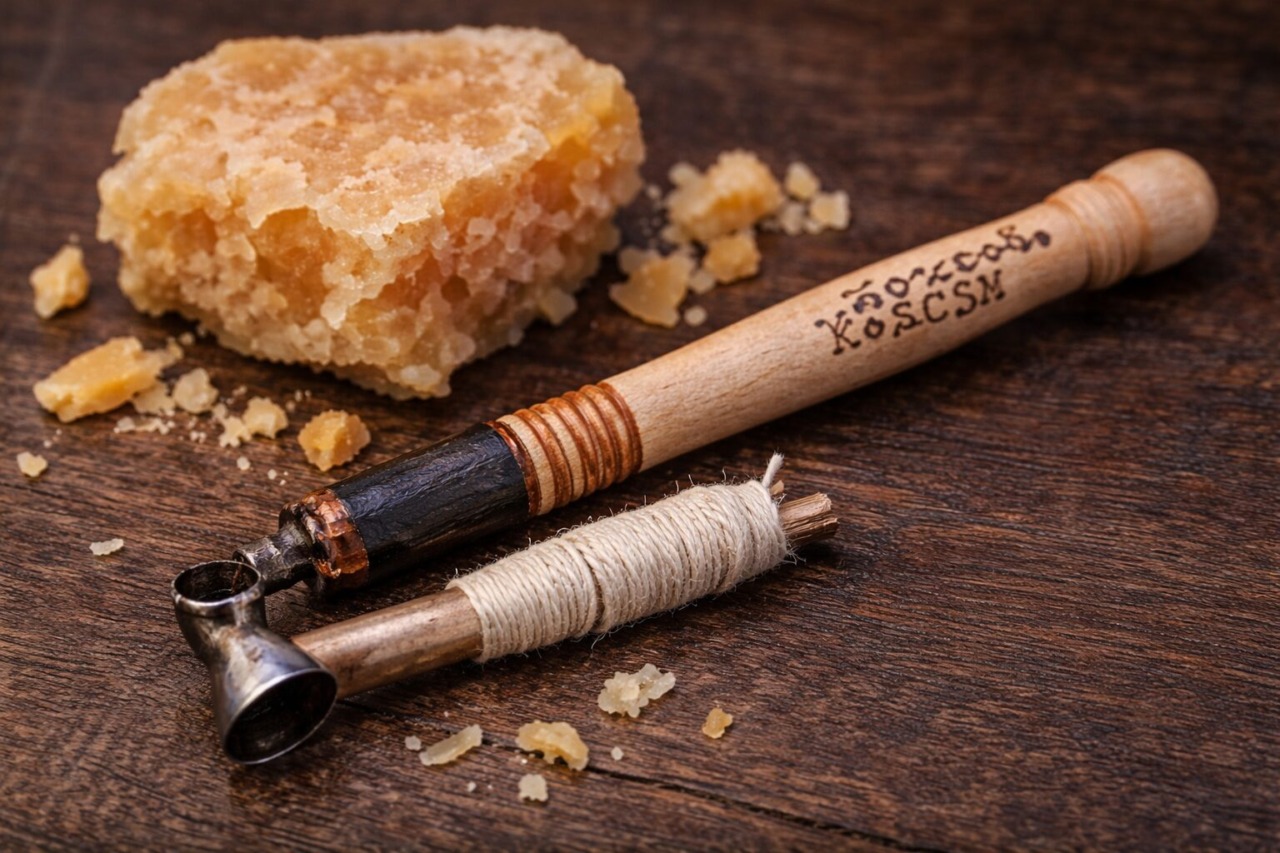
At the center of this tradition is a simple yet remarkably precise tool known as the šaraljajka.
At its tip sits a small funnel wrapped in fine cotton thread, with a single horsehair placed inside. This subtle detail allows the wax to flow evenly and in delicate lines, making it possible to create intricate ornaments. A small piece of beeswax is placed inside the funnel, and the tool is gently heated over a candle flame until the wax softens enough to follow the movement of the hand.
The process requires complete focus. There are no sketches, no guidelines, and no corrections. Every line is final, becoming part of the composition as soon as it is drawn. That irreversibility is part of its beauty – it asks for confidence, but also acceptance of imperfection as something authentic.
A skill not learned, but inherited
What makes this tradition especially meaningful is the way it exists within the community. It is not reserved for trained artisans; in many places, nearly every woman knows how to decorate eggs using this technique, yet no two eggs ever look the same.
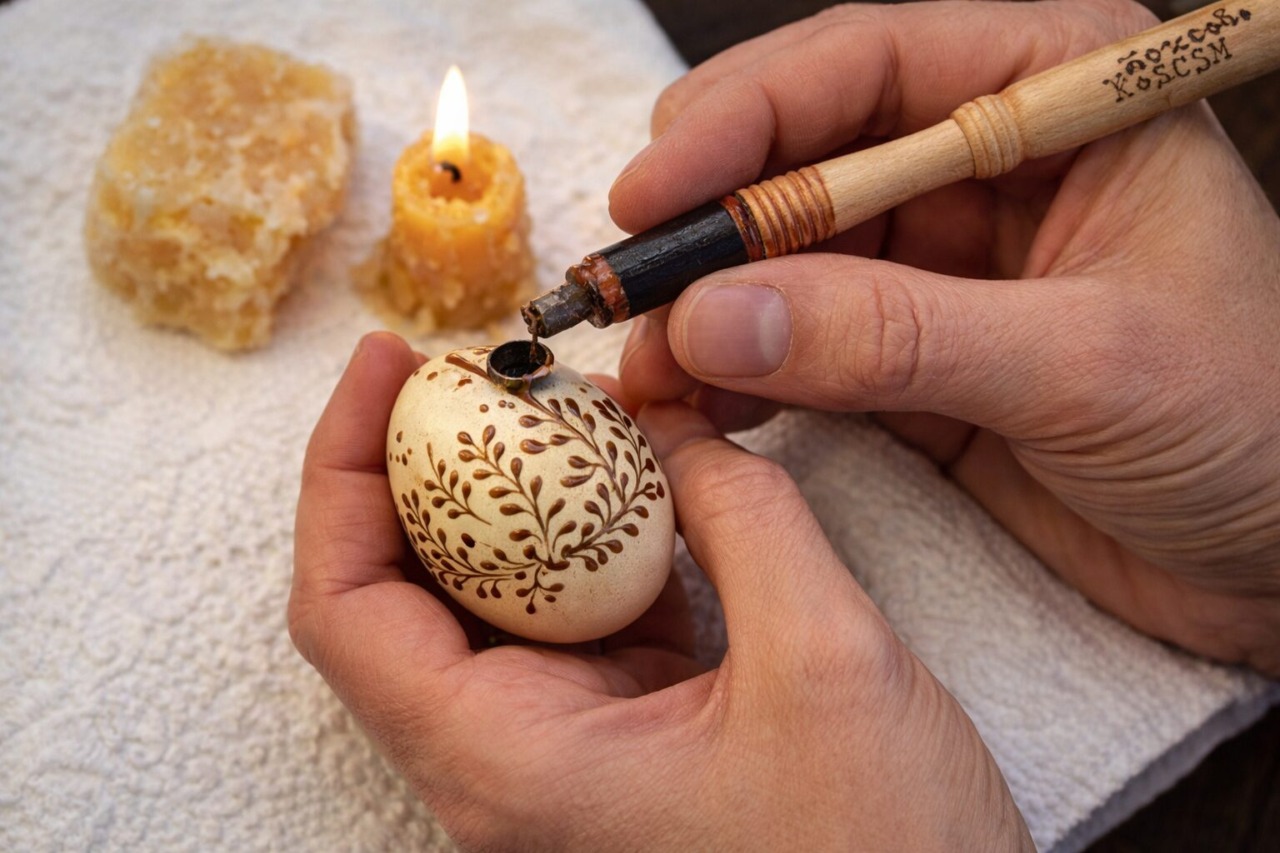
Patterns are not copied but remembered and reinterpreted. Geometric shapes, crosses, floral motifs, and symbols of fertility intertwine into compositions that often resemble miniature works of art. Each egg carries a visual language shaped by generations.
In places like Velika Hoča, this tradition becomes even more layered, deeply connected to identity, faith, and the rhythm of everyday life.
Symbolism: an egg that protects the home
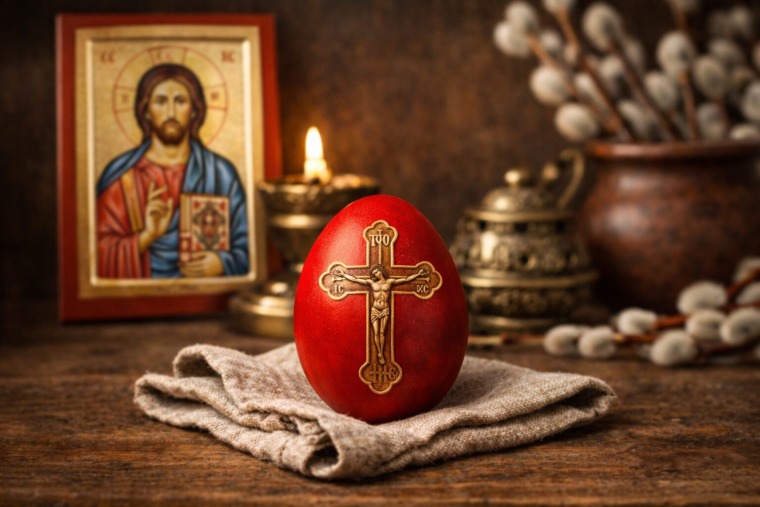
Within this practice, special importance is given to so-called čuvarkuća – “guard eggs,” decorated with one or more crosses. These eggs are believed to protect the home, fields, and vineyards, carrying a quiet but powerful symbolic role.
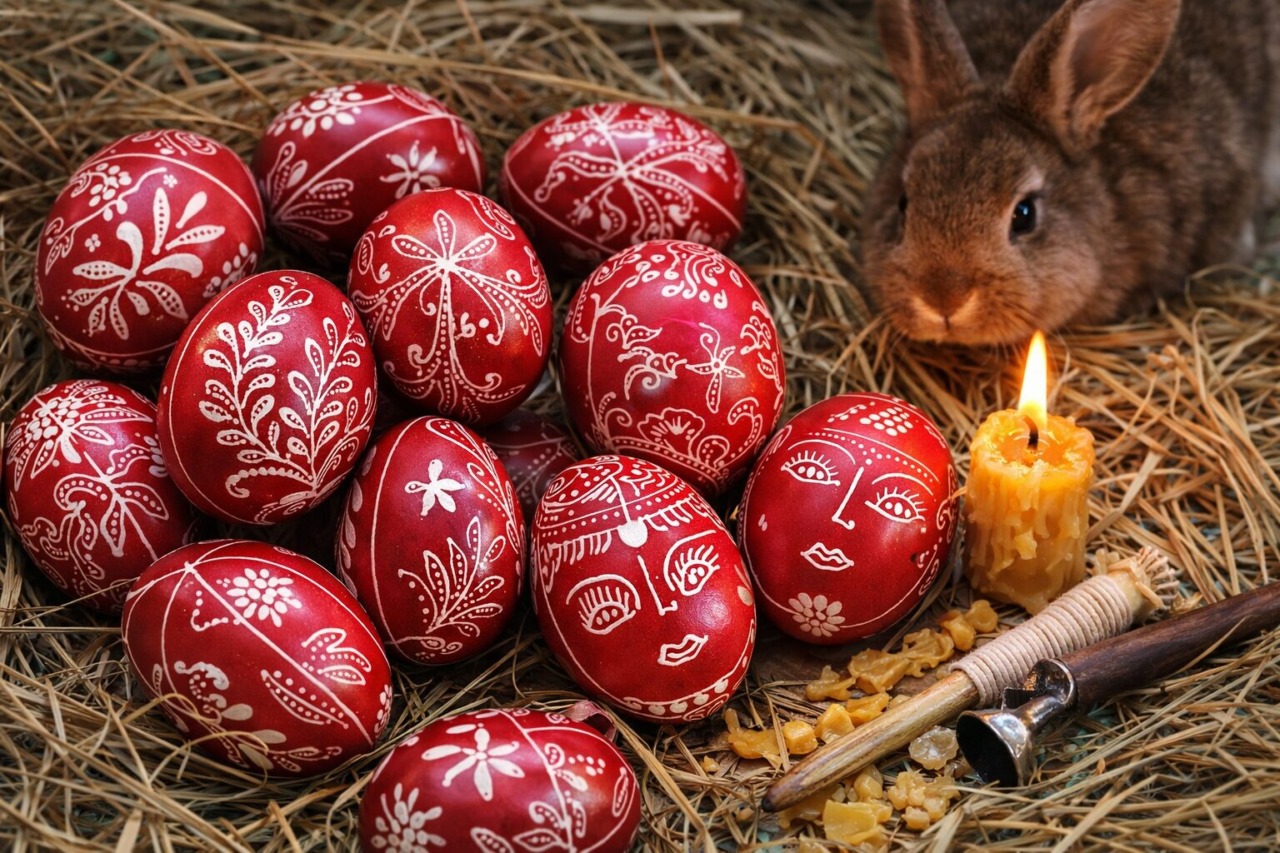
They often bear the inscriptions H.V. (Christ is Risen) and V.V. (Indeed He is Risen), reinforcing their spiritual meaning. Another important egg, known as the “bride,” is given to young men ready for marriage, symbolizing new beginnings, fertility, and hope.
Color, light, and the right moment
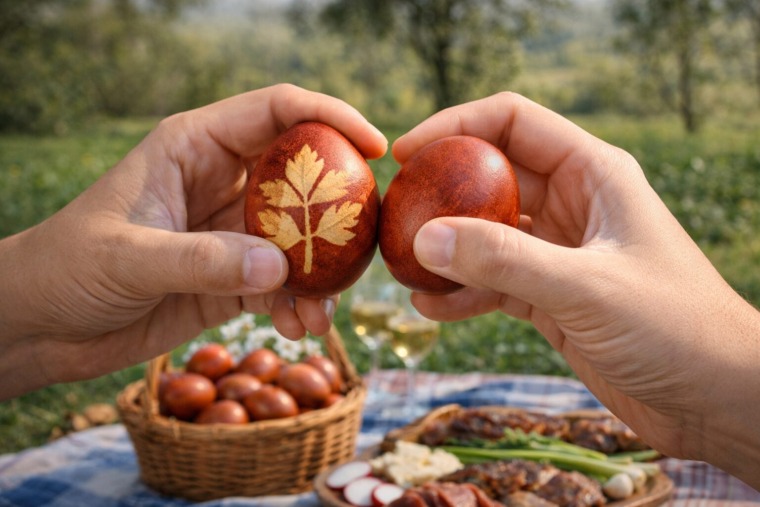
The act of dyeing the eggs is just as symbolic as decorating them. Traditionally, eggs are dyed early on Holy Thursday, at sunrise, when the first light enters the home and sets a calm, almost sacred atmosphere.
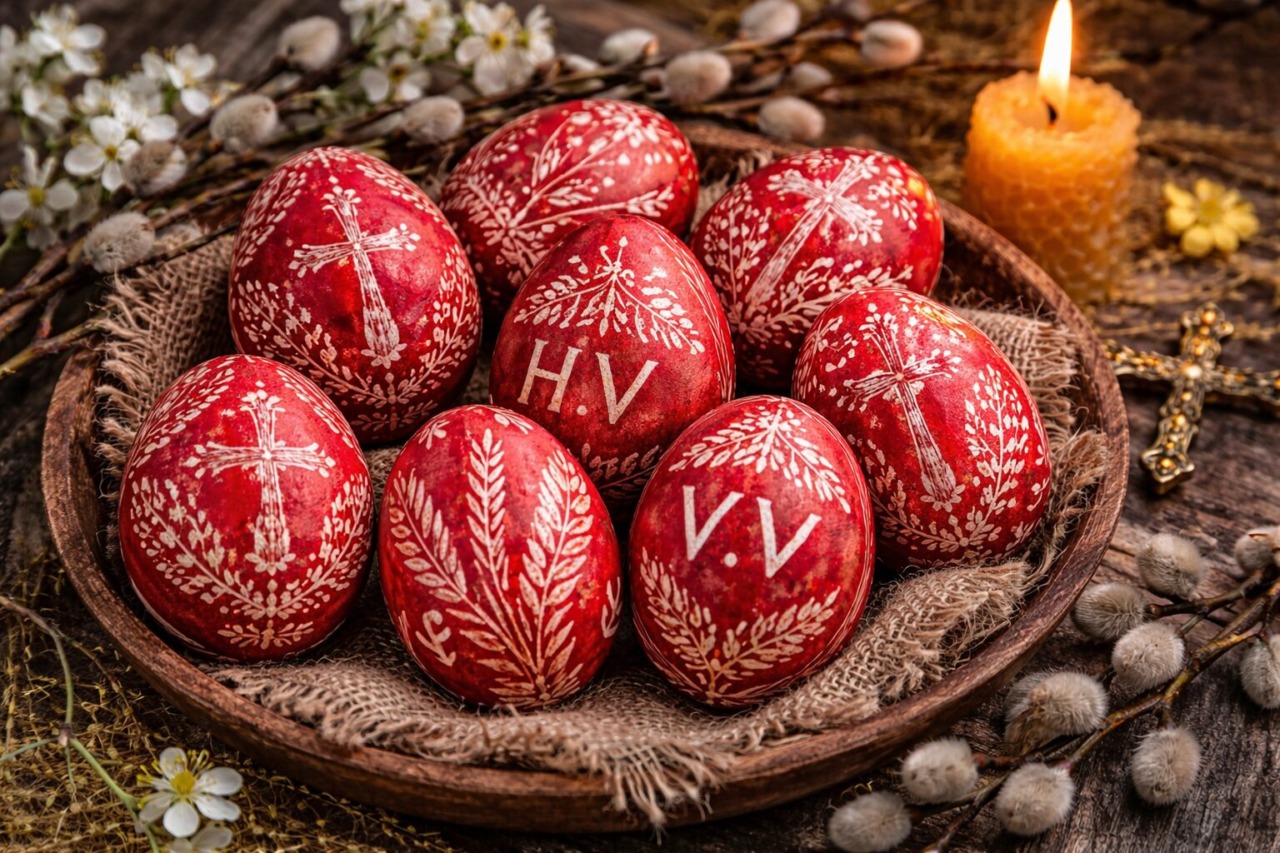
Red is the dominant color, carrying a dual meaning: sacrifice and resurrection, loss and renewal. Blessed water is often added to the dye, giving the process a deeper spiritual dimension.
The first dyed egg, known as the “guardian egg,” holds a special place in family rituals. Mothers and grandmothers gently touch children’s faces with it, making the sign of the cross and offering wishes for health and strength – a simple gesture layered with meaning.
A beauty that lasts beyond the holiday
Once decorated, the eggs are polished with oil or fat to give them a soft shine and carefully kept until they are placed on the Easter table. Yet their value does not end there. Each egg holds more than decoration. It carries the trace of a hand, a moment of stillness, and a story shaped in silence. That is why this tradition endures – not out of obligation, but because it holds meaning that cannot be replaced.
In a world that moves faster each day, wax-decorated Easter eggs remain a rare moment where beauty is created slowly, with intention, and with the awareness that what is being made is not just an object, but a piece of living heritage.
Related Articles