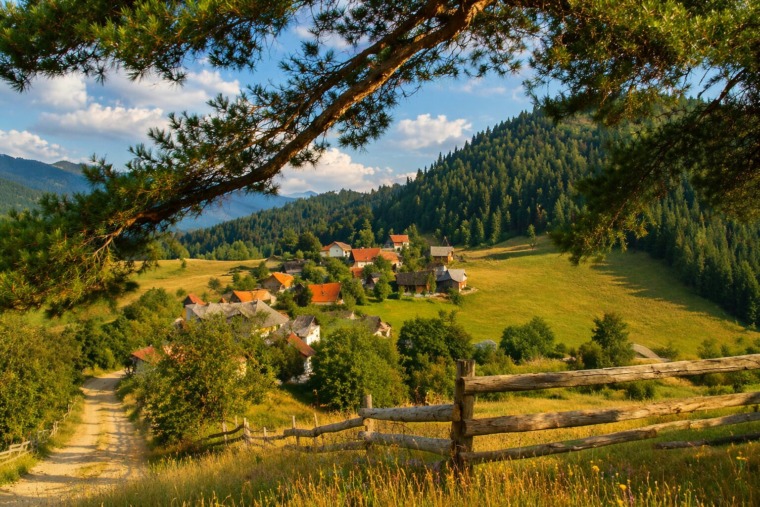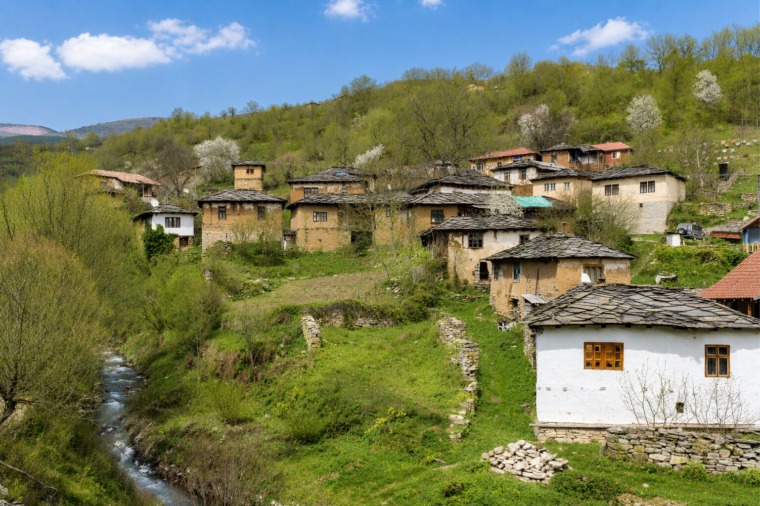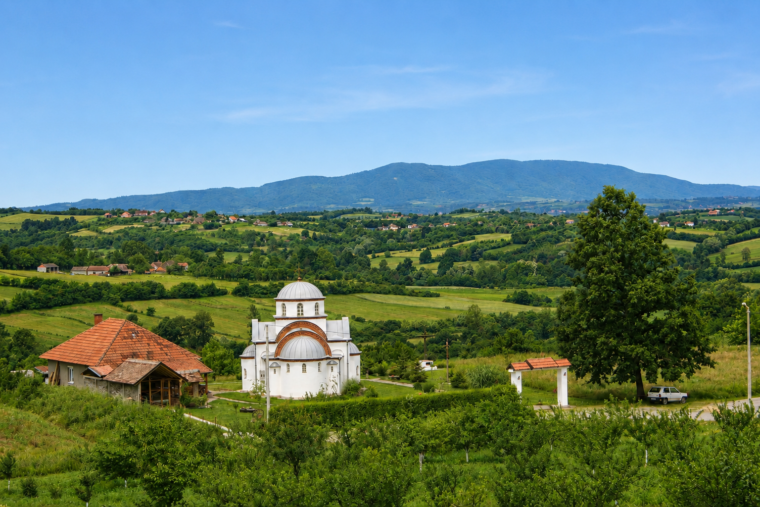

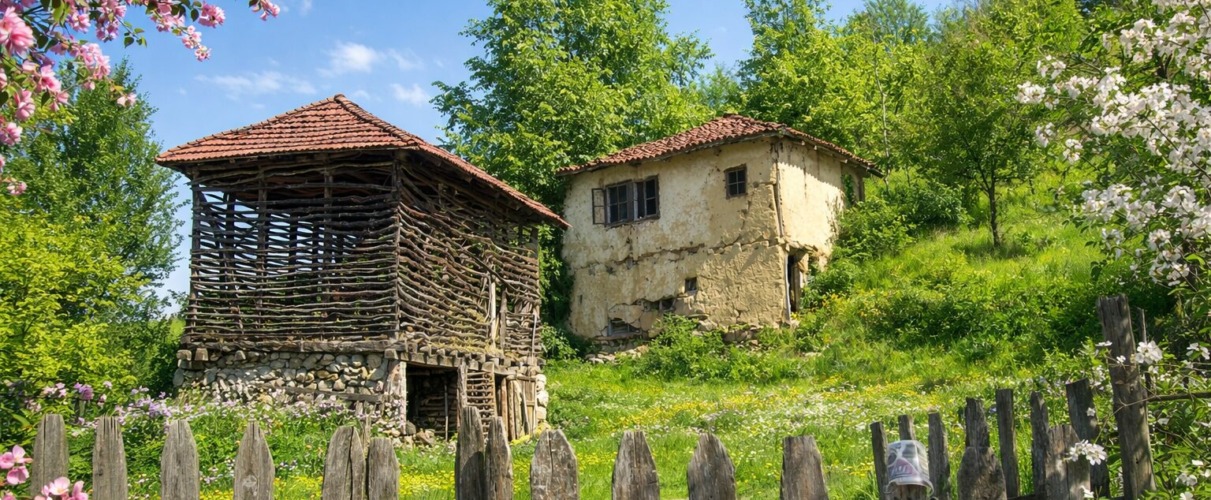
In southeastern Serbia, near the towns of Dimitrovgrad and Pirot, lies Poganovo – a village that does not try to be easily reached or fully explained. The road to it follows the Jerma River, through a landscape that gradually narrows as cliffs rise on both sides, and the outside world quietly fades away.
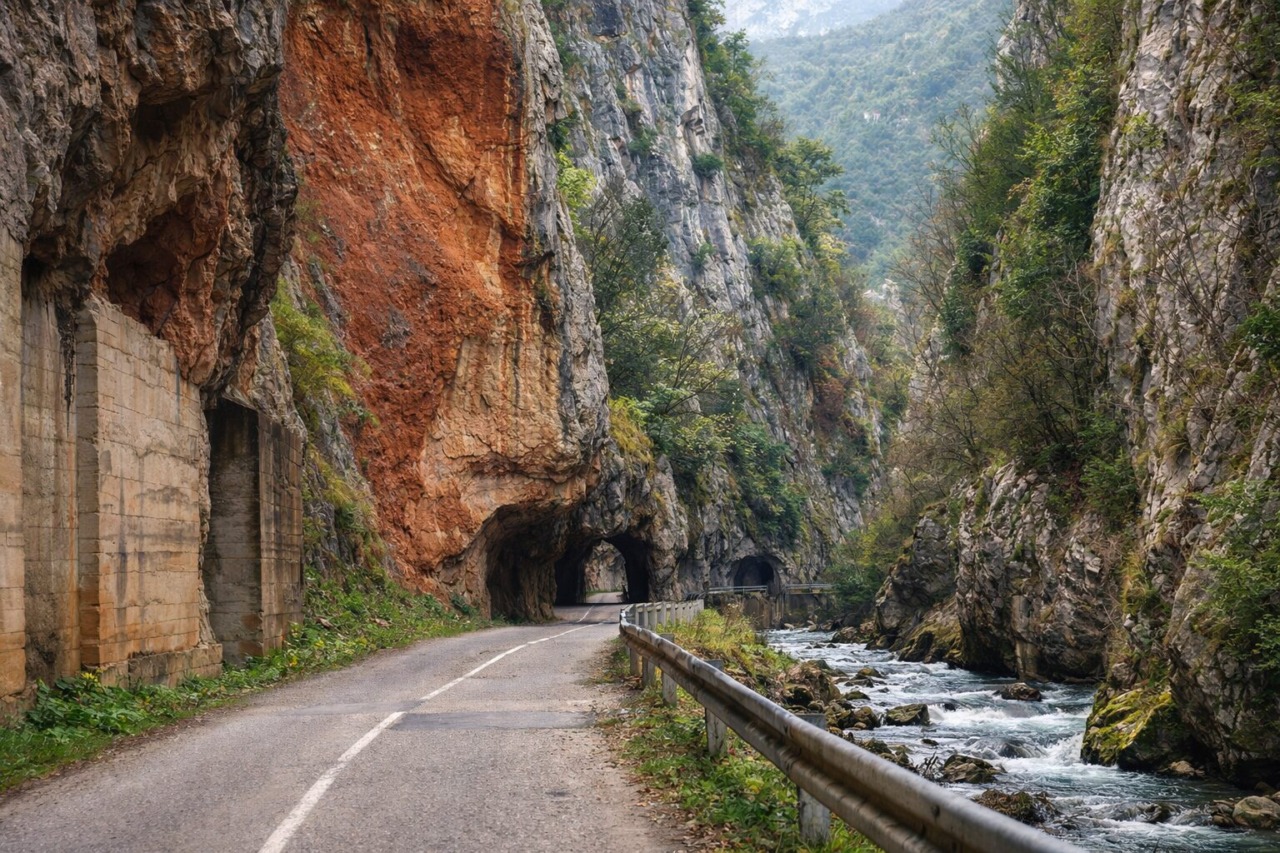
Here, nature leaves little room for distraction. The Jerma Canyon defines the entire setting, with steep rock walls and shifting light that changes throughout the day. Within this landscape, the village exists almost quietly, as if it belongs more to the canyon than to itself.
Poganovo is not experienced through a single view, but through a feeling of distance – not only in space, but in time.
What to See and Experience in Poganovo and Nearby
Time in Poganovo naturally leads to exploring the Jerma Canyon, one of the most striking yet lesser-known natural areas in Serbia. Trails follow the river, passing through narrow passages and opening up to viewpoints that appear unexpectedly, revealing landscapes that feel raw and untouched.
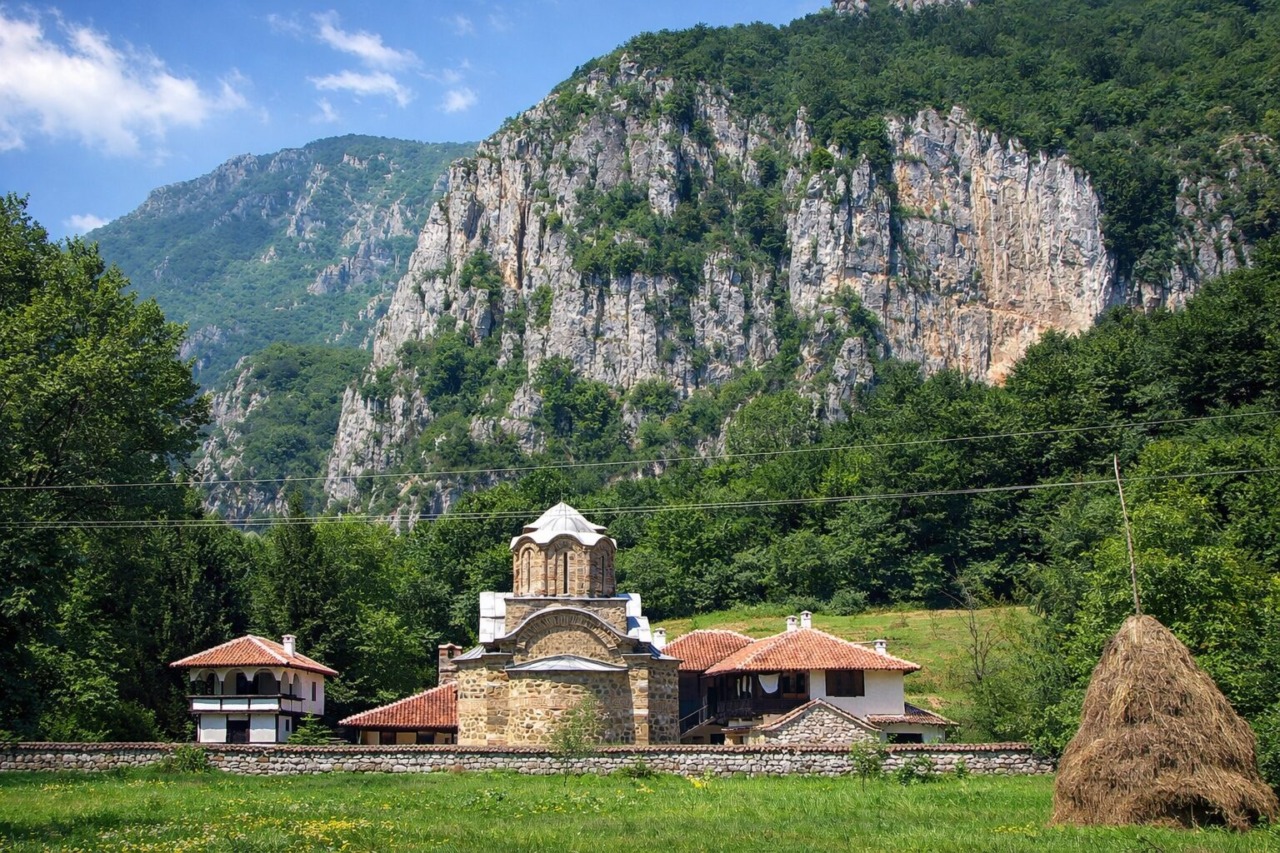
Close to the village stands the Poganovo Monastery (Monastery of St. John the Theologian), built in the late 14th century and set right beside the river. It does not stand apart from nature, but within it – its presence shaped by the same quiet rhythm as the canyon itself.
Not far from here lies the village of Vlasi, another small and peaceful place that reflects the character of this region – rugged, yet calm. Poganovo also serves as a natural starting point for exploring the wider area, including Dimitrovgrad, Pirot, Niš and the surrounding mountain landscapes.
Legends, Origins, and Layers of the Past
Few places in Serbia are so closely tied to stories as Poganovo. Its name is linked to a legend from the Ottoman period, about villagers who, out of defiance or indifference, refused to plant vineyards as ordered. According to the story, they planted the vines upside down – roots facing the sky – leading the Turks to call them “pagan” or “impure,” believing that vineyards would never grow there. To this day, vineyards have never truly taken hold in this area. But this is only one of many stories.
Perhaps the most well-known is the legend of Father Martin, who, according to local lore, became an outlaw and, together with forty monks from the monastery, attacked Ottoman caravans. The stolen treasure was said to be hidden in caves along the canyon, especially in a place known as Smokova Dupka. The story of buried gold still lingers, occasionally resurfacing through rumors and renewed curiosity.
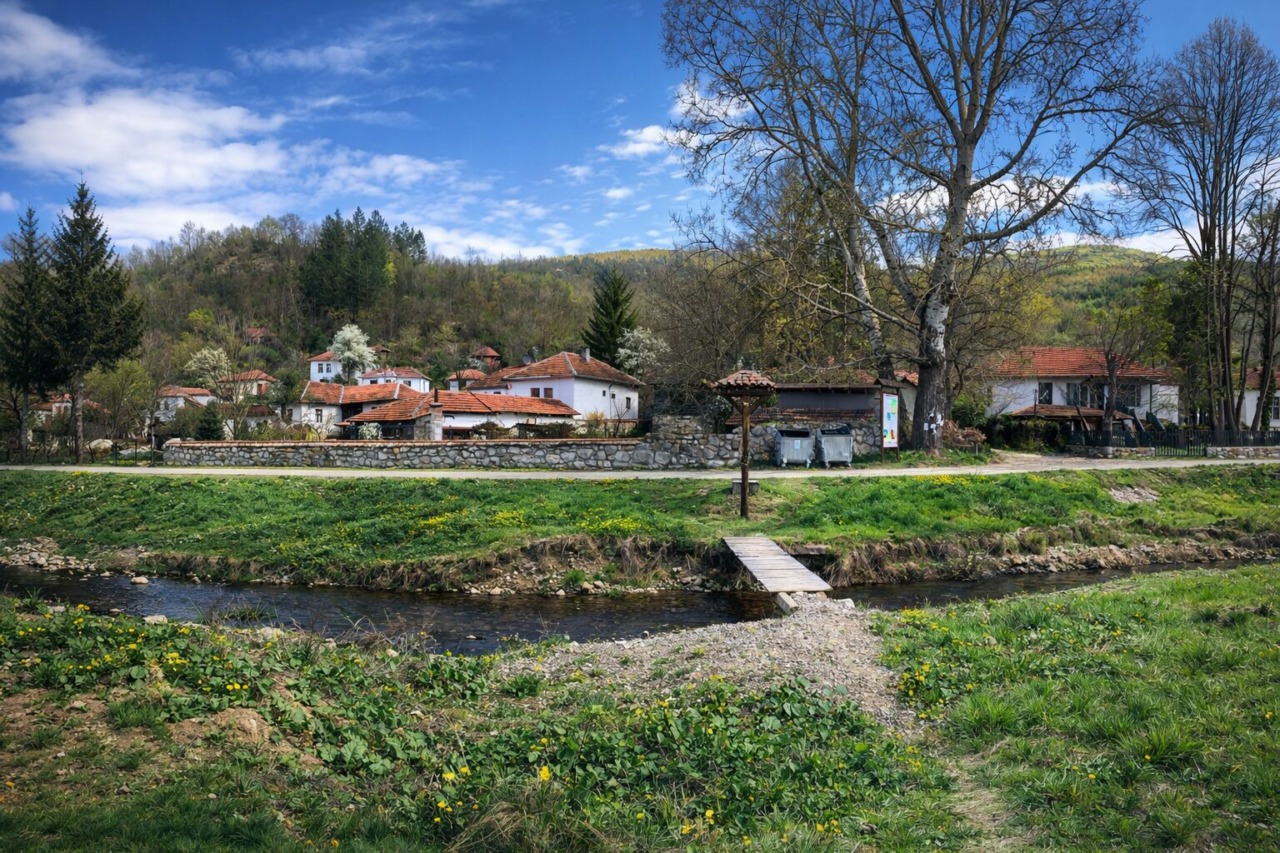
In Poganovo, such stories do not feel separate from reality – they are part of the landscape itself, adding to its quiet sense of mystery. At the same time, the history of this place reaches far beyond legend. Archaeological findings suggest that the area was inhabited as early as Roman times, with some indications that human presence here may date back even further, possibly to prehistoric periods.
Flavors of the South and the Simplicity of Life
In this part of Serbia, food is deeply connected to the mountainous landscape and a way of life that has remained largely unchanged. Meals are simple, yet full of character, based on what is grown, prepared, and preserved within local households.
The table reflects flavors shaped over generations – from kačamak and homemade pies filled with cheese or greens, to cornbread that accompanies almost every meal. A special place belongs to belmuž, a traditional dish made from cheese and cornmeal, embodying the spirit of the Stara Planina region and the richness that comes from simplicity.
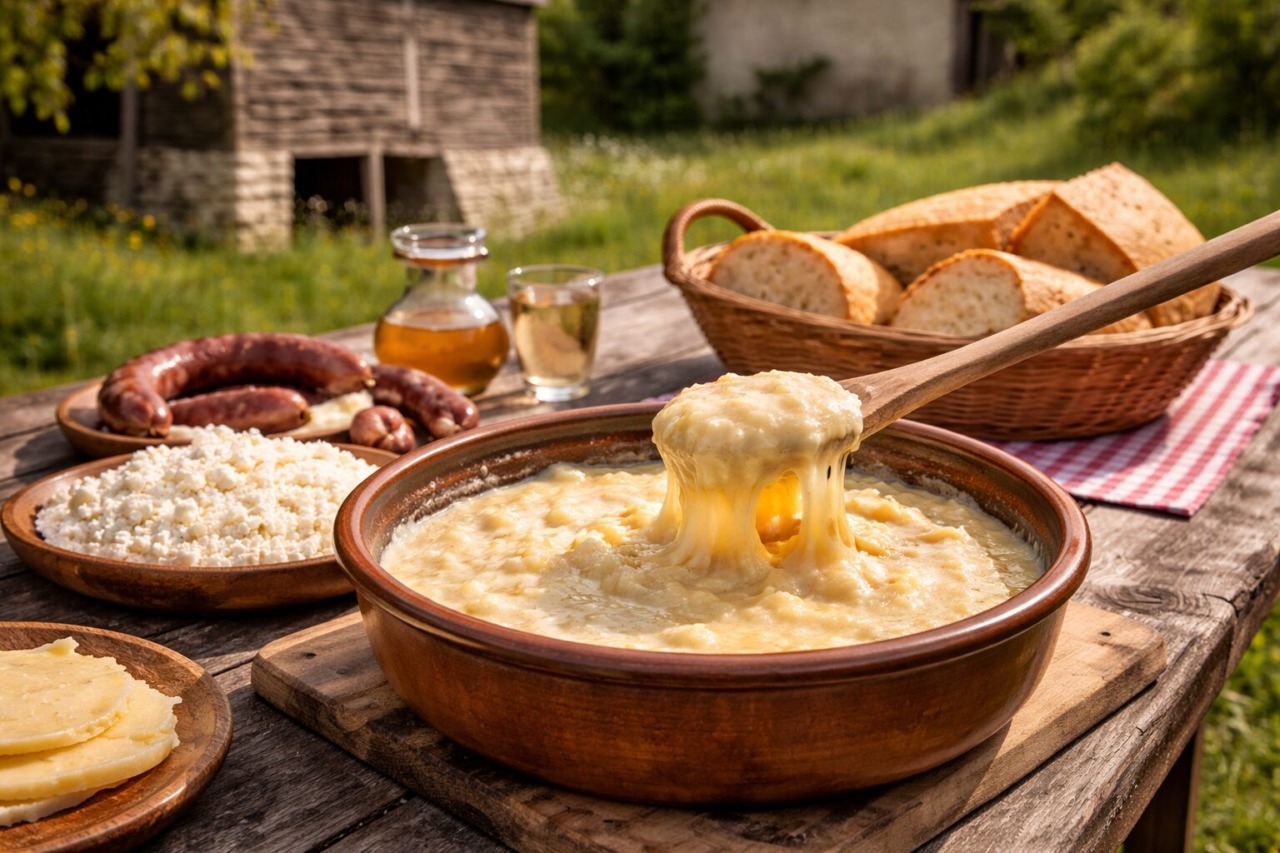
This area is also known for Pirot kačkavalj, as well as peglana kobasica, a unique air-dried sausage with a strong, distinctive flavor, cured in the clean mountain air. Lamb and meat from Stara Planina, prepared in a straightforward way, further reveal the character of this region – bold, authentic, and deeply rooted in nature.
In Poganovo and its surroundings, food is not a separate experience, but a part of everyday life meant to be shared. What appears on the table comes from the immediate environment, and each meal is remembered not only for its taste, but for the setting in which it is enjoyed – between cliffs, the river, and the quiet that surrounds it.
This article is part of the series “Villages of Serbia: Return to the Roots,” through which we explore authentic villages across the country – places where life still unfolds at a slower pace, more simply and closer to nature. Through stories about people, food, and landscapes, our goal is to encourage a different way of traveling and to highlight the importance of preserving rural Serbia.
Featured photo: Мико, CC BY-SA 3.0 https://creativecommons.org/licenses/by-sa/3.0, via Wikimedia Commons
Related Articles