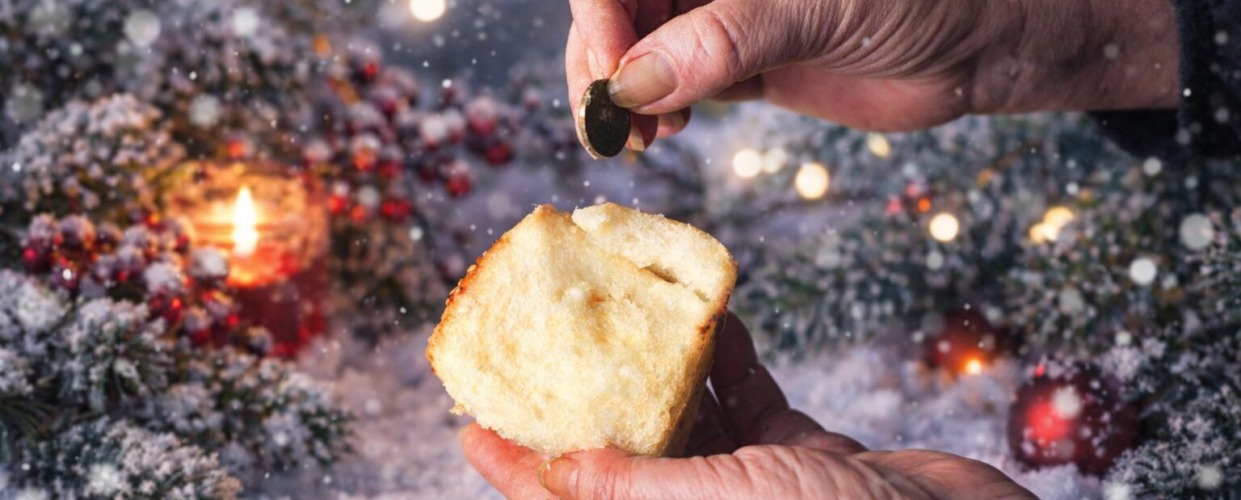
In Serbian homes, Christmas never arrives quietly. It announces itself through the scent of freshly baked bread, the crackling of firewood, and a gentle stillness as families gather around the table. At the heart of this sacred celebration stands česnica – more than a loaf of bread, it is a symbol of unity, faith, and hope for the year ahead.
When Česnica Is Made and Why on Christmas Day
Česnica is traditionally prepared on Christmas Day itself, January 7, early in the morning. This timing holds deep meaning: the bread is not made in advance so it can carry the freshness of a new day and the blessing of the holiday. In many Serbian households, the dough is kneaded in silence or accompanied by a short prayer, with wishes for health, peace, and prosperity.

In Orthodox tradition, Christmas celebrates the birth of Christ – a moment of renewal and light. As the first bread broken that day, česnica symbolizes new beginnings.
How Christmas Česnica Is Made
The ingredients of česnica are simple: wheat flour, water, salt, and yeast, though in some regions it is made without yeast, as a flatbread. Its true value lies not in richness, but in meaning.
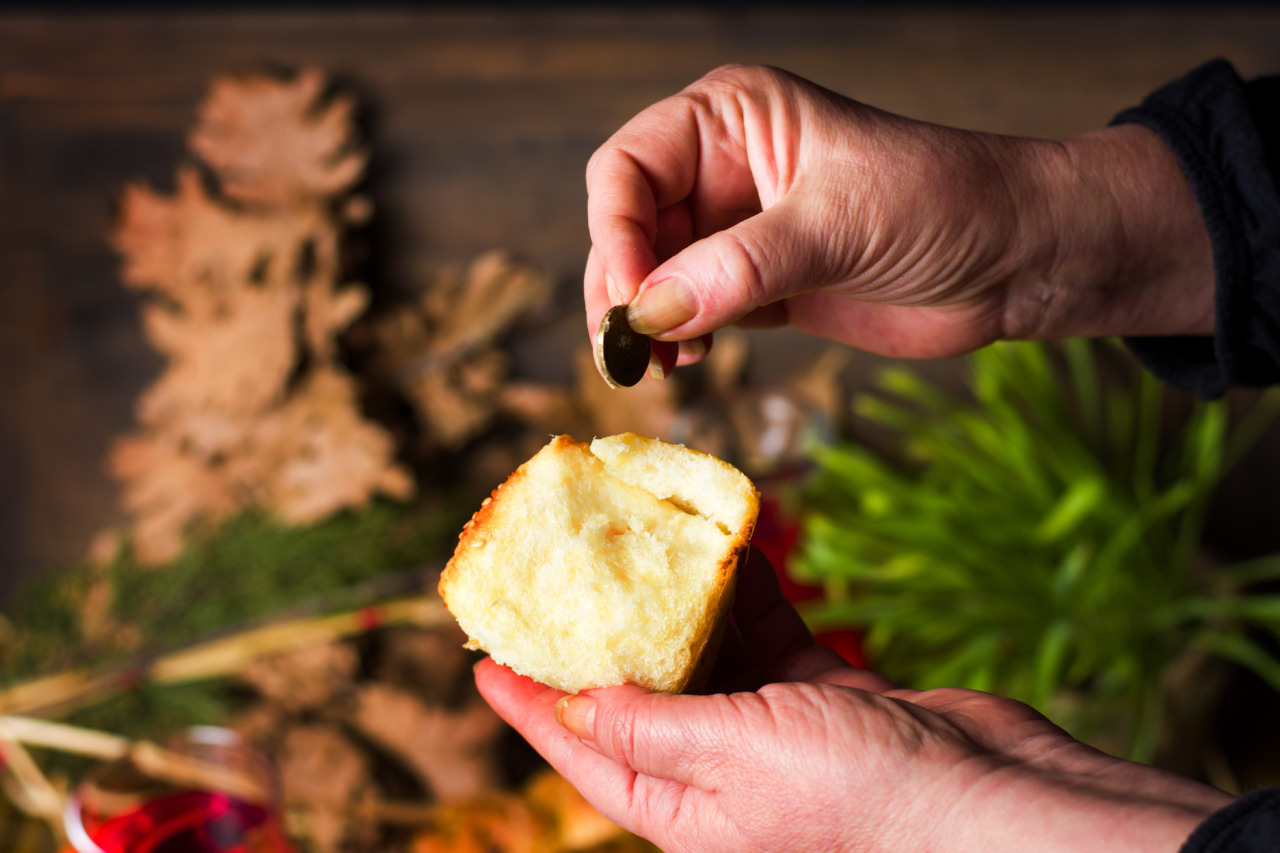
Hidden inside the dough is a coin, carefully wrapped, believed to bring good fortune to whoever finds it. Other symbolic items may also be added:
- a grain of wheat – for fertility and abundance
- beans or corn – for plenty of food
- a twig of cornelian cherry (dren) – for health and strength
- sugar or honey – for a sweet and joyful year
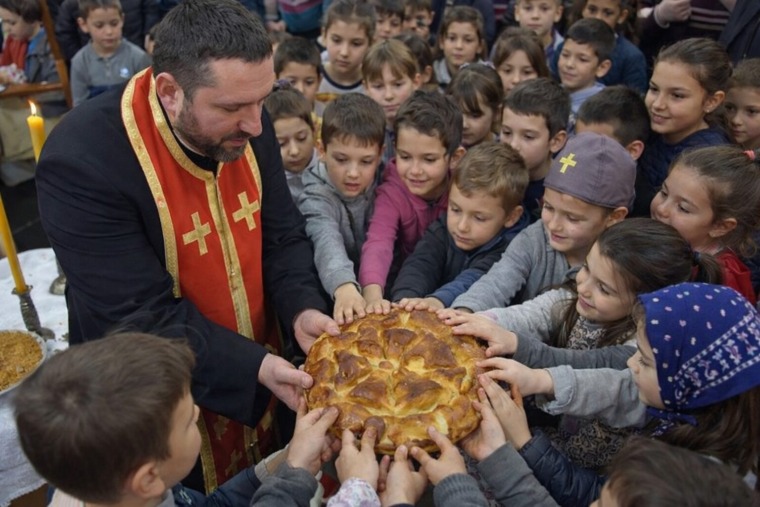
Česnica is usually round, shaped like the sun, and decorated with braided dough, a cross, or simple symbolic patterns.
Regional Traditions Across Serbia
While česnica is prepared throughout Serbia, local customs give it unique character. In Šumadija and central Serbia, the bread is broken by hand after being rotated three times. In Vojvodina, richer versions with milk or eggs are common, and in some villages the bread is cut only after a prayer.
In southern Serbia, česnica is often thinner, similar to a flatbread, sometimes baked directly on the hearth or in traditional ovens. Despite these variations, one rule remains unchanged: česnica is meant to be shared.
Breaking the Česnica: A Moment to Remember
One of the most cherished moments of Christmas morning is the breaking of the česnica. The family gathers around the table, a festive greeting is spoken, and the bread is divided into as many pieces as there are people present.
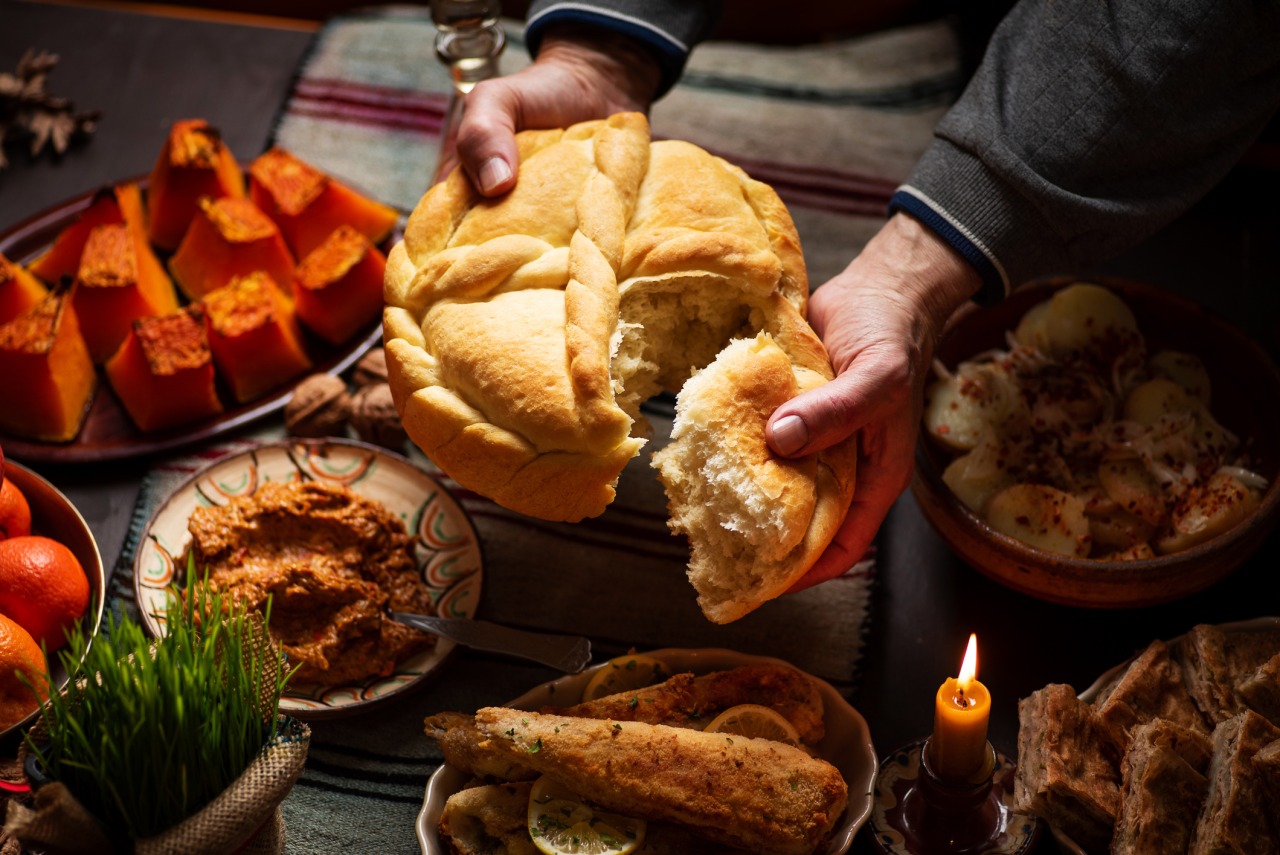
Finding the coin brings laughter and playful joy, along with the belief that the lucky person will have a prosperous year. Yet the true meaning lies not in fortune, but in togetherness.
The Meaning of Česnica Today
Even in modern life, česnica remains one of the most enduring Serbian traditions. It is still homemade, still shared within the family, and still carries the same message: peace, unity, and gratitude.
For many Serbs, česnica is a living connection to ancestors, childhood memories, and the feeling of home – especially for those celebrating Christmas far from Serbia.
A Bread That Speaks Without Words
Christmas česnica is not merely ritual bread. It is a quiet reminder that happiness is shared, that the year begins together, and that tradition lives on through simple but meaningful rituals.
As it is broken, česnica unites past and present – and reminds us that the true spirit of Christmas is found in what we share with others.