
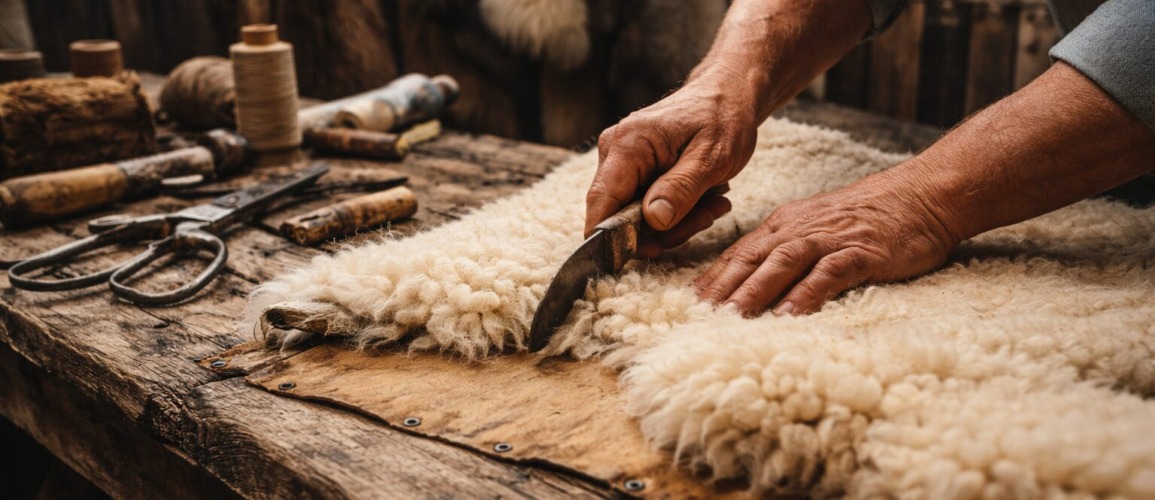
There are crafts that were not born out of fashion, but out of necessity. Out of cold winters, long days in the mountains, and a way of life in which clothing had to last, protect, and be repaired – not replaced. The Ćurčija craft belongs to this quiet yet highly demanding tradition: the art of processing leather and fur, developed over centuries across Serbia.
Ćurčija masters are artisans who know how to transform raw hide into objects that provide warmth, durability, and meaning. Their work begins where industrial production ends – in a slow, multi-stage process that requires patience, strength, and experience.
From Raw Hide to a Functional Object
At the heart of the Ćurčija craft lies the processing of leather and fur, most commonly lamb and sheepskin, and more rarely the hides of wild game. The first and perhaps most crucial stage is tanning – the process that stabilizes the hide and prepares it for further work. Without proper tanning, no later step can truly succeed.
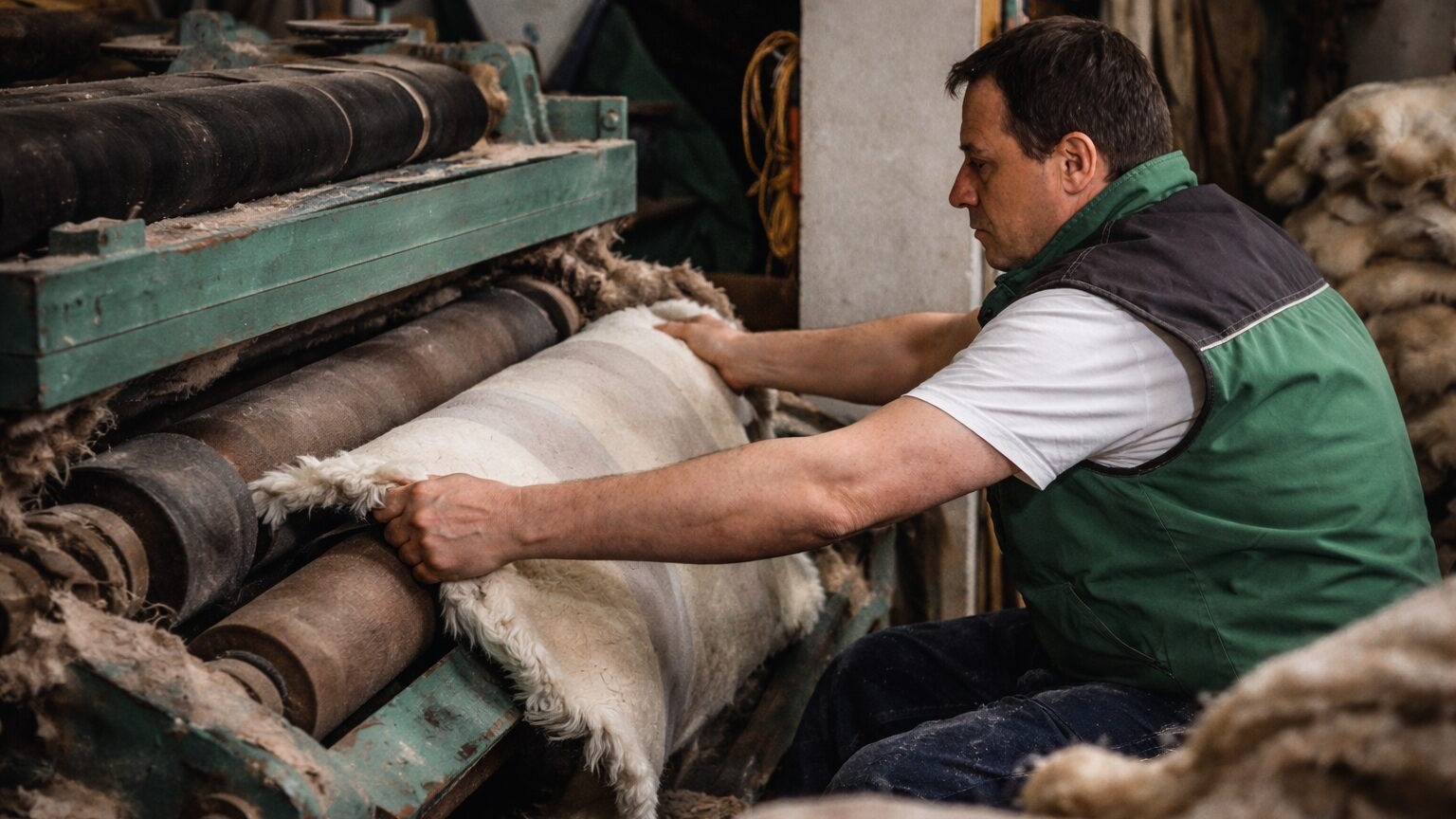
Once tanned, the fur is stretched by hand onto wooden frames, fixed in place with wooden pegs, and left to take shape. This is followed by trimming and thorough cleaning, after which the fur is washed again using water and softening agents. In the past, only natural substances and plant-based preparations were used; today, industrial agents are more common – yet the essence of the process remains unchanged.
Dyeing, drying, repeated trimming, mechanical stretching, and softening come next. Only after all these stages is the material ready for the final phase: cutting and sewing.
Precision of the Hands and Knowledge Beyond Time
Creating leather garments requires exceptional precision. The hide is first stretched and fixed onto special boards using small steel nails to maintain its shape. Cutting is done according to prepared patterns, using specialized tools such as furrier’s knives and scissors.
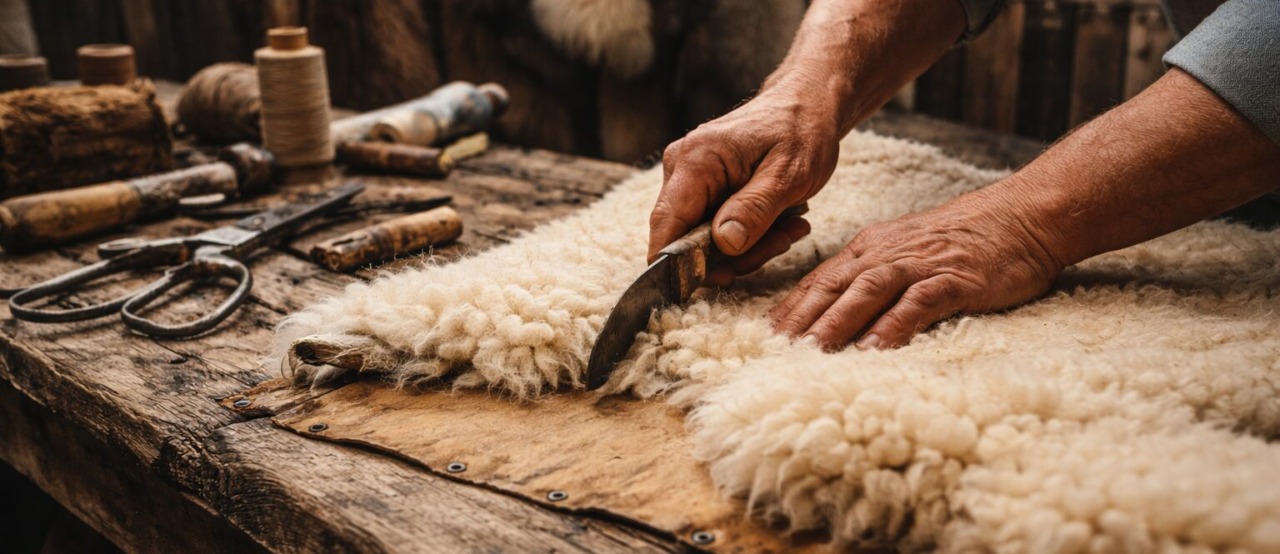
The cut pieces are then joined and stitched on machines designed specifically for working with leather and fur. The same principle applies to the making of sheepskin coats, vests, and gloves, as well as traditional fur hats (šubara), which are shaped on adjustable molds to achieve the correct size.
Each item passes through the artisan’s hands multiple times. Mistakes are not easily forgiven – leather remembers every cut.
Objects That Carry Identity
The Ćurčija craft has given Serbia garments that were never just clothing, but part of everyday identity: sheepskin coats, sleeveless jackets, fur hats, and gloves. These items were worn for generations, repaired, inherited, and adapted – without losing their function or dignity.
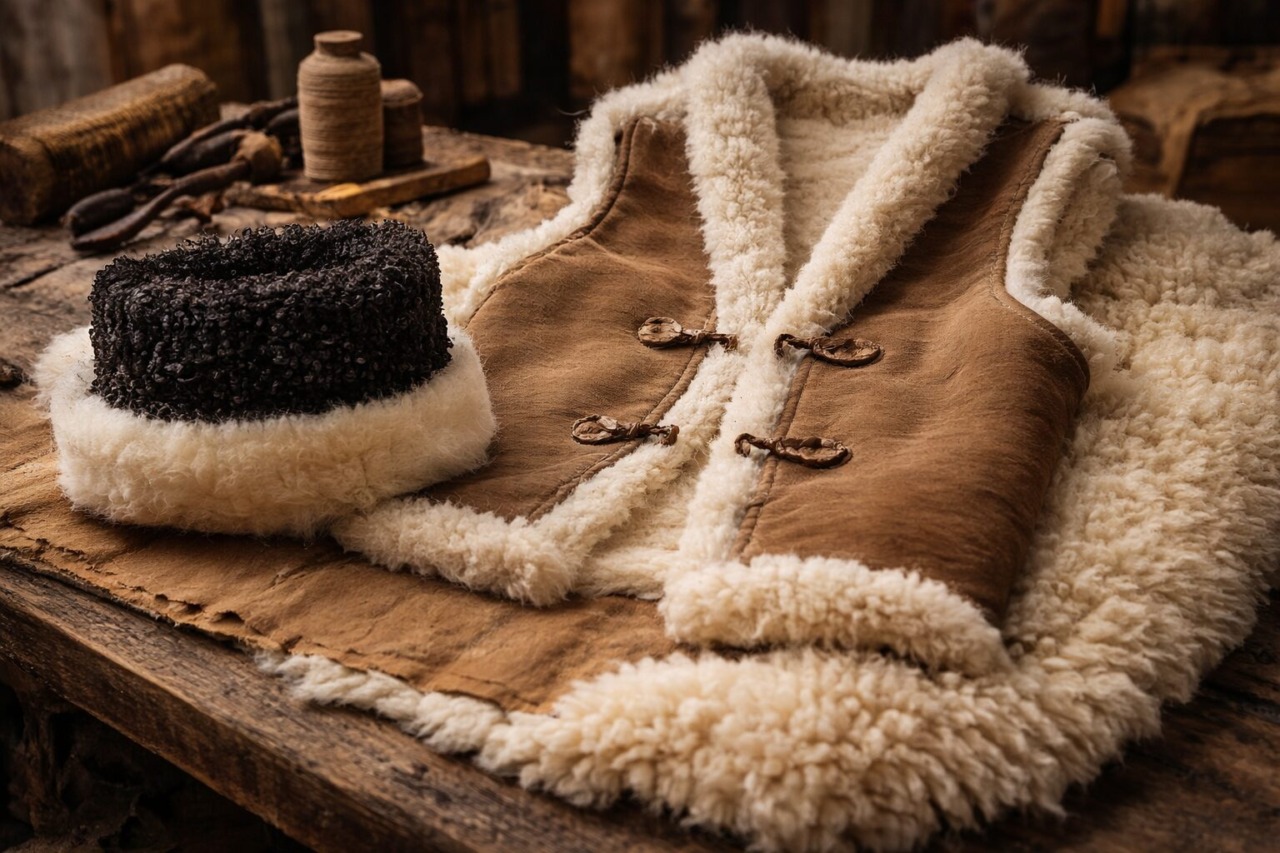
Today, these traditional forms are increasingly reinterpreted in a contemporary context, emerging as handmade, durable, and sustainable alternatives to fast fashion.
A Craft on the Edge of Disappearance – But Not Without a Future
Like many traditional crafts, the Ćurčija craft now stands on the edge of survival. There are few masters left, even fewer apprentices, and the process is long, physically demanding, and far removed from quick profit. Yet it is precisely these qualities that define its authenticity.
In a world driven by speed and disposability, the Ćurčija craft offers a different philosophy – slow work, durability, and respect for material. These are values the modern world is once again learning to appreciate.
Why the Ćurčija Craft Matters Today
The story of the Ćurčija craft is not merely a story about leather and fur. It is a story about our relationship with nature, about skills that cannot be automated, and about knowledge that disappears if it is not passed on.
That is why this craft deserves its place in the Authentic Serbian Products series – as a reminder that true authenticity is not created by trends, but by necessity, experience, and time.
Related Articles


5 Little Things in Serbia That Travelers Never Forget
February 20, 2026
Interesting Facts About Sretenje You May Not Know
February 16, 2026
The Sretenje Route: A Guide to Serbia’s Historic Sites
February 15, 2026