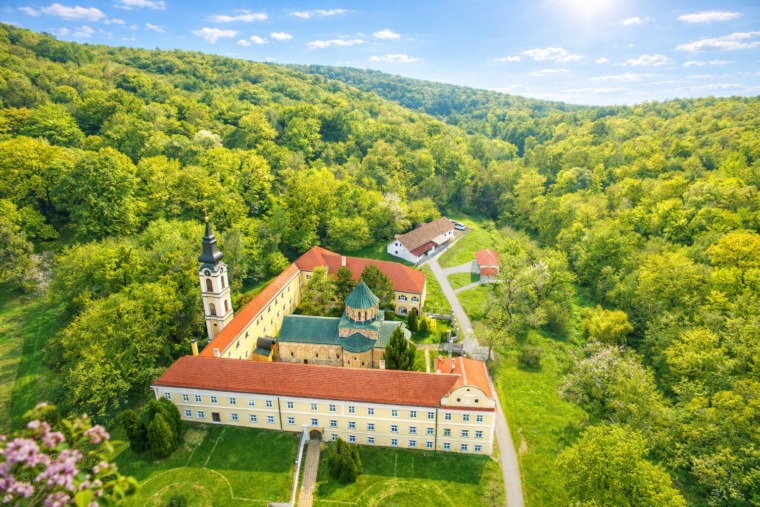
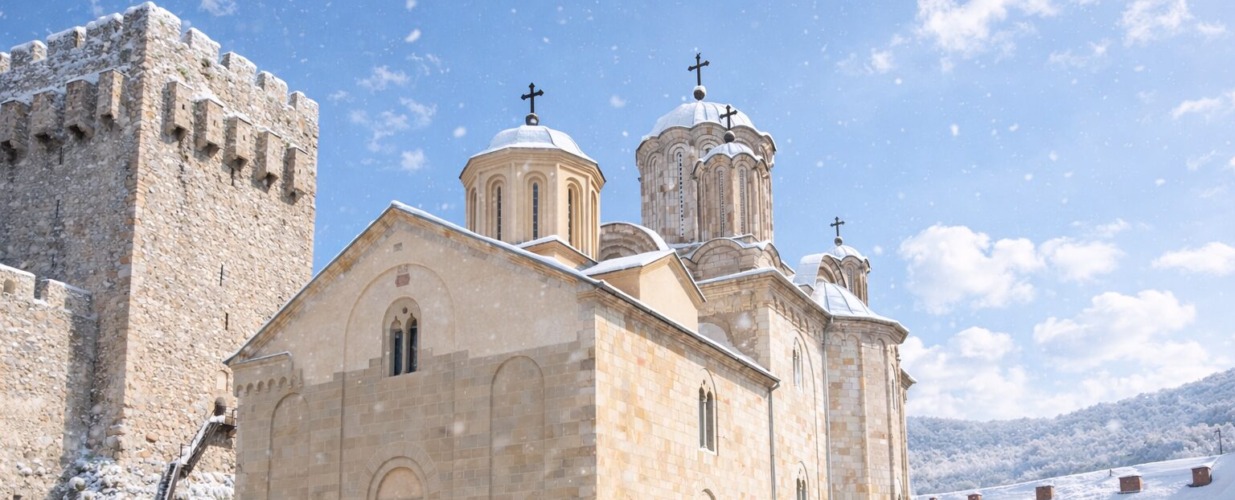
Tucked into the hills of central Serbia, Manasija Monastery is more than a historical monument – it is a place where time feels suspended. Built in the early 15th century by Despot Stefan Lazarević, this fortified monastery stands as one of the finest examples of medieval Serbian architecture, art, and spiritual life.
While impressive in every season, Manasija reveals its deepest character in February. Winter strips away distractions. The surrounding forests grow quiet, visitor numbers drop, and the thick stone walls seem to breathe with centuries of history. What remains is a rare atmosphere of stillness, ideal for travelers seeking meaning rather than movement.
A fortress of faith and culture
Manasija is unique among Serbian monasteries for its powerful defensive walls and towers, which once protected not only monks but also one of the most important cultural centers of medieval Serbia – the Resava School. Inside these walls, scholars copied manuscripts, preserved knowledge, and shaped Serbian literary tradition.
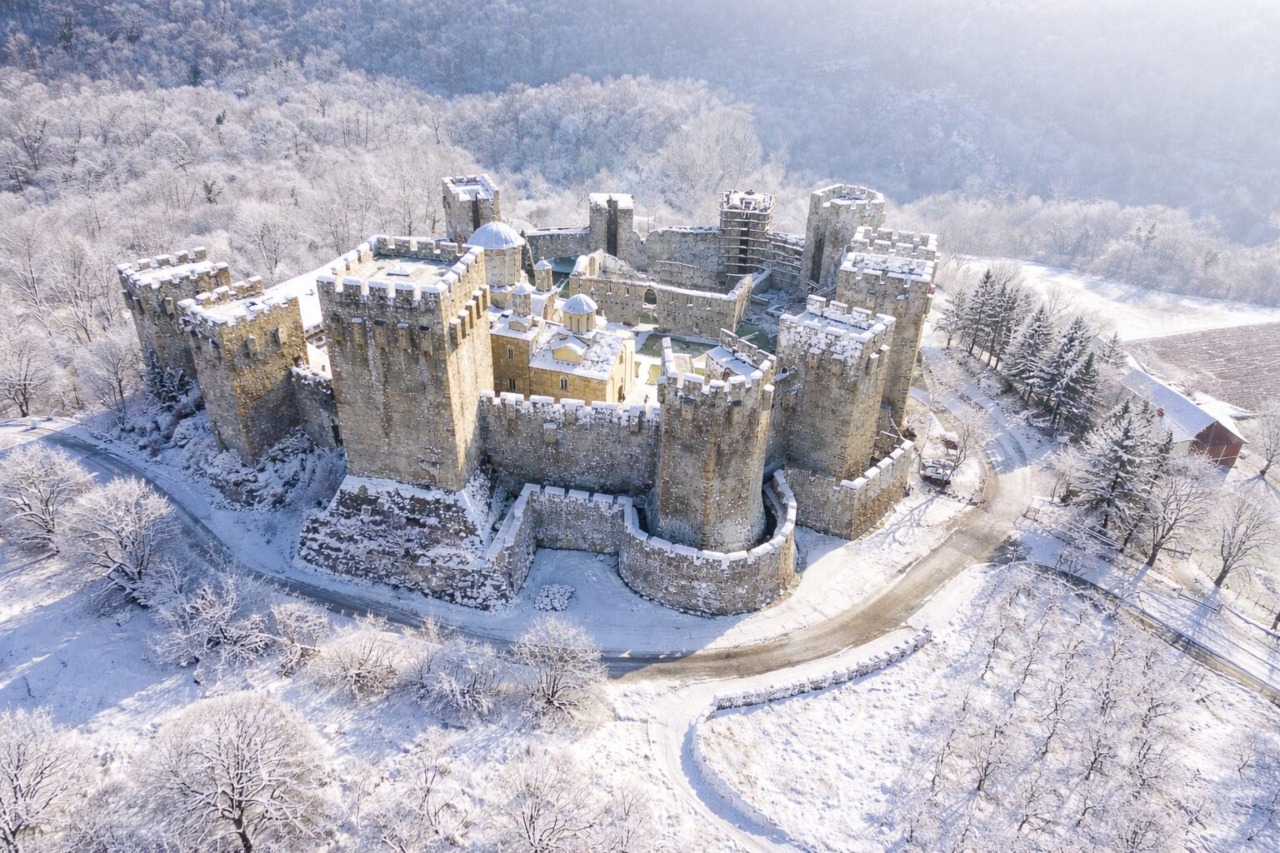
In winter, the contrast between white snow, pale stone, and dark roofs creates a striking visual harmony. Walking along the fortress walls or through the inner courtyard feels like stepping into another era, where silence replaces sound and space replaces noise.
Frescoes and inner calm
Inside the church, visitors are greeted by remarkable frescoes that reflect the artistic peak of the Morava School. Even on cold days, the interior offers warmth – not only in temperature, but in atmosphere. Soft light filters through small windows, illuminating centuries-old faces of saints and symbols of faith.
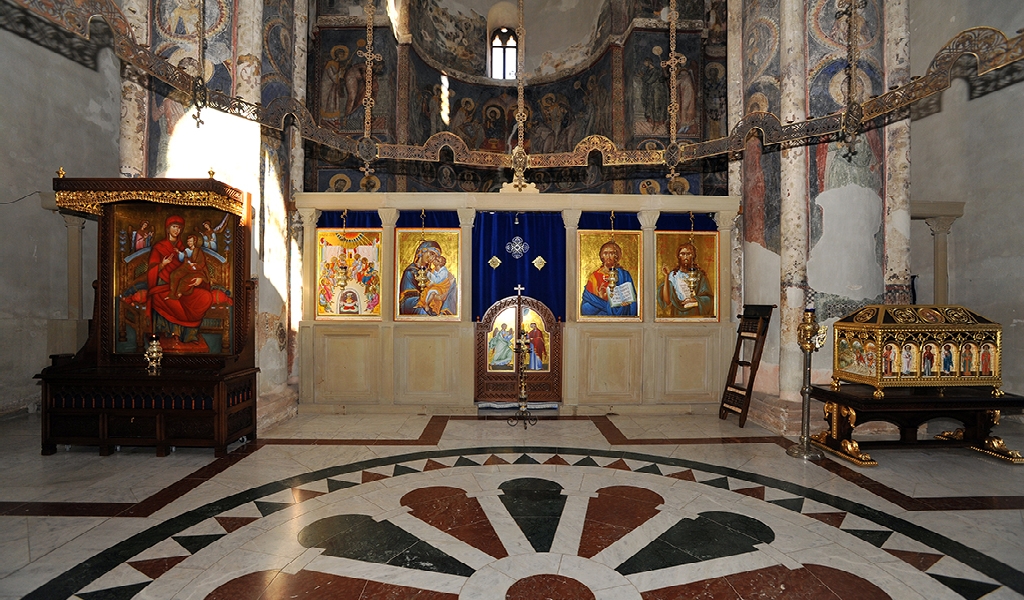
February is an ideal time to experience this intimacy. Without crowds, the church becomes a place for quiet reflection, where every detail can be observed slowly and thoughtfully.
The landscape around Manasija
The monastery is set within a gentle valley near Despotovac, surrounded by forests, hills, and rural scenery. In winter, the landscape feels purified – paths are quiet, colors subdued, and air crisp. Short walks around the complex and nearby countryside offer moments of solitude and connection with nature.
Close by, visitors can also explore small villages, traditional households, and local restaurants, completing the experience with regional flavors and hospitality.
Why visit in February?
February brings Manasija back to its essence. There are no festivals, no rush, no distractions – only space, history, and calm. It is a perfect destination for couples, solo travelers, and anyone in need of a mental and emotional reset.
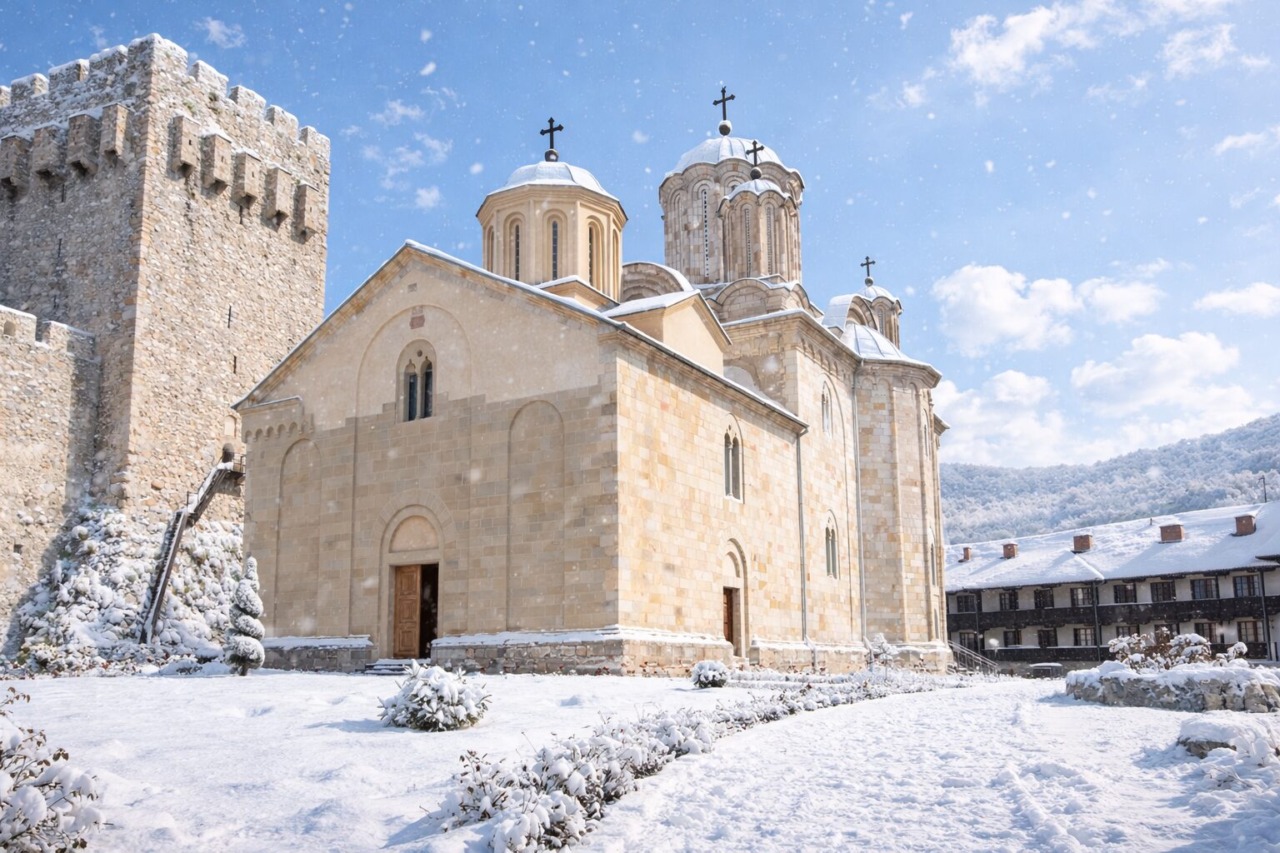
This is not a place to “see quickly.” It is a place to stay for a while, to listen, and to feel.
What to do
- Walk along the fortress walls and inner courtyard
- Visit the church and study its frescoes
- Explore the surrounding countryside
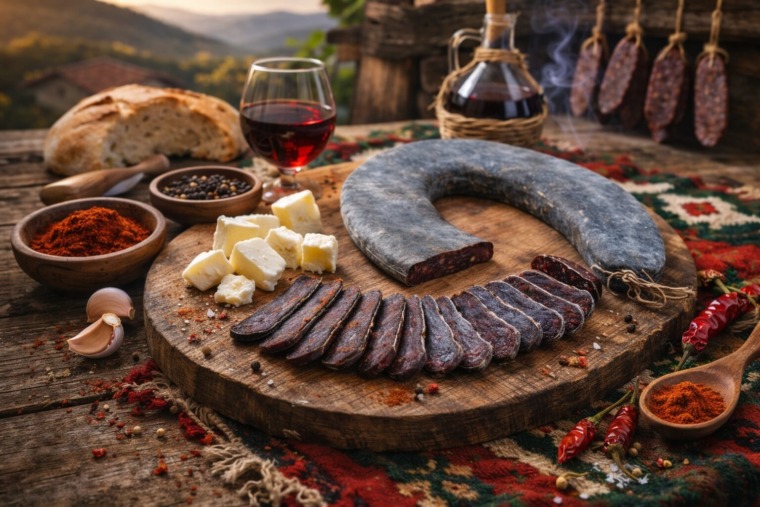
- Enjoy traditional food in nearby villages
Activities
- Cultural and spiritual sightseeing
- Winter photography
- Slow travel and reflection
- Quiet weekend escapes
In February, Manasija becomes what it has always been at heart: a sanctuary. A meeting point of stone and spirit, history and silence – offering visitors not just a destination, but an experience that stays long after the journey ends.