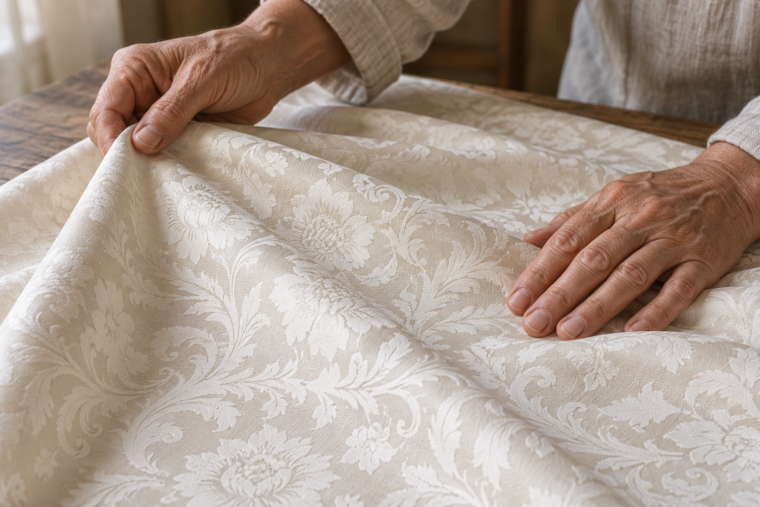

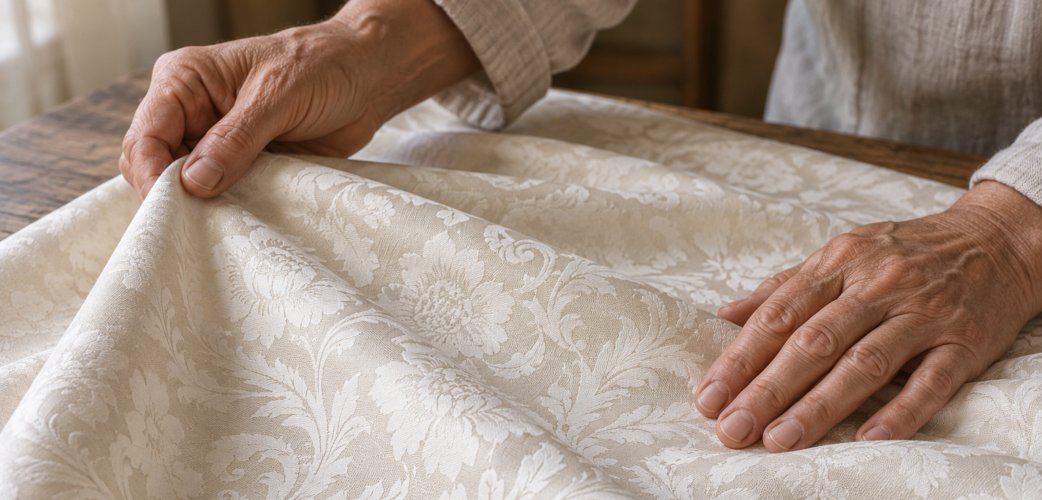
In northwestern Bačka, a traditional craft gives an everyday tablecloth a distinctive sense of place. Bezdan damask reveals another side of travelling through Serbia – one discovered through fabric, pattern and the work of skilled weavers.
At first, you notice the sheen. Look at the fabric from another angle, and a pattern emerges: one part catches the light while another appears more subdued. The design is subtle, yet unmistakably present.
This is one of the defining qualities of damask. Its pattern is created during weaving, through the interlacing of threads, making it part of the fabric’s structure. The contrasting way the pattern and background reflect light gives damask its characteristic appearance.
In Bezdan, near Sombor, this fabric also tells a local story. It connects wooden looms, knowledge passed between weavers and objects made to be used: tablecloths, napkins and bed linen. For travellers interested in traditional crafts, it offers a reason to venture beyond Vojvodina’s more familiar routes.
How Damask Became Part of Bezdan’s Story
An important year in the history of weaving in Bezdan is 1871, when artistic weaver János Schmidt settled in the village. According to the Tourism Organisation of Vojvodina, his arrival advanced local weaving traditions and introduced technology that made more intricate patterns possible.
After the Second World War, local weavers pooled their resources and established the “Dunav” weaving cooperative in 1951. The enterprise’s name and organisational structure changed over time, while handweaving remained its defining feature.
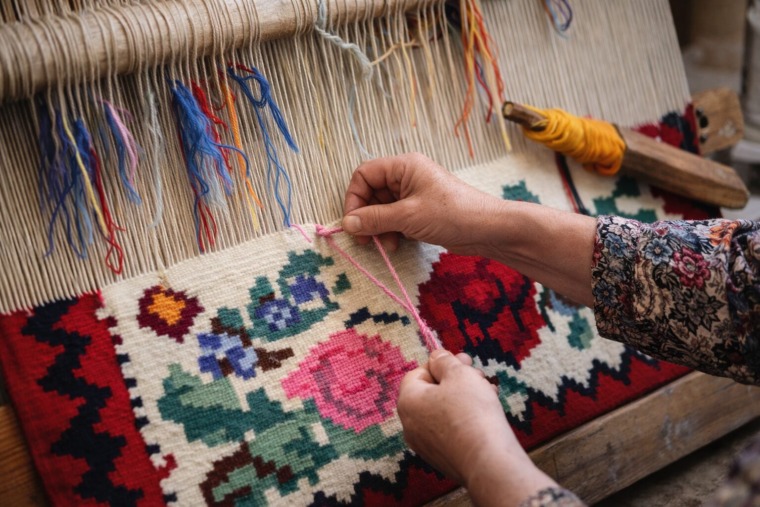
This tradition is also part of Bačka’s working history. Behind each finished piece lie preparation, an understanding of materials and the skill needed to operate a loom – knowledge that is difficult to appreciate simply by looking at a tablecloth in a shop window.
The Pattern Begins Before the First Row Is Woven
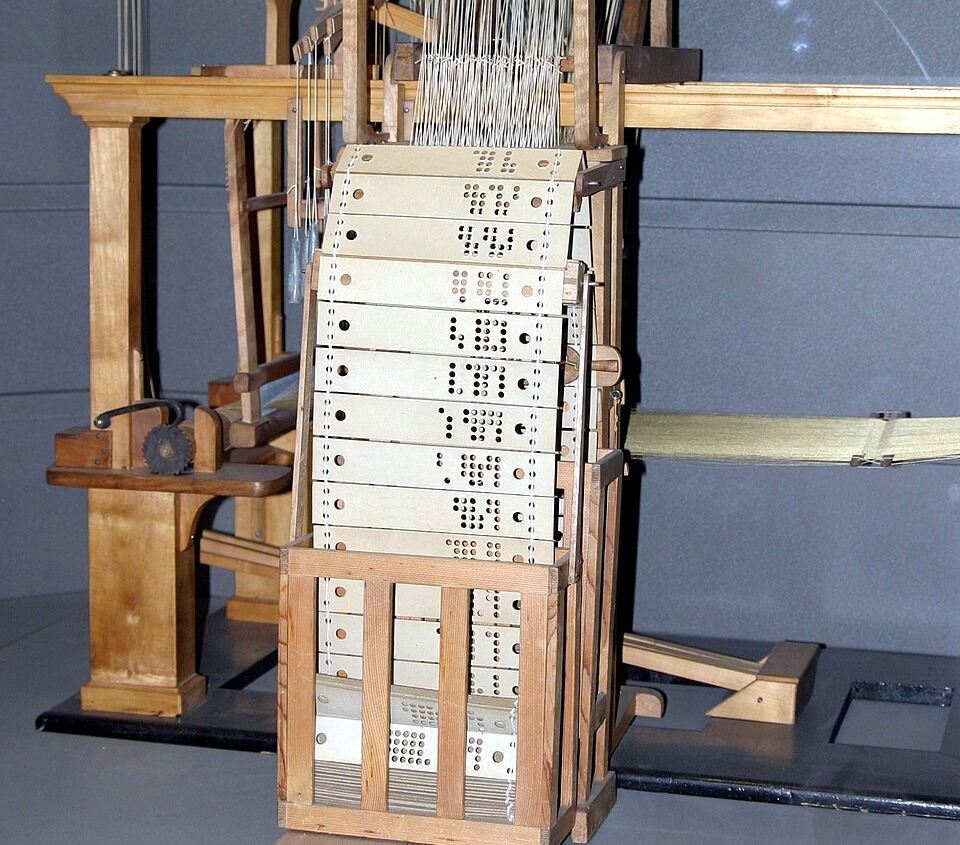
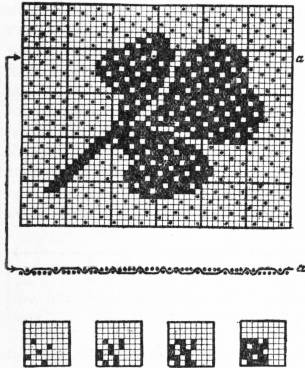
One of the most fascinating aspects of Bezdan damask is the use of punched cards to control the pattern. As Serbia’s National Register of Intangible Cultural Heritage explains, production begins with a design encoded on cards that are linked into sequences. Their arrangement allows different combinations and motifs to be woven on historic Jacquard looms.
If you arrange a visit that includes a working demonstration, pay attention to the relationship between the cards, threads and emerging fabric. It is an opportunity to begin “reading” the textile: to recognise repeating motifs and understand how the final result depends on both the mechanism and the person operating it.
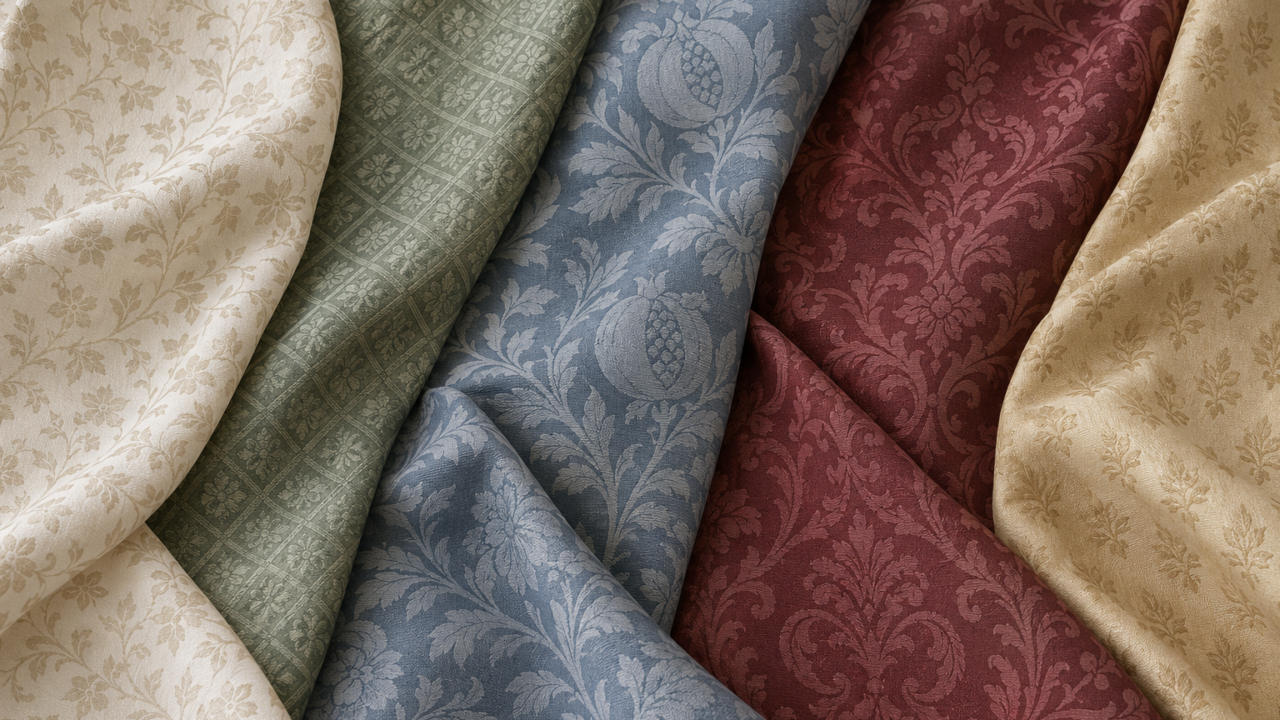
Rather than asking only how long a tablecloth takes to weave, ask what happens beforehand. How is the loom prepared? How is a pattern changed? Which part of the process requires the most experience? These questions reveal the story behind the finished product.
Does “Silk Damask” Mean Pure Silk?
The name can be misleading, so it is worth checking the fibre content. The workshop’s presentation on the Sombor crafts association website describes a blend of cotton and rayon, sometimes called artificial silk. Rayon is made from processed cellulose and is different from natural silk. Cotton damask is also mentioned in the published offering. The label on the individual product should therefore guide your purchase.
For visitors, this is a useful reminder to learn about a local product through conversation: what it is made from, how it should be washed and what it is intended for.
Heritage Preserved Through Skill
The skill of handweaving ornamented silk damask using the Jacquard technique was entered into Serbia’s National Register of Intangible Cultural Heritage in 2018.

The recognition concerns the knowledge involved in making the fabric: skills developed in Bezdan and the ways they are passed on. This information comes from the National Register, maintained by the Centre for Intangible Cultural Heritage of Serbia at the Ethnographic Museum in Belgrade.
A finished tablecloth takes on an additional meaning when seen in this light. Its value also lies in the process that produced it, the local tradition behind it and the continued use that helps sustain the craft.
What to Look For and Ask Before Visiting
The damask workshop is included in Bezdan’s tourism offering, and published visitor information specifies advance arrangements. Confirm the date, availability for individual visitors and any working demonstration before travelling. Visiting a sales area and touring the production space may involve different arrangements.
When enquiring, ask: Can your party be accommodated, and how long does a visit take? Will it be possible to see a loom in operation? Is a guided explanation of the process available? Are photography and filming permitted? Can products be purchased on site?
Public sources list the workshop at Žrtava fašizma 2, Bezdan. The Tourist Organisation of Sombor can also help you check contact details and enquire about arranging a visit.
A Souvenir with a Place in Your Home
Damask is an appealing choice for travellers who want to bring home something they will use. A small table runner or a few napkins may be more practical than a large set bought without measuring first.
The published range includes tablecloths, table runners and napkins, with made-to-measure options also described. Check current patterns, fibre content, lead times and ordering conditions directly.
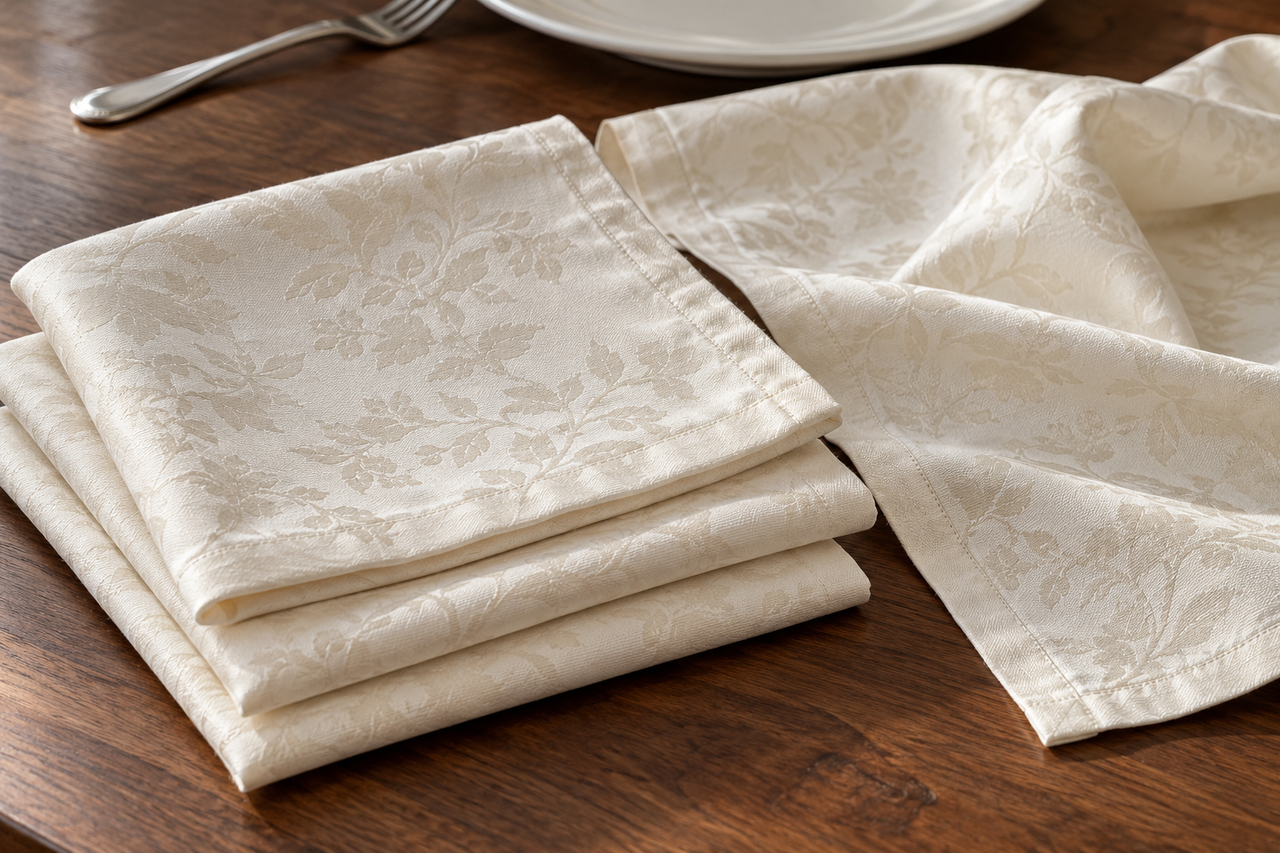
Before buying, consider where the piece will go. Measure your table, ask how far the cloth should hang over the edges and request care instructions. If it is a gift, keep the information about where and how it was made – that is part of the story you are bringing back from Bezdan.
How to Include Bezdan in an Autumn Trip
A prearranged workshop visit can be combined with a walk around Sombor or time in the countryside around Bezdan. For those drawn to woodland and water, one option is the area around the Karapandža Eco-centre, beside the Bajski Canal in the Gornje Podunavlje Special Nature Reserve. Check access to the centre, visiting arrangements and trail conditions before setting out.
On a short autumn day, choose one of these additions. After exploring the craft, a walk and lunch can be enough to complete the outing.
A suggested day: a confirmed workshop visit → lunch → a walk around Sombor or a prearranged nature visit near Bezdan.
That is the appeal of this trip: you set out to discover a fabric and return with a clearer understanding of the work behind it. The next time the light reveals a pattern in damask, you will know what you are looking at.
Related Articles