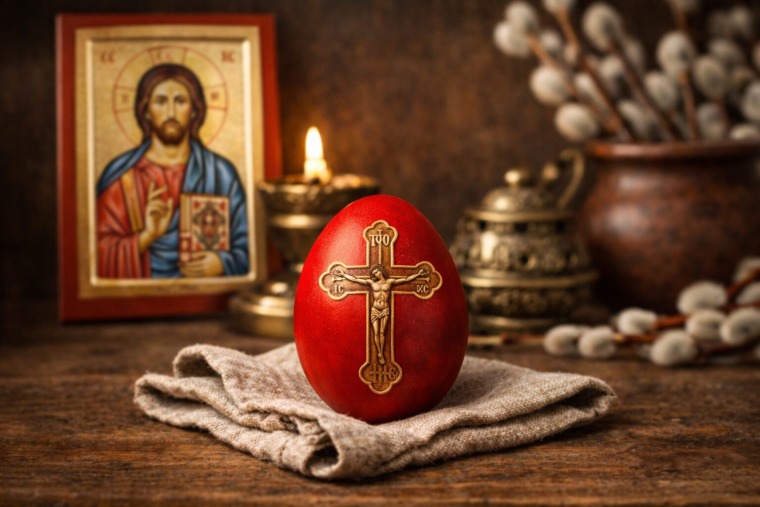

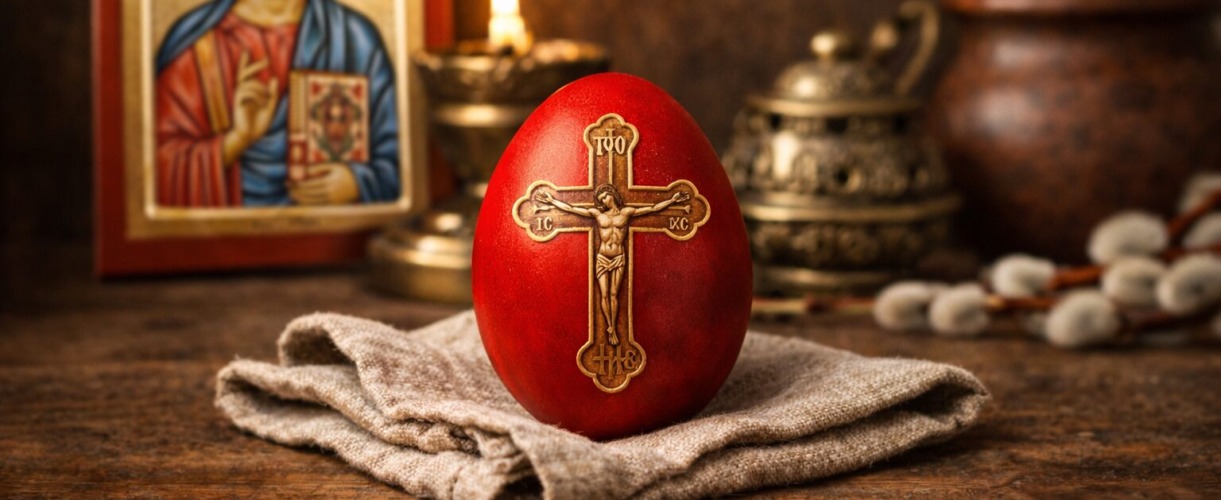
There is one egg in Serbia that is never eaten, never gifted, and never cracked. It doesn’t belong to the festive table, nor to the cheerful Easter rituals. Instead, it quietly remains inside the home – small, red, and almost unnoticeable, yet deeply meaningful. It is called čuvarkuća – literally, “the house guardian.”
This is the first egg dyed for Easter, usually on Veliki Petak (Good Friday). From that very moment, it takes on a different role. While other eggs are part of celebration and gathering, this one belongs to something more subtle – a space between tradition and belief, between the visible and the unseen.
Its purpose doesn’t end with Easter. That’s when it begins.
Why red carries more than color
The deep red color is not just a visual choice – it carries layered meanings shaped by both religion and older folk beliefs.
In Orthodox Christianity, red symbolizes Christ’s sacrifice and resurrection, the idea that life follows suffering. But in traditional Serbian belief, red also has a protective power. It is thought to repel evil, ward off misfortune, and create a sense of safety within the home.
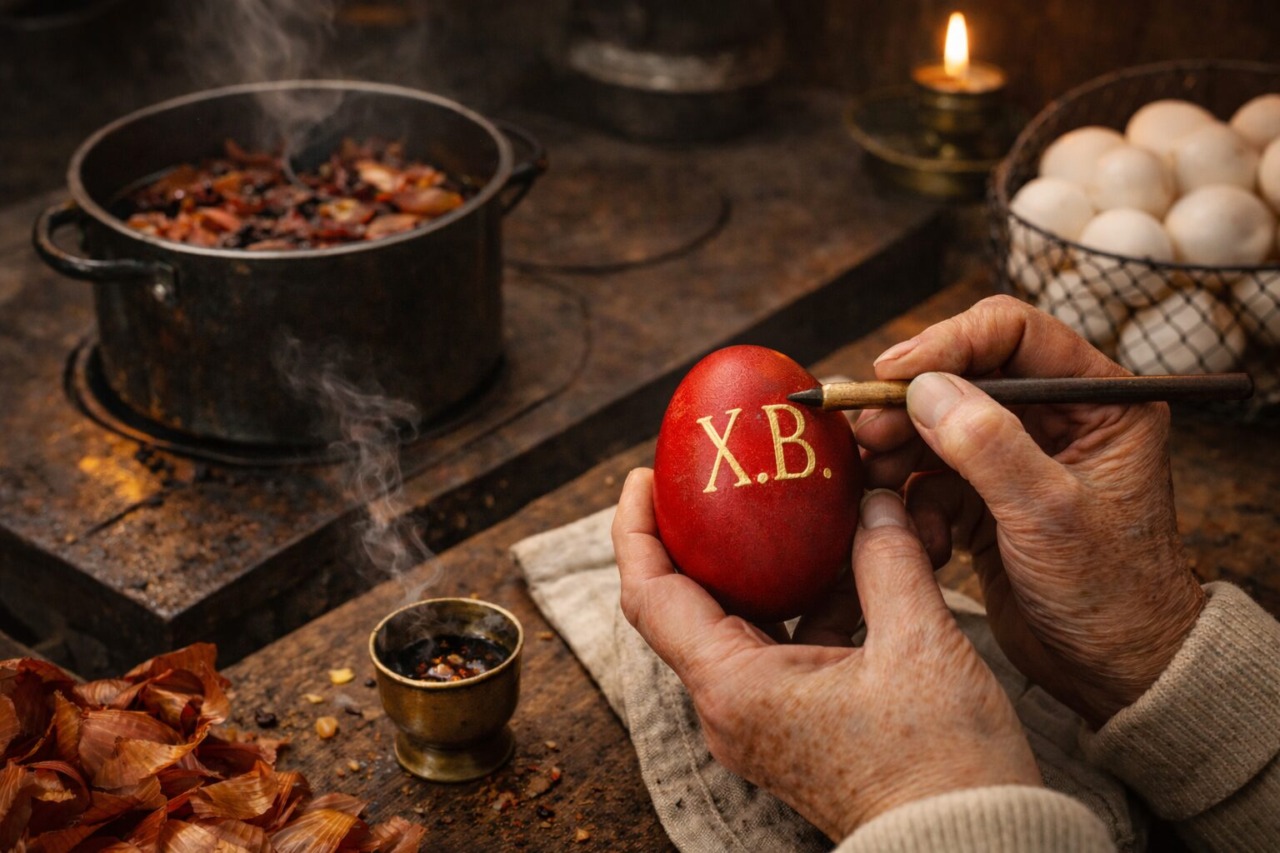
In parts of eastern Serbia, especially around Homolje, red was believed to form an invisible boundary around the household, protecting it from illness and unseen forces. In the western regions, it was more closely linked to protection from sudden misfortune, while in the northern plains of Vojvodina, it symbolized stability, prosperity, and continuity. Across all these interpretations, one idea remains the same – this egg is not decorative. It is protective.
Where the egg lives
After being dyed, the čuvarkuća is not placed on the table with the others. It is given a permanent place inside the home.
In many households, it is kept near religious icons, in a quiet corner that already carries spiritual meaning. There, it becomes part of a space associated with protection and presence. In other homes, it may be placed in the kitchen, closer to daily life, where the family gathers and routines unfold.
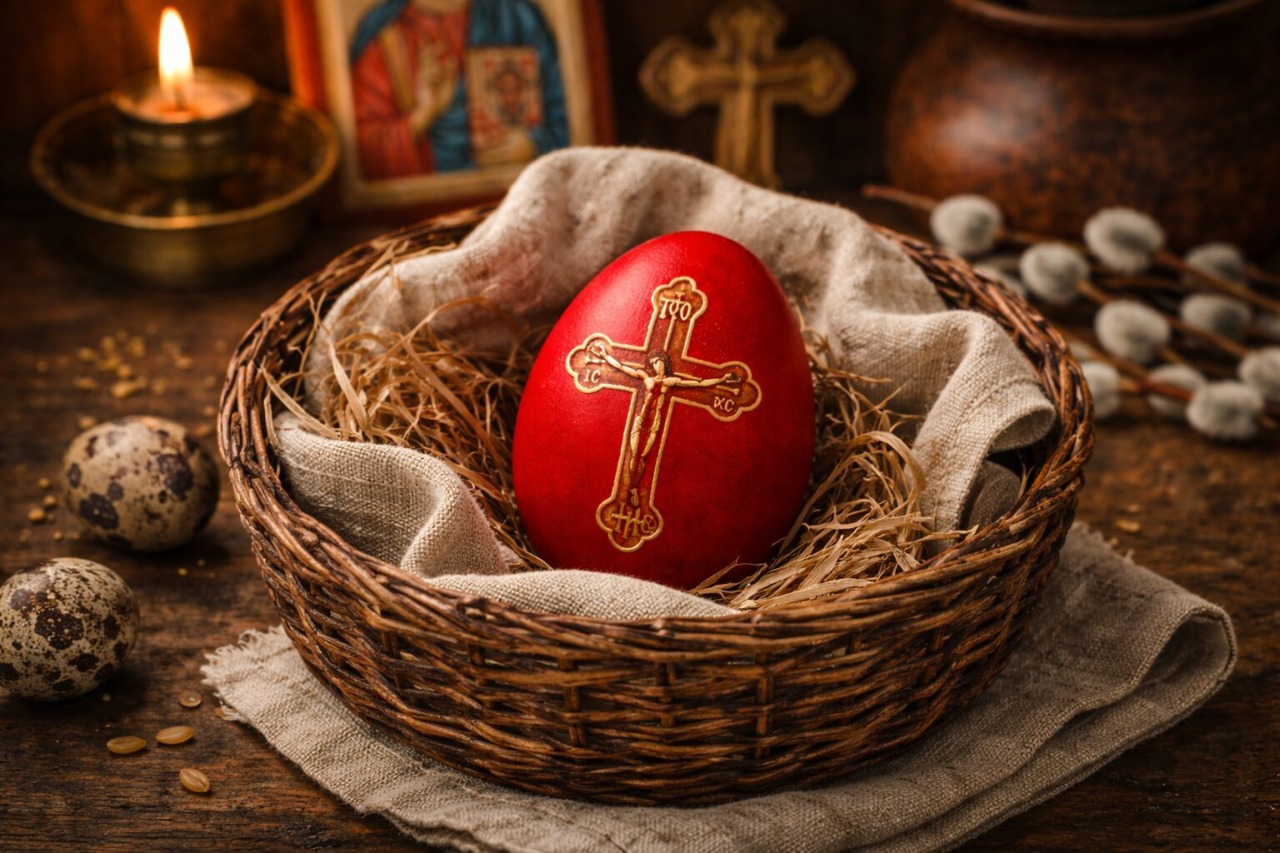
In some rural areas of southern and eastern Serbia, the egg is carefully set aside, sometimes wrapped in cloth or kept in a small container. This reflects its role – not as decoration, but as something meant to last. Its significance does not depend on being seen. It lies in simply being there.
What it protects
The beliefs surrounding the čuvarkuća vary across Serbia, but they all revolve around protection. In some regions, it is believed to safeguard the health of the household, keeping illness away. In others, it protects the home itself – ensuring stability, peace, and safety throughout the year. In rural traditions, its role extended even further, symbolically protecting livestock, crops, and everything that sustained daily life.
Rather than a single fixed meaning, the čuvarkuća reflects a broader idea – that a home is not just a physical space, but something that needs to be cared for, protected, and preserved.
A quiet ritual with a full cycle
The life of the čuvarkuća does not end when Easter passes. It remains in the home for an entire year, until the next Easter arrives. When a new guardian egg is made, the old one is not simply thrown away.
In some parts of Serbia, especially in rural eastern regions, it was traditionally buried in the yard or in the fields. This act symbolically transferred its protective power to the land, connecting the home with the cycle of nature and renewal. In other places, it was left in nature or removed quietly, without ceremony but with intention.
The idea is not disposal, but transition – the closing of one cycle and the beginning of another.
Who makes it – and why it matters
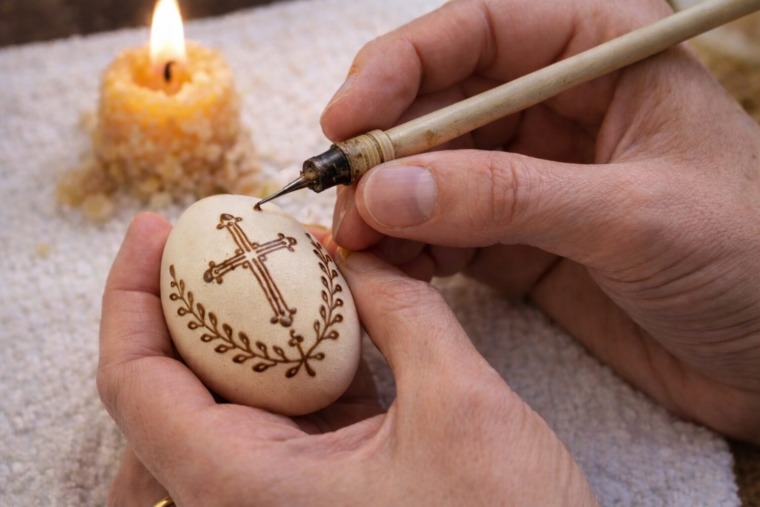
The čuvarkuća is always dyed first, often in the quiet atmosphere of Good Friday (or the day before). In many families, it is prepared by the oldest woman in the household, representing continuity and memory. In others, it is the role of the homemaker. Regardless of who does it, there is always a sense that this is not just a task, but a gesture with meaning.
The egg is usually left simple, without decoration, as if its strength comes not from appearance but from what it represents.
A tradition that still lives
Unlike many customs that have become symbolic or occasional, the čuvarkuća has quietly remained part of everyday life in Serbia. Perhaps because it asks for very little. It doesn’t require attention, explanation, or effort. It doesn’t interrupt routines or demand rituals.
It simply stays. Through changing seasons and passing months, through ordinary days and unexpected moments, it remains in its place – silent, almost invisible, yet constantly present.
And maybe that is its true meaning. Not in what can be seen – but in what endures.
Related Articles