
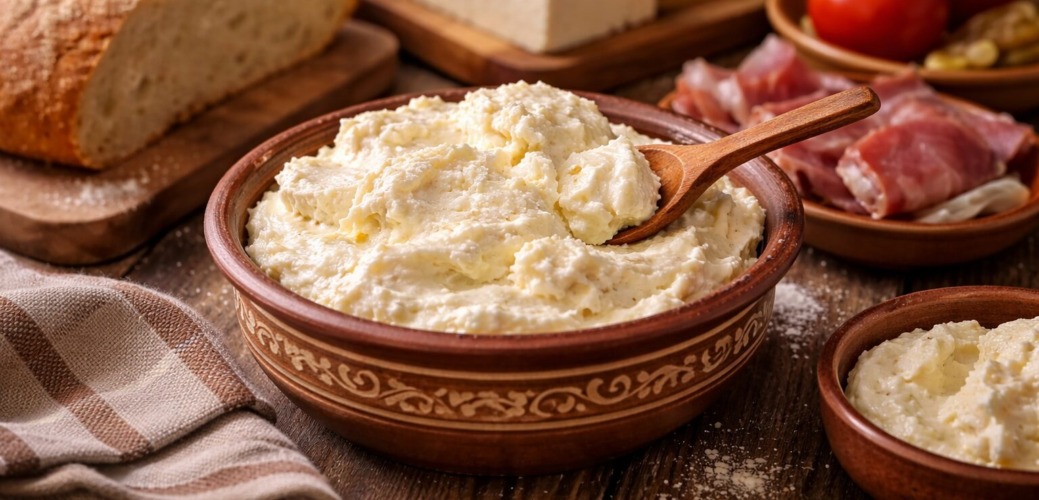
In Serbia, some foods are more than part of a meal – they are part of identity. Kajmak is one of them. Its taste is linked to childhood memories, village kitchens, summer mornings, freshly milked cows, and quiet rituals repeated through generations.
That is why the knowledge and skill of making kajmak have been officially recognized as part of Serbia’s intangible cultural heritage. Kajmak is not an industrial product. It is the result of patience, experience, and domestic wisdom.
How Kajmak Is Made: A Slow Process Without Shortcuts
Traditional kajmak is made from fresh, full-fat milk, most often cow’s milk and more rarely sheep’s milk. The milk is strained, boiled to the point of simmering, and then poured into wide, shallow dishes. This is where the most important part of the process begins.
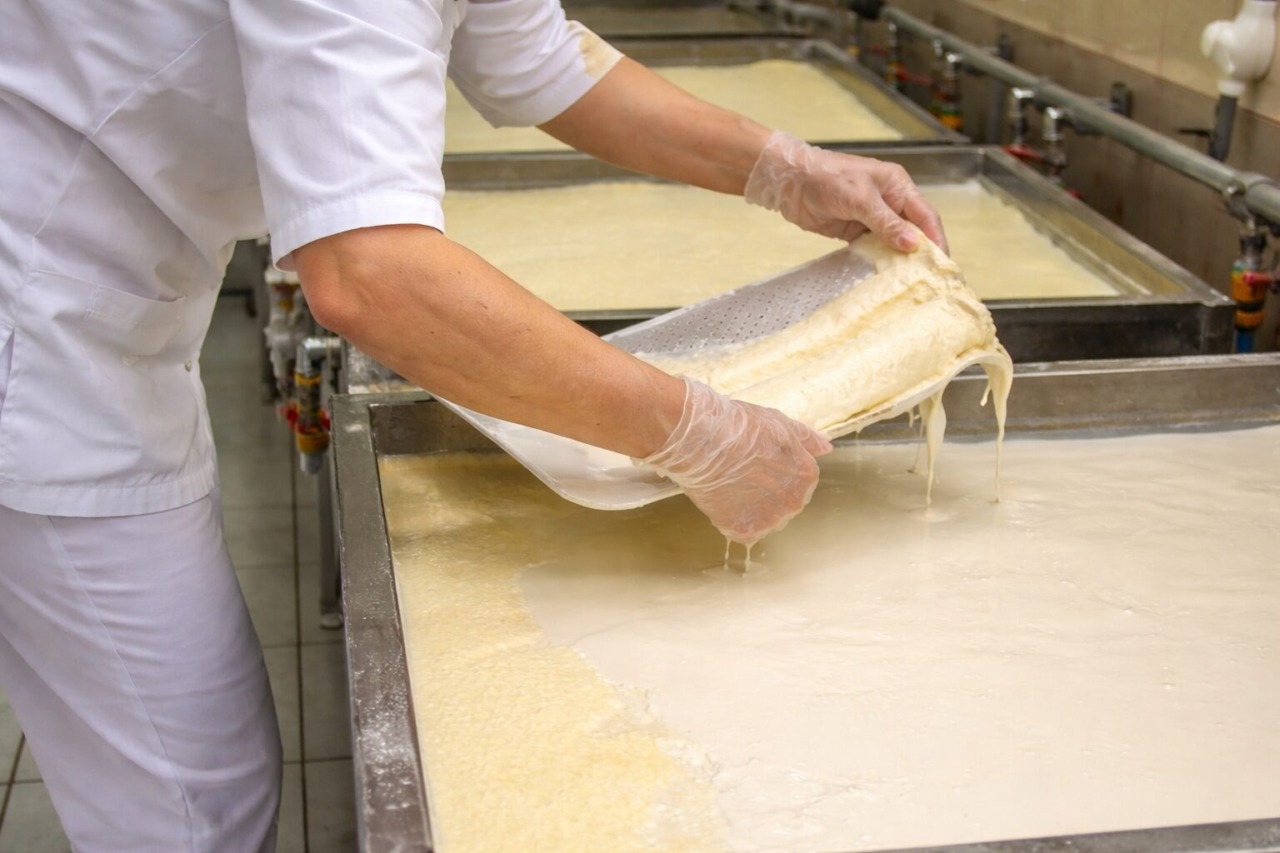
As the milk slowly cools, a thick, creamy layer forms on the surface. This layer is carefully removed, lightly drained, and placed into wooden or ceramic containers. Each layer is salted separately and left to mature. There is no speeding it up. No substitutes. No “quick version.”
Good kajmak comes only with time and experience.
Women’s Knowledge That Preserves Tradition
For centuries, kajmak-making in many parts of Serbia has been the domain of women – homemakers who passed their knowledge from mother to daughter. It was never written down or measured in precise quantities. It was learned by watching, repeating, and feeling. When to lift the cream. How much salt to add. When the kajmak is “ready.” These are things no manual can teach.
In regions around Zlatibor, Tara, and the valley of the Zapadna Morava, kajmak is still considered a mark of a good household and a skilled host.
The Geography of Flavor: Where Real Kajmak Comes From
Traditional kajmak production has been preserved mainly in the mountainous and hilly regions of central and western Serbia, including:
These regions offer ideal conditions: clean pastures, high-quality milk, and a way of life that still respects the rhythm of nature.
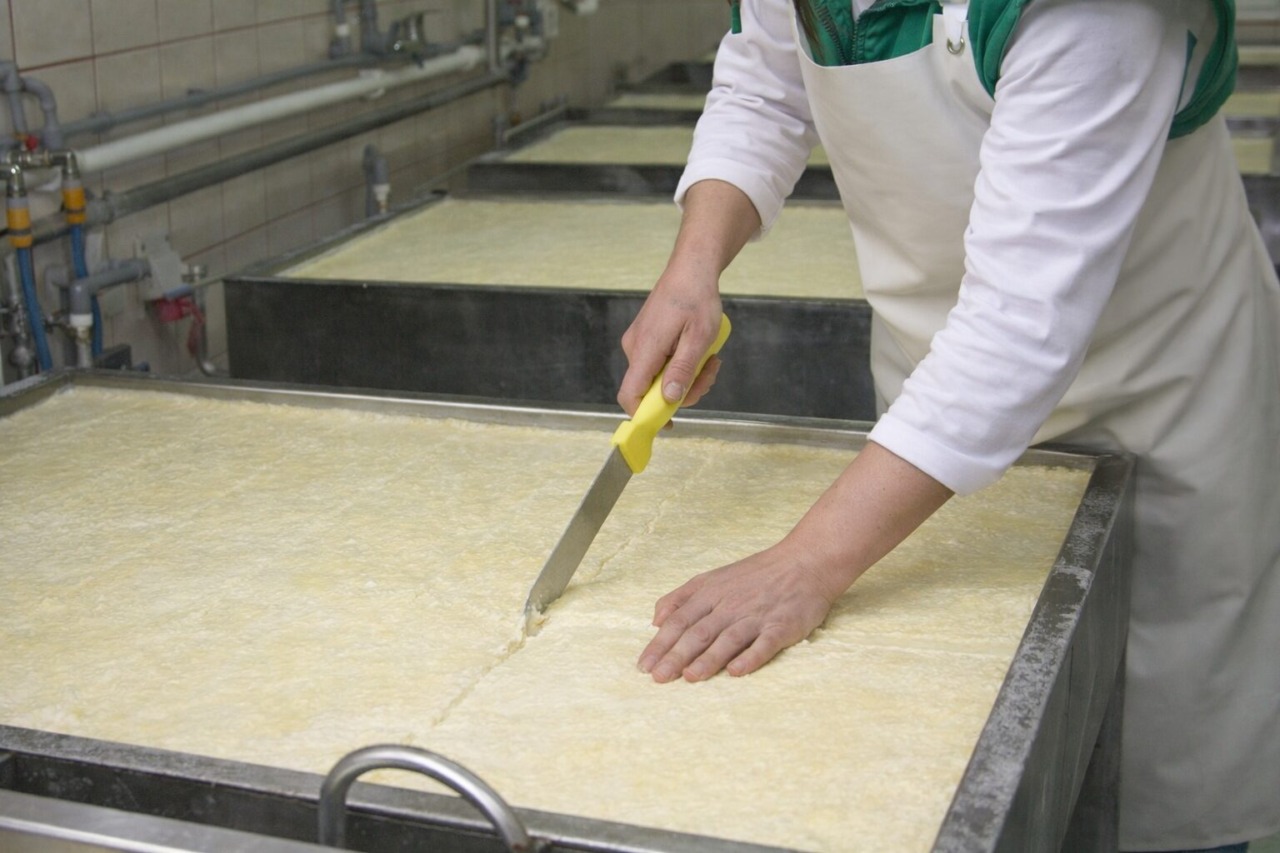
Kajmak from each area is slightly different. Texture, saltiness, and maturity vary – but every variety carries the signature of its place of origin.
Young and Aged Kajmak: Two Sides of the Same Story
In traditional Serbian cuisine, two main types are recognized:
- Young kajmak – mild, creamy, and fresh
- Aged kajmak – stronger, saltier, and more complex, developed through longer maturation
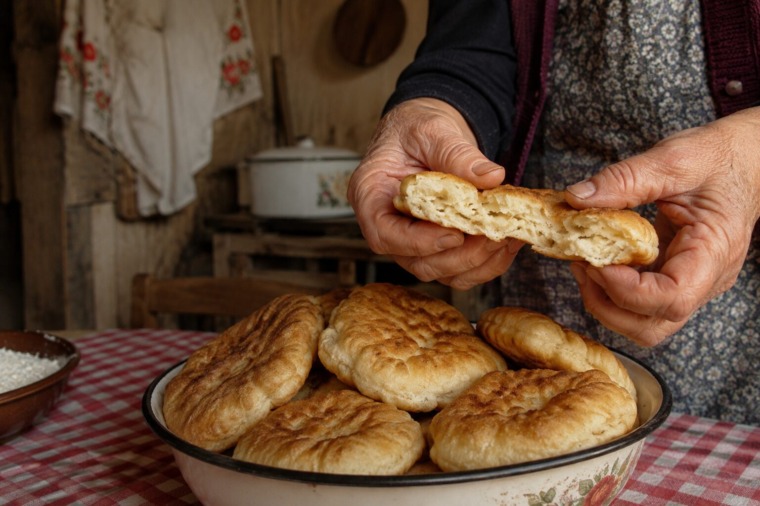
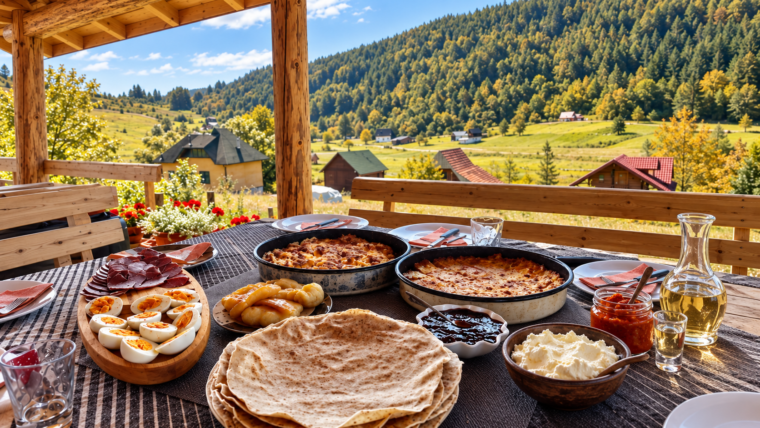
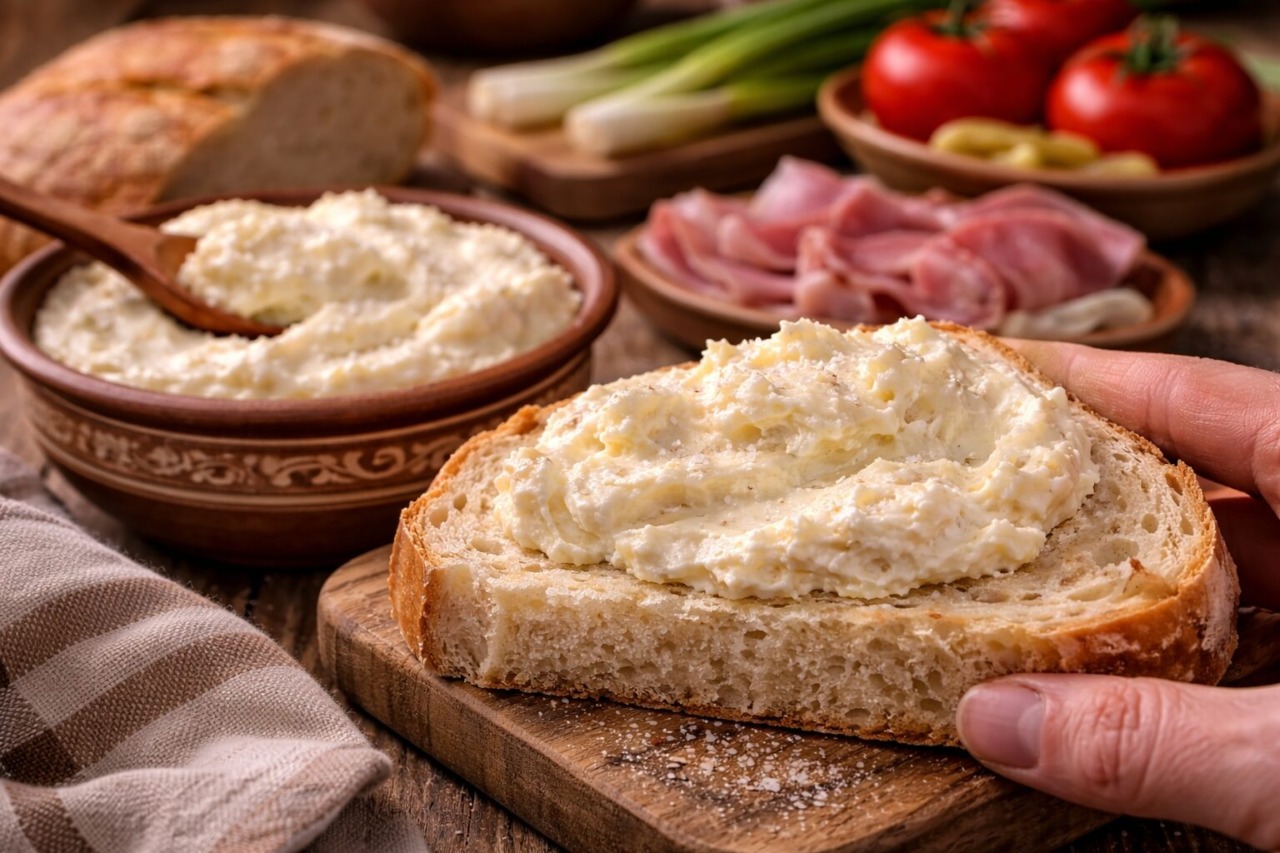
Both have their place on the table: with homemade bread, corn bread, roasted meat, potatoes, pies – or simply eaten with a spoon, straight from the bowl.
More Than Food: Kajmak as Identity
In many Serbian regions, kajmak is not just a side dish. It is a matter of local pride, a symbol of home cooking, and proof of a household’s skill.
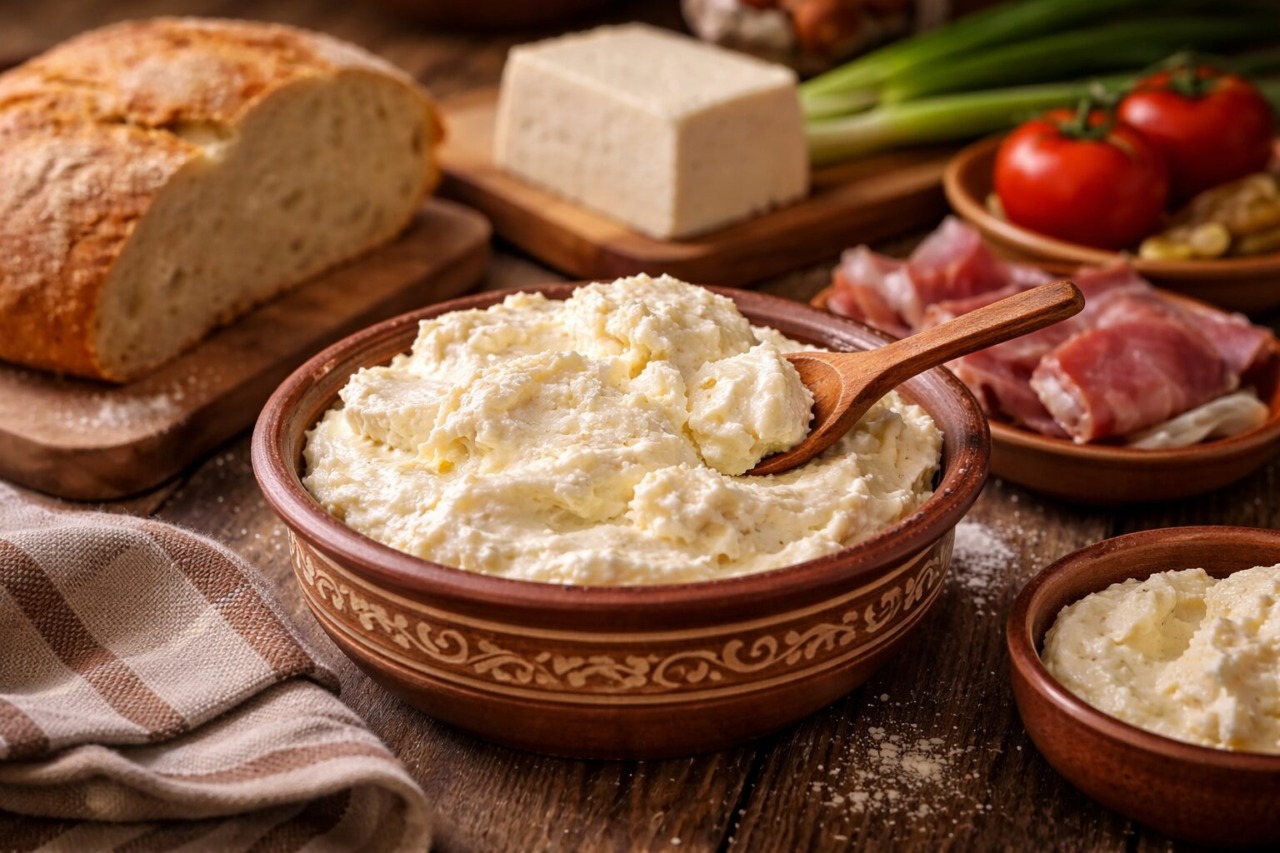
At markets, fairs, and village gatherings, kajmak is not sold only by weight – it is sold by reputation. Everyone knows whose is “the best,” “the oldest,” or “the creamiest.”
It is a living tradition, not a museum exhibit.
Why Kajmak Matters Today
In an age of industrial food and standardized flavors, kajmak represents the opposite – a product without uniformity, factory labels, or compromises.
It reminds us that:
- quality comes from slow work,
- flavor comes from nature,
- and tradition comes from respect for knowledge.
That is why kajmak deserves its place in the Authentic Serbian Products series – as a symbol of home, patience, and continuity.
Because real kajmak is not made in factories.
It is made in kitchens that remember.
Related Articles