
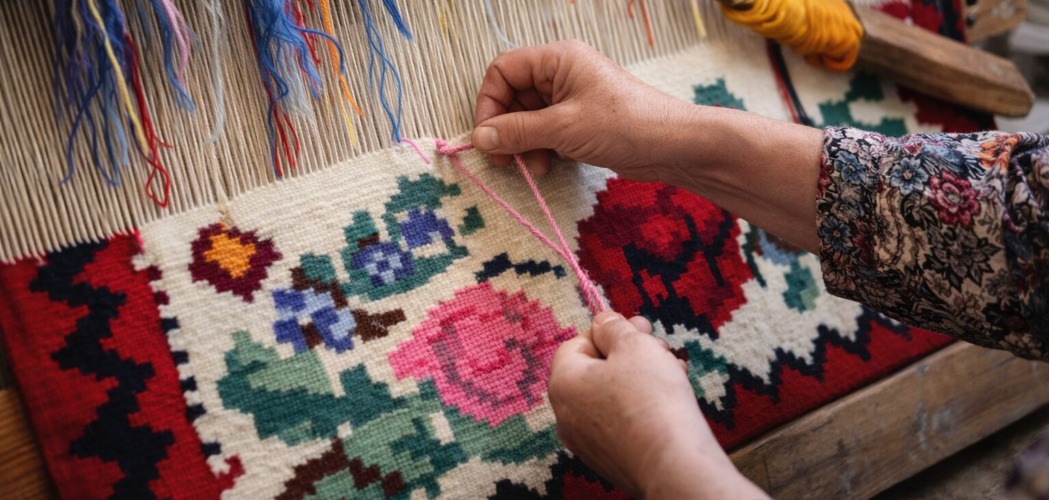
Everyone has heard of Pirot kilim weaving. Its motifs, symbols, and bold geometry have long been recognized as one of Serbia’s most iconic forms of traditional art. But few people know that far from the mountainous south, in the flatlands of Bačka, there exists another weaving tradition just as distinctive, authentic, and deeply rooted in local life – Staparski kilim.
In the village of Stapar, near Sombor in northwestern Vojvodina, kilims have been woven for more than two centuries – not for mass markets, but for homes, heritage, and the quiet beauty of everyday life.
A Kilim Born of the Plains, With a Strong Identity
The skill of making the Staparsko kilim developed in the 18th century as part of household craftsmanship. Unlike Pirot kilims, which are often bold, symbolic, and geometric, Stapar kilims reflect the spirit of Bačka – calm, harmonious, and distinctly decorative.
They are traditionally woven in pairs, on a specific wide horizontal loom that requires space, strength, and precision. This was no coincidence: kilims were central decorative elements in the home, often placed symmetrically as a sign of order, balance, and prosperity.
A Weaving Technique With No Reverse Side
Staparski kilims are made using the demanding kličanje technique, in which the weft of a single color completely covers the warp within the boundaries of a pattern. Because of this method, there are no visible color transitions, and the kilim has two identical faces – it has no reverse side.
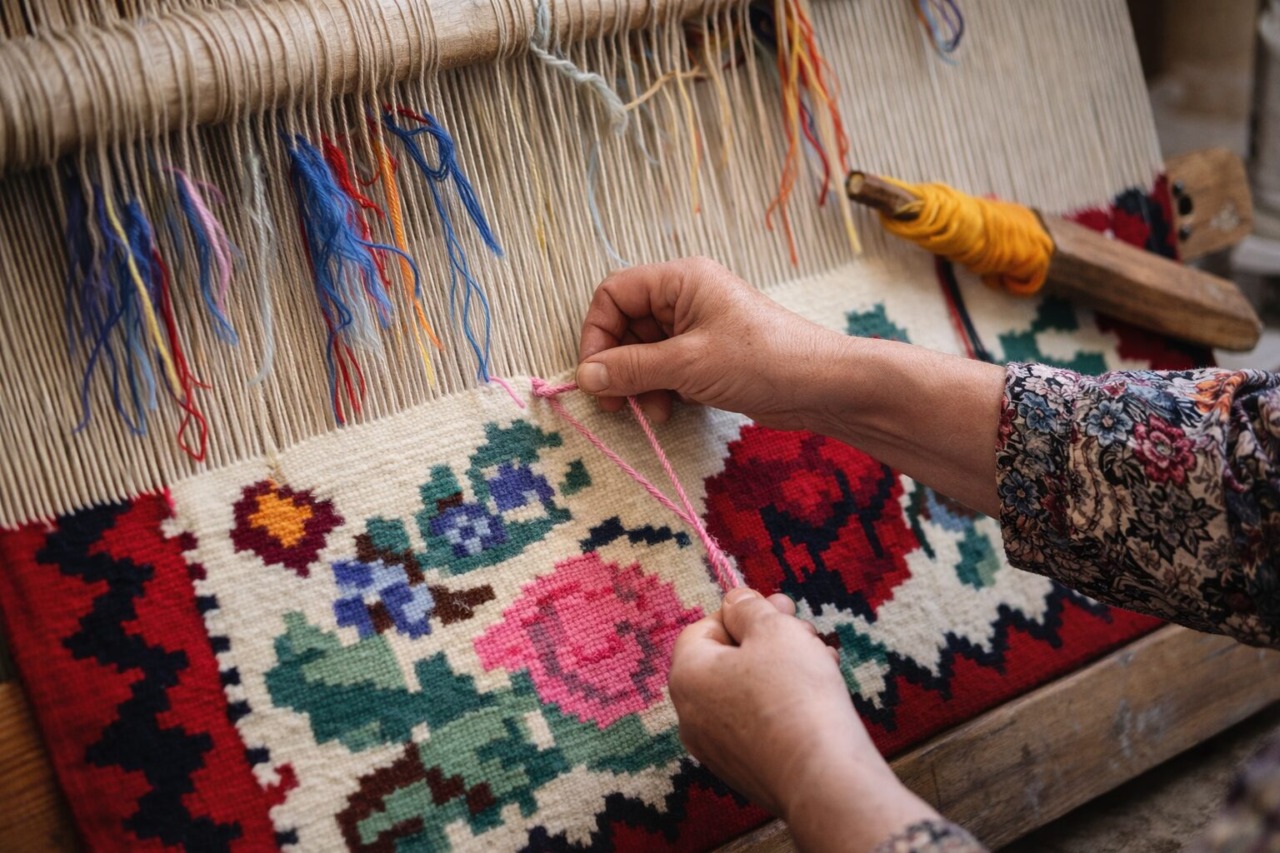
This is not only an aesthetic feature, but also a symbolic one: the kilim is the same on both sides, made to last, to be used, and to be passed down through generations.
Floral Motifs as the Signature of Stapar
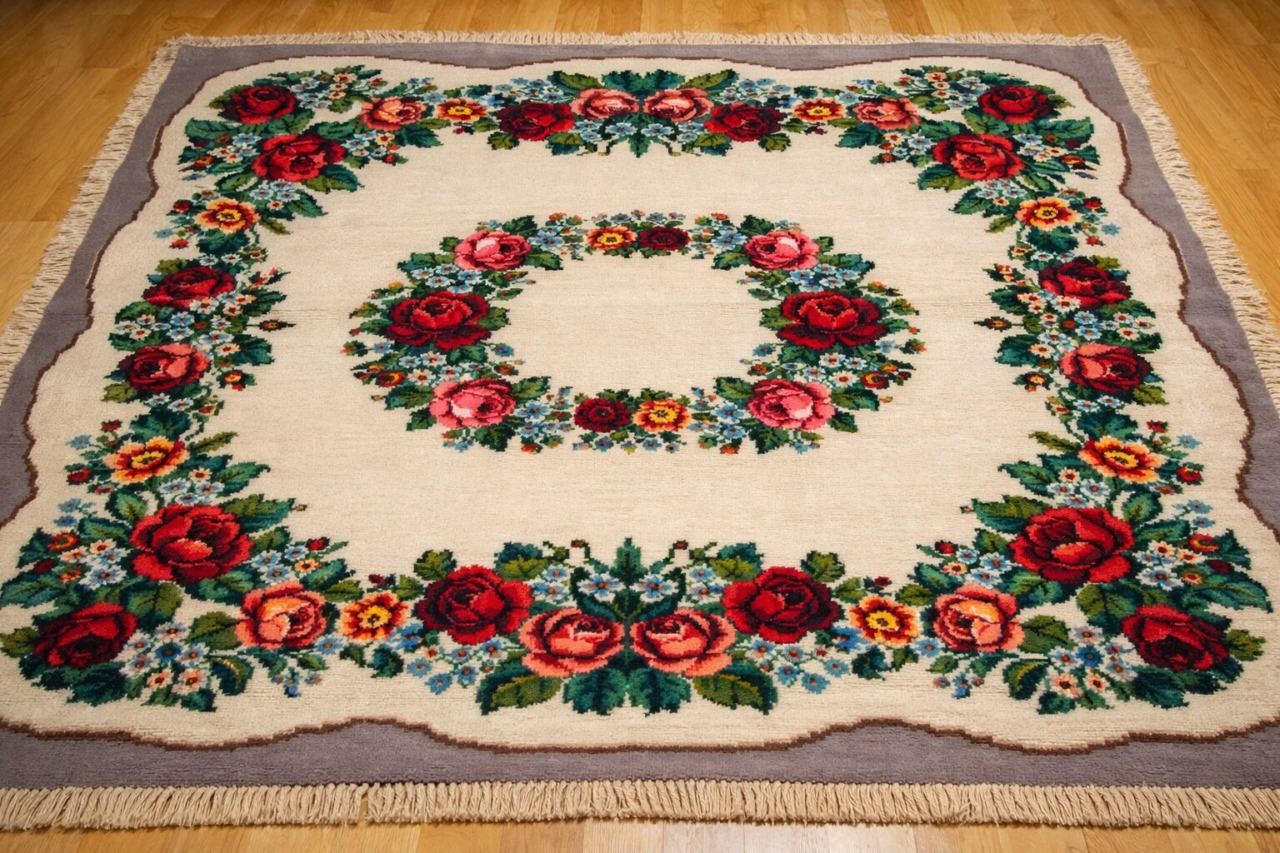
Unlike the strict geometry of southern Serbia, Stapar kilims are instantly recognizable by their floral motifs. Roses, bouquets, and floral wreaths dominate the composition, arranged in rhythmic and symmetrical patterns.
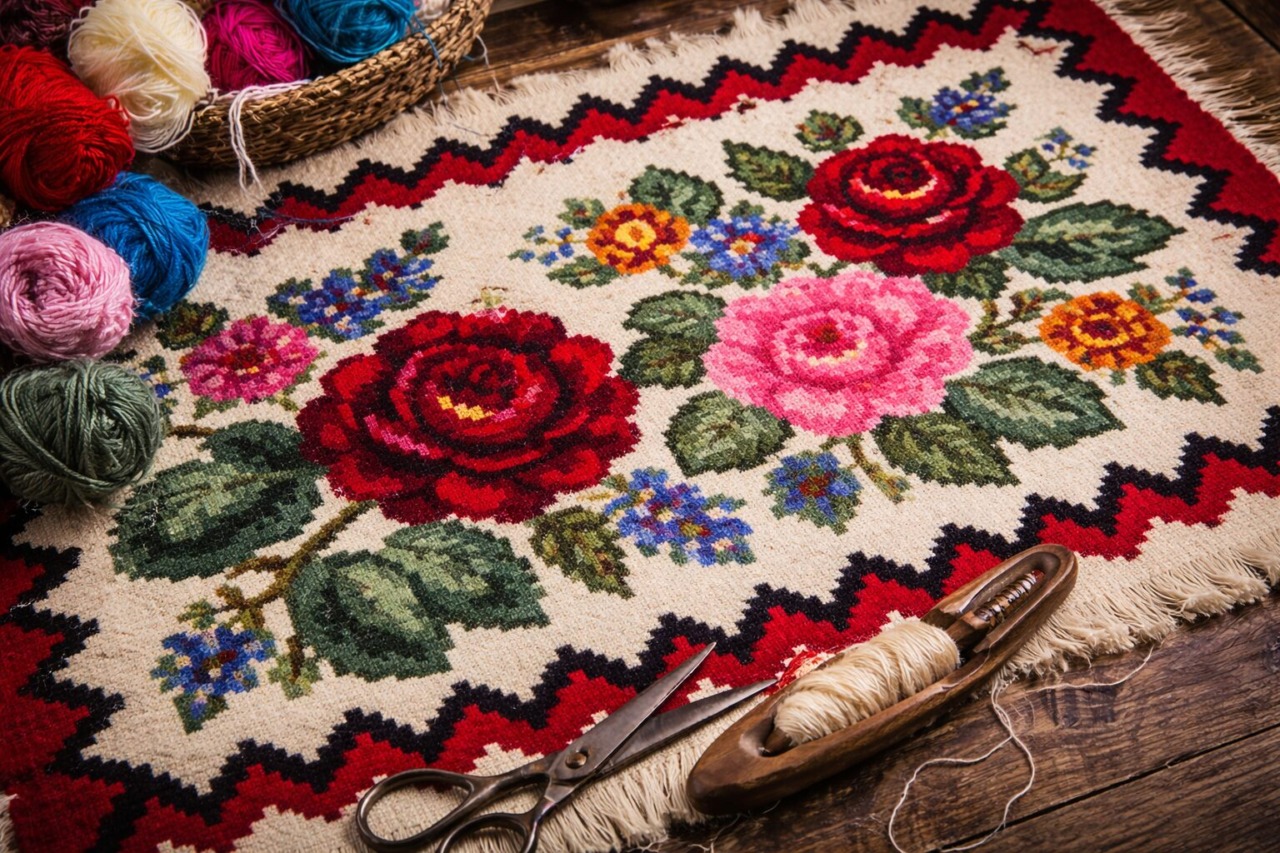
They are most often woven from streka wool, typically in white or beige tones, and more rarely in soft green. The most common size is around two by two meters, making them both functional and decorative. Their restrained color palette gives them a surprisingly contemporary feel, despite their long history.
Women’s Knowledge Passed Down Quietly, Yet Persistently
Staparski kilim weaving was never a form of mass production. It has survived thanks to the women of Stapar, who passed the skill from mother to daughter as part of family and cultural heritage.
This is what makes the craft especially valuable today – the knowledge is not written in manuals, but embedded in practice, in the movement of hands, and in the rhythm of the loom. Even today, local weavers continue to preserve this skill as part of the village’s identity, not merely as a craft.
Why Staparsko Kilim Weaving Matters Today
In a world dominated by serial production and decoration without context, the Staparsko kilim represents the opposite – an object with origin, authorship, and meaning. It reminds us that authentic Serbian products are not created only in mountains or remote regions, but also in the plains, through continuity, patience, and quiet dedication.
That is why Staparsko kilim weaving deserves its place alongside the Pirot tradition – not as its shadow, but as a distinct, lowland expression of the same human need for beauty, order, and durability.